The Semantic Bridge: Calculus vs. Drivetrain Mechanics
When new car owners dive into automotive manuals or forums, they occasionally stumble upon a confusing linguistic overlap and ask: what does differentiability mean? In pure mathematics, differentiability is a calculus concept describing whether a function has a continuous derivative—essentially, a measure of a curve's smoothness without sharp corners. However, in the context of automotive drivetrains and transmission basics, 'differentiability' refers to the mechanical differential ability of the drivetrain to allow opposing drive wheels to rotate at different speeds while maintaining seamless torque delivery.
This mechanical 'smoothness' is the cornerstone of cornering stability. Without it, your vehicle's tires would chirp, skip, and bind every time you turned a corner, as the outside wheel must travel a longer distance than the inside wheel. For new car owners, understanding this concept bridges the gap between the transmission's output shaft and the rubber meeting the road.
How the Differential Integrates with Your Transmission
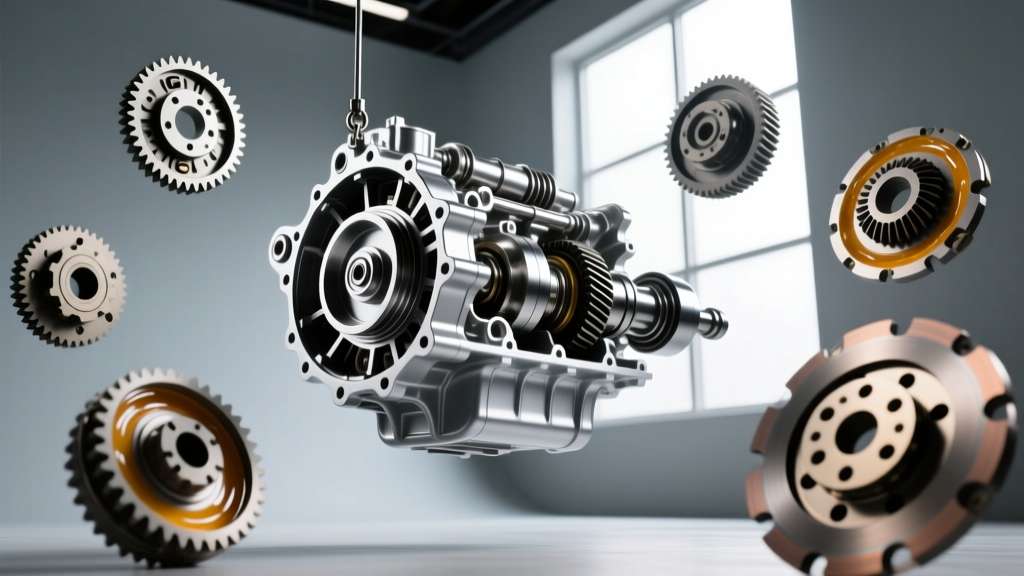
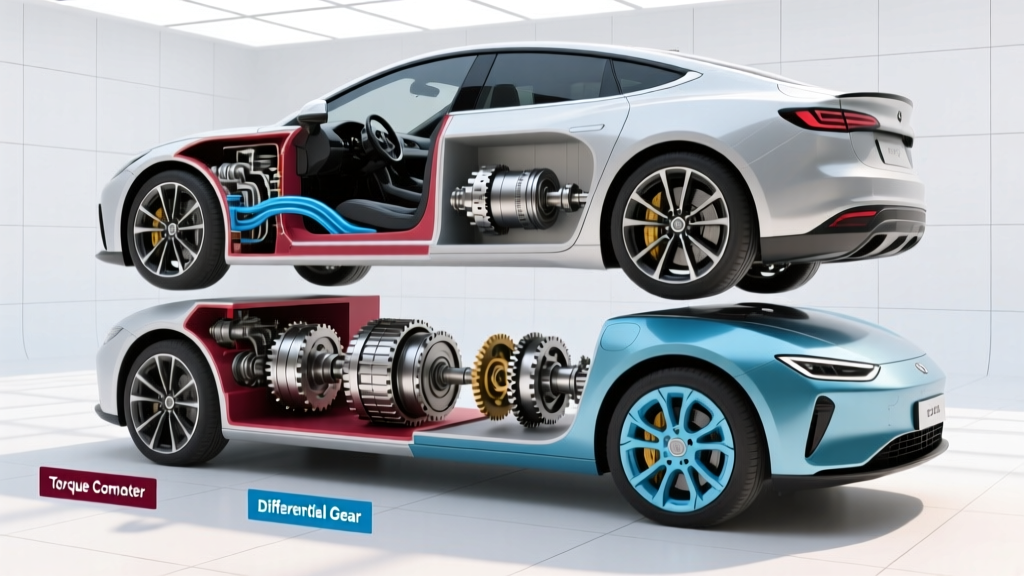
The transmission and the differential are distinct components that work in absolute tandem. The transmission (whether a classic torque-converter automatic like the GM 4L60E or a modern ZF 8HP) multiplies engine torque and selects gear ratios. The differential takes that final output and splits it 90 degrees (in longitudinal setups) to the axles, while allowing speed variance between the wheels.
Transaxle Configurations (FWD and Many AWDs)
In front-wheel-drive and many modern all-wheel-drive vehicles, the transmission and differential are housed in a single casting known as a transaxle. The differential is lubricated by the same transmission fluid (ATF or CVTF). For example, in a Honda Accord with a 10-speed automatic, the differential gears share the transmission's fluid sump, meaning a transmission fluid flush is simultaneously a differential service.
Traditional RWD Configurations
In rear-wheel-drive trucks and sports cars, the transmission is bolted to the engine, sending power down a driveshaft to a standalone rear axle housing (the 'pumpkin'). Here, the differential requires its own dedicated, high-viscosity gear oil, typically 75W-90 or 75W-140 synthetic.
Inside the Gearbox: Ring, Pinion, and Spider Gears
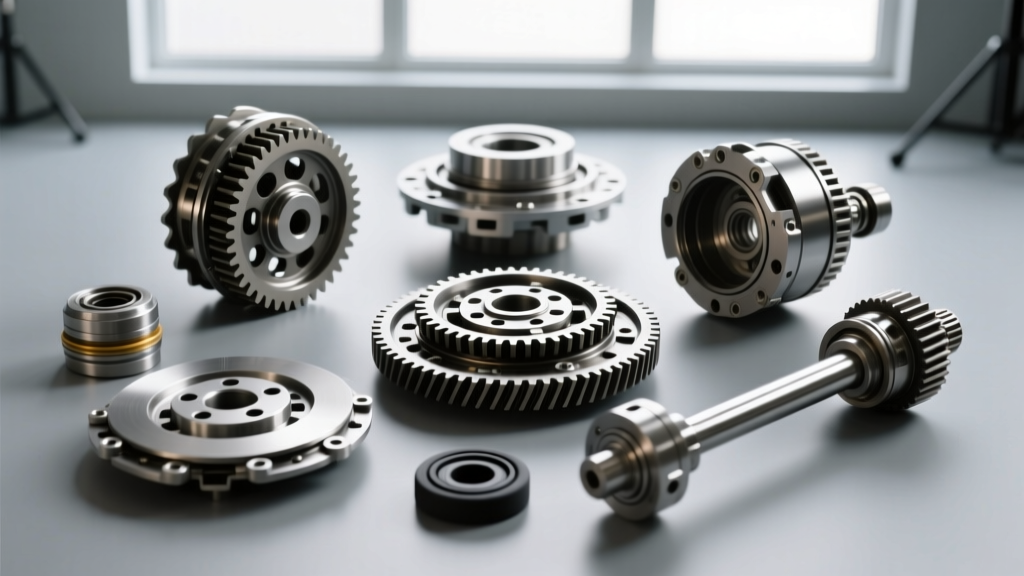
To understand what gives a drivetrain its 'differentiability,' we must look at the internal gear architecture. According to foundational engineering principles outlined by HowStuffWorks, the standard open differential relies on three primary gear sets:
- The Pinion Gear: Attached to the driveshaft, it meshes with the ring gear to provide the final drive ratio reduction (e.g., 3.73:1).
- The Ring Gear & Case: The pinion turns the ring gear, which is bolted to the differential case. The case rotates as a single unit with the driveshaft's input.
- The Spider (Planetary) Gears: Mounted inside the case on a cross-pin, these smaller gears mesh with the side gears attached to the axles. When driving straight, the spider gears do not spin on their own axes; they push both axles equally. When cornering, the spider gears rotate on their cross-pins, 'differentiating' the speed between the left and right axles.
Limited-Slip Differentials: Controlling the Variance
An open differential has a fatal flaw: if one wheel loses traction, it sends 100% of the available torque to the slipping wheel. To counter this, manufacturers use Limited-Slip Differentials (LSDs). As detailed in Eaton's automotive differential catalogs, clutch-type LSDs use a series of friction discs and cone clutches to bind the axles together under load, forcing torque to the wheel with grip while still allowing 'differentiability' during low-load cornering.
Crucial Maintenance Note: Clutch-type LSDs require a specialized friction modifier additive (e.g., Motorcraft XL-3 or GM ACDelco 10-4017). Failing to add this $12-$18 fluid additive during a gear oil change will result in aggressive 'chatter' or binding during low-speed turns as the clutch packs fail to slip smoothly.
Maintenance Matrix: Fluids, Capacities, and Torque Specs
Proper maintenance ensures the mathematical smoothness of your drivetrain. Below is a technical reference table for common setups encountered by new and veteran owners alike.
| Drivetrain Component | Fluid Type & Capacity | Critical Torque Specifications | Estimated Service Cost (2026) |
|---|---|---|---|
| GM 8.5' 10-Bolt Rear Axle (RWD Trucks/Cars) | 75W-90 Synthetic Gear Oil Capacity: ~2.1 Quarts |
Ring Gear Bolts: 55 lb-ft (w/ Loctite) Carrier Caps: 60 lb-ft Cover Bolts: 22 lb-ft |
$120 - $180 (Shop) $45 (DIY) |
| Ford 8.8-Inch Axle (Mustang/F-150) | 75W-140 Synthetic (Heavy Duty) Capacity: ~2.5 Quarts + Friction Modifier |
Ring Gear Bolts: 70-85 lb-ft Cover Bolts: 28-38 lb-ft Pinion Nut: 140-190 lb-ft |
$140 - $200 (Shop) $60 (DIY) |
| ZF 8HP70 Transaxle/Diff (Integrated RWD/AWD) | ZF LifeguardFluid 8 Capacity: Varies (Total fill ~9-10L, service ~5L) |
Diff Pan Bolts: 10 Nm (88 lb-in) Fill/Level Plug: 35 Nm |
$350 - $500 (Shop) Requires specialized leveling procedure |
Failure Modes: When Mechanical Smoothness Breaks Down
When the 'differentiability' of your axle fails, the symptoms are immediate and auditory. Here are the most common failure modes and their associated repair realities:
1. Spider Gear Disintegration
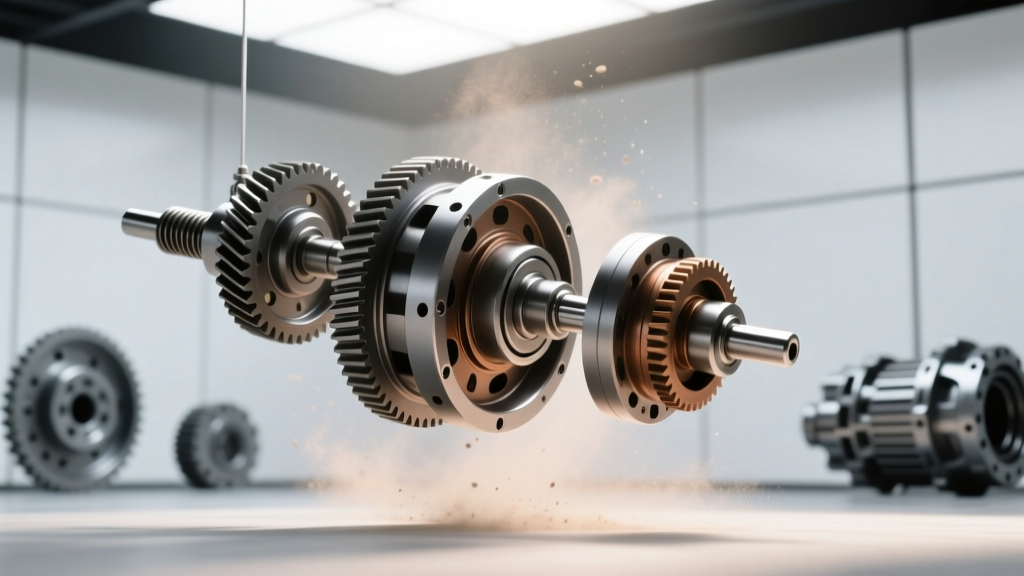
If a vehicle is subjected to severe 'one-wheel peels' or shock-loading (e.g., dropping the clutch on a manual transmission or aggressive brake-torqueing on an automatic), the cross-pin can weld itself to the spider gears, or the gears themselves can shatter. Cost: A replacement spider gear kit costs between $45 and $85, but labor to pull the axles and open the case will push the shop bill to $600-$900.
2. Ring and Pinion Wear (Backlash Drift)
Gear oil starvation or excessive mileage leads to pitting on the hypoid gear teeth. This manifests as a distinct 'howl' or 'whine' that changes pitch exactly with vehicle speed, not engine RPM. Setting the backlash (typically 0.006' to 0.010') and gear contact pattern requires specialized dial indicators and a master rebuild kit ($180-$250). Professional setup labor ranges from $800 to $1,200.
3. Carrier Bearing Whine
The bearings that support the differential case inside the axle housing wear out, causing a low-frequency rumble that often disappears when coasting. Replacing carrier bearings requires a hydraulic press and precise shim selection to maintain gear preload.
Expert Insight: Never reuse a crush sleeve on a pinion gear. When setting pinion bearing preload, a new crush sleeve must be crushed to achieve the exact rotational torque specification (typically 15-25 in-lbs for new bearings). Reusing an old sleeve will result in catastrophic pinion bearing failure and total axle lockup.
Summary for New Owners
While 'differentiability' might sound like a term reserved for a university calculus exam, in the automotive world, it represents the vital mechanical harmony that allows your car to corner safely and efficiently. Whether you are driving a FWD commuter with an integrated transaxle or a RWD truck with a heavy-duty 10-bolt axle, respecting the differential's fluid requirements, torque specifications, and friction modifiers is essential. For further technical reading on modern drivetrain integration, consult the ZF 8-Speed Transmission engineering documentation or your vehicle's specific OEM service manual.