The Hidden Costs of a Botched Twin Disc Marine Transmission Rebuild Break-In
When you authorize a twin disc marine transmission rebuild, you are typically looking at an invoice ranging from $14,000 to $38,000 depending on the model—whether it is a compact MG-506 or a heavy-duty MG-5114. However, the most critical phase of this investment occurs after the unit is bolted to the bell housing and the engine is fired for the first time. The break-in procedure dictates the lifespan of the clutch packs, the hydraulic control valves, and the internal gear pumps. Failing to execute a precise, load-stepped break-in protocol can result in glazed sintered bronze friction plates, leading to premature slip and a complete teardown before the 500-hour mark.
In this technical deep-dive, we will explore the exact metallurgical reasons behind the break-in process, the step-by-step load protocol, and a comprehensive cost analysis comparing proper break-in consumables against the catastrophic costs of premature failure.
The Metallurgy of the Break-In: Why the First 50 Hours Matter
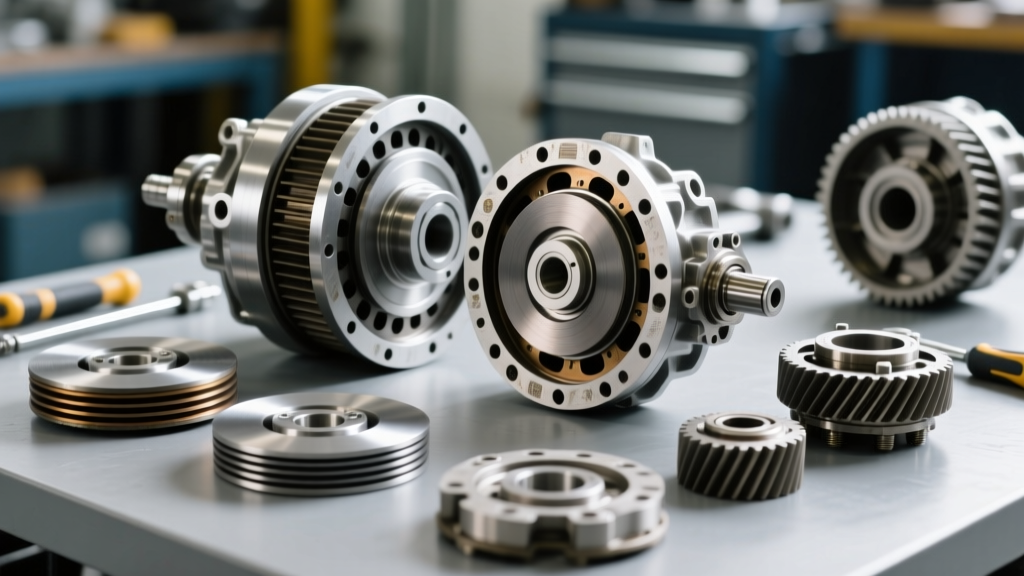
Unlike automotive transmissions that utilize paper-based or Kevlar friction materials, heavy-duty Twin Disc marine gears predominantly rely on sintered bronze on steel clutch packs. Sintered bronze is incredibly durable and resistant to high-temperature degradation, but it requires a specific surface roughness (Ra) to achieve optimal friction coefficients.
During a rebuild, the new steel separator plates and bronze friction discs possess microscopic machining peaks and valleys. The break-in process is essentially a controlled wear cycle designed to mate these peaks and valleys perfectly. If the transmission is subjected to excessive heat or shock-loading too early, the bronze matrix will 'glaze'—creating a hardened, mirror-like surface that prevents the clutches from biting. Once glazed, the clutch pack will slip under load, generating immense parasitic heat and ultimately destroying the pack.
Phase 1: Pre-Start Dry Priming and Fluid Specifications
The most common cause of immediate post-rebuild failure is running the internal gear pump dry. Twin Disc marine gears rely on an engine-driven internal pump to supply pressure to the modulating valves and clutch packs. Running the engine without priming the gear for even 15 seconds can score the pump housing and starve the forward/reverse clutches of hydraulic pressure upon initial engagement.
Pre-Lube Protocol
- Gravity Fill: Fill the gear sump to the exact dipstick specification while the vessel is level in the water. Do not rely on dockside water levels, as the shaft angle alters the sump geometry.
- Manual Priming: Disconnect the hydraulic cooler return line at the transmission and route it into a clean bucket. Crank the engine (without firing) or use an external pre-lube pump until a solid stream of oil flows into the bucket, confirming the internal pump is fully primed and all air is purged from the cooler circuit.
- Cooler Line Torque: Reconnect the cooler lines. For standard 3/4-inch NPT fittings, apply marine-grade thread sealant and torque to 35-40 ft-lbs. Over-torquing can crack the aluminum or cast iron housing.
Twin Disc Fluid and Filtration Matrix
Using the wrong fluid is a fatal error. While some modern Twin Disc gears with paper clutches require specific ATF, the heavy-duty sintered bronze models require high-zinc, straight-weight diesel engine oil to handle the shear forces and provide the correct friction modifier profile.
| Transmission Model | Sump Capacity | Recommended Fluid Type | Filter Specification |
|---|---|---|---|
| MG-506 / MG-5061 | 13.5 Quarts (12.8 L) | SAE 40 (e.g., Shell Rotella T4) | 25-Micron Spin-On |
| MG-509 / MG-5091 | 18.0 Quarts (17.0 L) | SAE 40 (e.g., Mobil Delvac 1300) | 25-Micron Spin-On |
| MG-5114 / MG-5114A | 28.0 Quarts (26.5 L) | SAE 40 (e.g., Shell Rotella T4) | 25-Micron Canister Element |
Note: Always verify the exact data plate on your specific serial number, as Twin Disc occasionally updates clutch materials which dictate fluid changes. Consult the Twin Disc Official Service Documentation for your exact serial number.
Phase 2: The 50-Hour Clutch Pack Seating Protocol
A proper break-in is not simply 'taking it easy' for a few weeks. It requires a deliberate, load-stepped approach to ensure the modulating valves stroke correctly and the clutch packs seat uniformly.
Hour 0-1: Dockside Pressure and Thermal Baseline
Start the engine and leave the transmission in neutral. Monitor the hydraulic pressure gauge. You should see a baseline pump pressure of 180-200 PSI. Engage forward gear. The engagement pressure should spike to 280-315 PSI within 0.4 seconds. If engagement takes longer than 0.8 seconds, shut down immediately; you have a hydraulic leak or a stuck modulating valve spool. Monitor the sump temperature; it should not exceed 140°F (60°C) at idle in neutral.
Hour 1-10: Light Maneuvering and Modulating Valve Seating
Operate the vessel in close quarters (docking, slow-speed maneuvering). This requires frequent shifting between forward and reverse, which exercises the modulating valves and ensures the hydraulic spools are moving freely without stiction. Keep RPMs below 1,200 and avoid heavy acceleration.
Hour 10-50: Progressive Load Stepping
This is where the sintered bronze clutch packs are physically mated to the steel plates. Follow this strict load progression based on maximum continuous rated (MCR) engine RPM:
- Hours 10-20: Limit load to 50% MCR (approx. 1,600 - 1,800 RPM depending on engine).
- Hours 20-35: Increase load to 75% MCR (cruising speed).
- Hours 35-50: Introduce 100% MCR (Wide Open Throttle) for 5-minute intervals, followed by 15 minutes of cruising speed to allow thermal dissipation.
Expert Thermal Threshold: According to Seaboard Marine Transmission Maintenance Guidelines, the absolute maximum allowable sump temperature for a Twin Disc marine gear under load is 210°F (99°C). If your temperature approaches 200°F, your cooler circuit is restricted, or the clutch packs are slipping. Shut down and investigate immediately.
Break-In Cost Breakdown: Doing It Right vs. Paying for Failure
Many vessel owners balk at the consumable costs associated with a proper break-in, opting to skip intermediate fluid changes. This is a false economy. The first 50 hours generate a massive amount of microscopic metallic silt as the clutches mate. Leaving this abrasive slurry in the sump will score the internal gear pump and destroy the hydraulic control valves.
| Break-In Maintenance Item | Frequency | Estimated Cost (Parts/Lab) |
|---|---|---|
| SAE 40 Marine Diesel Oil (18-28 qts) | At 10 hrs, 25 hrs, 50 hrs | $450 - $650 |
| 25-Micron Transmission Filters | At 10 hrs, 25 hrs, 50 hrs | $120 - $180 |
| Spectrographic Oil Analysis (Lab Fees) | At 25 hrs, 50 hrs | $80 - $120 |
| Total Proper Break-In Cost | First 50 Hours | $650 - $950 |
The Cost of Glazing and Premature Failure
If you skip the load-stepping protocol or fail to change the fluid, resulting in glazed clutches or a scored pump, the financial fallout is severe. Marine transmission removal requires hauling the vessel, disconnecting the shaft, and dropping the gear.
- Vessel Haul-Out & Blockage: $1,200 - $3,500
- Marine Mechanic R&R Labor (12-18 hours): $2,400 - $4,500
- Secondary Rebuild / Clutch Pack Replacement: $6,500 - $12,000
- Total Failure Cost: $10,100 - $20,000+
Spending $950 on break-in consumables protects a $35,000 rebuild investment. For more real-world failure scenarios and mechanic discussions, the Boatdiesel Technical Forums provide extensive archives of post-rebuild break-in diagnostics.
Post-Break-In Teardown Inspection Metrics
At the 50-hour mark, the final fluid and filter change must be treated as a diagnostic autopsy. You are looking for specific wear indicators that confirm the sintered bronze has seated correctly without glazing or catastrophic degradation.
Reading the Filter and Magnetic Plug
Cut the 25-micron spin-on filter open with a band saw or filter cutter. Unroll the pleated media and inspect the debris pattern:
- Normal Break-In Debris: A uniform, fine gray or bronze-colored silt that feels like talcum powder to the touch. This is the expected microscopic wear from the mating of the clutch peaks and valleys.
- Abnormal Wear (Warning): Visible, chunky flakes of brass or bronze. This indicates the clutch pack is slipping and tearing the friction material, or a bushing is failing.
- Catastrophic Failure (Stop Sailing): Steel shards or spiraled metal shavings on the magnetic drain plug. This means the internal gear pump is disintegrating or a hard-part bearing has collapsed.
Conclusion: Protecting Your Marine Drivetrain Investment
A twin disc marine transmission rebuild is a masterpiece of heavy-duty engineering, designed to endure thousands of hours of brutal marine torque. However, its longevity is entirely dependent on the discipline applied during the first 50 hours of operation. By adhering to strict pre-lube priming protocols, utilizing the correct straight-weight SAE 40 fluids, executing a measured load-stepping procedure, and budgeting for the necessary intermediate fluid changes, you ensure the sintered bronze clutch packs mate perfectly. Do not let a $900 shortcut in break-in consumables cost you a $20,000 haul-out and secondary rebuild. Treat the break-in phase with the same technical rigor as the rebuild itself, and your marine drivetrain will deliver reliable, slip-free performance for years to come.