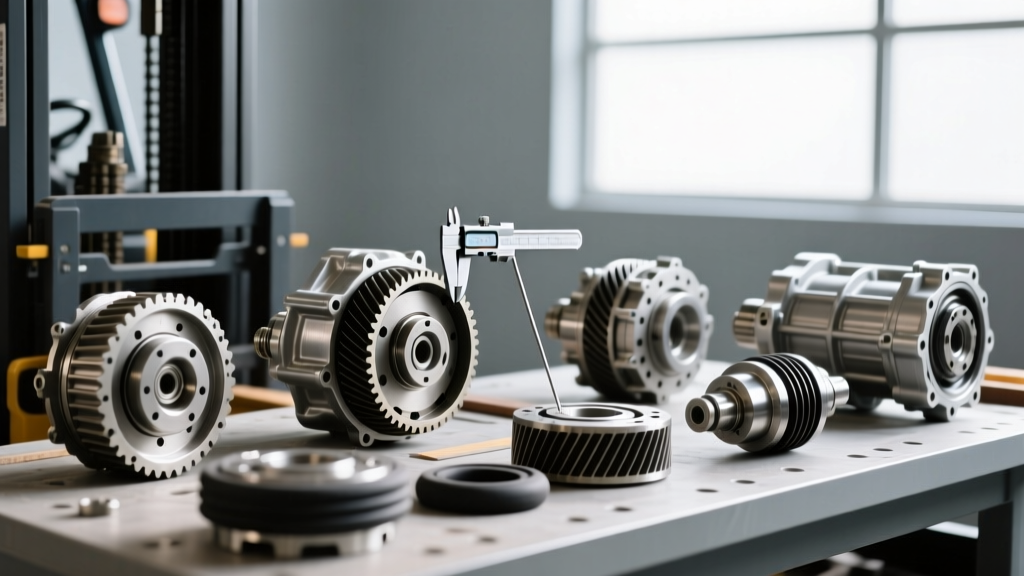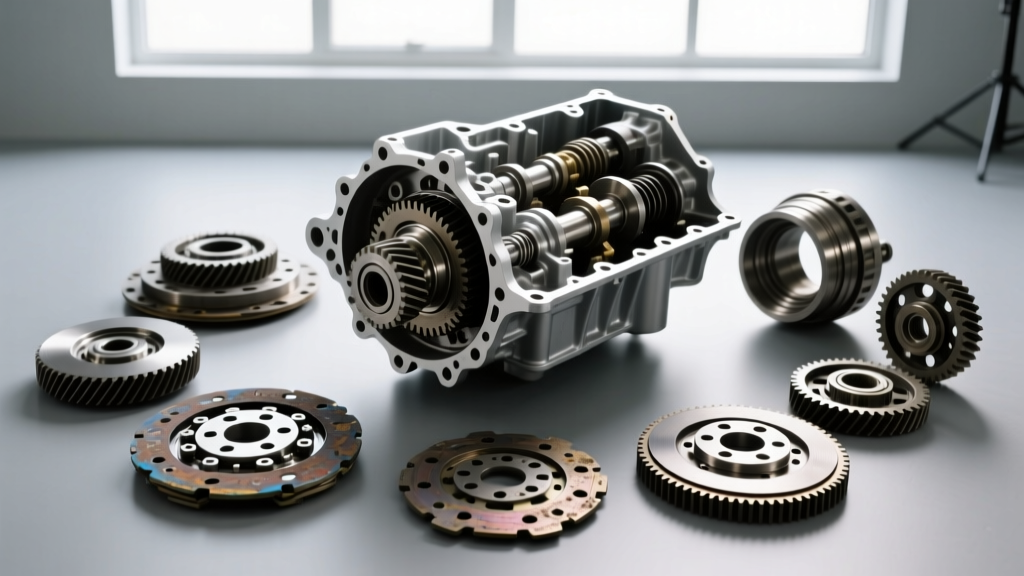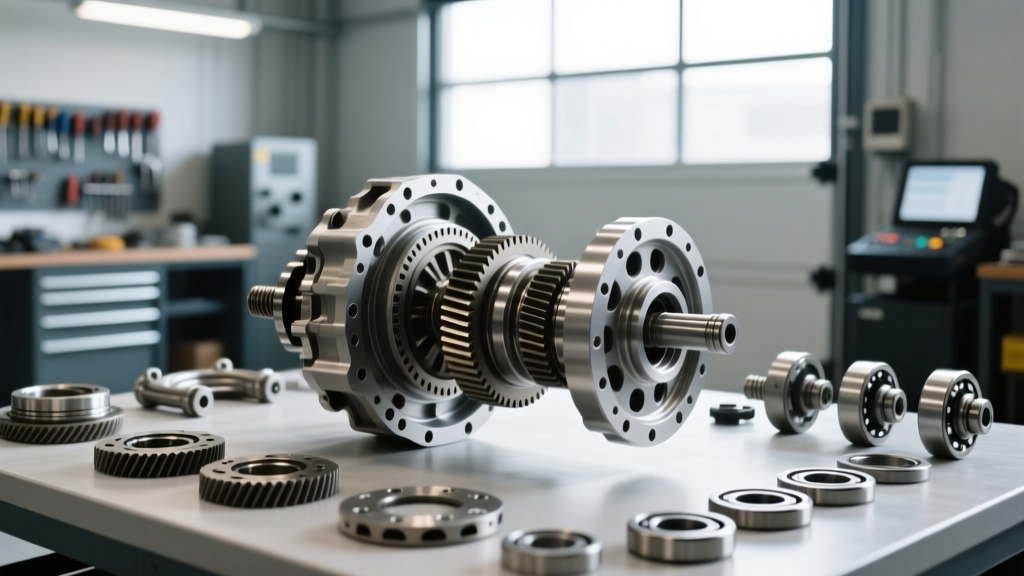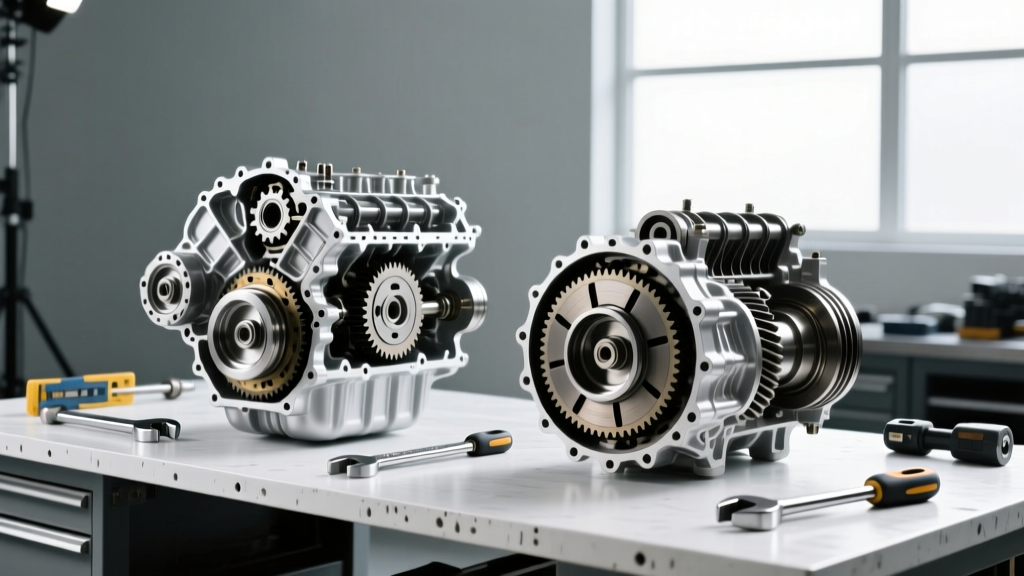
The Heavyweight Contender: Why Swap to a 4L80E?
When planning a high-horsepower engine swap or restoring a classic muscle car, builders constantly weigh their drivetrain options. While a standard 42rle transmission rebuild is an excellent, cost-effective choice for restoring a daily-driven Jeep Wrangler, Dodge Dakota, or Chrysler Sebring, it hits a hard mechanical ceiling around 300 to 350 horsepower. The Chrysler 42RLE simply lacks the physical mass, clutch volume, and gearset width required for serious performance applications.
For applications pushing 600 to 1,200 horsepower, the GM 4L80E (RPO MT1) remains the undisputed king of performance automatics. Originally designed for GM heavy-duty trucks and diesel applications, the 4L80E shares its DNA with the legendary TH400 but adds an overdrive gear and electronic control. As of 2026, the aftermarket ecosystem for the 4L80E is more robust than ever, making it the premier choice for high-horsepower swaps. This guide breaks down the cost differentials, mandatory performance upgrades, and critical assembly specifications required to build a bulletproof 4L80E.
Cost Breakdown: 4L80E Performance Rebuild vs. 42RLE
Understanding the financial commitment is crucial before tearing into a transmission case. Below is a comparative cost analysis for a professional-level rebuild versus a DIY performance build in the current market.
| Rebuild Category | 42RLE (Stock/OEM) | 4L80E (Stock Rebuild) | 4L80E (800+ HP Performance) |
|---|---|---|---|
| Core Acquisition Cost | $150 - $300 | $350 - $600 | $400 - $700 (Late '97+ Case) |
| Master Rebuild Kit (Frictions/Steels/Seals) | $180 - $250 | $250 - $350 | $350 - $500 (Raybestos Pro-Series) |
| Billet & Heavy-Duty Upgrades | N/A | $150 (Shift Kit) | $900 - $1,600 (Shafts, Sprag, Drums) |
| Torque Converter (Stall) | $250 (Stock) | $350 (Stock HD) | $600 - $1,100 (Billet Multi-Disc) |
| Standalone TCU (Required for Swaps) | N/A (OEM PCM) | N/A | $400 - $800 (Holley/PCS) |
| Total Estimated DIY Cost | $580 - $800 | $1,100 - $1,450 | $2,650 - $4,700 |
Note: Professional labor rates typically add $1,200 to $2,500 to these totals, depending on machine shop requirements for drum machining and case sleeving.
Core Upgrades for 800+ HP Reliability
A stock 4L80E will reliably handle about 450 horsepower. To push past the 800 HP threshold, you must address the factory weak points. Sourcing parts from the Sonnax 4L80E catalog and other premium manufacturers is non-negotiable for a performance build.
1. The Intermediate Sprag and Drum Assembly
The intermediate sprag is the Achilles heel of the 4L80E. Under heavy load, the factory 16-element sprag can slip, instantly destroying the sprag race and the direct clutch drum.
- The Fix: Upgrade to a 34-element intermediate sprag (Sonnax Part# 34195-01K). This requires machining the direct clutch drum and installing an inner race.
- Pro-Tip: For builds exceeding 1,000 HP, utilize a mechanical diode or a bolt-together drum setup to completely eliminate sprag failure possibilities.
2. Billet Input and Main Shafts
The factory input shaft is made from cast steel and is prone to twisting and snapping under the shock load of a trans-brake or high-stall torque converter.
- The Fix: Install a billet 300M steel input shaft (Sonnax Part# 34121-01K). Pair this with a hardened, billet main shaft to ensure the rotational force is transferred to the geartrain without torsional failure.
3. Clutch Pack Clearances and Materials
Performance builds require high-energy friction materials and precise clearances to prevent slippage without causing drag.
- Direct Clutch Pack: Use 6 to 7 Raybestos Pro-Series frictions with Kolene-coated steels. Target clearance: 0.040" to 0.060".
- Forward Clutch Pack: Target clearance: 0.050" to 0.070".
- Overdrive Clutch Pack: Target clearance: 0.040" to 0.055".
Critical Assembly Torque Specifications
Improper torque is a leading cause of post-rebuild fluid leaks and internal binding. Always use a calibrated inch-pound and foot-pound torque wrench during assembly. Below are the critical fastener specs for the 4L80E:
- Pump-to-Case Bolts (M8x1.25): 13 lb-ft (Apply medium-strength threadlocker)
- Valve Body-to-Case Bolts (M6x1.0): 97 lb-in (Do NOT overtighten; case distortion will cause valve spool binding)
- Extension Housing-to-Case Bolts: 32 lb-ft
- Bellhousing-to-Engine Block Bolts: 35 lb-ft
- Torque Converter-to-Flexplate Bolts: 46 lb-ft (Always use new Grade 8 or metric 10.9 hardware)
- Accumulator Piston Springs: Ensure the direct clutch accumulator uses the stiffest spring available (or block it entirely with a TransGo shift kit for firmer 2-3 shifts).
Real-World Failure Modes to Avoid
Even with the best Summit Racing rebuild kits, builders frequently make assembly errors that lead to catastrophic failure on the first test drive.
Lube Circuit Starvation
The 4L80E routes lube oil through the torque converter and back to the transmission to cool the clutch packs. If the converter is not fully seated into the oil pump during installation (you must feel three distinct 'clunks' when dropping the trans onto the engine), the pump gears will shatter upon startup, resulting in zero line pressure and immediate burnout of the forward clutches.
Endplay Neglect
Total geartrain endplay must be checked with a dial indicator before installing the oil pump.
- Spec: 0.010" to 0.022".
- Adjustment: Use selective thickness thrust washers located behind the output shaft and under the pump. Excessive endplay (>0.030") will cause the input shaft to walk forward under load, disengaging the direct clutch and resulting in a neutral-out condition in 3rd and 4th gear.
Line Pressure Tuning and Cooling
Unlike the hydraulic 42RLE which relies on a mechanical throttle valve (TV) cable or basic solenoid modulation, the 4L80E utilizes an Electronic Pressure Control (EPC) solenoid. When running a standalone TCU, base line pressure should be set to 160-180 PSI in forward gears, and max line pressure (280+ PSI) should be commanded during the 1-2 and 2-3 shifts to minimize clutch overlap and heat generation.
Furthermore, a performance 4L80E requires a dedicated transmission cooler capable of shedding at least 25,000 GVW of heat. Fluid capacity is approximately 13.5 quarts (dry build). Fill with a high-quality synthetic Dexron VI equivalent, such as Amsoil Signature Series, to maintain shear stability under extreme converter slip.
Final Verdict: Is the 4L80E Swap Worth the Premium?
If your project is a mild street cruiser making under 350 horsepower, a 42rle transmission rebuild remains a highly practical, budget-friendly solution that retains OEM drivability and requires no standalone computers. However, if you are building a drag car, a heavy-duty tow rig, or a boosted street machine pushing north of 600 horsepower, the 4L80E is an absolute necessity. The upfront cost of billet shafts, a 34-element sprag, and a standalone controller is easily justified by the transmission's ability to survive thousands of abuse-filled passes without requiring a teardown.