The IFS Clamshell Dilemma: Rethinking the Cooling Cover
When off-roading, towing heavy trailers, or pushing a commercial snowplow, the drivetrain of a full-size pickup endures immense mechanical stress. For Toyota owners, managing the toyota tundra front differential fluid temperatures is a critical, yet frequently misunderstood, aspect of heavy-duty maintenance. If you are searching for a bolt-on 'differential cooling cover' for your Tundra, you are about to encounter a fundamental engineering reality that separates solid-axle trucks from Toyota’s Independent Front Suspension (IFS) architecture.
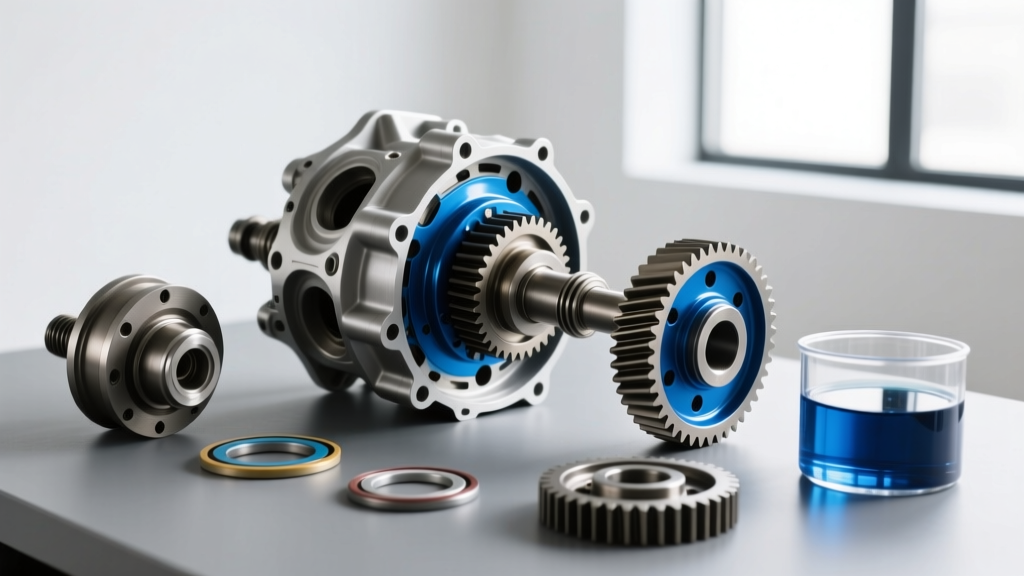
Unlike the Ford Super Duty or Ram 2500, which utilize solid front axles (like the Dana 60 or AAM 11.5) featuring removable 10-bolt or 12-bolt differential covers, the Toyota Tundra utilizes an IFS setup. Whether you are driving the 8.7-inch reverse-rotation IFS differential found in the 2007–2021 second-generation models or the updated, electronically locking IFS assembly in the 2022–2026 third-generation trucks, the front differential is a sealed clamshell and dropout design. There is no traditional stamped-steel cover to unbolt and replace with a finned aftermarket cooling cover. Therefore, achieving the thermal benefits of a 'cooling cover' requires a completely different engineering approach tailored specifically to the Tundra’s IFS geometry.
Thermal Degradation and the Heat Soak Phenomenon
The primary enemy of hypoid gear sets is localized heat generated at the ring-and-pinion mesh point. In a solid axle, the differential housing holds roughly 3.0 to 4.0 quarts of gear oil, providing a large thermal mass to absorb and dissipate heat. The Tundra’s front IFS differential, by contrast, holds a notoriously small volume of fluid—typically around 1.4 Liters (1.48 US Quarts).
This low fluid capacity means the gear oil cycles through the high-friction pinion bearing and gear mesh zone much more frequently. Under extreme loads, such as crawling in 4LO or plowing snow in 4HI, the fluid temperature can rapidly exceed 250°F (121°C). According to lubrication tribology data cited by Red Line Oil Technical Articles, the oxidation rate of standard petroleum-based gear oils doubles for every 18°F (10°C) increase in temperature above 200°F. Once oxidation begins, the fluid forms sludge, varnish, and acidic byproducts that corrode the precision-machined hypoid gear surfaces and degrade the Extreme Pressure (EP) additives required to prevent metal-on-metal welding.
Factory Fill vs. Synthetic Thermal Thresholds
Toyota’s factory fill is typically a Genuine Hypoid Gear Oil SX GL-5 75W-85. While this fluid provides excellent cold-weather flow and meets the American Petroleum Institute (API) GL-5 specification for sliding hypoid friction, it is not optimized for sustained high-thermal loads. When the fluid shears and thins out under heavy towing, the protective hydrodynamic film between the ring and pinion gears collapses, leading to micro-pitting and premature bearing failure.
Engineering Workarounds: Cooling the Tundra Front Diff
Since you cannot simply bolt on a Mag-Hytec or PML finned cover, Tundra owners and fleet mechanics must rely on alternative thermal management strategies to replicate the cooling effects of an upgraded differential cover.
1. Finned Dropout Housings and Thermal Skid Plates
The most direct mechanical equivalent to a cooling cover on a Tundra is upgrading the differential dropout carrier or utilizing a thermal-conductive skid plate. The dropout housing (the section that slides into the front of the clamshell and houses the pinion gear) is the hottest part of the assembly. Custom aftermarket aluminum dropout housings featuring deep, directional cooling fins can increase the surface area for convective heat transfer by up to 40%.
Alternatively, heavy-duty aluminum skid plates (such as those from RCI or custom fabricators) can be mated directly to the lower clamshell housing using a high-temperature thermal interface compound. This effectively turns the entire surface area of the skid plate into a massive, finned heat sink, drawing thermal energy away from the 1.4L fluid sump and dissipating it into the high-velocity undercarriage airflow.
2. Active External Gear Oil Cooler Loops
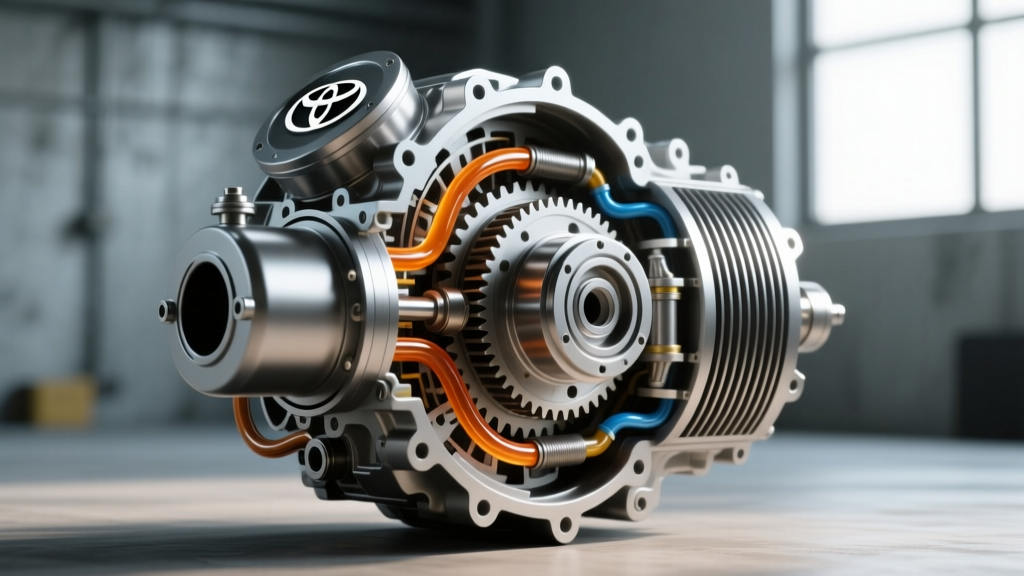
For extreme-duty applications like commercial snowplowing or desert racing, passive cooling is insufficient. Mechanics adapt external gear oil cooler loops using a high-temp, low-flow gear pump (such as a modified Melling or Pierburg pump). The system draws fluid from the differential via a modified drain plug, routes it through a stacked-plate transmission cooler mounted in front of the radiator or A/C condenser, and returns it through the fill port. While complex and expensive, active cooling can drop sustained operational temperatures by 60°F to 80°F, entirely eliminating heat soak.
3. High-Thermal Synthetic Fluids (The Chemical Cover)
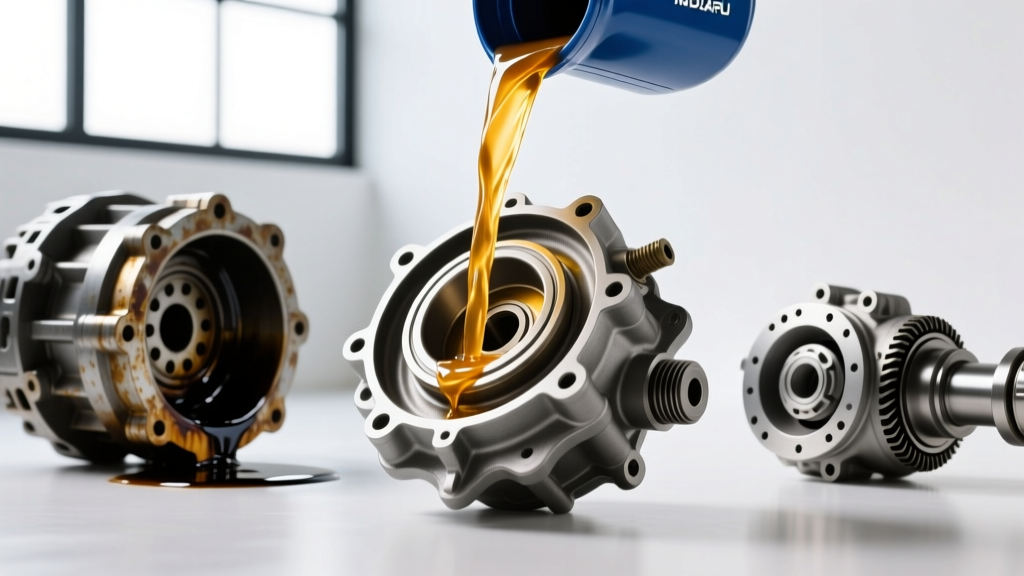
If physical cooling modifications are out of budget, upgrading the fluid itself acts as a 'chemical cooling cover.' Switching to a Polyolester (POE) or high-end Polyalphaolefin (PAO) synthetic 75W-90 GL-5 gear oil drastically raises the thermal breakdown threshold. Premium synthetics maintain their viscosity index and film strength well past 300°F (149°C), ensuring that even when the small IFS sump experiences heat soak, the ring and pinion remain protected.
Comparative Analysis: IFS Cooling Methods
| Cooling Strategy | Est. Temp Reduction | Cost Range (USD) | Installation Complexity |
|---|---|---|---|
| POE/PAO Synthetic 75W-90 Upgrade | +50°F Threshold Buffer | $40 - $80 | Low (Standard Fluid Swap) |
| Thermal-Conductive Aluminum Skid | 15°F - 25°F Drop | $300 - $600 | Medium (Bolt-on + Thermal Paste) |
| Finned Aftermarket Dropout Housing | 25°F - 40°F Drop | $800 - $1,500 | High (Requires Diff Teardown) |
| Active External Pump & Cooler Loop | 60°F - 80°F Drop | $1,200 - $2,500 | Extreme (Custom Fabrication) |
Precision Service: Torque Specs and Fill Procedures
Whether you are installing an external cooler loop or simply performing a routine fluid exchange to maximize thermal stability, precision is mandatory. The Toyota Technical Information System (TIS) outlines strict parameters for servicing the IFS front differential to prevent cross-threading and fluid leaks that can lead to catastrophic dry-running failures.
- Capacity Verification: The front IFS differential holds approximately 1.4L (1.48 Quarts). Always purchase 2 quarts of high-quality GL-5 75W-90 synthetic gear oil.
- Plug Removal Sequence: ALWAYS remove the FILL plug first before removing the DRAIN plug. If the fill plug is seized or stripped, you will be left with an empty differential and no way to refill it.
- Socket Sizing: Depending on your specific model year, the drain and fill plugs typically require a 24mm socket or a 10mm hex (Allen) bit. Use a 6-point socket or precision hex bit to prevent rounding the soft aluminum plugs.
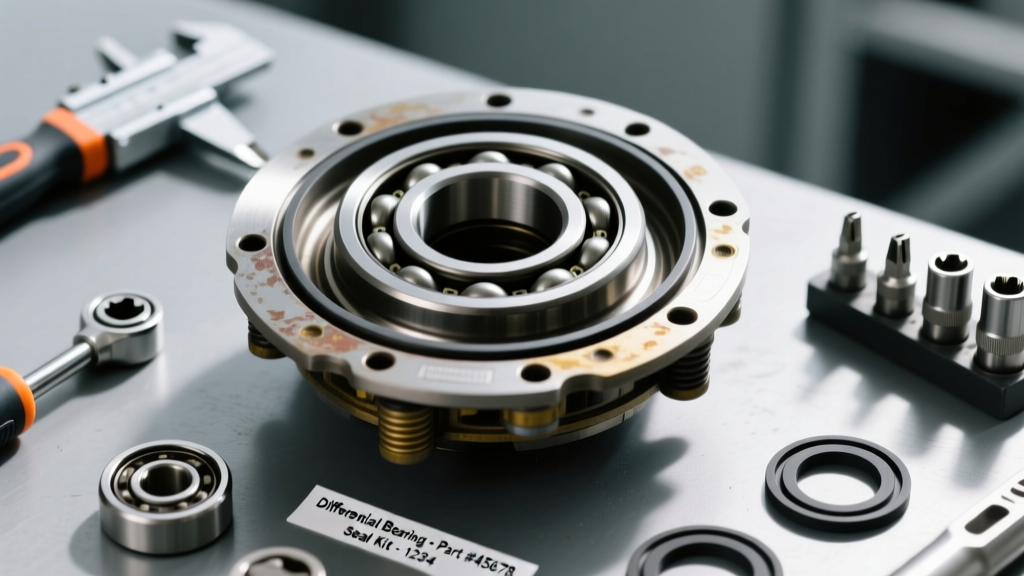
- Crush Washers: Never reuse the factory aluminum crush washers. Replace them with new Toyota OEM gaskets (typically Part # 90430-24003 for 24mm plugs, though verify with your local dealer for your specific VIN).
- Torque Specifications: Both the drain and fill plugs must be torqued to exactly 30 ft-lbs (41 Nm). Over-torquing will crack the aluminum clamshell housing or distort the threads, leading to persistent weeping.
- ADD Actuator Awareness: The Automatic Disconnecting Differential (ADD) actuator is mounted directly to the front diff housing. When cleaning the exterior of the diff or installing thermal skids, ensure you do not bend the ADD wiring harness or introduce moisture into the actuator connector, as ADD failure is a common Tundra weak point.
Expert Verdict: Protecting the IFS Investment
The Toyota Tundra’s front IFS differential is a marvel of packaging and ride comfort, but its small fluid capacity makes it inherently vulnerable to thermal degradation under heavy loads. Because the traditional 'bolt-on cooling cover' does not exist for this platform, owners must be proactive. For 90% of Tundra owners who tow, trail-ride, or plow, the most cost-effective and reliable 'cooling cover' strategy is a strict 15,000-mile service interval using a top-tier synthetic 75W-90 POE gear oil, paired with a heavy-duty aluminum skid plate to increase passive convective surface area. By understanding the unique thermal dynamics of the IFS clamshell, you can ensure your Tundra’s front drivetrain survives the most punishing environments well past the 200,000-mile mark.