The Physics of Shear: Towing Loads vs. Rally Lateral Gs
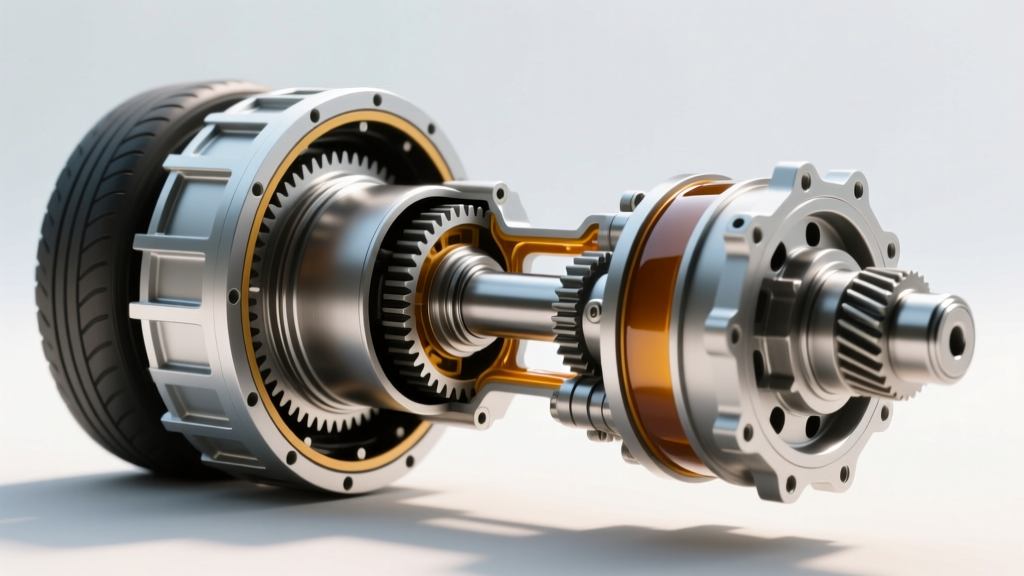
When automotive enthusiasts discuss drivetrain longevity, the conversation often splits into two distinct camps: heavy-hauling trucks and high-performance all-wheel-drive machines. At first glance, a 3/4-ton diesel pickup and a turbocharged rally car share little in common. However, the fundamental enemy of both is the same—extreme gear oil shear and thermal breakdown. While a standard Subaru Impreza differential fluid change focuses on protecting the R180 rear and helical front differentials from high-RPM lateral G-loads and rapid thermal cycling, truck and SUV owners face a different beast: extreme low-speed torque multiplication, heavy towing shear, and sustained high-temperature cruising.
As of 2026, modern truck towing packages and SUV off-road trims (like the Ford F-250 Tremor or Chevy Silverado ZR2) generate massive low-end torque that places immense stress on the ring and pinion gear sets. In this performance and upgrade guide, we will dissect the metallurgy, fluid chemistry, and service protocols required to keep heavy-duty differentials alive, using the high-strung AWD benchmarks of the Subaru Impreza WRX/STI as a comparative baseline for severe-duty maintenance.
2026 Performance Fluid Matrix: Heavy-Duty vs. AWD
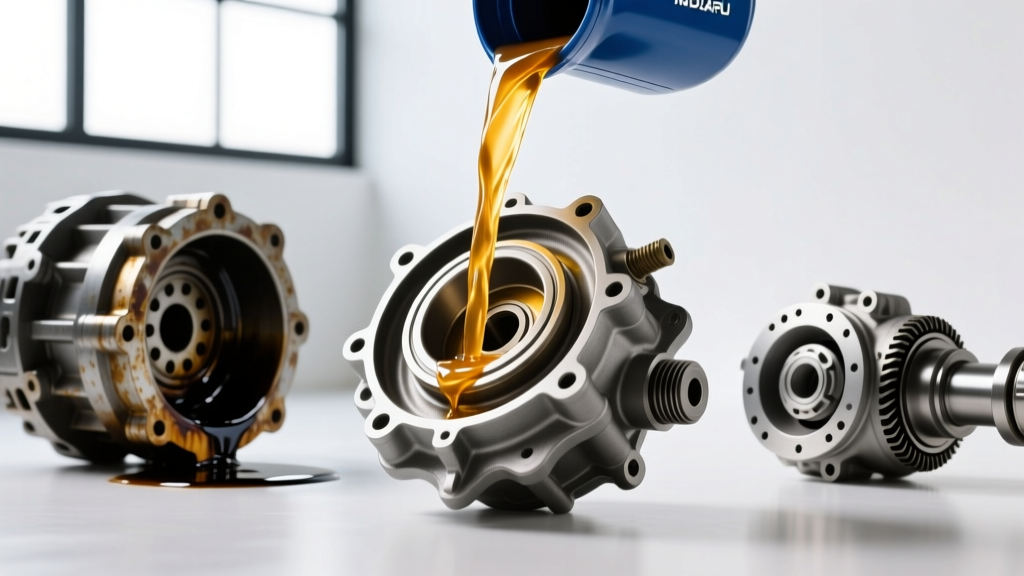
Selecting the correct gear oil is not merely about matching a viscosity grade; it is about understanding the additive package required for your specific friction modifier and load-bearing needs. Below is a comparative matrix of top-tier synthetic gear oils used in both heavy-duty truck axles and performance AWD systems.
| Fluid Brand & Type | Viscosity | Additive Chemistry | Best Application | Est. Cost (Qt) |
|---|---|---|---|---|
| AMSOIL Severe Gear 75W-90 | 75W-90 | Sulfur-Phosphorus / Borate | Heavy Towing, Dana 60, AAM 11.5 | $23.99 |
| Motul Gear 300 75W-90 | 75W-90 | Ester / Sulfur-Phosphorus | Subaru R180, High-RPM AWD Diffs | $34.50 |
| Red Line HeavyWeight ShockProof | 75W-250 (Film) | Solid Dispersant / Polyol Ester | Drag Racing, Rock Crawling, Lockers | $28.95 |
| Valvoline SynPower Full Synthetic | 75W-140 | Standard EP Additives | Commercial Fleet, High-Heat Towing | $14.50 |
Expert Insight: If your truck or SUV is equipped with an aftermarket locking differential (such as an ARB Air Locker or Eaton Detroit Locker), standard limited-slip friction modifiers can cause chatter or improper engagement. Red Line ShockProof is often the go-to upgrade for locked truck axles due to its unique solid-dispersant cushioning effect, which absorbs the shock loads of low-speed crawling.
Additive Chemistry: Why 'Lifetime' Fluid is a Myth
Many OEM manufacturers label their truck and SUV differential fluids as 'lifetime' under normal driving conditions. However, the moment you attach a 10,000-pound trailer or spend hours crawling in 4-Low, the fluid temperature easily exceeds 250°F (121°C). At these temperatures, the sulfur-phosphorus extreme pressure (EP) additives begin to deplete, and the base oil oxidizes.
According to AMSOIL's engineering data, synthetic gear oils with advanced borate ester additives maintain their film strength significantly longer under high-shear conditions than conventional petroleum-based oils. In contrast, the Subaru Impreza differential fluid change interval is often dictated by the rapid degradation of friction modifiers required for the viscous or helical center differentials, which are highly sensitive to fluid viscosity shifts. Truck axles, utilizing large hypoid gear sets, rely more heavily on the physical film strength of the 75W-90 or 75W-140 oil to prevent metal-on-metal contact on the ring gear's drive side.
Heavy-Duty Truck & SUV Differential Service Protocol
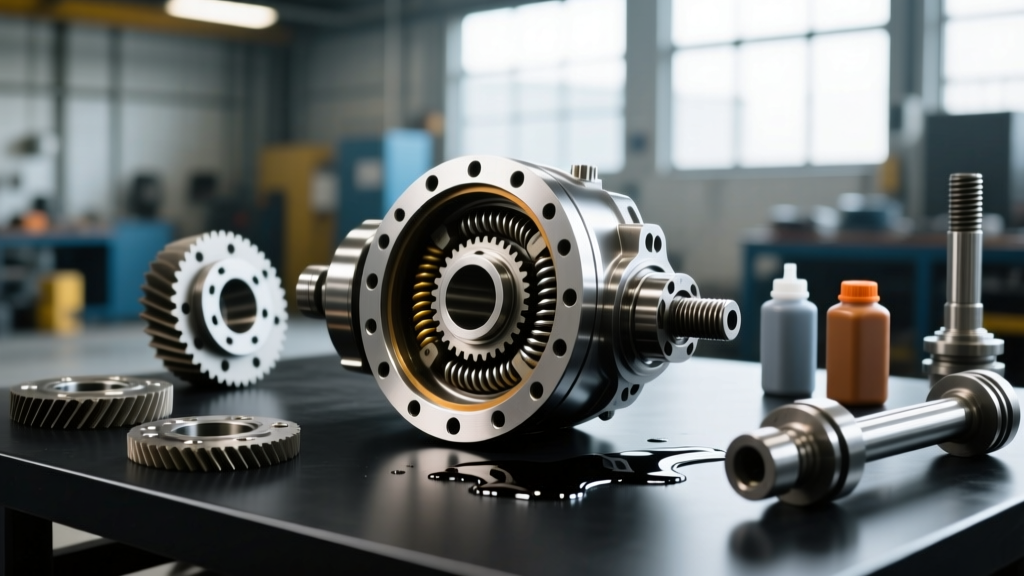
Upgrading your truck's differential fluid requires precision. Unlike a simple drain-and-fill on a passenger car, heavy-duty axles like the Dana Spicer 60, Dana 80, or GM AAM 11.5-inch require a complete teardown, cleaning, and resealing process.
Step 1: Teardown and Metallurgical Inspection
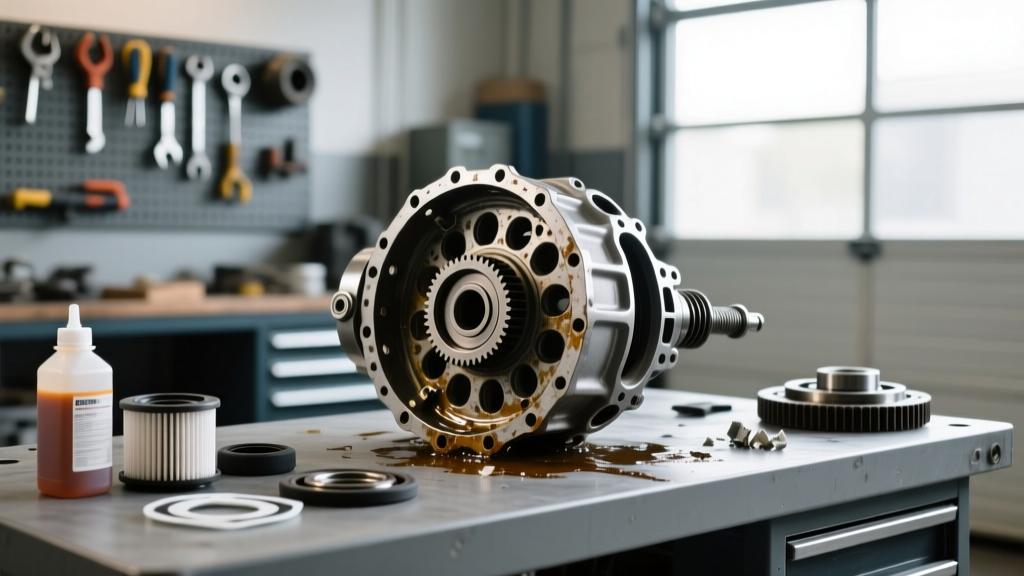
Remove the differential cover bolts using a 3/8-inch drive torque wrench set to break them loose evenly to prevent warping the cover flange. Once the cover is dropped, inspect the fluid for metallic glitter. While a fine, silty metallic paste on the magnetic drain plug is normal for a gear set with 50,000 miles, chunky metal shards indicate bearing cage failure or ring-and-pinion spalling.
Use a dedicated brake cleaner and lint-free shop towels to clean the differential housing, the cover, and the internal magnets. Never use a wire wheel on the internal casting, as loose bristles can destroy pinion bearings.
Step 2: RTV Selection and Torque Sequences
For heavy-duty truck applications, paper or cork gaskets are obsolete. Use a high-temp, oil-resistant RTV silicone such as Permatex Ultra Black (Part #80050). Apply a continuous 1/4-inch bead around the cover, ensuring you circle every bolt hole to prevent vacuum leaks and water ingestion during deep water fording.
Reference the Dana Spicer official service manuals for exact torque specifications. For a standard Dana 60 rear differential, the cover bolts must be torqued to exactly 35 lb-ft in a crisscross pattern. For the GM AAM 11.5-inch, the spec is typically 30 lb-ft. Over-torquing these bolts will warp the thin stamped-steel or cast-aluminum covers, leading to chronic leaks and gear misalignment under load.
What Truck Owners Can Learn from a Subaru Impreza Differential Fluid Change
While the scale and torque figures differ wildly, truck owners can adopt several best practices from the rally and performance AWD community:
- Thermal Cycling Awareness: Just as a Subaru Impreza WRX owner changes their rear R180 differential fluid every 30,000 miles due to track-day heat cycles, truck owners who frequently tow heavy loads through mountain passes should abandon the 100,000-mile OEM interval and adopt a strict 30,000 to 50,000-mile severe-duty fluid change schedule.
- Fill Plug Verification: A cardinal rule in any Subaru Impreza differential fluid change is to always remove the fill plug before removing the drain plug. If the fill plug is seized or stripped, you will be left with an empty differential and no way to refill it. This rule is equally critical for heavy-duty truck axles, where rusted, overtightened fill plugs can ruin a weekend towing trip.
- Friction Modifier Precision: Performance AWD systems require exact volumes of limited-slip friction modifier to prevent clutch-pack chatter. Similarly, if your SUV features a factory electronic limited-slip differential (eLSD), such as those found in modern Ford Raptors or Chevy ZR2s, you must use the exact OEM-specified friction modifier additive (e.g., Motorcraft XL-3 or GM ACDelco 10-4017) alongside your synthetic 75W-140 base oil.
Cost Analysis: Dealership vs. Performance DIY
Upgrading your differential fluid is one of the highest-ROI maintenance tasks you can perform on a truck or SUV. Here is a breakdown of the costs associated with a heavy-duty rear differential service in 2026:
| Service Route | Fluid Used | Labor / Shop Fees | Total Estimated Cost |
|---|---|---|---|
| OEM Dealership | Standard 75W-140 Synthetic | $120 - $180 | $220 - $320 |
| Independent 4x4 Shop | AMSOIL / Royal Purple | $90 - $130 | $180 - $250 |
| Performance DIY | Motul 300V / Red Line | $0 (Your Time) | $80 - $110 |
By performing the service yourself, you not only save money but also gain the invaluable opportunity to inspect your ring and pinion wear patterns, check the axle shaft end-play, and ensure your differential cover magnets are functioning correctly. Whether you are prepping your truck for a cross-country towing expedition or maintaining a weekend rally car, respecting the physics of gear oil shear is the key to drivetrain survival.