Why the Truetrac Differential is the Ultimate Truck and SUV Upgrade
When pushing a truck or SUV to its limits—whether towing a 7,000-lb trailer up a steep grade, navigating low-traction off-road trails, or launching a heavy load—the factory open differential is almost always the drivetrain's weakest link. For drivers seeking a massive traction upgrade without the harsh, unpredictable engagement of a full locking locker, the Eaton Detroit Truetrac differential remains the gold standard in 2026. Unlike traditional clutch-type limited-slip differentials (LSDs) that rely on friction plates and wear out over time, the Truetrac utilizes a helical gear design to multiply torque to the wheel with traction. This mechanical torque-biasing system is virtually maintenance-free internally, making it the ultimate performance upgrade for daily-driven trucks, overlanding SUVs, and dedicated tow rigs.
Engineering Advantage: Helical Gears vs. Clutch Packs
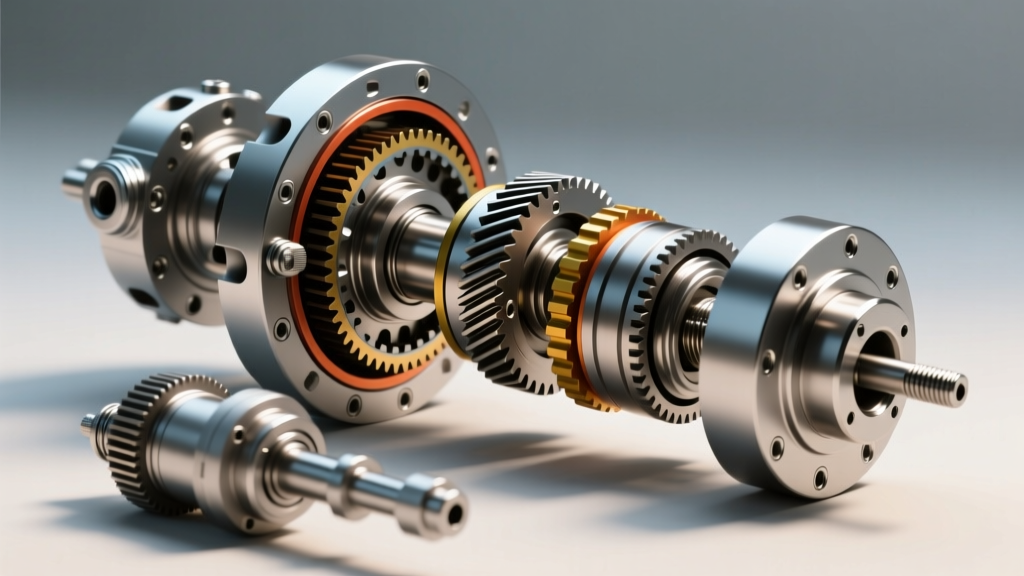
To understand why the Truetrac differential dominates the heavy-duty and off-road aftermarket, you must look at its internal architecture. The unit employs parallel-axis helical gears that act as torque multipliers. When one wheel loses traction, the helical gears bind against the differential case, transferring torque to the wheel with grip. Eaton engineers this system with a torque bias ratio (TBR) typically around 3.5:1. This means the Truetrac can send up to 3.5 times more torque to the gripping wheel compared to the slipping wheel.
Because there are no clutch packs to degrade, burn out, or require periodic rebuilding, the Truetrac is effectively a "fill it and forget it" component. This is a massive advantage for fleet trucks, work-site vehicles, and overland builds where reliability in remote locations is non-negotiable.
Differential Upgrade Comparison Chart
| Feature | Truetrac (Helical Gear) | Clutch-Type LSD (e.g., Posi) | Automatic Locker (e.g., Detroit) |
|---|---|---|---|
| Operation Mechanism | Gear-driven, torque-sensing | Friction clutches, preload springs | Ratcheting locking mechanism |
| Friction Modifier Needed? | No | Yes (Required for chatter prevention) | No |
| Street Manners | Smooth, completely transparent | Good initially, degrades as clutches wear | Poor (clunking, ratcheting in turns) |
| Internal Maintenance | None (Gears do not wear out) | High (Clutch packs require replacement) | Moderate (Springs and pins fatigue) |
| Avg. 2026 Cost (Part Only) | $650 - $890 | $450 - $650 | $350 - $550 |
Application Guide: Popular Truck and SUV Fitments
When ordering your Truetrac differential, verifying your exact axle housing, spline count, and gear ratio is critical. Here are the most common applications for modern trucks and SUVs:
- GM 8.6" (Silverado/Sierra 1500, Tahoe/Yukon): Requires Eaton Part #911A5880 (30-spline). Ideal for half-ton trucks that see moderate towing and street use.
- Dana 44 (Jeep Wrangler JL/JT, Ford F-150 Front): Requires Eaton Part #911A4692 (30-spline). A massive upgrade for front-axle traction in off-road SUVs without the steering bind associated with full lockers in 4WD.
- Ford 8.8" (Ranger, Explorer, F-150 Rear): Requires Eaton Part #911A5623 (31-spline). The 8.8" is legendary for its strength, and pairing it with a Truetrac creates a highly capable, reliable street/trail combo.
- GM 9.5" / 10.5" (2500HD/3500HD Trucks): For heavy-duty towing, the 14-bolt or 9.5" semi-floating axles benefit immensely from the Truetrac's ability to keep both rear tires pulling evenly on wet or icy boat ramps.
Installation Torque Specs and Axle Preparation
While the Truetrac itself requires no internal assembly or adjustment, the installation process—specifically setting up the ring and pinion and carrier bearings—dictates the longevity of your axle. Improper setup will destroy a $3,000 axle assembly in under 5,000 miles. Always use a dial indicator and inch-pound torque beam wrench during setup.
Carrier and Ring Gear Torque Specifications
When mating your existing (or new) ring gear to the Truetrac case, cleanliness and threadlocking compound are mandatory. Use Red Loctite 272 on all ring gear bolts. Never use impact wrenches to torque ring gear or carrier cap bolts.
- Dana 44: Carrier bearing cap bolts: 60-70 lb-ft. Ring gear bolts: 70-85 lb-ft.
- GM 8.6" / 9.5": Carrier bearing cap bolts: 60 lb-ft. Ring gear bolts: 70-85 lb-ft.
- Ford 8.8" / 9.75": Carrier bearing cap bolts: 70-85 lb-ft. Ring gear bolts: 70-85 lb-ft.
Pro-Tip: Always mark the carrier bearing caps before removal. Ford and Dana axle caps are line-bored at the factory and are not interchangeable. Installing them on the wrong side or rotated 180 degrees will cause severe carrier bind and catastrophic bearing failure.
Fluid Selection: The Lifeblood of Your Truetrac
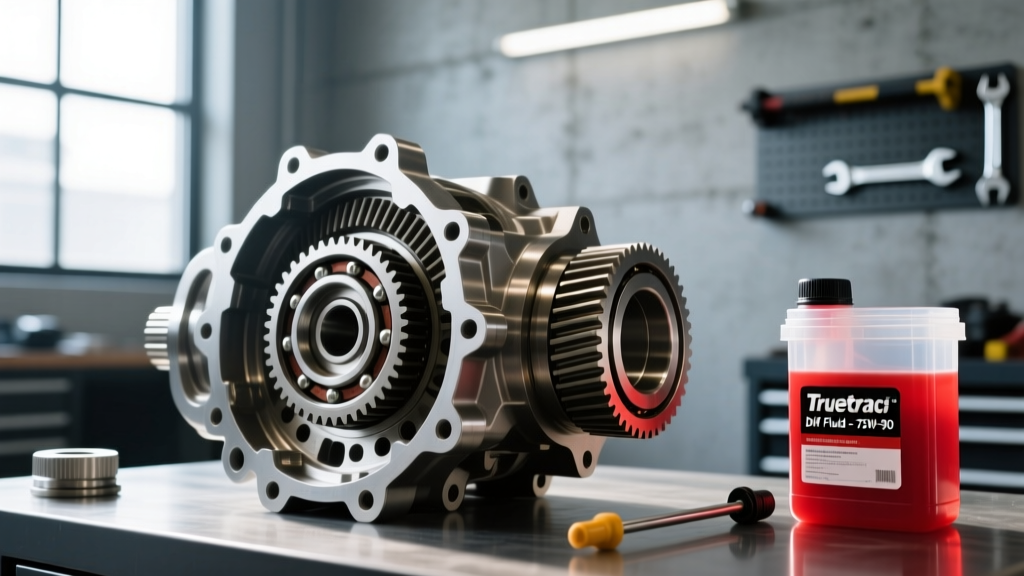
One of the most significant advantages of the Truetrac differential in daily-driven trucks and SUVs is its fluid requirements. Unlike clutch-based limited-slip differentials (such as the Eaton Positraction or Auburn LSD), the Truetrac's helical gear design requires no special friction modifiers. In fact, adding limited-slip friction modifiers to a Truetrac can reduce the coefficient of friction on the gear teeth, slightly diminishing its torque-biasing efficiency.
Recommended Gear Oil Viscosities for 2026
As of 2026, modern synthetic gear oils offer unprecedented shear stability for high-heat towing environments. Your viscosity choice should be dictated by your vehicle's Gross Vehicle Weight Rating (GVWR) and usage profile.
- 75W-90 Synthetic: The standard for daily driving, commuting, and light-duty off-roading. Offers excellent cold-weather flow and fuel economy. (Recommended for Jeep Wranglers, Ford Rangers, and half-ton SUVs).
- 75W-140 Synthetic: Mandatory for heavy towing, commercial use, and high-horsepower applications. The thicker fluid maintains a protective hydrodynamic film over the hypoid gears and Truetrac helical gears when axle temperatures exceed 250°F under sustained load. (Recommended for F-250s, Silverado 2500HDs, and dedicated rock crawlers).
Top-tier fluid recommendations include AMSOIL Severe Gear Synthetic, Red Line 75W90 or 75W140, and Mobil 1 Synthetic Gear Lube. Expect to spend between $60 and $90 per axle for premium synthetic fluid.
Common Truck Axle Fluid Capacities
Always fill the differential until the fluid level is even with the bottom of the fill hole on the differential cover. However, knowing the baseline capacity helps when purchasing fluid:
- Dana 44 (JK/JL Wrangler): ~2.0 - 2.5 Quarts
- Ford 8.8" (Explorer/Ranger): ~1.5 - 2.0 Quarts
- GM 9.5" (14-Bolt Semi-Floating): ~2.5 - 3.0 Quarts
- Ford 10.5" (Super Duty Rear): ~3.5 - 4.0 Quarts
The 500-Mile Break-In and Heat Cycle Protocol
While the Truetrac differential itself does not require a mechanical "break-in" like a clutch pack, the ring and pinion gears and the new carrier bearings absolutely do. Hypoid gear sets generate immense localized friction during their initial mating phase. Failure to properly heat-cycle the axle will result in glazed gear oil, premature bearing wear, and a permanent high-pitched whine.
Step-by-Step Break-In Procedure
- The First 15 Miles: Drive under 45 MPH with no load and no towing. The differential will generate significant heat. This is normal.
- The Cool-Down: Park the vehicle and allow the axle housing to cool completely to ambient temperature (minimum 2 hours). This allows the gear metal to normalize and the oil to settle.
- The Next 500 Miles: Vary your speed between 30 and 65 MPH. Avoid steady-state highway cruising, which can cause localized heat spots on the ring gear. Do not tow any trailers during this window.
- The First Fluid Change (Critical): At exactly 500 miles, drain the differential fluid. You will notice a metallic paste on the drain plug magnet. This is the microscopic lapping compound and break-in metal shavings from the new ring and pinion. Refill with fresh synthetic gear oil.
Long-Term Maintenance Intervals for Heavy-Duty Use
Once the break-in fluid is replaced, the Truetrac differential requires very little internal attention. However, the fluid itself degrades over time due to shear forces and moisture intrusion (especially if you submerge your axles in water during off-road excursions).
- Normal Duty (Commuting, Highway): Change fluid every 50,000 miles.
- Severe Duty (Towing >5,000 lbs, Off-Roading, Plowing): Change fluid every 30,000 miles or once a year.
- Water Submersion: If the axle breather tube is submerged in water, the differential creates a vacuum as it cools, sucking water past the axle seals and into the housing. If your fluid looks like a chocolate milkshake, drain and refill immediately to prevent catastrophic rust and gear pitting.
Diagnosing Truetrac Noise vs. Ring and Pinion Whine
A common concern among first-time Truetrac owners is noise diagnosis. Because the Truetrac uses helical gears, it can occasionally produce a faint, low-frequency hum under light throttle or deceleration, especially when paired with aftermarket ring and pinion sets. However, it is vital to distinguish between normal gear noise and failure symptoms.
- Coast-Down Whine: A high-pitched whine when letting off the throttle usually indicates excessive ring and pinion backlash or an improper gear contact pattern (too close to the toe). This is an installation error, not a Truetrac defect.
- Cornering Clunk: The Truetrac should be completely silent and smooth around corners. If you hear a mechanical "clunk" or binding sensation while turning at low speeds, check your axle shaft splines for wear, or verify that you did not accidentally add a limited-slip friction modifier to the fluid, which can alter the gear binding characteristics.
- High-Speed Vibration: The Truetrac is a precision-machined, balanced unit. If you experience driveline vibration at speeds over 60 MPH, the issue is likely a bent axle shaft, worn pinion yoke, or improper carrier bearing preload, not the differential itself.
Upgrading to a Truetrac differential is one of the most effective, reliable, and low-maintenance modifications you can make to your truck or SUV's drivetrain. By adhering to strict torque specifications, utilizing high-quality synthetic gear oils without friction modifiers, and respecting the 500-mile heat-cycle break-in protocol, your axle assembly will deliver decades of flawless, traction-multiplying performance.