The Anatomy of a Heavy-Duty Drivetrain Layout
When evaluating a modern truck or SUV drivetrain layout, the engineering priorities shift dramatically compared to passenger vehicles. While a sedan prioritizes NVH (Noise, Vibration, and Harshness) and fuel economy, a body-on-frame truck or heavy-duty SUV must manage extreme torsional stress, high static loads, and severe articulation angles. Whether you are maintaining a fleet of 2026 heavy-duty pickups or prepping a full-size SUV for overlanding, understanding the precise specifications of your drivetrain components is non-negotiable.
In this expert guide, we dissect the critical components that define a robust truck and SUV drivetrain layout, providing actionable torque specifications, fluid capacities, and failure-point diagnostics that dealership service manuals often gloss over.
Transfer Case Dynamics: Chain vs. Gear Driven
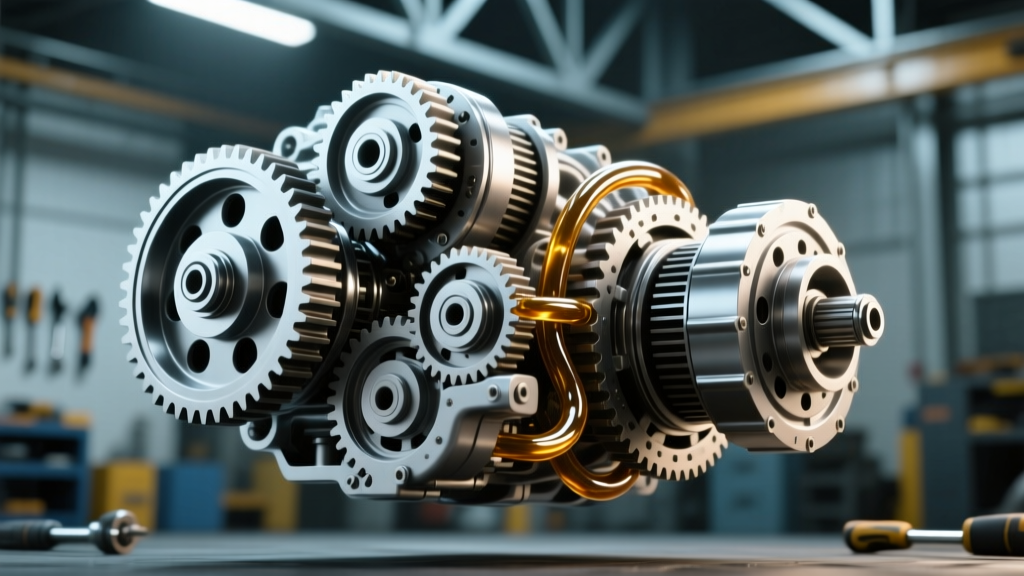
The transfer case is the heart of any 4WD drivetrain layout. In modern 3/4-ton and 1-ton trucks, you will predominantly encounter two architectures: chain-driven (like the BorgWarner 4485 found in GM HDs) and gear-driven (like the New Venture/NV271 in Ram Heavy Duty models).
BorgWarner 4485 (GM 2500/3500HD)
This chain-driven unit is lightweight and quiet but susceptible to chain stretch under sustained heavy towing. The OEM Morse chain operates in a bath of Auto-Trak II fluid (GM P/N 88900402). A common failure mode is the pump rub issue, where the magnesium housing wears down from the aluminum pump gear, leading to catastrophic fluid loss. Installing an aftermarket pump rub kit (typically $45-$65) is a mandatory best practice during any transfer case teardown.
- Fluid Capacity: 2.0 Quarts (Auto-Trak II or equivalent synthetic)
- Output Shaft Nut Torque: 148 lb-ft (Rear Yoke)
- Common Failure: Encoder motor failure (P/N 12577412) causing neutral drop-outs.
NV271 / NV273 (Ram / Ford Super Duty)
The NV271 is a gear-driven, part-time transfer case renowned for its brute strength. Because it relies on helical cut planetary gears rather than a chain, it handles massive torque multiplication without stretching. However, the shift motor and internal synchro rings require precise maintenance.
- Fluid Capacity: 2.0 Liters (Mopar ATF+4 or equivalent)
- Output Shaft Nut Torque: 250 lb-ft
- Expert Tip: Never tow a vehicle with an NV271 in neutral without disconnecting the rear driveshaft; the output shaft bearings rely on splash lubrication from the rotating mainshaft.
Axle Assemblies and Differential Setup
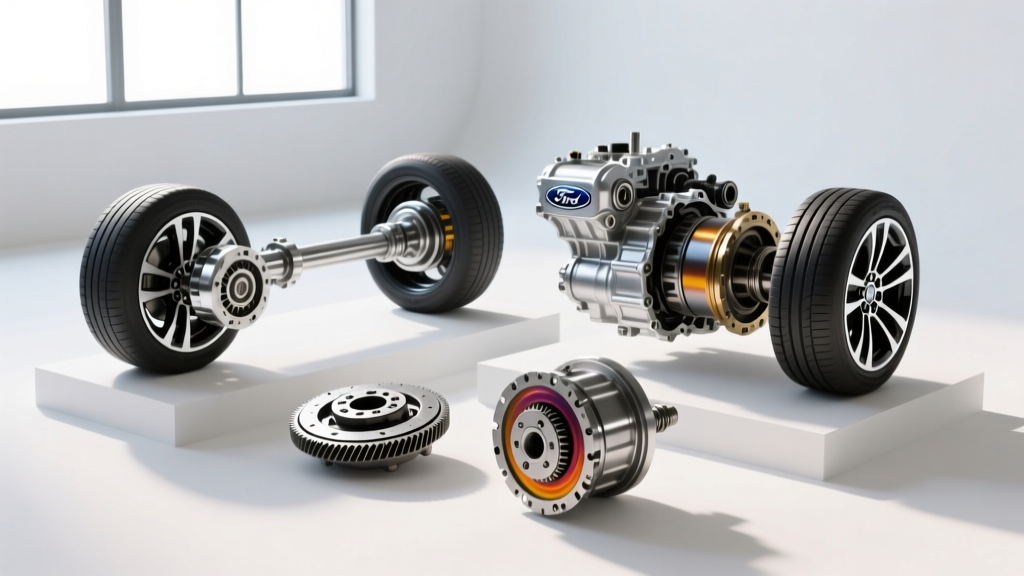
The rear axle dictates the towing limit and durability of your truck's drivetrain layout. The AAM (American Axle & Manufacturing) 11.5-inch ring gear (found in Ram 2500/350 and GM 2500HD) and the Dana 60 are the industry benchmarks.
Setting up an AAM 11.5 or Dana 60 requires micrometer-level precision. When replacing a ring and pinion, the gear backlash must be strictly maintained to prevent whine and tooth fracture under load.
- Target Backlash (AAM 11.5): 0.006' to 0.010' (inches)
- Pinion Bearing Preload (Used Bearings): 15 to 25 in-lbs of rotating torque
- Pinion Bearing Preload (New Bearings): 25 to 40 in-lbs
- Carrier Bearing Cap Torque: 85 lb-ft (Always reuse original caps in their exact orientation; they are line-bored with the housing).
For heavy towing, upgrading to a 75W-140 full synthetic gear oil (such as AMSOIL Severe Gear) provides a thicker hydrodynamic film at the ring and pinion contact patch, where temperatures can easily exceed 250°F on 6% highway grades.
Driveshaft Angles and U-Joint Sizing
A lifted suspension completely alters the drivetrain layout geometry, introducing destructive harmonic vibrations if U-joint operating angles are ignored. The cardinal rule of driveshaft phasing is that the front and rear U-joint operating angles must be within 1 degree of each other, and ideally sit between 1.5 and 3 degrees. Angles below 1 degree cause the needle bearings to brinell the cross trunnions due to lack of oscillation, while angles above 5 degrees drastically reduce U-joint RPM capacity.
Spicer U-Joint Sizing for Heavy Duty Trucks
Upgrading from a Spicer 1350 to a Spicer 1480 series U-joint is a common best practice for trucks pushing over 800 lb-ft of torque. According to Dana Spicer engineering guidelines, the 1480 series offers a 30% increase in torsional yield strength over the 1350.
- Spicer 1350 Cap Diameter: 1.188 inches
- Spicer 1480 Cap Diameter: 1.313 inches
- Strap Bolt Torque (1480): 70 lb-ft (using Grade 8 hardware)
Heavy-Duty Drivetrain Component Matrix
The following matrix outlines critical specifications for the most common heavy-duty truck platforms, serving as a quick-reference for drivetrain layout audits and rebuilds.
| Component | Platform / Application | Fluid / Spec | Critical Torque / Measurement |
|---|---|---|---|
| NV271 Transfer Case | Ram 2500/3500 (2003-Present) | ATF+4 (2.0L) | Output Yoke Nut: 250 lb-ft |
| AAM 11.5 Axle | GM/Ram 3/4 & 1-Ton | 75W-90 Synthetic (3.8L) | Backlash: 0.006' - 0.010' |
| Spicer 1480 U-Joint | Modified HD Trucks / Lifted SUVs | Mobil 1 Synthetic Grease | Strap Bolts: 70 lb-ft |
| BorgWarner 4485 | GM 2500/3500HD (Allison Equip) | Auto-Trak II (2.0 Qt) | Rear Output Nut: 148 lb-ft |
Front Axle Disconnect Systems: IWE and CAD
Modern fuel economy standards force trucks to disconnect the front drivetrain layout components when in 2WD. Ford utilizes the IWE (Integrated Wheel End) system, which relies on engine vacuum to disengage the front hubs. When the vacuum solenoid or check valve fails, the hubs partially engage, leading to catastrophic CV joint and IWE actuator destruction. Always test IWE vacuum lines with a Mityvac; you should see a minimum of 18 in-Hg holding steady at the hub actuator.
GM and older Ram models use a Center Axle Disconnect (CAD) or an electronic front axle actuator. If your 4WD indicator light flashes but the front driveshaft does not spin, the thermal actuator motor (often located on the front differential pumpkin) has likely ingested water. Upgrading to an aftermarket positraction cable-actuated kit ($150-$200) bypasses the failure-prone OEM thermal motor entirely.
Preventative Maintenance Best Practices for 2026
To maximize the lifespan of your truck or SUV drivetrain layout, adhere to this severe-duty maintenance schedule. 'Severe duty' applies to any vehicle that tows, off-roads, or operates in stop-and-go traffic.
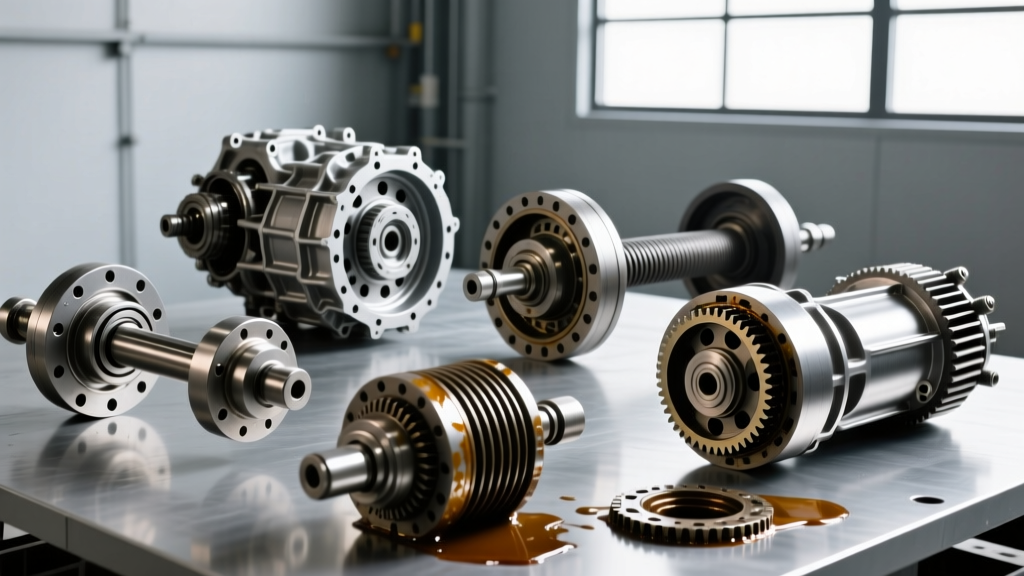
- Differential Fluid: Replace every 30,000 miles. Inspect the magnetic drain plug; fine metallic paste is normal, but chunky ferrous shards indicate bearing cage failure.
- Transfer Case Fluid: Replace every 50,000 miles. Do not overfill, as this causes aeration and foaming, leading to chain slippage.
- U-Joint Service: Purge old grease until fresh grease is visibly extruding from all four cap seals. Use a synthetic lithium-complex grease with 5% Molybdenum Disulfide (Moly) for heavy shock loads.
- Driveshaft Slip Yoke: Remove, clean, and re-grease the slip yoke splines every 15,000 miles to prevent the dreaded 'clunk' when shifting from Park to Reverse.
By treating your drivetrain layout as a cohesive, interconnected system rather than a collection of isolated parts, you ensure maximum uptime, towing safety, and off-road capability. For further engineering data on heavy-duty axles and drivetrain components, consult the Ring & Pinion technical archives or your OEM service portal.