The Paradigm Shift: From VW Jetta Drivetrain to Heavy-Duty Platforms
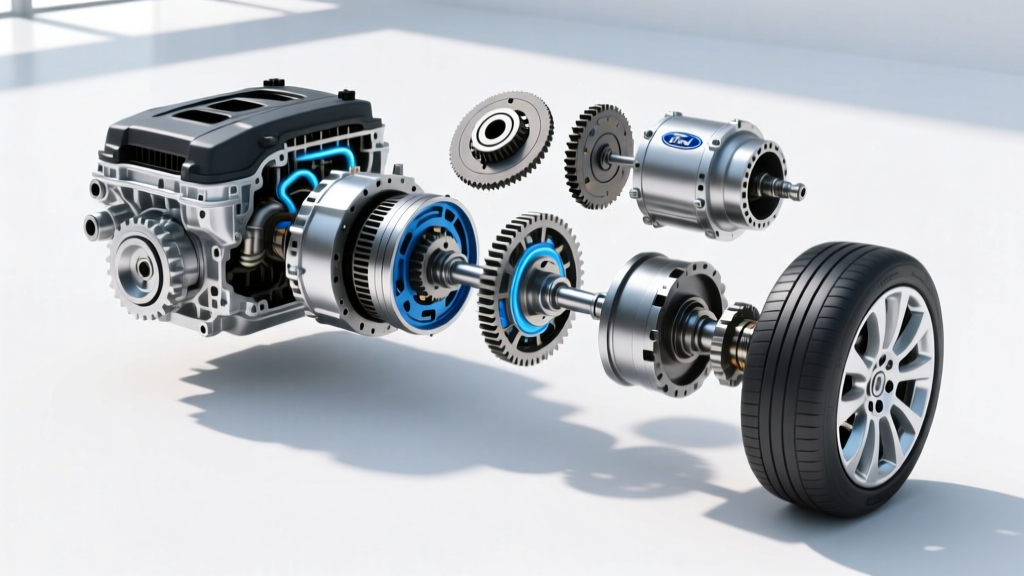
Many automotive enthusiasts and junior technicians begin their careers wrenching on lightweight, transverse-engine passenger cars. The VW Jetta drivetrain is a classic example of this architecture: a compact transaxle, equal-length CV half-shafts, and, in AWD variants, a Haldex-based rear power take-off (PTO) integrated into the rear differential. While highly efficient for daily commuting and packaging, this lightweight FWD/AWD layout is entirely inadequate for the torsional stress, articulation, and towing demands of full-size trucks and heavy-duty SUVs.
When you step into the world of longitudinal, body-on-frame trucks and off-road SUVs, the engineering paradigm shifts entirely. We are no longer dealing with fragile CV joints and compact transaxles. Instead, we must manage massive torque multiplication, extreme driveline angles, and severe thermal loads. In this 2026 expert guide, we break down the critical drivetrain components for trucks and SUVs, providing actionable maintenance data, torque specifications, and upgrade paths for heavy-duty applications.
Transfer Cases: The Heart of 4WD Systems
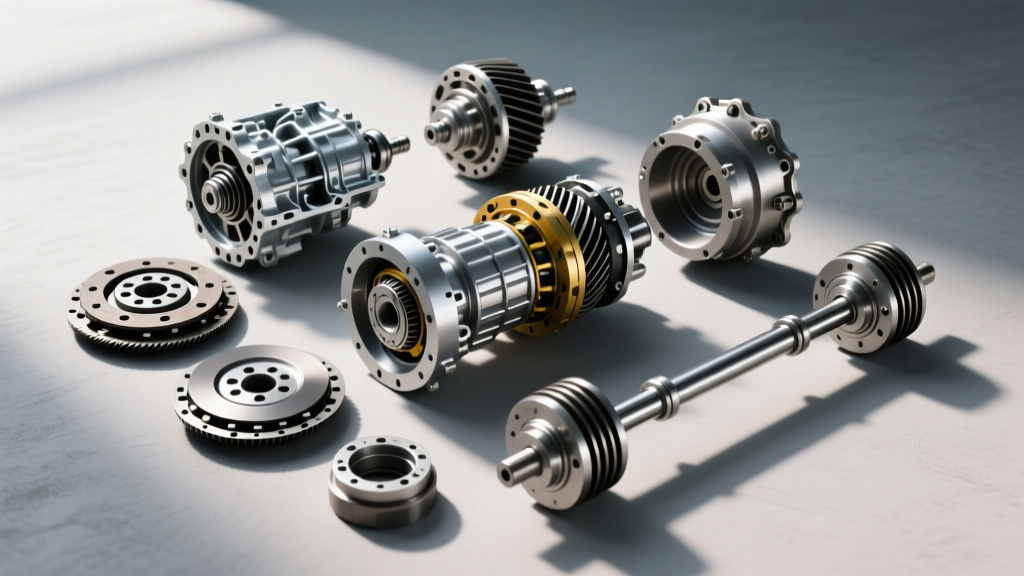
Unlike the simple PTO found on FWD-based crossovers, dedicated truck transfer cases are robust, multi-mode gearboxes designed to split torque between the front and rear axles. Modern heavy-duty applications frequently utilize chain-driven, active torque management systems.
Key Architectures and Applications
- GM NP261XHD / NP263XHD: Found in Silverado and Sierra 2500/3500HD trucks. These magnesium-cased transfer cases utilize a wide chain and a planetary gearset for a 2.72:1 low-range ratio. They require strict adherence to fluid specifications to prevent chain stretch and pump cavitation.
- BorgWarner 4493 / 4494: Common in modern GM and Ford active 4WD systems, these units feature internal clutch packs that can variably route torque front-to-rear without driver input, relying on complex encoder motors and proprietary ATF.
- Jeep NV241OR (Rock-Trac): Utilized in the Wrangler Rubicon, featuring a 4.0:1 low-range planetary gear and integrated electronic locking differentials, demanding high-clearance fluid dynamics for extreme articulation.
Expert Tip: Never substitute standard Dexron/Mercon ATF in an active transfer case requiring specialized friction modifiers. For GM Auto-Trak systems, using anything other than GM Auto-Trak II (Part # 88900402) or the updated Dexron ULV will result in clutch pack chatter and eventual encoder motor failure.
Solid Axles vs. Heavy-Duty IFS: Ring, Pinion, and Splines
While the VW Jetta drivetrain relies on independent rear suspension (IRS) with small-diameter CV axles, trucks utilize massive solid axles or reinforced Independent Front Suspension (IFS) to handle gross vehicle weight ratings (GVWR) exceeding 10,000 lbs. The differential and axle shafts are the primary failure points when owners increase tire size without re-gearing.
The Dana 60 and Ford 10.5-Inch Standards
The Dana 60 remains the gold standard for heavy-duty front and rear axles. Modern iterations feature 35-spline or 40-spline inner axle shafts, massive ring gears (9.75 to 10.5 inches), and full-floating rear hubs. When rebuilding a Dana 60, pinion bearing preload is critical. Unlike passenger cars where you might torque a nut to a static number, heavy-duty pinion nuts are torqued to achieve a specific rotational drag (typically 15-25 in-lbs of drag on a new bearing setup, measured with an inch-pound dial torque wrench).
For the rear, the Ford 10.5-inch (and its modern 10.54-inch variant) utilizes a massive 35-spline shaft and a 14-bolt cover. When upgrading to an Eaton E-Locker or Detroit Locker, ensure the carrier bearing caps are line-bored or at least checked for runout; heavy torque spikes can shift the carrier, altering the ring-and-pinion gear mesh pattern and leading to catastrophic tooth shearing.
Driveshafts and U-Joints: Managing Torsional Harmonics
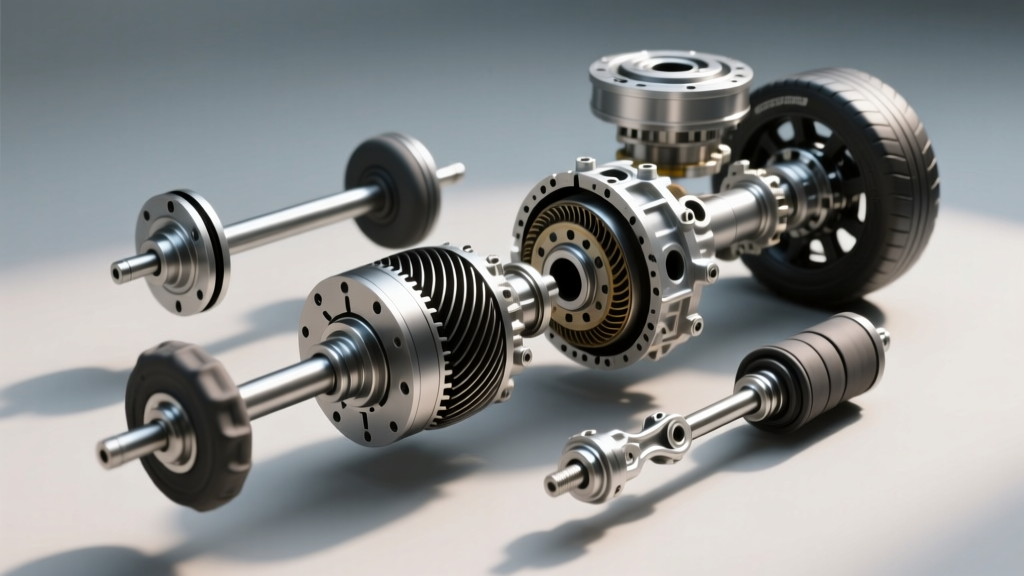
Passenger cars use CV joints to manage suspension travel and steering angles. Trucks and SUVs predominantly rely on Spicer-style cross-and-bearing U-joints due to their superior tensile strength and ability to handle high-torque, low-angle articulation.
U-Joint Sizing and Identification
According to Spicer Parts engineering data, U-joints are categorized by series, which dictates their cross dimensions and torque limits:
- 1310 Series: Light-duty trucks and mid-size SUVs (e.g., Toyota Tacoma, Jeep Gladiator). Cap diameter: 1.062", Cap-to-cap: 3.219".
- 1350 Series: 3/4-ton and 1-ton trucks (e.g., F-250, Silverado 2500HD). Cap diameter: 1.188", Cap-to-cap: 3.625". The Spicer 5-1350X is the industry-standard replacement.
- 1410 / 1480 Series: Heavy-duty towing and lifted applications. Often utilized in the rear of dual-rear-wheel (DRW) trucks to handle the immense torque output of modern diesel powertrains like the 6.7L Power Stroke or Duramax L5P.
Expert Tip: When installing U-joint strap bolts, the torque specification is remarkably low—typically 25 to 30 lb-ft. Over-torquing these 8mm or 12mm bolts will stretch the threads or distort the bearing cap, causing immediate needle-bearing failure. Always use a calibrated 1/4-inch drive torque wrench and apply a medium-strength threadlocker.
Longitudinal Transmissions: Torque Converters and Tow/Haul Logic
The transition from a transverse passenger car transmission to a longitudinal truck transmission involves moving from compact, high-RPM efficiency to massive, low-RPM torque multiplication. Modern truck drivetrains rely on advanced 8-speed and 10-speed automatics.
- GM 10L90 / Ford 10R80: Co-developed 10-speed transmissions featuring specialized tow/haul shift logic. They utilize a unique internal hydraulic circuit and specialized MERCON ULV or Dexron ULV fluids to manage the lockup clutch across multiple gears, reducing thermal buildup during heavy towing.
- ZF 8HP75 / 8HP90: Found in Ram 1500s and heavy-duty SUVs. The ZF 8-speed utilizes a mechatronic valve body integrated directly into the transmission pan. If the plastic pan cracks or the internal filter clogs, the entire $800+ pan assembly must be replaced.
2026 Drivetrain Maintenance Matrix: Fluids, Capacities, and Specs
Proper maintenance is the difference between a drivetrain that lasts 300,000 miles and one that fails on a mountain grade. Below is a reference matrix for common heavy-duty truck and SUV drivetrain components.
| Component | Common Application | Fluid / Specification | Capacity / Torque Spec | 2026 Est. Replacement Cost |
|---|---|---|---|---|
| Transfer Case (NP261XHD) | GM 2500HD / 3500HD | GM Auto-Trak II (88900402) | 2.7 Quarts | $1,800 - $2,400 (Reman) |
| Front Axle (Dana 60) | Ford Super Duty / Ram 2500 | 75W-140 Synthetic Gear Oil | 3.5 - 4.0 Quarts | $3,500+ (Crate Axle) |
| Rear Axle (Ford 10.5") | Ford F-250 / F-350 SRW | 75W-140 + Friction Modifier | 3.75 Quarts | $2,200 - $2,800 |
| U-Joint (Spicer 1350) | HD Trucks / Lifted SUVs | N/A (Pre-lubricated / Zerk) | Strap Bolts: 25-30 lb-ft | $45 - $85 per joint |
| Transmission (ZF 8HP75) | Ram 1500 / Grand Cherokee | ZF LifeguardFluid 8 | 8.5 Liters (Dry Fill) | $4,500+ (OEM Assembly) |
Common Failure Points and Preventative Best Practices
1. Slip Yoke and Spline Wear
On lifted SUVs like the Jeep Wrangler or Toyota 4Runner, the increased driveline angle causes the transfer case slip yoke to ride on the very edge of its splines. This leads to "driveline clunk" upon acceleration and eventual spline stripping. The industry-standard fix is installing a Slip Yoke Eliminator (SYE) kit paired with a CV-style rear driveshaft, which converts the sliding joint into a fixed flange, transferring the plunge movement to the driveshaft's CV joint.
2. Differential Overheating During Towing
While the BorgWarner transfer cases and modern transmissions feature integrated coolers, differentials do not. When towing near the 15,000+ lb GCWR limits of modern 3/4-ton trucks, differential fluid temperatures can exceed 280°F, breaking down the synthetic oil film. Installing an aftermarket differential cover with integrated cooling fins (such as those from AFE Power or Banks Engineering) and utilizing high-quality 75W-140 full synthetic gear oil is mandatory for fleet and heavy-towing applications.
3. Axle Shaft Deflection Under Load
Semi-floating axles (common on light-duty 1/2-ton trucks) bear the vehicle's weight and the rotational torque simultaneously. Under heavy towing or off-road articulation, these shafts can deflect, destroying the wheel bearings. Upgrading to a full-floating axle conversion (where the hub rides on the outside of the spindle and the axle shaft only transmits torque) is a critical best practice for overland SUVs and expedition trucks carrying heavy roof-top tents and armor.
Conclusion
Understanding the vast mechanical chasm between a lightweight passenger car setup and a heavy-duty truck platform is essential for any serious automotive technician. While the VW Jetta drivetrain represents the pinnacle of transverse, space-efficient engineering, truck and SUV drivetrains are a masterclass in brute-force metallurgy, thermal management, and torsional dampening. By adhering to strict torque specifications, utilizing OEM-specified friction modifiers, and understanding the limits of your U-joints and axle splines, you can ensure your heavy-duty platform survives the most punishing environments of 2026 and beyond.