Evolution of the Ford Escape AWD Architecture
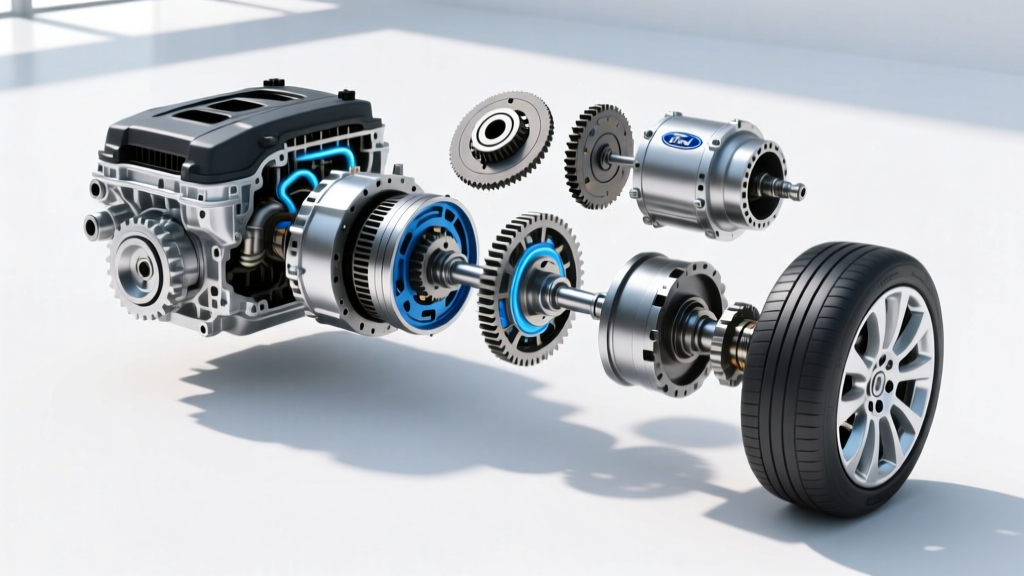
When analyzing the Ford Escape drivetrain, the transition from the third-generation (2013–2019) to the fourth-generation (2020–2026) represents a masterclass in thermal management and torque vectoring evolution. The Escape’s all-wheel-drive (AWD) system is not a monolithic design; rather, it is a complex, multi-node network comprising the Power Transfer Unit (PTU), a two-piece propshaft with a center carrier bearing, and a Rear Drive Module (RDM). Understanding the mechanical operation of these components is critical for both performance optimization and long-term reliability.
The Power Transfer Unit (PTU): Helical Gears and Thermal Bottlenecks
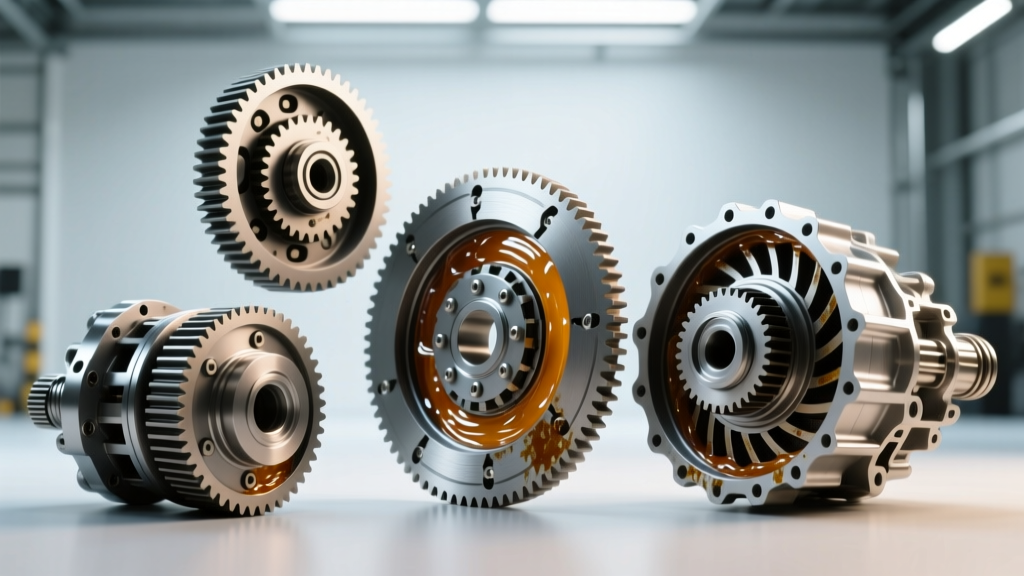
At the front of the Ford Escape drivetrain is the PTU, bolted directly to the transaxle case (the 6F35 on Gen 3 models, and the 8F24/8F35 on Gen 4 models). The PTU’s primary function is to intercept rotational force from the front differential carrier and redirect it 90 degrees to the rear propshaft. Inside the aluminum PTU casing, a helical gearset meshes with the transaxle’s ring gear. This helical design is chosen for its high load capacity and relatively quiet operation compared to straight-cut gears.
Fluid Dynamics and Thermal Degradation
The most notorious vulnerability in the older Ford Escape AWD systems is PTU thermal management. Because the PTU is mounted in close proximity to the catalytic converter and exhaust manifold, ambient underbody temperatures frequently exceed 220°F (104°C). Compounding this issue is the PTU’s remarkably small fluid sump, which holds approximately 11.8 to 14 ounces (0.35L to 0.41L) of gear oil.
Under sustained highway driving or towing, the shear forces on the fluid break down its viscosity. When the 75W-140 or 75W-85 gear oil degrades, the internal support bearings—specifically the needle bearings supporting the output shaft—begin to score the aluminum casing. This leads to the infamous 'whining' noise, eventual propshaft seal leaks, and catastrophic PTU failure. According to Ford's official maintenance guidelines, the PTU fluid is often labeled as a 'lifetime' fluid, but drivetrain specialists universally recommend swapping it every 30,000 to 45,000 miles using a fluid extractor pump, as the drain plug is often obstructed by the subframe or exhaust components.
'Treating the PTU fluid as a lifetime component is the leading cause of premature AWD failure in crossovers. The fluid volume is simply too small to act as an effective heat sink over 100,000 miles of thermal cycling.' — Senior Drivetrain Diagnostic Technician
Rear Drive Module (RDM): Electromagnetic vs. Twin-Clutch Vectoring
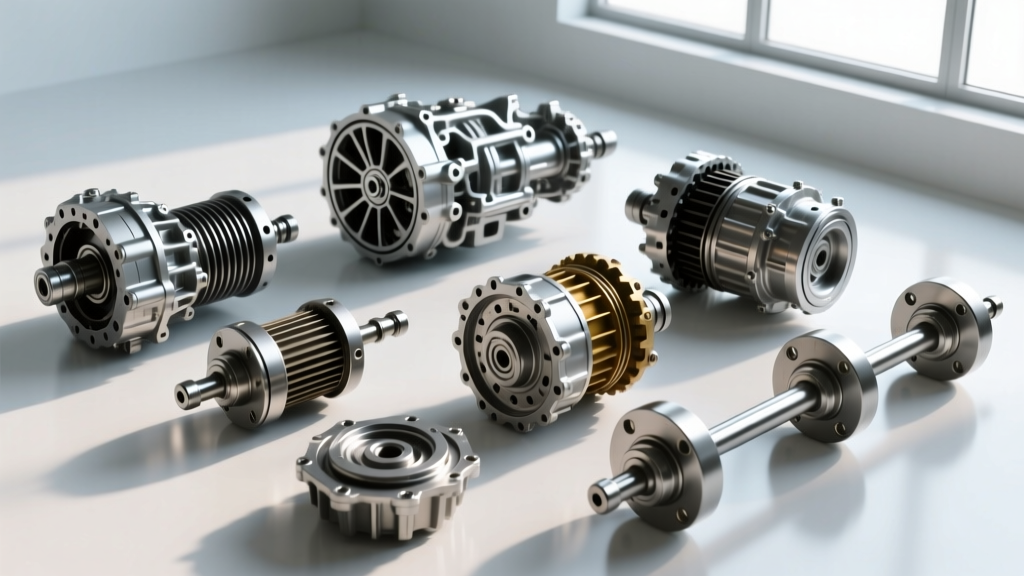
While the PTU handles the front-to-rear torque split, the Rear Drive Module (RDM) dictates how that torque is distributed laterally across the rear axle. The operation of the RDM varies drastically depending on the trim level and generation of the vehicle.
Gen 3: Traditional Electromagnetic Clutch Pack
On 2013–2019 models, the RDM utilizes a traditional electromagnetic clutch pack situated ahead of the rear differential. When the AWD module detects front wheel slip via the ABS wheel speed sensors, it pulses the electromagnetic coil. This compresses a multi-plate friction clutch pack, locking the input shaft to the rear differential and sending up to 50% of the engine's torque to the rear axle. However, this system acts as an open differential side-to-side; if one rear wheel loses traction, torque will follow the path of least resistance, requiring the brake-lock differential simulation (BLDS) via the ABS system to restore forward momentum.
Gen 4: Twin-Clutch Torque Vectoring
The modern Ford Escape drivetrain (specifically on higher trims like the Titanium and ST-Line Elite) employs an advanced Twin-Clutch RDM, conceptually similar to the Dana Twinster or GKN eTwinster systems. Instead of a single clutch pack feeding an open differential, this RDM features two independent, hydraulically actuated wet-clutch packs—one for each rear half-shaft.
- Independent Actuation: The AWD control module can engage the left and right clutch packs independently.
- Torque Vectoring: By fully engaging the outside clutch pack during cornering, the system can route up to 100% of the rear axle's torque to a single wheel, generating a yaw moment that actively pulls the vehicle through the apex.
- True Locking Capability: In deep snow or mud modes, both clutch packs can be locked simultaneously, effectively simulating a solid rear axle lock for maximum traction.
For a comprehensive look at the chemical requirements of these advanced clutch packs, the Motorcraft Fluids Catalog specifies exact friction modifiers required to prevent clutch chatter during low-speed vectoring maneuvers.
AWD Disconnect and Driveline Efficiency
To mitigate the parasitic drag of spinning a 60-pound steel propshaft and multiple gearsets during dry-weather highway cruising, Ford introduced the AWD Disconnect system on the 8-speed automatic platforms. Located inside the RDM housing, a motorized dog-clutch actuator physically decouples the ring gear from the propshaft input flange. Simultaneously, a secondary disconnect mechanism at the PTU halts the rotation of the propshaft. This reduces rotational mass and driveline friction, yielding a verified 2% to 4% improvement in highway fuel economy.
Maintenance Matrix: Fluids, Capacities, and Torque Specs
Proper maintenance of the Ford Escape drivetrain requires strict adherence to fluid specifications and torque values. Over-torquing the aluminum PTU fill plug is a common shop error that results in stripped threads and total unit replacement.
| Component | Fluid Specification | Motorcraft Part # | Capacity | Torque Spec (Fill/Drain) |
|---|---|---|---|---|
| PTU (Gen 3 / 6F35) | SAE 75W-140 Synthetic | XY-75W140-QL | ~12 oz (0.35L) | 22 lb-ft (18mm plug) |
| PTU (Gen 4 / 8F35) | SAE 75W-85 Premium Synthetic | XY-75W85-QL | ~14 oz (0.41L) | 22 lb-ft |
| RDM (Standard Open) | SAE 75W-85 Synthetic | XY-75W85-QL | ~22 oz (0.65L) | 22 lb-ft (3/8" sq) |
| RDM (Twin-Clutch) | SAE 75W-85 + Friction Modifier | XY-75W85-QL + XL-3 | ~26 oz (0.75L) | 22 lb-ft |
| Propshaft to PTU Flange | N/A (Hardware) | W719209-S439 | N/A | 35 lb-ft |
Diagnostic Troubleshooting: AWD Faults and Drivetrain Warnings
When the instrument cluster displays an 'AWD Fault' or 'Drivetrain Malfunction' warning, the AWD module has typically defaulted to FWD-only mode to protect the mechanical components. Diagnosing the Ford Escape drivetrain requires reading manufacturer-specific U-codes and C-codes via an advanced bi-directional OBD2 scanner.
Common Fault Codes and Edge Cases
- U0100 (Lost Communication with ECM/PCM): Often triggered by voltage drops on the CAN bus. Before condemning the AWD module, check the chassis ground points near the RDM for corrosion, a common issue in rust-belt climates.
- C1A06 (AWD Clutch Control Circuit): Indicates an open or short circuit in the electromagnetic coil (Gen 3) or the hydraulic solenoid valves (Gen 4 Twin-Clutch). Resistance testing of the coil should yield between 2.5 and 4.0 ohms at 68°F (20°C).
- U0401 (Invalid Data Received From ECM): If the throttle position sensor (TPS) or steering angle sensor (SAS) provides erratic data, the AWD module will disable torque vectoring to prevent unsafe yaw moments. Recalibrating the SAS via the steering wheel lock-to-lock procedure often resolves this without parts replacement.
Expert Verdict on the Escape AWD System
The Ford Escape drivetrain has matured from a reactive, slip-dependent system into a proactive, torque-vectoring architecture. While the Gen 4 Twin-Clutch RDM and AWD Disconnect offer class-leading dynamics and efficiency, the foundational weakness remains the front PTU's thermal environment. Owners who proactively manage PTU fluid degradation and utilize the correct friction modifiers for the rear clutch packs will easily extract 150,000+ miles of reliable, all-weather performance from this sophisticated AWD layout. For further technical service bulletins and drivetrain warranty parameters, consult the official Ford Escape owner resources.