Why Stock Truck Axles Demand a Performance Overhaul
As we navigate the 2026 automotive landscape, modern heavy-duty trucks and full-size SUVs are producing unprecedented factory torque. Diesel platforms like the 6.7L PowerStroke, Duramax, and Cummins easily push 1,000+ lb-ft at the crank, while modern hybrid and EV SUVs carry massively increased curb weights. When you multiply this force through low-range transfer cases and aggressive off-road tires, the weakest links in the drivetrain are invariably the ring, pinion, and carrier bearings. Factory axles were designed for economy and NVH (Noise, Vibration, and Harshness) compliance, not sustained shock-loading. Upgrading your axle begins with selecting a premium differential repair kit to serve as the foundation for high-performance gear sets, lockers, and reinforced carriers.
Anatomy of a Premium Differential Repair Kit
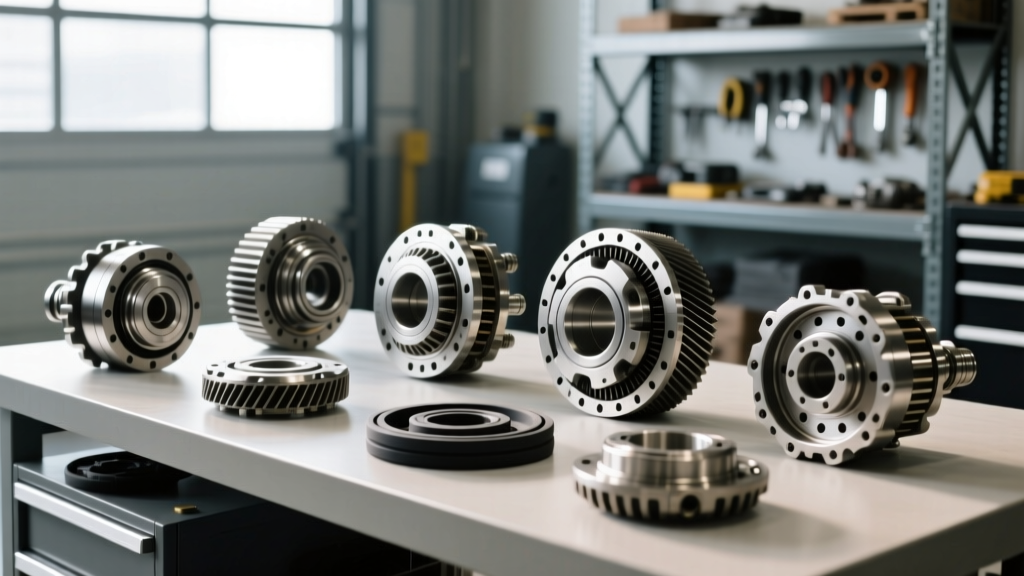
Many enthusiasts mistakenly order a basic 'seal and gasket' kit when performing an axle overhaul. For performance applications—whether you are installing a 4.56 ring and pinion for 38-inch tires or upgrading to a Detroit Truetrac limited-slip differential—you require a comprehensive Master Overhaul Kit. According to engineering standards from Yukon Gear & Axle, a true master kit must include the following critical components:
- Premium Tapered Roller Bearings: Only accept Timken or SKF bearings. Offshore counterfeit bearings often feature inferior metallurgy that spalls under high-torque towing loads.
- Crush Sleeve & Solid Spacer Conversion: High-performance kits often include a solid pinion spacer with precision shims, eliminating the factory crush sleeve which is prone to fatigue and failure under heavy shock loads.
- Grade 8 / Grade 10.9 Ring Gear Bolts: Factory bolts can stretch. Upgraded kits include high-tensile hardware and thread-locking compounds.
- Carrier and Pinion Shims: A comprehensive shim kit (ranging from .001" to .050") is mandatory for setting precise gear backlash and pinion depth.
- Heavy-Duty Axle Seals and RTV: High-temp silicone and double-lip seals to prevent gear oil contamination from water crossings.
Axle Platform Profiles: Dana 60 & GM AAM
The Dana 60 (Front & Rear)
The Dana 60 remains the gold standard for off-road SUVs and heavy-duty truck front axles. When rebuilding a Dana 60, the inner pinion bearing (typically Timken LM503349) and outer pinion bearing (Timken M86649) must be pressed onto the pinion shaft using a hydraulic press and specialized bearing race drivers. Never hammer bearings into place, as this brinells the races and guarantees premature whine and failure. A high-quality differential repair kit for the Dana 60 will also include the correct carrier bearings (often Timken SET45 or SET47, depending on spline count and year) to ensure the differential carrier is rigidly supported against deflection under load.
GM AAM 10.5-Inch & 11.5-Inch
Found in 2500HD and 3500HD Silverado and Sierra trucks, the AAM (American Axle Manufacturing) 10.5 and 11.5-inch differentials are massive, full-floating rear axles. However, their sheer size requires massive setup forces. The pinion nut on an AAM 11.5 requires up to 450 lb-ft of torque to seat the bearings and achieve proper preload. Standard 1/2-inch drive torque wrenches will not suffice; a specialized 3/4-inch drive or heavy-duty hydraulic multiplier is often required. When sourcing a differential repair kit for the AAM platforms, ensure it includes the heavy-duty pinion yoke retention hardware and the specific thick-wall crush sleeves required to handle the rotational mass of the AAM pinion gear.
Precision Setup: Preload, Backlash, and Pattern
Installing the parts from your differential repair kit is only half the battle; the setup tolerances dictate the lifespan of your axle. According to Timken Bearing Technologies, improper preload is the number one cause of catastrophic bearing failure in rebuilt differentials.
Expert Insight: Never measure rotating preload with the axle seals installed. The friction of the double-lip rubber seals against the axle shaft or yoke will artificially inflate your inch-pound readings, leading you to under-preload the bearings. Always set preload on a bare housing with the carrier and pinion fully assembled but seals omitted.
Critical Setup Specifications Data Table
| Axle Platform | Pinion Nut Torque | Rotating Preload (New Bearings) | Carrier Bearing Cap Torque | Target Backlash |
|---|---|---|---|---|
| Dana 60 (Rear) | 200 - 250 lb-ft | 25 - 35 in-lbs | 70 - 90 lb-ft | .006" - .010" |
| Dana 60 (Front Reverse) | 200 - 250 lb-ft | 15 - 25 in-lbs | 70 - 90 lb-ft | .008" - .012" |
| Ford 10.5" (Sterling) | 250 - 300 lb-ft | 20 - 30 in-lbs | 85 - 100 lb-ft | .008" - .012" |
| GM AAM 11.5" | 350 - 450 lb-ft | 30 - 45 in-lbs | 120 - 140 lb-ft | .007" - .011" |
Reading the Gear Pattern
Once preload and backlash are set using the shims provided in your differential repair kit, you must verify the contact pattern using a yellow ochre gear marking compound. Apply a thin layer to three or four ring gear teeth. Rotate the pinion to load the drive side, then the coast side. A perfect pattern will sit dead-center on the tooth face, slightly biased toward the toe (the inner edge of the ring gear) under load. If the pattern rides high on the flank, the pinion is too close to the ring gear; if it rides low on the face, the pinion is too deep. Adjusting this requires swapping the pinion depth shims located behind the inner pinion bearing race, a process that demands patience and precision.
Post-Rebuild Break-In and Fluid Dynamics
The moment you fill the differential after a rebuild is critical. The friction modifiers and base oils you select will dictate how well the new ring and pinion mate. For the initial break-in period (the first 500 miles), it is highly recommended to use a high-quality, non-synthetic 80W-90 GL-5 gear oil. Non-synthetic oils allow for a controlled micro-wearing of the gear teeth, promoting a perfect mating pattern without generating excessive heat. Synthetic oils can be 'too slippery' during initial break-in, leading to glazed gears and permanent whine.
The 500-Mile Swap
After 500 miles of mixed driving (avoiding sustained highway speeds over 65 MPH and heavy towing during this window), drain the break-in oil. You will likely notice a metallic sheen or fine glitter in the fluid; this is normal metallurgical lapping. Flush the housing with a cheap quart of gear oil, then refill with a premium synthetic. AMSOIL Severe Gear 75W-140 is the industry benchmark for tuned trucks and SUVs towing heavy loads. The 140-weight viscosity maintains its protective hydrodynamic film even when differential temperatures exceed 250°F during steep grade towing.
Cost Analysis: Rebuild vs. Replacement
Investing in a top-tier differential repair kit and performance components yields massive dividends compared to purchasing a crate axle. A complete Yukon or Randy's Ring & Pinion Master Overhaul Kit typically ranges from $180 to $280. Pair this with a premium 4.10 or 4.56 gear set ($350) and an ARB Air Locker or Eaton E-Locker ($1,200 - $1,600). Even factoring in specialized shop labor ($800 - $1,200), a fully built, bulletproof axle costs roughly $2,500 to $3,500. Conversely, a heavy-duty aftermarket crate axle from manufacturers like Currie Enterprises or Dynatrac can easily exceed $5,500, not including freight shipping and core charges. By mastering the setup process or partnering with a specialized driveline shop, the differential repair kit remains the most cost-effective gateway to ultimate truck and SUV traction and reliability.