The Anatomy of a Posi Differential
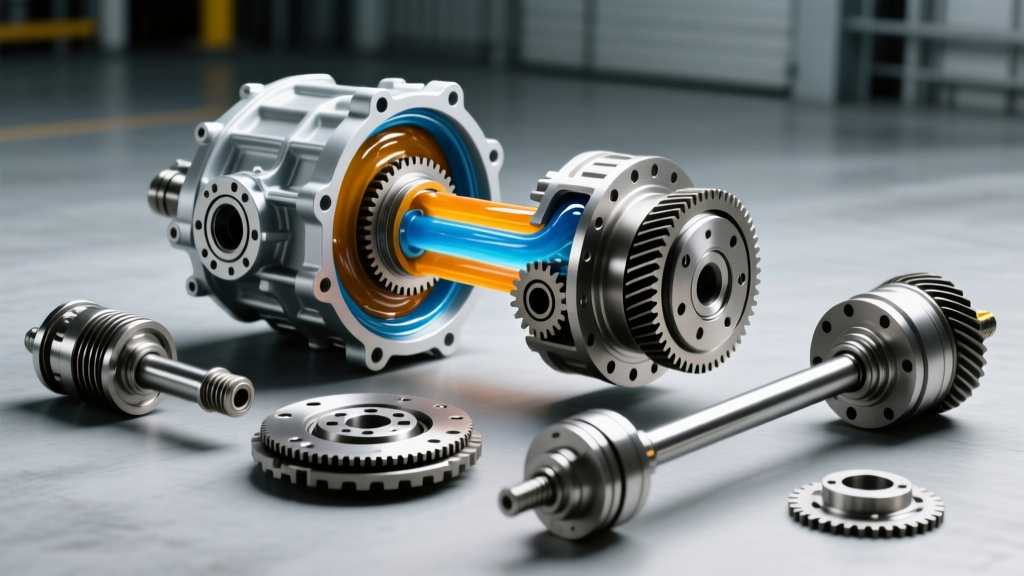
While the term 'Posi' is universally tossed around in garage parlance to describe any limited slip differential (LSD), it is historically a trademark of General Motors, specifically referring to the Eaton Positraction design. Introduced in the late 1950s and heavily utilized in GM 10-bolt and 12-bolt axles, the clutch-type Posi differential remains one of the most robust and widely serviced traction-adding devices in the automotive aftermarket. Unlike torque-biasing gear systems (such as Torsen) or viscous couplings, a traditional Posi differential relies on mechanical friction to limit wheel spin.
At the core of the Eaton Positraction and Ford's equivalent Trac-Lok design are two sets of multi-disc clutch packs located between the side gears and the differential carrier case. When torque is applied, the spider gears (pinion mates) push outward against the side gears. This axial thrust forces the side gears into the clutch packs, compressing them against the carrier. The resulting friction locks the axles together, transferring torque to the wheel with the most traction. Understanding this mechanical interplay is critical for proper diagnosis, fluid selection, and eventual rebuild procedures.
Fluid Dynamics and the Friction Modifier Paradox
The most misunderstood aspect of posi differential maintenance lies in the chemical conflict between hypoid gear protection and clutch pack operation. The ring and pinion gears in a solid axle utilize a hypoid cut, meaning the pinion gear sits below the centerline of the ring gear. This creates a severe sliding and shearing action that requires Extreme Pressure (EP) additives—specifically sulfur and phosphorus compounds—found in API GL-5 rated gear oils.
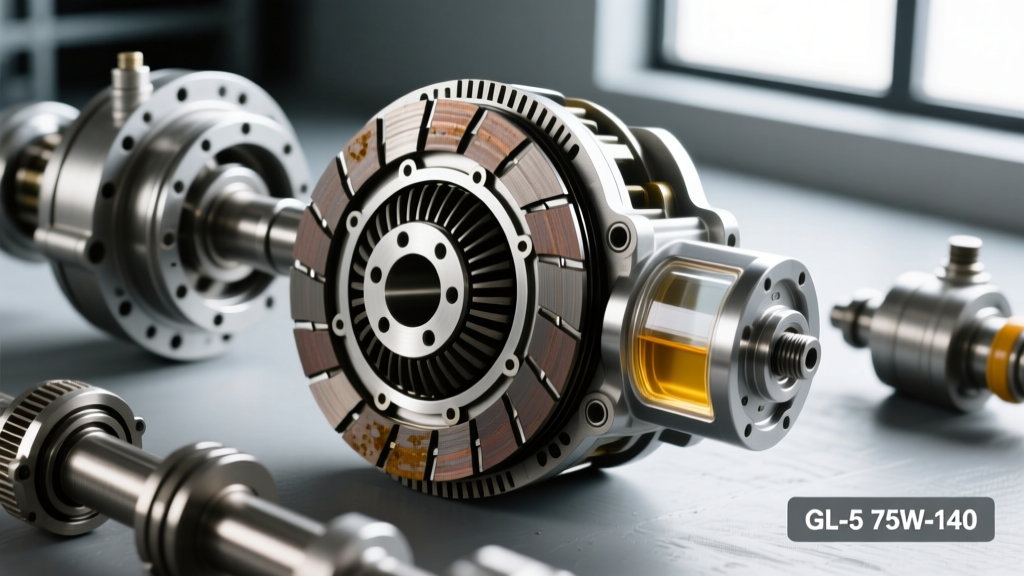
However, these exact same EP additives are detrimental to the friction materials used in Posi clutch packs. Sulfur-phosphorus compounds cause the sintered iron or carbon-fiber clutch discs to grab and release erratically, a phenomenon known as 'stick-slip' friction. This manifests audibly as a rhythmic chatter or groaning noise during low-speed, tight-radius turns. To counteract this, a specialized limited slip friction modifier (FM) must be introduced to the fluid.
Friction modifiers consist of long-chain fatty acids and esters that align themselves on the microscopic pores of the clutch material, creating a boundary lubrication layer that ensures smooth engagement rather than abrupt locking. Getting the ratio of gear oil to FM correct is the difference between a smooth-operating differential and one that destroys its own clutch packs in under 5,000 miles.
2026 Synthetic Fluid Landscape
As of 2026, the shift toward full-synthetic, ester-based 75W-90 gear oils has altered how friction modifiers interact with clutch packs. Modern synthetics like AMSOIL Severe Gear already contain baseline friction modifiers in their additive packages. However, relying solely on pre-blended 'LS' (Limited Slip) gear oils is often insufficient for high-torque applications or heavily worn clutch packs. Experienced drivetrain technicians still recommend a baseline 75W-90 GL-5 synthetic paired with a dedicated OEM friction modifier to achieve precise tuning of the clutch engagement.
Axle Platform Specifications and Fluid Matrix
Different manufacturers utilize distinct clutch materials and preload spring designs, necessitating specific fluid capacities and modifier formulations. Below is a reference matrix for the most common solid axle platforms requiring posi differential maintenance.
| Axle Platform | OEM LSD Type | Clutch Material | Fluid Capacity | Required Friction Modifier |
|---|---|---|---|---|
| GM 8.5' 10-Bolt | Eaton Positraction | Sintered Iron / Raybestos | 2.1 Quarts | 4 oz GM 10-9003 (or 88900333) |
| Ford 8.8' Solid Axle | Trac-Lok | Carbon Fiber / Paper | 1.9 Quarts | 4 oz Ford XL-3 |
| Chrysler 8.75' Sure-Grip | Sure-Grip (Clutch) | Steel / Bronze | 2.3 Quarts | 3 oz Mopar 4318060AB |
| Dana 44 (Jeep/Scout) | Trac-Lok / Power-Lok | Sintered Bronze | 2.0 Quarts | 4 oz Ford XL-3 or Mopar |
Note: Always fill the differential to the bottom of the fill plug hole. Overfilling leads to fluid aeration, thermal expansion leaks past the axle seals, and foaming which degrades the EP additive package.
Diagnosing Posi-Specific Failure Modes
Before tearing into a differential, a precise road test and fluid inspection can isolate whether the issue is fluid-related, clutch-related, or a catastrophic mechanical failure.
- Low-Speed Chatter: If the axle chatters only when turning from a dead stop or in tight parking maneuvers, the fluid is likely depleted of its friction modifier due to thermal breakdown. Action: Perform a complete drain, flush with a non-solvent cleaner, refill with fresh 75W-90 GL-5, and add the exact OEM-spec friction modifier. Drive in figure-eights to work the additive into the clutch pores.
- One-Tire Fire (Loss of Bias): If one wheel spins freely while the other remains stationary on slippery surfaces, the Posi unit has failed internally. This is typically caused by collapsed S-springs (in GM Eaton units) or burnt, glazed clutch packs that have lost their coefficient of friction.
- Chunking or Metallic Debris: If the drained fluid contains shiny metallic scales or distinct S-shaped metal fragments, the preload spring has shattered. In Eaton Positraction units, a broken S-spring will wedge between the spider gears and the carrier case, leading to catastrophic case galling. A full teardown and carrier replacement are mandatory.
Rebuild Specifications: GM 8.5' Eaton Positraction
When a Posi differential requires a rebuild, precision is paramount. The clamping force of the clutch packs is dictated by the thickness of the shims placed behind the side gears and the tension of the preload springs. For a standard GM 8.5-inch 10-bolt Eaton Positraction (commonly found in G-Body, S10, and older full-size trucks), technicians should reference Ring & Pinion service data and utilize high-quality rebuild kits, such as the Ratech 1013 or Yukon Gear YK T5.
Clutch Pack Shimming and Preload
The target clutch pack clearance (preload) for a standard street-driven Eaton Posi is between 0.030' and 0.060'. This is measured by assembling the side gear, clutch pack, and shim, then attempting to slide a feeler gauge between the side gear and the carrier pocket. If the clearance exceeds 0.080', the clutch packs will not engage aggressively enough under torque, resulting in an open-differential feel. If the clearance is under 0.020', the differential will bind severely, causing axle hop and premature ring gear tooth shear.
Critical Torque Specifications
Proper torque values ensure the rotating assembly remains stable under the extreme shock loads of hard launches. Always use a calibrated beam-style or digital torque wrench for these steps.
| Component | Torque Specification | Fastener Prep / Notes |
|---|---|---|
| Ring Gear to Carrier | 70 - 85 lb-ft | Apply Loctite 242 (Blue) to threads. Torque in a star pattern. |
| Carrier Bearing Cap Bolts | 45 - 60 lb-ft | Ensure cap alignment marks match. Do not interchange L/R caps. |
| Pinion Nut (Crush Sleeve) | 150 - 250 lb-ft | Tighten incrementally to achieve 15-25 in-lbs rotating preload. |
| Spider Gear Pin Shaft | 15 - 25 lb-ft | Apply Loctite 242 to the lock bolt threads. |
The Future of Posi Maintenance
While modern torque-vectoring differentials and electronic locking axles are becoming standard on 2026 OEM trucks and SUVs, the mechanical clutch-type Posi differential remains a staple in the off-road, drag racing, and classic car restoration communities. Its simplicity, rebuildability, and predictable torque transfer characteristics ensure its continued relevance. By adhering to strict fluid chemistry protocols, utilizing exact OEM friction modifiers, and respecting precise shim clearances during rebuilds, enthusiasts and technicians can extract decades of reliable, chatter-free service from these iconic traction devices. For further engineering schematics and application guides, consult the Eaton Differentials catalog to verify specific carrier series and spline counts before ordering replacement components.