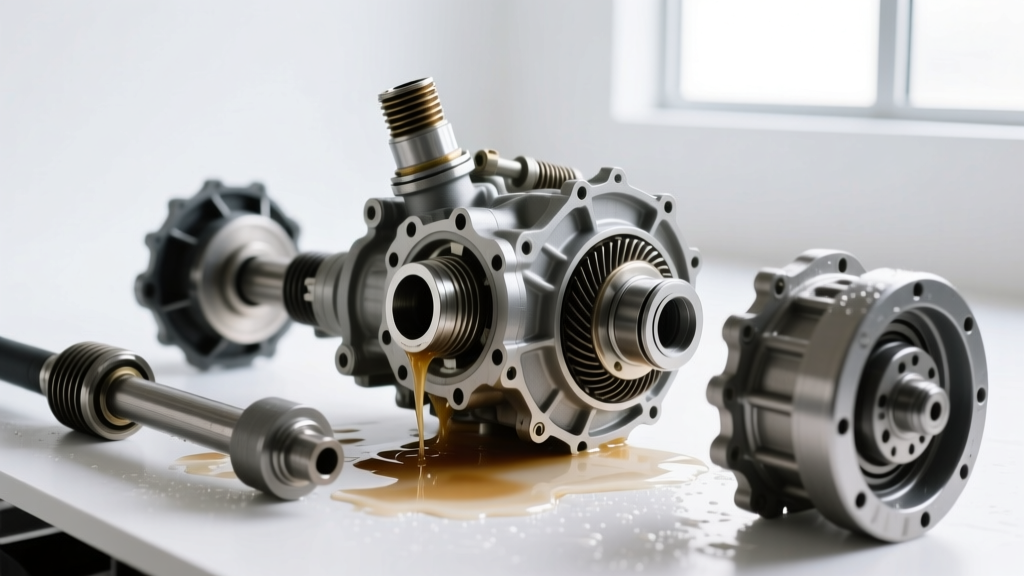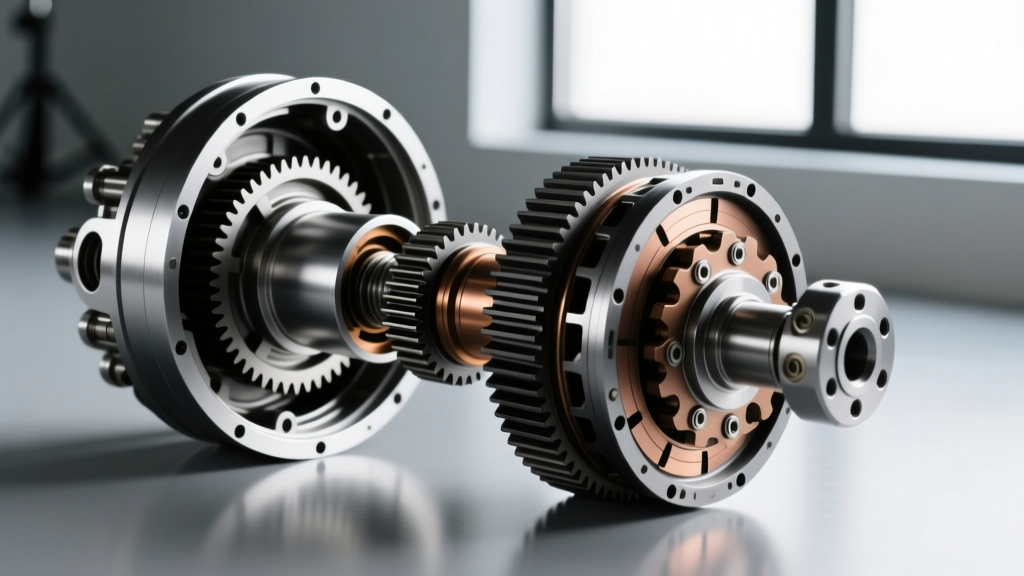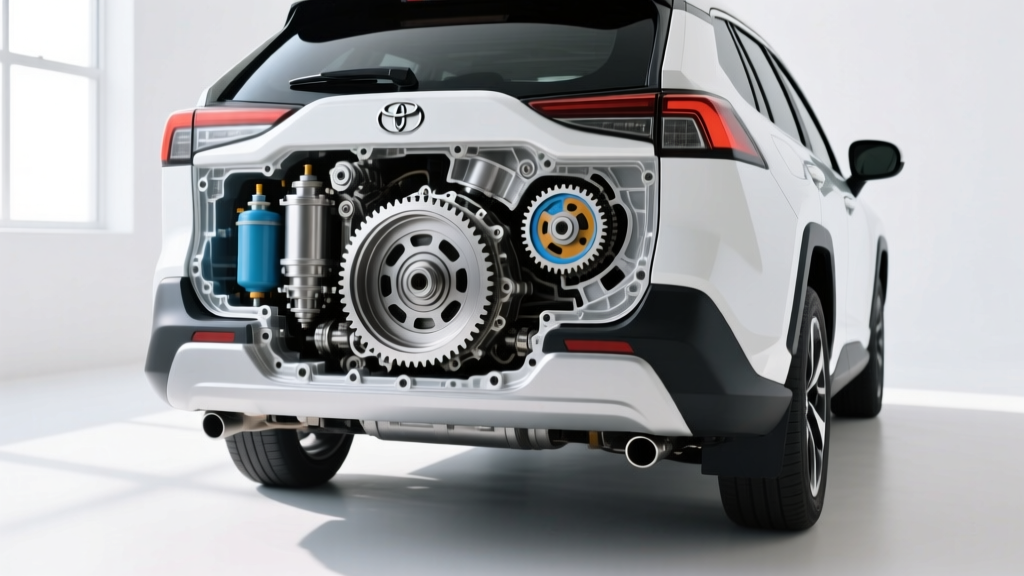
The Performance Tax on Modern Truck Drivetrains
As of 2026, the truck and SUV aftermarket has seen a massive surge in 37-inch tire fitments, heavy-duty towing packages, and overlanding builds. While modern axles like the AAM 11.5-inch, Ford Sterling 10.5, and Dana 60 are engineering marvels, adding rotational mass and extreme towing loads drastically increases parasitic stress on the drivetrain. The most common early warning sign of an overstressed axle is differential bearing noise. Unlike gear whine, which indicates improper mesh or backlash, bearing noise points directly to Hertzian contact stress exceeding the fatigue limit of the bearing races.
For performance applications, simply swapping gear oil is a band-aid. True differential maintenance for trucks and SUVs requires a holistic approach: upgrading bearing metallurgy, eliminating factory crush sleeves, and selecting high-shear-stability synthetic fluids. This guide details how to diagnose, cure, and prevent bearing failures in high-load truck axles.
Decoding the Growl: Diagnostic Framework
Differential bearing noise is rarely a sudden failure; it is a progressive degradation of the bearing rollers and races. Because the pinion and carrier bearings operate under different load vectors, their acoustic signatures vary depending on throttle input and vehicle speed. Misdiagnosing the source can lead to unnecessary teardowns and wasted labor.
| Acoustic Signature | Driving Condition | Probable Failure Point | Required Action |
|---|---|---|---|
| Low-pitch rumble or growl | Constant speed (20-45 mph) | Carrier Bearings | Replace carrier bearings (e.g., Timken SET10); check housing bore runout. |
| High-pitch whine or howl | Deceleration (Coast) | Pinion Bearings (Outer/Cone) | Inspect pinion shaft for galling; replace pinion bearings and solid spacer. |
| Rhythmic knocking or clunk | Load transitions (On/Off throttle) | Worn Cross Pin or Side Gears | Upgrade to a locking differential; inspect carrier case for elongation. |
| Continuous whirring | All speeds, load-independent | Pinion Bearings (Inner/Cup) | Check pinion depth shim; replace inner race and roller assembly. |
If your truck exhibits a rumble that changes pitch only when turning left or right, the issue is likely a failing wheel bearing or a worn axle shaft bearing, not the differential carrier itself. Always isolate the axle by lifting the vehicle and spinning the wheels by hand with a stethoscope applied to the differential housing.
Heavy-Duty Hardware Upgrades for Towing and Off-Road
When tearing down a truck differential for maintenance, never reuse OEM bearings. The high-load environment of a lifted SUV or a 3/4-ton truck towing 12,000+ lbs demands premium metallurgy. According to Timken, their high-carbon, vacuum-degassed steel bearings offer up to 30% greater fatigue life under heavy shock loads compared to standard import alternatives.
The Solid Spacer Conversion
Factory differentials use a crush sleeve to set pinion bearing preload. While cheap to manufacture, crush sleeves are notorious for failing under high-torque scenarios (like rock crawling or heavy towing). If the pinion nut loosens even slightly, the preload is lost, leading to catastrophic pinion bearing noise and eventual gear destruction. The fix: Install a solid pinion spacer kit (available from brands like Yukon Gear or Ratech). A solid spacer uses precision-machined shims to set preload, ensuring that pinion bearing tension remains constant regardless of torque spikes or thermal expansion.
Upgrading the Yoke and U-Joints
Differential bearing noise is often accelerated by driveline vibration. If you have installed a suspension lift, your driveshaft angles have likely changed, introducing harmonic vibrations that hammer the pinion bearing. Upgrading to a heavy-duty 1350-series or 1410-series pinion yoke, paired with high-angle Spicer U-joints, reduces parasitic deflection. Always verify yoke runout with a dial indicator; anything over 0.003 inches will prematurely destroy the outer pinion bearing seal and race.
Fluid Dynamics: Selecting the Right Gear Oil
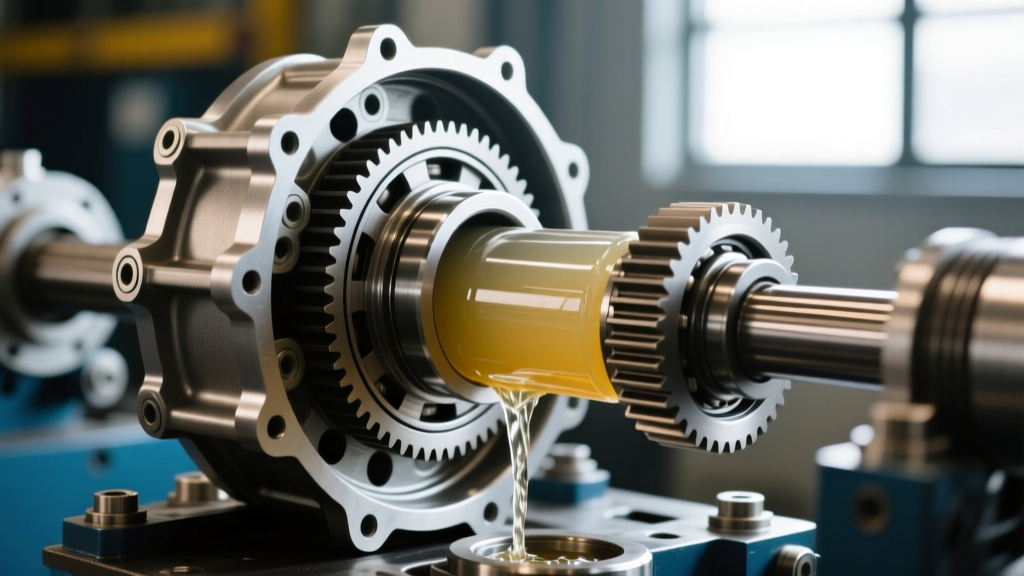
Fluid shear stability is the last line of defense against differential bearing noise. Under extreme towing conditions, differential temperatures can easily exceed 250°F (121°C). At these temperatures, conventional 75W-90 gear oils experience severe viscosity breakdown, allowing metal-to-metal contact on the bearing rollers.
- Viscosity Upgrade: For trucks frequently towing over 8,000 lbs or running 35-inch+ tires, step up to a 75W-140 Full Synthetic gear oil. The higher high-temperature high-shear (HTHS) viscosity maintains a protective hydrodynamic film across the bearing races.
- Friction Modifiers: If your truck is equipped with a clutch-type Limited Slip Differential (LSD) like the Eaton Truetrac or Ford Traction-Lok, you must add the manufacturer-specified friction modifier. Failing to do so will cause chatter, which translates into shock loads that damage carrier bearings.
- Capacity Realities: Remember that an AAM 11.5-inch differential holds approximately 3.5 to 4.0 quarts of fluid. Always fill until the fluid level is exactly at the bottom of the fill hole, or use a differential cover with a built-in fluid level indicator to account for modified pinion angles.
Industry leaders like Amsoil formulate their Severe Gear 75W-140 synthetic with specialized extreme-pressure (EP) additives designed specifically to protect bearing surfaces under high-sliding, high-load conditions.
Precision Assembly: Torque Specs and Preload Settings
Curing differential bearing noise permanently requires meticulous attention to assembly tolerances. Guessing torque specs will result in either a bound-up axle (over-preloaded) or a loose, howling differential (under-preloaded). Below is the benchmark procedure for setting up a heavy-duty truck differential (e.g., Dana 60 or Sterling 10.5).
Step-by-Step Preload and Backlash Sequence
- Pinion Depth: Set the pinion depth using the factory shim calculator or a master setup kit. Target a gear contact pattern centered on the drive and coast sides of the ring gear tooth.
- Pinion Bearing Preload: Using an inch-pound torque wrench, measure the rotational drag of the pinion shaft. For new bearings with a solid spacer, target 18 to 25 inch-pounds of rolling resistance. (Note: This is inch-pounds, not foot-pounds!).
- Carrier Bearing Preload: Install the carrier with shims or threaded adjusters. You should feel a slight, uniform drag when rotating the carrier without the pinion engaged. Total rotational torque (pinion + carrier) should increase by roughly 5 to 8 inch-pounds.
- Backlash Setting: Mount a magnetic dial indicator perpendicular to the ring gear tooth. Set backlash to 0.006 to 0.010 inches for most heavy-duty truck applications. Check backlash at four equidistant points around the ring gear to ensure true ring gear mounting.
- Ring Gear Bolts: Always use new, high-grade ring gear bolts. Apply a medium-strength threadlocker (like Loctite 242) and torque to factory specifications—typically 110 to 130 lb-ft depending on the axle model.
Long-Term Maintenance Intervals
Even with premium Spicer or Timken bearings and 75W-140 synthetic fluid, severe-duty trucks require strict maintenance schedules. If your vehicle is subjected to water crossings (common in off-roading), the differential breathers can ingest moisture, emulsifying the gear oil and destroying bearing surfaces in a matter of miles. Relocate your axle breathers to the engine bay or bed rail using extended polyurethane tubing.
For dedicated towing rigs, perform a differential fluid analysis or drain-and-fill every 30,000 miles. Inspect the drain plug for excessive ferrous metal. While a fine, glitter-like paste on the magnetic plug is normal for the first 10,000 miles of a new gear set, any distinct metal flakes or chunks indicate immediate bearing or gear degradation. By combining solid spacer upgrades, premium bearing selection, and high-shear synthetic fluids, you can effectively eliminate differential bearing noise and build an axle assembly capable of handling the most extreme 2026 truck performance demands.