The Psychology of Grip: Open vs. Limited Slip Differentials
You might wonder what behavioral science has to do with heavy-duty axle building. In applied psychology, differential reinforcement is a process of behavior change in which specific responses are strengthened by altering their consequences. In the realm of high-performance automotive drivetrains, we apply a direct mechanical equivalent. Upgrading your axle’s carrier from an open unit to a Limited Slip Differential (LSD) is a physical form of differential reinforcement. It is a process of traction behavior change in which wheelspin is mechanically penalized, and grip is rewarded.
As we navigate the 2026 off-road and motorsport landscapes, understanding the nuanced differences between open carriers, clutch-type LSDs, and helical gear LSDs is critical for maximizing your vehicle’s performance. This buyer’s guide breaks down the engineering, the fluid dynamics, and the real-world costs of reinforcing your drivetrain.
The Open Differential: The Unreinforced Baseline
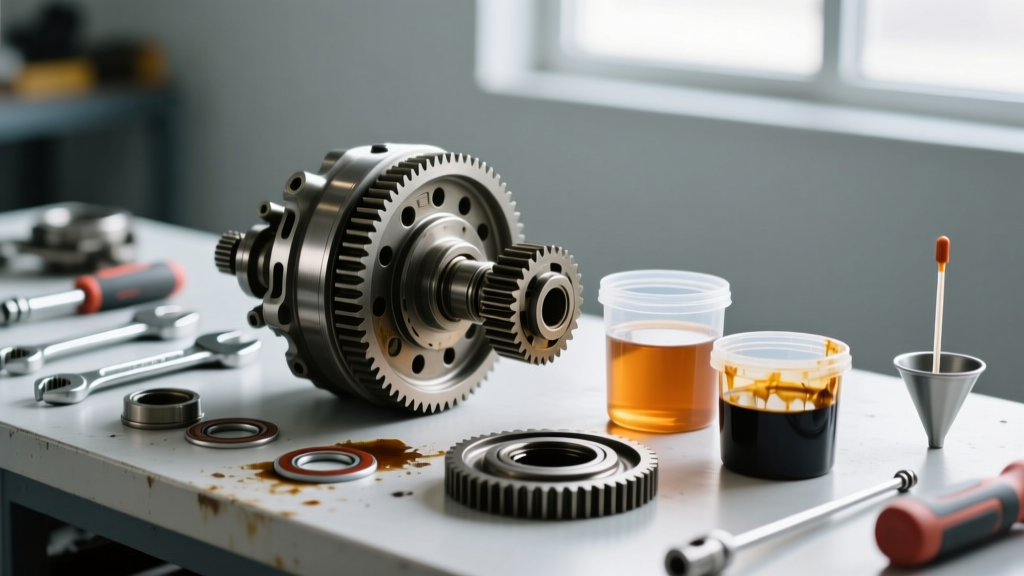
The open differential is the undisputed baseline of modern automotive engineering. Its primary directive is to allow the left and right wheels to rotate at different speeds during cornering, preventing tire scrubbing and driveline binding. Mechanically, it achieves this via a set of spider gears (side gears and pinions) mounted on a cross-pin within the carrier case.
The Torque Biasing Flaw
While excellent for highway cruising and tight parking lot maneuvers, the open differential possesses a critical flaw: it always routes torque to the path of least resistance. If your left wheel is on dry asphalt and your right wheel is on ice, 100% of the rotational force is sent to the slipping wheel. The vehicle remains stranded.
Furthermore, in high-shock environments like drag racing or rock crawling, the small spider gears and cross-pins in standard open carriers (such as the ubiquitous GM 8.5-inch 10-bolt, OE carrier part #26040476) are highly susceptible to catastrophic failure. Under extreme torque loads, the cross-pin can weld itself to the spider gears or sheer entirely, destroying the carrier case and leaving you with a locked, undrivable axle.
Limited Slip Differentials: Reinforcing the Axle
To correct the open differential’s traction deficits, engineers developed the Limited Slip Differential (LSD). LSDs introduce internal resistance, forcing torque to transfer to the wheel that still has grip. However, not all LSDs are created equal. Choosing the right unit dictates how your vehicle behaves under load.
Clutch-Type LSDs (Eaton Positraction & Auburn)
Clutch-type LSDs utilize a series of alternating friction and steel clutch packs positioned behind the side gears. A central preload spring (often an S-spring or C-spring) applies constant pressure to these packs. When one wheel begins to slip, the internal thrust forces increase, clamping the clutch packs tighter and transferring torque to the gripping wheel.
- Pros: Excellent for straight-line launch and drag racing; highly predictable breakaway torque.
- Cons: Clutch packs wear out over time; requires specialized friction modifier fluids; can cause low-speed cornering ‘chatter’ if not maintained.
- Top Pick: Auburn Gear High Performance Series (Part #542044 for Ford 8.8-inch 31-spline). Retailing around $550, it offers a torque bias ratio suitable for aggressive street and strip use.
Helical Gear LSDs (Eaton Truetrac)
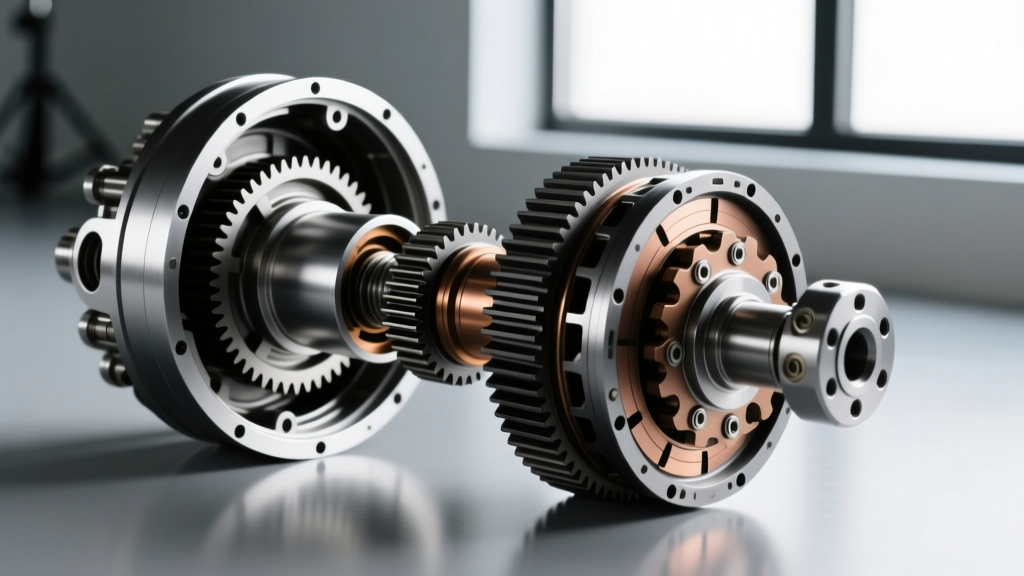
Helical LSDs abandon friction clutches entirely. Instead, they use parallel-axis helical planet gears. When torque is applied, the helical cut of the gears creates axial thrust, wedging the gears against the carrier case walls to create friction and limit slip. According to Eaton Performance Differentials, the Truetrac operates seamlessly and requires zero special maintenance.
- Pros: Maintenance-free; smooth operation; no friction modifier required; highly durable under continuous load.
- Cons: Requires some load to ‘activate’; not a true locker for extreme rock crawling where a wheel might be completely in the air.
- Top Pick: Eaton Truetrac (Part #910A486 for GM 8.5-inch 30-spline). Priced at approximately $680, it is the gold standard for daily-driven performance trucks and SUVs.
2026 Drivetrain Behavior Matrix
To visualize how differential reinforcement alters vehicle dynamics, review the comparison matrix below. This framework helps align your traction needs with the correct hardware and fluid requirements.
| Carrier Type | Torque Bias Ratio | Fluid Requirement | Best Application | Avg. Cost (2026) |
|---|---|---|---|---|
| Open Differential | 1:1 (None) | Standard 75W-90 GL-5 | Highway, commuting, towing | $150 - $250 (OE) |
| Clutch-Type LSD | 2.5:1 to 4:1 | 75W-90 GL-5 + Friction Modifier | Drag racing, street performance | $450 - $700 |
| Helical Gear LSD | 3.0:1 to 4.5:1 | Standard 75W-90 GL-5 Synthetic | Overlanding, daily driving, autocross | $600 - $850 |
| Automatic Locker | 100% Locked (Under Load) | Standard 75W-90 GL-5 | Hardcore rock crawling, mud bogging | $300 - $500 |
The Fluid Factor: Chemistry Meets Mechanics
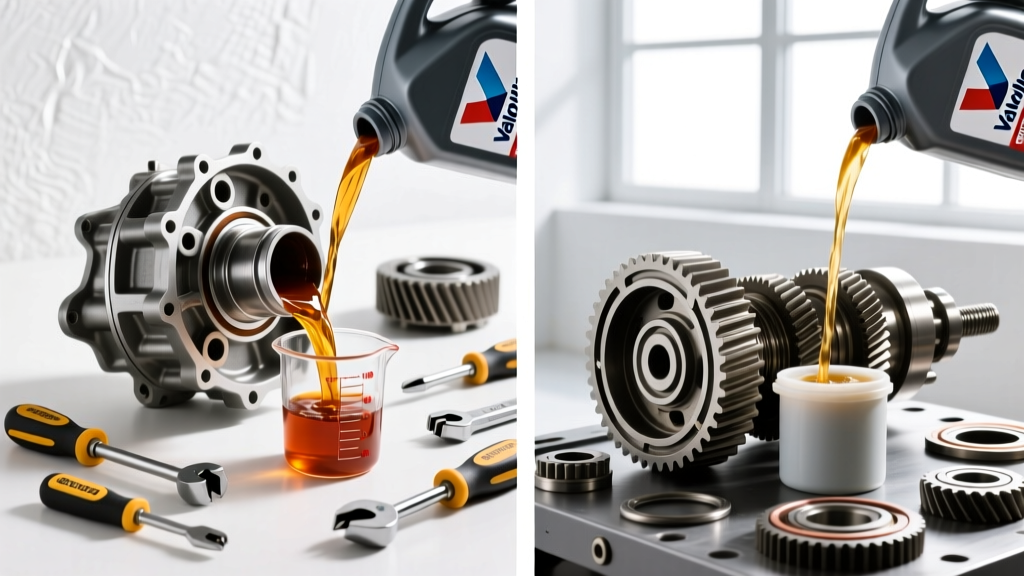
Because you are reading AutoGearNexus, you know that the hardware is only half the battle. The differential fluid you select dictates the longevity and behavior of your reinforced drivetrain. The hypoid gear design of the ring and pinion requires extreme pressure (EP) additives found exclusively in API GL-5 rated gear oils. Using GL-4 in a hypoid axle will result in rapid gear wear and catastrophic failure.
The Friction Modifier Imperative
If you install a clutch-type LSD (like the Auburn or Eaton Posi), you must add a friction modifier. Without it, the carbon-fiber or paper clutch packs will experience ‘stick-slip’ friction during low-speed turns. This manifests as a violent, shuddering chatter from the rear axle that can permanently glaze the clutch packs and ruin the unit.
Products like GM EOS (Part #88900338) or Lubegard Limited Slip Supplement contain long-chain polymers that alter the shear characteristics of the gear oil, allowing the clutches to slip smoothly before biting. Conversely, if you install a helical Truetrac, do not use friction modifiers. The additive can reduce the coefficient of friction on the helical gears, effectively neutering the unit’s torque-biasing capabilities. As noted by Spicer Drivetrain Components, matching the lubricant to the carrier architecture is non-negotiable for warranty compliance and operational integrity.
Capacity and Fill Specifications
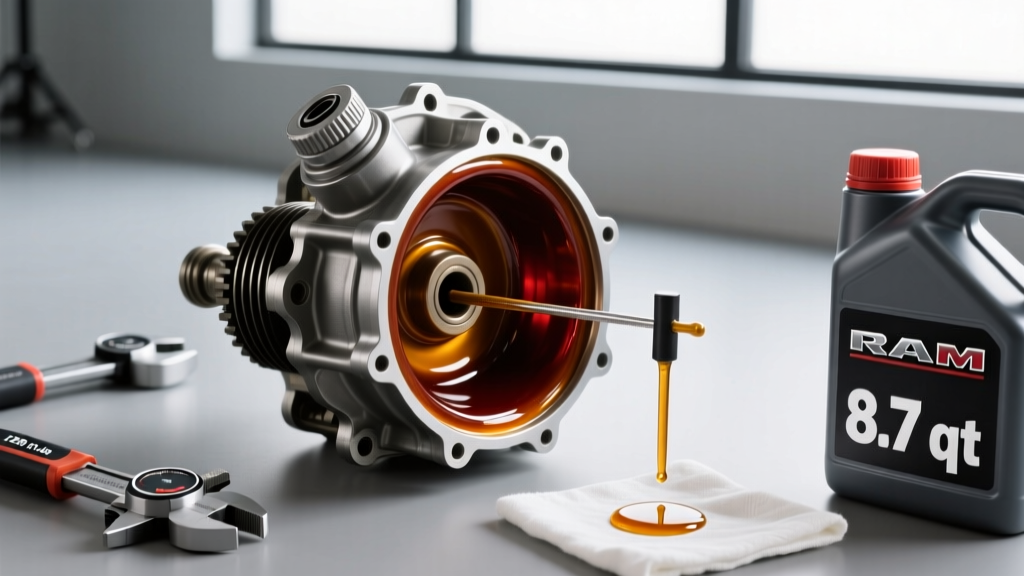
Overfilling a differential is a common DIY mistake that leads to blown axle seals due to thermal expansion and foaming. Always fill to the bottom of the fill plug hole while the vehicle is on level ground.
- Ford 8.8-inch Solid Axle: ~2.5 pints (1.18 Liters)
- GM 10-Bolt 8.5-inch: ~2.1 quarts (1.98 Liters)
- Jeep Dana 44 Rear: ~2.0 quarts (1.89 Liters)
For severe-duty applications in 2026, we recommend synthetic 75W-90 formulations like AMSOIL Severe Gear, which resist viscosity breakdown at extreme sump temperatures generated by sustained highway towing or track use.
Installation Economics and Torque Specifications
Reinforcing your differential is not a simple plug-and-play job. Swapping a carrier requires setting the ring gear backlash and verifying the gear contact pattern using marking compound. If the backlash is too tight, the gears will whine and overheat; if too loose, the drivetrain will clunk and the ring gear bolts may shear.
Critical Torque Specs
When performing a carrier swap or a full master rebuild kit installation (approx. $150 for a high-quality Timken or Motive Gear kit), adhere strictly to manufacturer torque specifications. For example, on a standard GM 8.5-inch 10-bolt:
- Ring Gear Bolts: 7/16-inch-20 Left-Hand Thread. Torque to 85-95 lb-ft. Must be coated with Loctite 262 (Red) high-strength threadlocker.
- Carrier Bearing Cap Bolts: Torque to 60-65 lb-ft. Never swap left and right caps; they are line-bored at the factory and are not interchangeable.
- Differential Cover Bolts: 10mm or 3/8-inch. Torque to 25-30 lb-ft in a star pattern to prevent warping the stamped steel or cast aluminum cover.
Total Cost of Ownership
Budgeting for a differential reinforcement project in 2026 requires looking beyond the sticker price of the LSD. A complete, professional swap includes the carrier ($450-$750), a master rebuild kit with shims and bearings ($120-$180), high-quality synthetic gear oil and modifiers ($40-$60), and machine shop or professional labor for setup ($400-$800). Expect a total investment between $1,000 and $1,800 for a properly calibrated, reinforced rear axle.
Final Verdict: Which Behavior Suits Your Build?
Ultimately, the process of differential reinforcement is about aligning your axle’s mechanical behavior with your real-world demands. If your vehicle is a dedicated drag car that sees occasional street use, a clutch-type LSD with the correct friction modifier fluid is your best route for maximum launch grip. If you drive a daily-driven truck, tow heavy loads, or explore fire roads, the Eaton Truetrac helical gear LSD offers unparalleled durability, zero maintenance, and seamless torque biasing using standard GL-5 synthetic gear oil.
By understanding the intricate relationship between carrier design, gear oil chemistry, and precise installation tolerances, you can successfully engineer the exact traction behavior your vehicle needs to dominate the pavement or the dirt.