The Hidden Threat to Your 4Runner's Axles
The Toyota 4Runner is legendary for its off-road capability, relying on a robust suspension and durable drivetrain to conquer harsh terrain. However, one of the most common points of failure during water crossings or deep mud runs isn't the gears themselves—it is the 4Runner differential breather. When this small, often-overlooked component fails or becomes submerged, it compromises the entire axle assembly. As a core pillar of our preventive maintenance guide series, understanding the direct link between breather integrity and differential fluid color and condition is critical for avoiding catastrophic ring and pinion failure.
When differential gear oil heats up during highway driving or trail riding, the air inside the axle housing expands and vents through the breather tube. If you suddenly submerge the axle in cold water, the housing rapidly cools, creating a powerful internal vacuum. If the breather hose is submerged, disconnected, or clogged with trail debris, that vacuum will suck water directly past the axle seals and into the gear oil. The only way to catch this before it destroys your hypoid gears is by reading the fluid's color and physical condition.
Decoding Differential Fluid Color and Condition
Inspecting your gear oil is the most reliable diagnostic tool for assessing the health of your 4Runner's axles. GL-5 gear oil contains vital sulfur-phosphorus extreme pressure (EP) additives. When water enters the system, it emulsifies the oil, destroying its film strength and leading to micro-pitting and scoring on the gear teeth. Below is a definitive diagnostic chart for evaluating your differential fluid condition.
| Fluid Appearance | Texture & Odor | Diagnostic Meaning | Required Preventive Action |
|---|---|---|---|
| Clear to Pale Amber | Smooth, slight sulfur/rotten egg odor | Normal, healthy GL-5 gear oil. No contamination. | Routine maintenance; check again at next interval. |
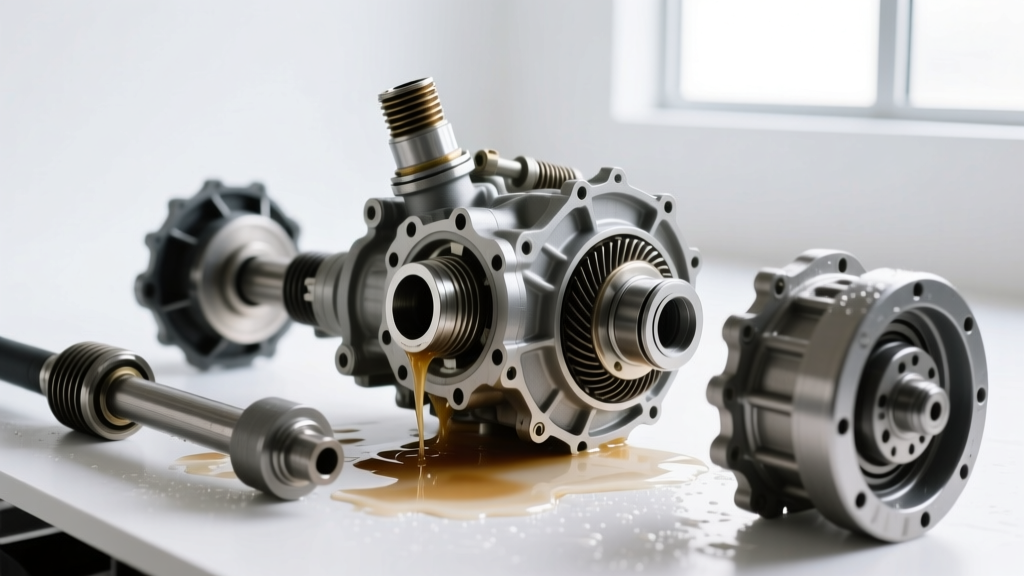
| Milky / 'Chocolate Milk' | Emulsified, thick, opaque | Severe water intrusion. The 4Runner differential breather is submerged, clogged, or the axle seal has failed. | Immediate flush. Relocate or replace breather hose and cap. |
| Dark Grey / Metallic | Gritty, sparkling in sunlight | Ring and pinion gear wear, or bearing cage degradation. Metal shavings are suspending in the oil. | Drop the differential cover (if equipped) or pull the third member. Inspect backlash and gear contact pattern. |
| Jet Black | Thin, burnt/acrid smell | Extreme thermal breakdown from heavy towing, overloading, or a dragging rear brake heating the axle tube. | Flush fluid. Inspect rear parking brake shoes and axle bearings for excessive heat transfer. |
Step-by-Step Preventive Inspection Protocol
To accurately assess your differential fluid color and condition, you must pull a sample directly from the housing. Do not rely on the dipstick on the transfer case; the front and rear differentials require individual inspection.
1. Preparation and Safety
Park the 4Runner on a perfectly level surface. The fluid level must be checked at the bottom of the fill hole threads. If the vehicle is on an incline, you will get a false reading, potentially leading to an underfilled differential that starves the pinion bearings of lubrication.
2. Tools and Torque Specifications
- Drive Tool: 3/8-inch square drive ratchet (for the 8-inch rear differential fill and drain plugs).
- Socket: 24mm or 10mm hex (depending on the specific model year and aftermarket plug variations).
- Torque Spec: Factory specification for Toyota 8-inch differential fill and drain plugs is 29 ft-lbs (39 Nm).
- Clean-Up: Brake cleaner and lint-free shop towels.
3. The Extraction Process
Always remove the fill plug first. If the drain plug is stripped or seized and you remove it first, you will be left with an empty differential and no way to refill it. Wipe the area around the fill plug with brake cleaner to prevent trail dirt from falling into the housing. Insert your 3/8-inch ratchet, break the plug loose, and let a small amount of fluid drain into a clean, clear glass or plastic catch pan. This initial sample will reveal the true fluid color and condition.
Corrective Maintenance: Flushing and Breather Relocation
If your inspection reveals the dreaded 'chocolate milk' emulsion, your 4Runner differential breather system has failed its primary job. Simply changing the fluid is not enough; you must address the root cause to prevent a recurrence.
Flushing the Contaminated Axle
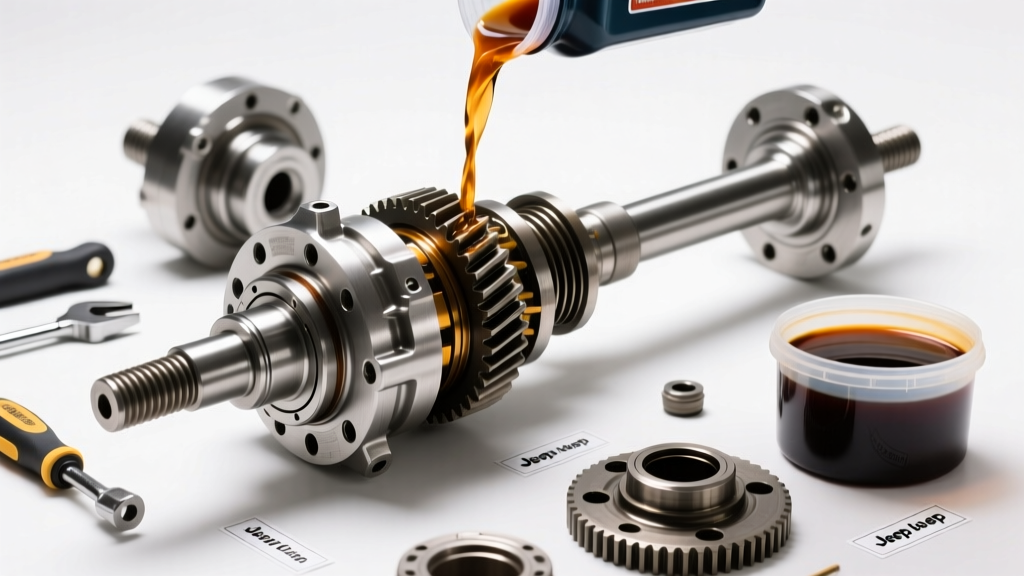
Water is heavier than gear oil and will pool at the bottom of the housing. Drain the contaminated fluid completely. For severe emulsion, mechanics often recommend a 'flush fill' using a cheap, conventional 80W-90 GL-5 gear oil. Fill the differential, drive the vehicle for 5 to 10 miles to circulate the oil and suspend the trapped water, and then drain it again while hot. Finally, refill with your preferred synthetic fluid.
OEM Fluid Recommendation: Toyota Genuine 75W-85 GL-5 (Part # 08885-02606).
Aftermarket Alternative: Amsoil Severe Gear 75W-90 or Red Line 75W90 Synthetic.
Capacities: The 5th Gen 4Runner rear 8-inch differential holds approximately 3.2 quarts (3.0L). The front independent differential holds approximately 1.5 quarts (1.4L).
Upgrading the 4Runner Differential Breather
The OEM Toyota breather cap (Part # 90930-03121) is a simple push-on plastic valve designed for light dust and splash resistance. It is not designed for hydrostatic pressure. To bulletproof your axle, you must extend the breather hose.
According to the off-road engineering experts at IH8MUD's Toyota Truck Tech forums, the best preventive measure is routing a 1/4-inch polyurethane hose from the axle housing up into the engine bay, securing it near the firewall or the top of the radiator support. Terminate the hose with a high-flow, water-resistant breather filter, such as those found in the ARB Differential Breather Kits (Part # 17010012). This ensures that when the axle cools and creates a vacuum, it pulls clean, dry engine bay air instead of river water.
When to Suspect Internal Gear Damage
If you discover that your 4Runner has been driving with emulsified fluid for an extended period, a simple fluid change may not save the axle. Water contamination strips the protective boundary layer of the GL-5 gear oil. Under heavy load, the bare metal of the ring and pinion gears will weld together microscopically and tear apart, a process known as scuffing.
After flushing a severely contaminated differential, listen carefully for a 'whining' or 'howling' noise that changes pitch during deceleration versus acceleration. As noted in the drivetrain blueprints provided by Yotaforce Toyota Axle Specifications, a whine on deceleration typically indicates pinion bearing wear or an incorrect gear contact pattern exacerbated by water-induced lubrication failure. If the noise persists after installing fresh synthetic 75W-90, the differential requires a complete teardown, backlash adjustment, and likely a new ring and pinion set.
Preventive Maintenance Intervals
To maintain optimal differential fluid color and condition, adhere to the following preventive maintenance schedule based on your 4Runner's usage profile:
- Highway / Commuter (No Off-Roading): Inspect fluid color and condition every 30,000 miles. Change every 60,000 miles.
- Weekend Warrior (Dirt Roads, Light Trails): Inspect fluid every 15,000 miles. Change every 30,000 miles. Ensure OEM breather hoses are free of cracks and securely attached to the axle housing.
- Overland / Water Crossings: Inspect fluid immediately after any water crossing where the hub is submerged. If the 4Runner differential breather has not been relocated to the engine bay, assume water intrusion has occurred and perform a preventive flush.
By treating your differential fluid color and condition as an early warning system, and by ensuring your 4Runner differential breather is properly routed and functioning, you can easily push your Toyota's axles well past the 200,000-mile mark without a single gear replacement.