The Great Divide: Performance Car vs. Heavy-Duty Truck Differentials
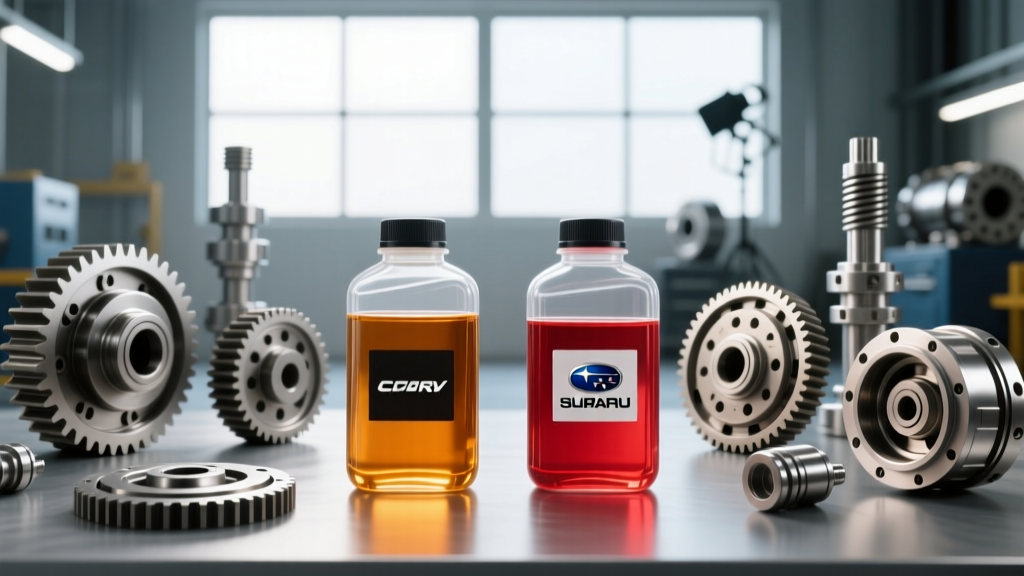
When automotive enthusiasts discuss drivetrain maintenance, the conversation often splinters based on vehicle purpose. On one side, you have the high-RPM, low-torque-stress environment of performance cars. Enthusiasts frequently debate the merits of OEM versus aftermarket subaru wrx rear differential fluid for track-day abuse, focusing on rapid temperature spikes and helical gear whine. On the other side sits the brutal reality of truck and SUV differential maintenance—a world defined by massive low-end torque multiplication, heavy towing loads, and severe shock-loading from off-road articulation.
While a Subaru WRX rear differential typically holds less than a single quart (roughly 0.85L) of 75W-90 GL-5 gear oil and relies on high-RPM fluid shear, a heavy-duty truck like a Ford F-250 with a 10.5-inch Sterling axle or a Jeep Wrangler Rubicon with Dana 44 axles demands an entirely different approach to gear oil chemistry. As of 2026, modern synthetic formulations have bridged some gaps, but treating a heavy-duty truck differential like a sports car differential is a fast track to catastrophic hypoid gear failure.
Gear Oil Viscosity and Additive Packages Explained
The fundamental difference between performance car and truck/SUV differential maintenance lies in the viscosity index and Extreme Pressure (EP) additive concentrations. The subaru wrx rear differential fluid is engineered for rapid flow at cold starts to protect tight-tolerance bearings and to maintain a stable film strength at high rotational speeds. Conversely, truck and SUV axles operate at much lower rotational speeds but endure exponentially higher thrust loads, particularly when towing or crawling over rocks.
Heavy-duty applications require higher viscosity fluids, such as 75W-140 or heavy 80W-90, fortified with specialized EP additives like zinc dialkyldithiophosphate (ZDDP) and sulfur-phosphorus compounds. These additives chemically react with the metal surfaces under extreme pressure to create a sacrificial boundary layer, preventing metal-on-metal welding when the fluid film is squeezed out from between the ring and pinion gears.
| Specification | Performance Car (e.g., WRX) | Heavy-Duty Truck/SUV (e.g., F-250, Wrangler) |
|---|---|---|
| Typical Viscosity | 75W-90 GL-5 | 75W-140 or 80W-90 GL-5 |
| Fluid Capacity | 0.8 - 1.2 Quarts | 2.5 - 4.5 Quarts |
| Primary Stress Factor | High RPM / High Shear | High Torque / Shock Loading |
| EP Additive Focus | Moderate (Anti-wear) | Extreme (Boundary layer protection) |
| Service Interval | 60,000 Miles | 15,000 - 30,000 Miles (Severe/Towing) |
Truck and SUV Differential Maintenance Intervals
One of the most critical mistakes truck owners make is following the manufacturer's "normal" service schedule. If your truck or SUV is equipped with a towing package, a snow plow prep package, or if you regularly drive in dusty, off-road environments, your differential fluid is operating under "severe" conditions.
- Light Duty SUVs (e.g., Toyota 4Runner, Ford Explorer): Under normal conditions, rear differential fluid can last up to 60,000 miles. Under severe conditions (frequent towing, water fording), drop this interval to 30,000 miles.
- Heavy Duty Trucks (e.g., Chevy Silverado 2500HD, Ram 2500): When actively towing near Gross Combined Weight Rating (GCWR), the differential fluid in an 11.5-inch AAM axle can reach temperatures exceeding 250°F (121°C), rapidly depleting the fluid's oxidation inhibitors. Change intervals must be compressed to 15,000–20,000 miles.
- Off-Road Crawlers (e.g., Jeep Wrangler, Ford Bronco): Water intrusion is the primary enemy. Even with breather tube extensions, deep water fording can cause a rapid temperature drop, sucking moisture past the axle seals. If the fluid takes on a milky, chocolate-milk appearance, immediate extraction is mandatory to prevent bearing spalling.
Step-by-Step Solid Axle Differential Service Guide
Performing differential maintenance on a truck or SUV solid axle (such as the ubiquitous Dana 44, Dana 60, or Ford/Sterling axles) requires precision and the right materials. Unlike the simple drain-and-fill plug setup found on most performance cars, many truck axles require removing the entire differential cover.
1. Preparation and Extraction
Warm the axle by driving the vehicle for 10-15 minutes. Warm fluid suspends metallic particulates and flows more easily. Position a high-capacity drain pan (minimum 6-quart capacity to account for fluid rushing out with the cover). Use a 3/8-inch or 1/2-inch drive socket to remove the fill plug before unbolting the cover. If you remove the cover first and find the fill plug is seized or stripped, you have created a massive logistical problem.
2. Cleaning and Inspection
Once the cover is off, inspect the magnetic drain plug or the internal magnets. A fine, glitter-like paste is normal wear from the hypoid gear set's initial break-in and clutch pack friction. However, jagged metal shards or chipped teeth indicate imminent ring and pinion failure. Use a dedicated brake cleaner and lint-free shop towels to clean the inside of the axle housing and the mating surface of the cover. Never leave solvent residue inside the housing.
3. Sealing and Torque Specifications
Abandon cheap cork gaskets. For modern truck and SUV differentials, use a high-quality RTV silicone like Permatex Ultra Black (part #81878) or a premium reusable rubber gasket like the Lube Locker. If using RTV, apply a continuous 1/8-inch bead, ensuring you circle the inside of every bolt hole. Allow the RTV to skin over for 10 minutes before mating the cover.
Expert Torque Specs: When reinstalling a Dana 44 or Dana 60 differential cover, tighten the bolts in a crisscross pattern to 30-35 lb-ft. For a Ford 10.5-inch Sterling axle fill plug, torque to 35-45 lb-ft. Over-torquing soft steel cover bolts will strip the aluminum or cast-iron housing threads, requiring a costly Heli-Coil repair.
Friction Modifiers: The LSD Chatter Factor
Trucks and SUVs frequently utilize complex Limited Slip Differentials (LSDs) to maintain traction, such as the Eaton Truetrac, Auburn Gear, or OEM clutch-type LSDs. This is where the comparison to subaru wrx rear differential fluid becomes highly relevant. The WRX utilizes a Torsen-style helical gear LSD or a viscous coupling, which generally does not require specialized friction modifiers.
However, clutch-type LSDs found in many Ford and GM trucks require a specific friction modifier additive (often labeled as "Limited Slip Additive" or GM part #88900338). Without this additive, the clutch packs will grab and release erratically during low-speed cornering, resulting in a violent chattering sensation that can permanently score the clutch steels. Always verify if your aftermarket 75W-140 synthetic fluid already contains the necessary friction modifiers for clutch-type LSDs before adding separate additives, as over-treating can cause the clutch packs to slip excessively under heavy load.
Top Synthetic Upgrades for 2026
Upgrading your truck or SUV differential fluid is one of the highest ROI performance and reliability modifications you can make. Here are the top-tier synthetic options dominating the heavy-duty market in 2026:
- AMSOIL Severe Gear 75W-140: Engineered specifically for high-torque, high-heat applications. It features an exclusive synthetic base oil blend that maintains film strength under extreme shock loads. Pricing averages around $22 to $25 per quart. You can review their technical data sheets on the AMSOIL Severe Gear product page.
- Royal Purple Max Gear 75W-140: Utilizing proprietary Synerlec additive technology, Max Gear offers exceptional boundary protection and includes the necessary friction modifiers for most OEM clutch-type LSDs out of the bottle. Expect to pay $23 to $26 per quart. Learn more via Royal Purple's Max Gear lineup.
- Red Line ShockProof Heavy: A unique suspension of solid microscopic particles that acts like a fluid cushion under extreme shock loading. Ideal for heavily modified off-road SUVs and rock crawlers utilizing spool or Detroit Locker setups. Priced at a premium $28+ per quart.
Final Thoughts on Drivetrain Longevity
While the subaru wrx rear differential fluid is a masterpiece of low-viscosity, high-RPM engineering, it has no place in the heavy-duty axles of trucks and SUVs. By understanding the distinct viscosity requirements, adhering to severe-duty maintenance intervals, and utilizing premium synthetic gear oils with the correct EP additives, you can ensure your rig's ring and pinion survive the harshest towing and off-road environments for hundreds of thousands of miles.