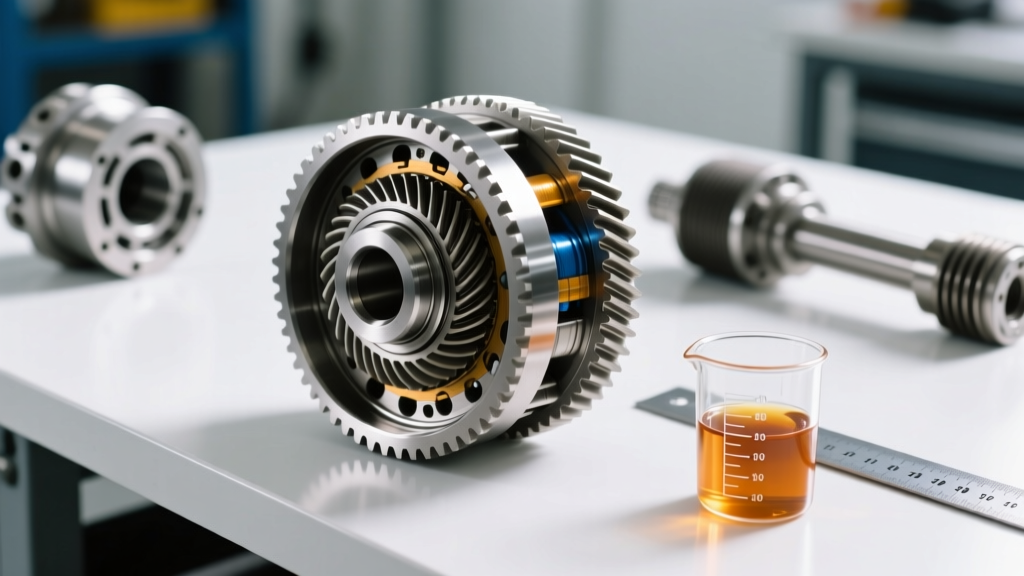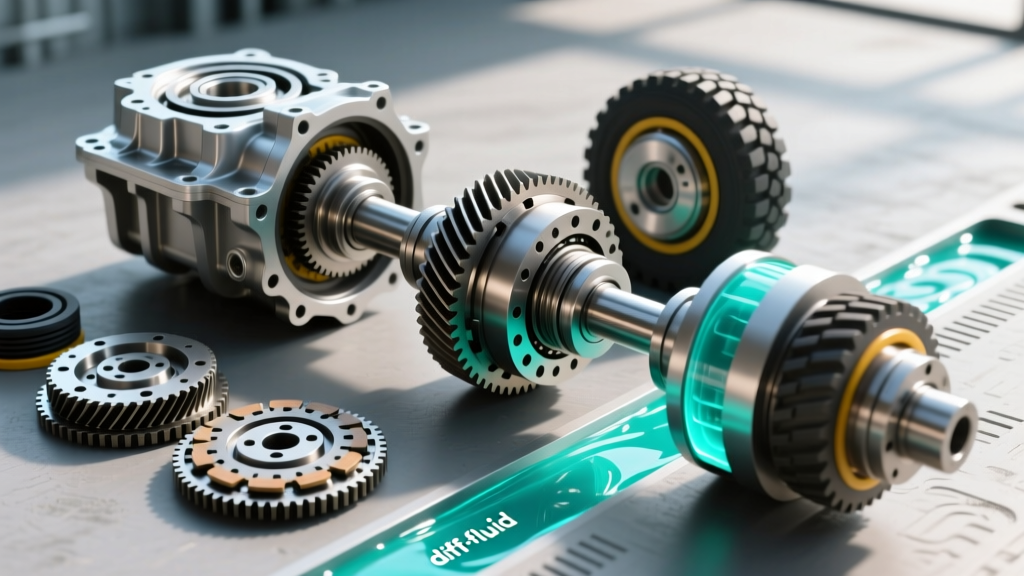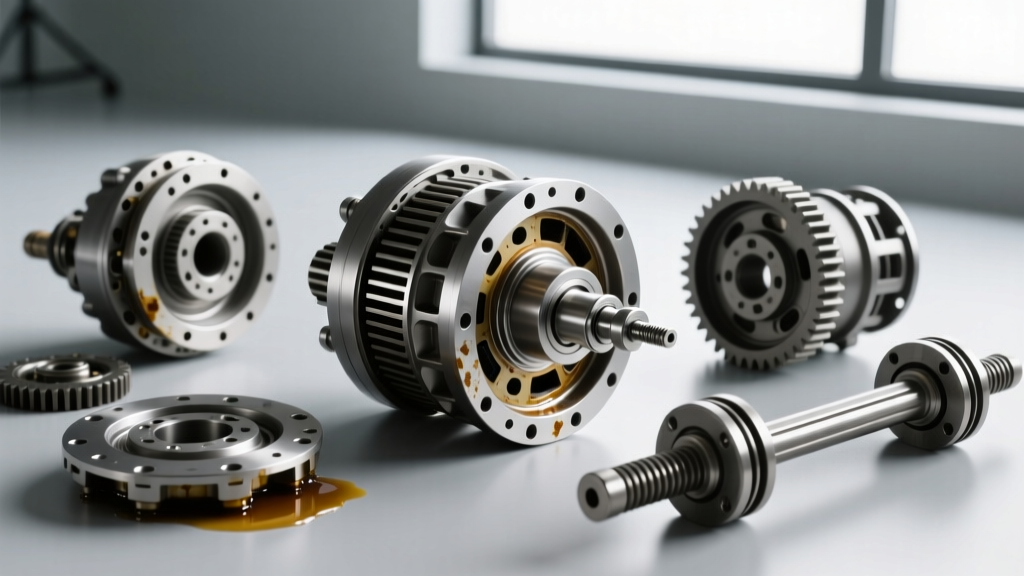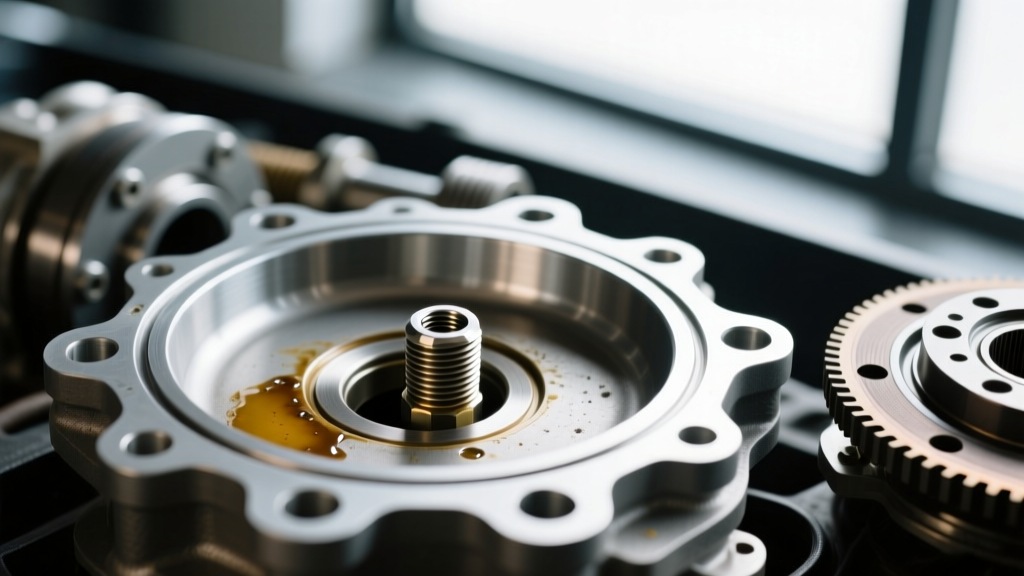
When a customer complains of axle whine, clunking, or chatter, novice technicians often jump straight to a teardown or recommend a complete replacement. However, expert drivetrain diagnostics dictate a more methodical approach. Before unbolting the driveshaft or pulling the differential cover, the most critical first step in rear differential noise diagnosis is inspecting the fluid and the magnetic drain plug on rear differential housings. The gear oil and the debris it carries tell a detailed story about the internal health of the hypoid gear set, bearings, and limited-slip clutch packs.
Auditory Triage: Categorizing Axle Noises
Before pulling the plug, you must accurately categorize the noise. Rear differentials are subjected to extreme torque multiplication, especially when paired with high-output transmissions like the ZF 8HP75 or the GM 10L90. The acoustic signature of the axle will point you toward the specific failing component.
Coast-Down Whine vs. Drive Whine
- Whine on Deceleration (Coast Side): A howling or whining noise that occurs when you let off the throttle (typically between 40-60 mph) usually indicates pinion bearing wear or improper pinion depth. The coast side of the ring and pinion teeth is taking the load, and if the pinion bearing preload has relaxed, the gear mesh will be out of spec.
- Whine on Acceleration (Drive Side): If the noise occurs only under load, the issue is often related to ring gear deflection, worn pinion depth shims, or inadequate case bearing preload. The drive side of the gear teeth is wearing, often exacerbated by heavy towing or aggressive tuning.
Clunking, Backlash, and Chatter
- Engagement Clunk: A sharp metallic clunk when shifting from Park to Drive or Reverse, or during sudden throttle tip-in, points to excessive backlash. This can be caused by worn spider gears, a stretched ring gear bolt set, or slip yoke spline wear in the driveshaft rather than the differential itself.
- Turn Chatter: A rhythmic shudder or chirping noise during low-speed cornering is the hallmark of limited-slip differential (LSD) clutch pack bind. This is almost always a fluid chemistry issue, resolved by addressing the drain plug on rear differential units, flushing the fluid, and adding the correct friction modifier.
The Diagnostic Value of the Drain Plug on Rear Differential Housings
Not all axles feature a dedicated drain port; some older or light-duty independent rear suspension (IRS) housings require fluid extraction via the fill hole. However, for solid axles and heavy-duty housings (like the Dana 60, Ford 10.5, or Ram ZF M226), the drain plug on rear differential assemblies is your primary diagnostic window. Most factory drain plugs feature a magnetic tip designed to capture ferrous metals before they circulate through the bearing journals.
Expert Insight: Never use an impact wrench to remove the drain plug on rear differential casings. The housings are often cast aluminum or thin-walled nodular iron. An impact gun can easily crack the boss or strip the threads, turning a $50 fluid service into a $1,500 housing replacement or helicoil repair.
Debris Analysis: What the Magnet Tells You
Once you extract the drain plug, wipe the magnet onto a white shop towel. The morphology of the debris will dictate your next move. Use the following diagnostic matrix to interpret the findings:
| Debris Type on Drain Plug | Visual / Tactile Description | Probable Internal Failure Mode | Recommended Action |
|---|---|---|---|
| Fine Metallic Paste | Dark grey, smooth, looks like graphite or fine glitter. | Normal wear of bearings and gear teeth over 50,000+ miles. | Standard fluid drain and refill. No teardown required. |
| Brass / Bronze Flakes | Yellow/gold metallic chips or shavings. | Differential case thrust washer wear or bronze spider gear bushing failure. | Inspect backlash; plan for a master rebuild kit installation. |
| Chunky Ferrous Metal | Sharp, jagged steel fragments larger than a grain of rice. | Catastrophic ring and pinion tooth shearing, or bearing cage disintegration. | Immediate teardown. Do not drive the vehicle. Replace R&P and bearings. |
| Needle Roller Bearings | Tiny, hardened steel cylinders. | Spider gear cross-pin bearing failure or pinion bearing collapse. | Complete axle rebuild. Flush the axle tubes to prevent scored journals. |
Fluid Evacuation and Refill Best Practices
If the debris on the drain plug on rear differential units indicates normal wear, or if you are simply treating an LSD chatter issue, a proper fluid exchange is required. As of 2026, synthetic 75W-90 and 75W-140 gear oils remain the industry standard for severe-duty applications. According to AMSOIL and Spicer Parts engineering bulletins, synthetic fluids provide superior shear stability and film strength under high-heat towing conditions.
Step-by-Step Service Procedure
- Warm the Axle: Drive the vehicle for 15-20 minutes. Gear oil viscosity drops significantly when warm, allowing suspended particulates to drain out rather than settling at the bottom of the housing.
- Open the Fill Plug FIRST: This is a cardinal rule of drivetrain maintenance. If the fill plug is seized and you drain the axle first, the vehicle is immobilized until the fill plug is freed. Use a 3/8" or 1/2" square drive, or the appropriate metric hex (often 10mm or 12mm).
- Extract and Inspect: Remove the drain plug and evaluate the magnet as detailed above.
- Reinstall and Torque the Drain Plug: Clean the threads and reinstall. Do not over-torque.
- Fill to Capacity: Pump the new gear oil until it reaches the bottom of the fill hole threads. For limited-slip axles, add the OEM-specified friction modifier before topping off with gear oil to ensure proper mixing.
Critical Torque Specifications
Stripped drain bosses are a leading cause of axle replacement in poorly maintained trucks. Adhere strictly to these OEM torque specifications for common axles:
- GM 8.5 / 8.6 (10-bolt & 12-bolt): M12x1.75 plug. Torque to 18 lb-ft (24 Nm).
- Ford 8.8 & 9.75: 1/2" square drive plug. Torque to 35 lb-ft (47 Nm).
- Dana 44 / Dana 60: 1/2" NPT pipe plug. Torque to 25-35 lb-ft. Use liquid Teflon tape or anaerobic pipe sealant on the threads to prevent weeping.
- Stellantis / Ram ZF M226 / M235: M14x1.5 plug. Torque to 30 lb-ft (40 Nm).
Addressing Limited-Slip Chatter Post-Service
If the drain plug on rear differential inspections revealed clean fluid but the vehicle still exhibits turn chatter, the clutch pack friction coefficient has degraded. For Ford Trac-Lok axles, Motorcraft XL-3 Friction Modifier is mandatory. For GM G80 Eaton locking differentials, no friction modifier is used; chatter in a G80 usually indicates broken governor weights or worn carbon clutches, requiring a differential cover removal. For aftermarket units like the Eaton Truetrac or Detroit Locker, consult the manufacturer, as many modern helical or gear-type lockers do not require friction modifiers at all.
Rebuild vs. Replace Economics in 2026
When the drain plug reveals chunky metal or needle bearings, a teardown is unavoidable. Understanding the 2026 pricing landscape helps in quoting the customer accurately:
- Master Rebuild Kit: A high-quality kit featuring Timken bearings, shims, and seals (e.g., Timken SET-10 for pinion) costs between $180 and $280.
- Ring and Pinion Set: OEM or premium aftermarket (Yukon, Motive Gear) sets range from $250 to $450 depending on the gear ratio and axle model.
- Labor Rates: A proper R&P setup, including verifying the contact pattern with marking compound and setting pinion preload via inch-pound torque gauge, takes 4 to 6 hours. At an average 2026 shop rate of $150/hr, labor will range from $600 to $900.
- Complete Remanufactured Axle Assembly: For heavily damaged housings or seized bearings that require torching off the carrier, a complete drop-in third member or bare axle assembly can cost $1,800 to $3,500, but saves diagnostic and setup time.
By treating the drain plug on rear differential systems as a primary diagnostic tool rather than just a maintenance port, technicians can accurately predict internal axle health, avoid unnecessary teardowns, and provide customers with transparent, data-driven repair estimates.