The Evolution of Truck Axles: From Mechanical to Mechatronic
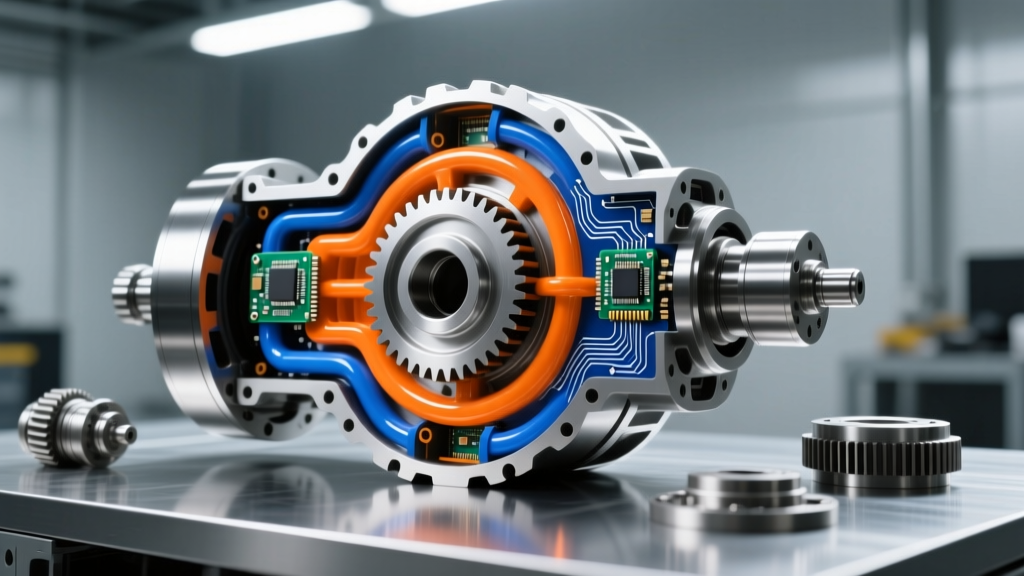
As of the 2026 model year, the landscape of heavy-duty truck and performance SUV drivetrains has fundamentally shifted. Platforms like the Ford F-150 Raptor R, Ram 2500 Power Wagon, and Chevy Silverado ZR2 Bison no longer rely solely on mechanical limited-slip differentials or basic pneumatic lockers. Instead, they utilize advanced active electronic differentials (eDiffs) and torque-vectoring axles. For performance enthusiasts and fleet technicians, differential maintenance is no longer just about swapping out 75W-140 gear oil; it requires a deep understanding of the electronic architecture housed within the axle casing.
At the heart of this mechatronic integration is the sensor array that monitors axle shaft speed, locking collar position, and thermal thresholds. These sensors communicate with the powertrain control module (PCM) using a highly robust protocol known as the differential Manchester code. Understanding how this encoding scheme interacts with your differential fluid condition and axle upgrades is critical for maintaining peak off-road performance and avoiding catastrophic drivetrain limp-mode failures.
Understanding the Differential Manchester Code in eDiffs
In automotive electronics, the undercarriage is an incredibly hostile environment for data transmission. High electromagnetic interference (EMI) from the alternator, ignition coils, and electric power steering pumps can easily corrupt standard digital signals. To combat this, OEMs utilize differential signaling paired with Manchester encoding—specifically, the differential Manchester code—for critical wheel speed and active locker position sensors.
Unlike standard NRZ (Non-Return-to-Zero) encoding, differential Manchester encoding guarantees a voltage transition in the middle of every single bit period, while utilizing a twisted-pair wire setup to reject common-mode noise. The PCM reads the difference in voltage between the two wires rather than the voltage relative to ground.
Why Signal Integrity Matters During Fluid Changes
You might wonder how a digital encoding protocol relates to synthetic gear oils and differential maintenance. The answer lies in the physical placement of the exciter rings and magneto-resistive sensors. In many modern Dana 60 and AAM 11.5 axles, the encoder ring is mounted directly to the axle shaft or the differential carrier, bathed in or directly adjacent to the gear oil.
- Particulate Interference: As ring-and-pinion gears wear, they shed microscopic metallic swarf. If your differential fluid is degraded or lacks adequate suspension additives, this metallic sludge coats the magnetic encoder ring.
- Signal Attenuation: A coated encoder ring weakens the magnetic field. The sensor fails to register the precise transitions required to generate a clean differential Manchester code waveform.
- Limp Mode Activation: When the PCM detects dropped packets in the Manchester bitstream, it assumes a sensor failure. It will immediately disable the active eLocker, traction control, and ABS, severely crippling the vehicle's off-road capability.
2026 Heavy-Duty Axle Comparison & Maintenance Specs
When performing performance upgrades or routine severe-duty maintenance, it is vital to know the exact specifications of your axle. Below is a comparison of the most common heavy-duty truck axles and their electronic/mechanical requirements.
| Axle Model | Ring Gear Size | Fluid Capacity | Cover Bolt Torque | Sensor / Encoding Type |
|---|---|---|---|---|
| AAM 11.5 (Ram HD) | 11.5 inches | 3.8 - 4.2 Quarts | 45 lb-ft | Magneto-Resistive (Manchester) |
| Ford 10.5 (Super Duty) | 10.5 inches | 3.4 - 3.7 Quarts | 33 lb-ft | Active Hall-Effect / Differential Pair |
| Dana 60 (GM ZR2/HD) | 9.75 inches | 3.5 - 4.0 Quarts | 35 lb-ft | Encoder Ring / Biphase Mark |
Step-by-Step Performance Differential Service
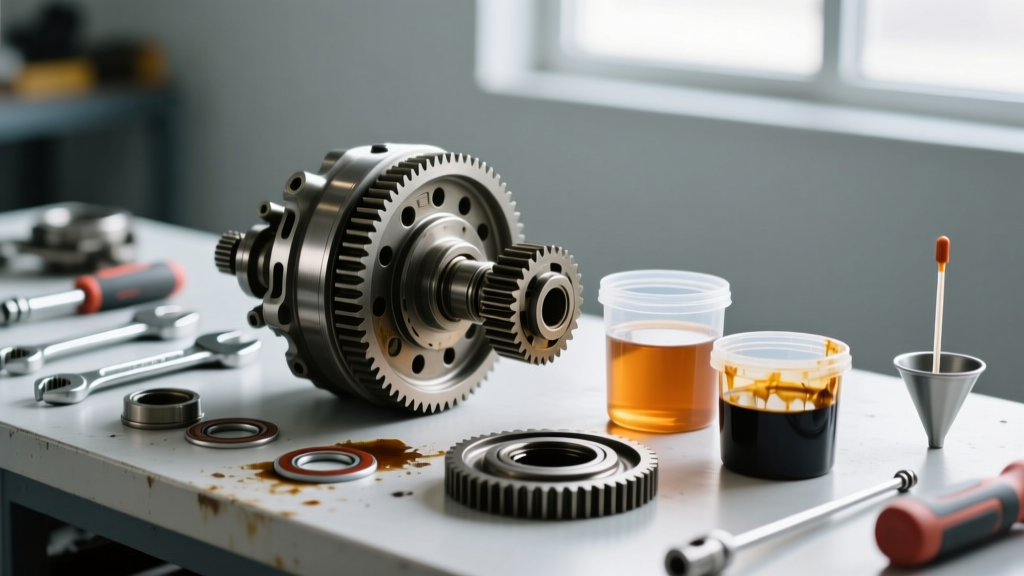
For trucks subjected to heavy towing, rock crawling, or high-speed desert running, a standard 60,000-mile fluid interval is insufficient. Performance applications demand 15,000 to 30,000-mile intervals. Here is the expert protocol for servicing the differential while preserving the electronic sensor arrays.
1. Teardown and Decontamination
Remove the differential cover using the specified torque sequence in reverse. Allow the fluid to drain completely. Crucial Step: Do not use high-pressure solvent sprayers directly on the axle shaft seals or the internal encoder rings. High-pressure solvents can force debris past the seals and into the magneto-resistive sensor cavities, permanently destroying the sensor's ability to read the differential Manchester code.
2. Magnetic Encoder Ring Inspection
Wipe the internal exciter/encoder rings with a lint-free cloth and a dedicated electronic contact cleaner. Inspect the ring for missing poles or physical damage. The air gap between the sensor and the encoder ring must strictly adhere to OEM specifications—typically between 0.5mm and 1.2mm. If you are upgrading to aftermarket alloy axle shafts (such as those from Dana Spicer or Yukon Gear), ensure the reluctor rings are pressed on with the exact same dimensional offset as the factory shafts.
3. Fluid Selection and Refill
For heavy-duty trucks with active eDiffs, avoid generic gear oils that contain excessive friction modifiers meant for clutch-type limited slips, as these can cause the electronic locking collars to slip or bind. Recommended Fluids:
- Red Line 75W140 ShockProof: Ideal for severe off-road use and high-load towing. Its unique suspension characteristics keep metallic particles away from the encoder rings.
- Amsoil Severe Gear 75W-90: Excellent for daily-driven trucks that see occasional heavy towing, offering superior thermal stability.
Refill until the fluid reaches the bottom of the fill hole. For vehicles with an off-road bumper or a lifted suspension, verify if the OEM requires an extended fluid fill to compensate for the altered pinion angle.
Upgrading to Active Electronic Lockers
If you are rebuilding a differential and want to upgrade from an open carrier or a worn clutch-pack LSD to a modern active locker, the Eaton eLocker (Part #19967-01 for Dana 60s) remains a top-tier choice for 2026 builds. Priced between $950 and $1,250, the Eaton eLocker uses an internal electromagnetic coil to engage a mechanical locking collar.
When wiring an aftermarket eLocker, you are essentially creating a new circuit that must survive the undercarriage environment. Use military-spec MIL-DTL-24643 twisted-pair wiring to route the 12V trigger and the feedback signal to your cabin-mounted switch. While the Eaton eLocker itself does not output a Manchester-encoded data stream back to a factory PCM, integrating it with standalone traction management systems (like those from Motec or Haltech) requires configuring the ECU's digital inputs to read differential Manchester signals from external wheel speed sensors to automate locker engagement based on slip ratios.
Diagnosing Dropped Manchester Signals with Oscilloscopes
When a truck throws a U-code (Network Communication Fault) or a C-code (Chassis/ABS Fault) related to the axle speed sensors, guessing and throwing parts at the vehicle is a waste of time and money. Professional drivetrain technicians use automotive oscilloscopes, such as those from Pico Technology, to visualize the actual waveform.
By back-probing the twisted-pair sensor harness at the differential pigtail, you can observe the differential Manchester code in real-time. A healthy signal will show two square waves that are exact 180-degree mirror images of each other, with consistent voltage amplitudes (usually swinging between 0.8V and 1.6V).
Common Failure Modes:
- Amplitude Collapse: If the voltage swing drops below 0.5V, the air gap is too wide, or the encoder ring is heavily coated in metallic gear-oil sludge.
- Asymmetrical Waveforms: If one wire in the twisted pair shows a degraded signal while the other remains strong, you have a chafed wire shorting to the chassis ground, destroying the common-mode noise rejection.
- Thermal Drift: If the signal drops out only after 30 minutes of highway driving, the internal sensor hall-effect chip is failing under the thermal load of the 180°F+ differential fluid.
Final Thoughts on Drivetrain Preservation
The modern truck differential is a marvel of mechanical strength and electronic precision. Whether you are prepping a Ram 2500 for a cross-country towing expedition or upgrading the Dana 60 on a ZR2 for desert racing, respecting the symbiotic relationship between your gear oil and your sensor arrays is paramount. By utilizing high-suspension synthetic fluids, adhering to strict torque specifications, and understanding the underlying differential Manchester code protocols, you ensure that your axle performs flawlessly when the pavement ends and the trail begins.