The Anatomy of Modern Bike Drivetrains: A Mechanic's Perspective
When evaluating drivetrain types for different vehicles, motorcycles present a unique engineering triad. Unlike the enclosed, fluid-bathed differentials of passenger cars, bike drivetrains are largely exposed to the elements, requiring precise mechanical tolerances and rigorous maintenance schedules. Whether you are wrenching on a high-strung sportbike, a heavy cruiser, or an adventure tourer, understanding the specific failure modes and repair protocols of chain, belt, and shaft systems is critical for longevity and safety.
In this model-specific repair guide, we dissect the three primary motorcycle final drive architectures. We will cover exact torque specifications, OEM part numbers, fluid capacities, and diagnostic procedures for the Honda CBR1000RR-R (chain), Harley-Davidson Softail Standard (belt), and BMW R 1250 GS (shaft). For further reading on general motorcycle maintenance principles, authoritative resources like RevZilla's Common Tread and Cycle World offer excellent baseline tutorials, but the data below is tailored for advanced, model-specific wrenching.
Chain-Drive Systems: Honda CBR1000RR-R Fireblade Repair and Setup
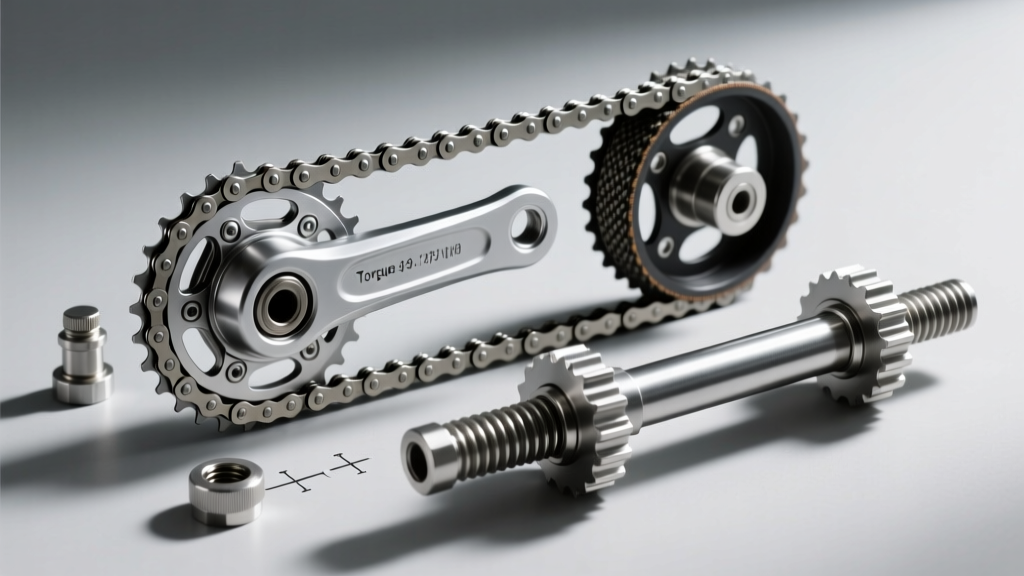
The chain drive remains the undisputed king of high-performance sportbikes due to its minimal rotational mass and high tensile strength. The Honda CBR1000RR-R Fireblade utilizes a robust 530-pitch O-ring chain to handle its 214-horsepower inline-four. However, the extreme torque output accelerates chain stretch and sprocket hooking if lubrication and tensioning protocols are ignored.
Diagnosing Chain Stretch and Sprocket Hooking
Chain stretch is a misnomer; the metal does not elongate. Instead, the internal pins and bushings wear, increasing the pitch distance. To measure wear on a DID 530ERV3 X-Ring chain, select 16 consecutive pins on the lower, taut run of the chain. Using digital calipers, measure the distance from the center of the first pin to the center of the 16th pin.
- Factory Standard: 254.0 mm
- Service Limit: 256.5 mm
If your measurement exceeds 256.5 mm, the chain must be replaced. Concurrently, inspect the countershaft and rear sprockets. A worn sprocket will exhibit a 'hooked' or 'shark-fin' tooth profile on the trailing edge of the teeth. Replacing a chain on hooked sprockets will result in rapid, catastrophic wear of the new chain's O-rings.
Precision Adjustment and Torque Specifications
Proper chain slack is vital. Too tight, and you risk snapping the chain or destroying the transmission output shaft bearing under suspension compression. Too loose, and the chain can derail, locking the rear wheel.
- Place the motorcycle on a rear paddock stand.
- Rotate the wheel to find the tightest spot in the chain (chains rarely stretch perfectly evenly).
- Measure vertical deflection at the midpoint of the lower chain run. The Honda factory specification is 25 mm to 35 mm (1.0 to 1.4 inches).
- When installing a new master link, never use pliers. Use a dedicated riveting tool, such as the Motion Pro Chain Breaker & Riveting Tool (Part #08-0489), to flare the hollow pins to the exact width specified by DID (typically 5.8 mm to 6.2 mm).
- Rear Axle Nut Torque: 88 Nm (65 lb-ft).
- Countershaft Sprocket Nut Torque: 49 Nm (36 lb-ft) with a new staked washer.
Belt-Drive Configurations: Harley-Davidson Softail Maintenance
For heavy cruisers like the Harley-Davidson Softail Standard, belt drivetrains offer a quiet, clean, and maintenance-light alternative to chains. Modern belts, such as the Gates Poly Chain GT Carbon series, utilize aramid tensile cords that do not stretch under normal operating conditions. However, they are highly susceptible to misalignment, debris ingestion, and improper tensioning.
Belt Tensioning and Alignment Protocols
Unlike chains, belts do not require lubrication, but their tension must be meticulously managed. A belt that is over-tensioned will destroy the transmission mainshaft bearing and the rear wheel bearings, leading to catastrophic drivetrain failure.
To check tension on a Milwaukee-Eight Softail:
- Ensure the bike is resting on its kickstand (suspension loaded) with the rear tire on the ground.
- Locate the tightest spot on the belt's lower run by slowly rotating the rear wheel.
- Using the official Harley-Davidson Belt Tension Gauge (Part #HD-47819), apply exactly 10 lbs (4.5 kg) of upward force at the midpoint between the sprockets.
- Target Deflection: 3/8 inch to 1/2 inch (9.5 mm to 12.7 mm).
Alignment is equally critical. Use a laser alignment tool or the factory string method to ensure the rear pulley is perfectly parallel to the countershaft pulley. Even a 2 mm misalignment will cause the belt to track aggressively against the inner or outer flange, fraying the edge cords and necessitating a premature $220+ replacement.
Pulley Inspection and Replacement Costs
Inspect the rear aluminum pulley for missing teeth, rock ingestion damage, and galvanic corrosion where the steel hub meets the aluminum ring. If replacing the rear pulley, the rear axle nut must be torqued to 95-105 ft-lbs (129-142 Nm). Always replace the castled axle nut; it is a single-use, prevailing-torque fastener. Expect to pay around $350 for an OEM rear pulley and $220 for a high-capacity Kevlar-reinforced belt.
Shaft-Drive Architectures: BMW R 1250 GS Paralever Overhaul
Shaft drivetrains, like the legendary Paralever system on the BMW R 1250 GS, prioritize longevity and all-weather reliability over outright weight savings. The system uses a hypoid gear set in the rear final drive unit, connected to the transmission via an enclosed driveshaft with two universal joints and a splined coupling. While largely 'sealed for life' in the eyes of casual riders, true longevity requires strict adherence to fluid and spline maintenance.
Hypoid Gear Oil and Final Drive Splines
The most common cause of premature final drive failure in BMW boxer models is the neglect of the splined coupling that connects the rear U-joint to the final drive input shaft. If water ingress occurs past a failing seal, the unlubricated splines will gall and strip, resulting in a complete loss of drive.
Service Protocol:
- Fluid Type: Castrol SAF-XO 75W-90 Hypoid Gear Oil (BMW Part# 83 22 2 446 694).
- Capacity: Exactly 220 ml. Do not overfill, as thermal expansion will blow the output seal.
- Drain/Fill Interval: Break-in at 600 miles, then every 12,000 miles or 2 years.
- Spline Lubrication: Every time the rear wheel is removed, or at least every 12,000 miles, clean the final drive input splines with brake cleaner and apply a generous layer of high-molybdenum grease. Honda Moly 60 (Part #08791-9010) or Castrol Spheerol L MX2 are the industry standards.
Diagnosing Bearing Play and Seal Leaks
To check for final drive bearing wear, lift the rear wheel and grasp the tire at the 6 o'clock and 12 o'clock positions. Attempt to rock the wheel fore and aft. Any discernible 'clunk' or play indicates wear in the hypoid gear bearings or the Paralever pivot bearings. Additionally, inspect the weep hole located at the bottom of the final drive housing. If you see thick, milky residue or active gear oil seepage, the internal seals have failed, and a complete final drive rebuild (often costing upwards of $1,200 at a dealership) is required.
Mechanic's Note: When reinstalling the rear wheel on a BMW Paralever, the rear axle nut torque specification is a massive 160 Nm (118 lb-ft). Failure to achieve this torque will allow the wheel flange to wobble, destroying the final drive output bearings within a few thousand miles.
Comparative Failure Modes and Lifecycle Costs
Understanding the financial and mechanical realities of these drivetrain types for different vehicles helps owners budget for long-term ownership. Below is a comparative breakdown based on 2026 aftermarket and OEM pricing averages.
| Drivetrain Type | Model Example | Efficiency Loss | Avg. Replacement Cost | Primary Failure Mode | Service Interval |
|---|---|---|---|---|---|
| O-Ring Chain | Honda CBR1000RR-R | 3% - 5% | $350 - $450 (Chain & Sprockets) | O-ring degradation, pin wear | Clean/Lube every 500 mi; Replace 15k mi |
| Carbon Belt | Harley-Davidson Softail | 5% - 7% | $450 - $600 (Belt & Pulley) | Edge cord fraying, rock damage | Inspect tension every 5k mi; Replace 20k mi |
| Shaft Drive | BMW R 1250 GS | 10% - 15% | $1,200+ (Rebuild/Seals) | Spline galling, hypoid bearing wear | Fluid every 12k mi; Spline lube every 12k mi |
Sourcing OEM vs. Aftermarket Drivetrain Components
When repairing bike drivetrains, the debate between OEM and aftermarket parts is heavily dependent on the component. For chains and sprockets, aftermarket specialists like DID, RK Chains, and JT Sprockets often exceed OEM quality. A DID ZVM-X chain paired with JT steel sprockets will frequently outlast the factory Honda setup while saving 20% on the total bill.
Conversely, for belt drives and shaft drives, sticking to OEM or direct OEM-suppliers (like Gates for Harley belts, or Castrol/BMW-branded fluids for the Paralever) is highly recommended. The metallurgical tolerances in hypoid gear sets and the specific aramid weave patterns in cruiser belts leave little room for aftermarket deviation without risking catastrophic drivetrain binding or snapping. Always cross-reference your specific VIN with the manufacturer's parts fiche before ordering final drive components to account for mid-year production revisions.
For more in-depth technical service bulletins and factory manual excerpts, reference the BMW Motorrad USA owner portal or the Harley-Davidson Service Support database to ensure your torque specs align with the latest engineering updates for your specific model year.