Introduction to Ford Fusion Drivetrain Diagnostics
As we navigate through 2026, the Ford Fusion remains a highly capable and popular sedan on the used and enthusiast market. However, as these vehicles accumulate mileage, owners frequently report strange noises emanating from beneath the chassis. Diagnosing a Ford Fusion drivetrain issue requires a systematic, mechanical approach to isolate the exact failing component. Whether you are dealing with a front-wheel-drive (FWD) model or the more complex all-wheel-drive (AWD) configuration, ignoring early warning signs can lead to catastrophic mechanical failure and repair bills exceeding $3,000.
This step-by-step guide will walk you through the professional diagnostic process used by transmission and drivetrain specialists. We will cover the specific architecture of the Fusion's driveline, essential diagnostic tools, and the exact torque specifications and fluid capacities required for proper reassembly.
The Architecture: FWD vs. AWD Configurations
Before turning a single wrench, you must understand the hardware under your Fusion. The majority of 2013-2020 Ford Fusions are equipped with the 6F35 six-speed automatic transaxle. In FWD models, power is routed directly from the transaxle differential through two front half-shafts (CV axles) to the wheels.
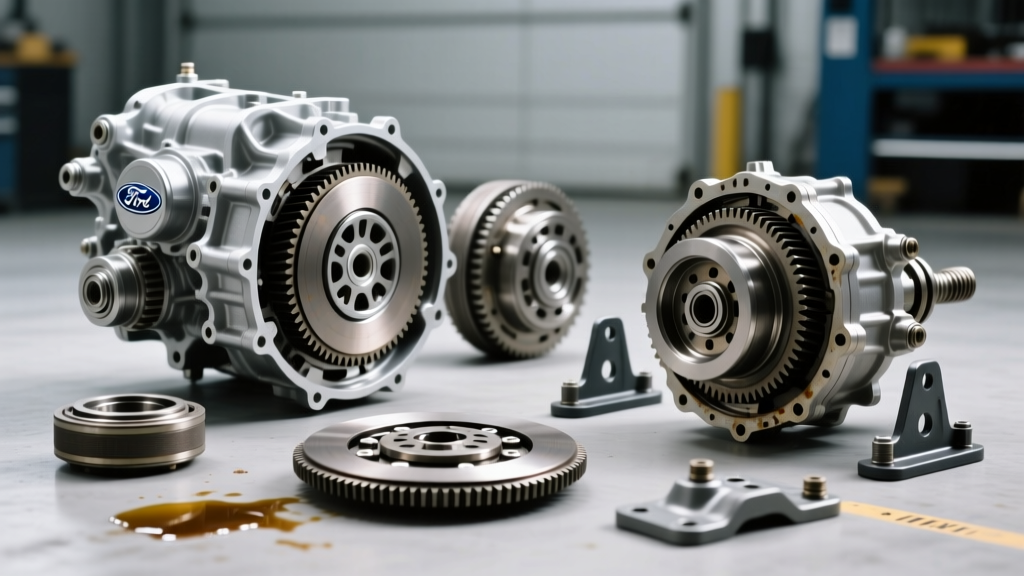
AWD models, however, feature a significantly more complex layout. Bolted directly to the side of the 6F35 transaxle is the Power Transfer Unit (PTU). The PTU acts as a transfer case, splitting torque and sending it rearward via a two-piece driveshaft to the rear differential, which then distributes power to the rear wheels via a Haldex-style electronic coupling. This additional hardware introduces multiple new failure points, including PTU bearings, U-joints, center support bearings, and rear differential gears.
Required Diagnostic Tools
Professional drivetrain noise diagnosis relies on isolating frequencies and vibrations. You will need:
- Wireless Chassis Ears or Electronic Stethoscope: Essential for pinpointing bearing whines while the vehicle is on a lift and the wheels are spinning.
- OBD2 Scanner with Advanced ABS/Drivetrain Modules: Tools like FORScan are critical for reading Haldex clutch duty cycles and ABS wheel speed sensor data.
- Infrared Thermometer: Used to check for abnormal heat generation in the PTU and rear differential.
- Pry Bars and Dial Indicators: For checking CV joint play and driveshaft runout.
Step 1: The Dynamic Road Test
The first step in any drivetrain diagnosis is verifying the customer's complaint under controlled conditions. Find a safe, empty stretch of road and perform the following maneuvers:
- Coast-Down Test: Accelerate to 60 MPH, then release the throttle and let the car coast. If the noise changes pitch with vehicle speed but disappears when you apply light throttle, you are likely dealing with a drivetrain gear lash issue or a worn rear differential pinion bearing (AWD models).
- Full-Lock Turning Test: In a parking lot, turn the steering wheel to full lock and drive in a tight circle. A distinct clicking or popping noise indicates a worn outer Constant Velocity (CV) joint on the front half-shafts.
- AWD Binding Test: Perform tight figure-eight turns at low speeds. If you feel a binding sensation or hear a groaning/clunking noise from the rear, the Haldex AWD clutch may be locked up. According to NHTSA technical service bulletins, this is often caused by mismatched tire tread depths across the four corners, which forces the AWD coupler to constantly slip and overheat.
Step 2: Stationary Load Testing
With the vehicle safely secured on a lift, start the engine and place it in gear (ensure the wheels are free to spin). Use your electronic stethoscope to listen to the following components:
- PTU Housing (AWD): Listen near the right side of the transaxle. A high-pitched whine that increases with RPM indicates failing PTU internal bearings or degraded gear oil.
- Center Support Bearing: Place the probe on the driveshaft center bearing bracket. A grinding or roaring noise here means the rubber isolator has collapsed or the bearing is dry.
- Transmission Bellhousing: A rhythmic scraping or shudder felt through the chassis at idle in gear often points to a failing 6F35 torque converter, not the drivetrain axles.
Drivetrain Noise Symptom Matrix
Use the following matrix to cross-reference your road test findings with the most probable culprits and current 2026 market repair estimates.
| Noise Type | Trigger Condition | Probable Component | Estimated 2026 Cost |
|---|---|---|---|
| Clicking / Popping | Turning at low speeds | Outer CV Joint / Half-Shaft | $250 - $450 |
| High-Pitched Whine | Accelerating (AWD only) | PTU Bearings / Gear Wear | $1,400 - $2,800 |
| Clunk on Engagement | Shifting into Drive/Reverse | Trans Mount or Driveshaft U-Joint | $150 - $600 |
| Humming / Roaring | Coast down or steady cruise | Rear Differential Bearings (AWD) | $900 - $1,600 |
| Low-Speed Groan | Tight turning (AWD only) | Haldex Coupler / Mismatched Tires | $100 - $1,200 |
Deep Dive: The AWD Power Transfer Unit (PTU)
The most notorious component in the Ford Fusion drivetrain lineup is the AWD Power Transfer Unit. The PTU is mounted directly adjacent to the catalytic converter, subjecting it to extreme thermal loads. Over time, the heat bakes the internal gear oil, reducing its viscosity and leading to catastrophic bearing failure.
Expert Tip: If your AWD Fusion has over 60,000 miles and the PTU fluid has never been changed, the fluid is likely degraded to a black, burnt sludge. The PTU does not have a traditional drain plug on early models, requiring a fluid extraction pump via the fill plug, though later revisions included a drain plug. Always use the exact specified fluid to prevent gear whine.
According to data from the Ford Motor Company Support portals and enthusiast repair logs, the PTU requires Motorcraft SAE 75W-85 Premium Synthetic Hypoid Gear Oil. The capacity is surprisingly small—only about 0.75 Liters (25.4 oz). Because the volume is so low, any thermal breakdown happens rapidly. If you catch a PTU whine early, a fluid flush using a pneumatic extractor can sometimes quiet the bearings, but if metal flakes are present in the extracted fluid, a complete PTU replacement is mandatory.
Advanced Diagnostics: Using FORScan for AWD Systems
If you suspect an issue with the rear drivetrain coupling, mechanical inspection isn't enough. You must verify the electronic control strategy. Using a laptop with FORScan and an OBDLink EX adapter, you can monitor the AWD Clutch Duty Cycle PID in real-time.
During normal, dry highway cruising, the AWD clutch duty cycle should read near 0% to 5%, effectively putting the car in FWD mode to save fuel. If you see the duty cycle hovering at 40% or higher while driving in a straight line on dry pavement, the AWD system is falsely detecting slip. This constant engagement will overheat the rear differential coupler and cause severe driveline binding and noise. This data point is invaluable for differentiating between a mechanical gear failure and an electronic sensor calibration issue.
Critical Torque Specifications and Fluid Capacities
When replacing drivetrain components, adhering to factory torque specifications is non-negotiable. Improperly torqued axle nuts will destroy the wheel bearing and CV joint splines within a few thousand miles. Always reference the specific year's service manual, but the following are the standard benchmarks for the 2013-2020 Fusion 6F35 platform:
- Front Axle Nut: 258 lb-ft (350 Nm) - Always use a new, single-use staked nut.
- PTU Drain/Fill Plug: 33 lb-ft (45 Nm)
- Rear Differential Fill Plug: 33 lb-ft (45 Nm)
- Driveshaft Center Bearing Bolts: 59 lb-ft (80 Nm)
- PTU Fluid Capacity: ~0.75 L (Motorcraft 75W-85 Hypoid)
- Rear Differential Fluid Capacity: ~0.8 L (Motorcraft 75W-85 Hypoid)
For replacement parts, sourcing OEM Motorcraft or high-tier aftermarket equivalents from reputable suppliers like the RockAuto Parts Catalog ensures proper spline counts and metallurgy, especially for the front half-shafts which are prone to snapping under high-torque loads if cheap remanufactured units are used.
Conclusion
Diagnosing a Ford Fusion drivetrain noise is a process of elimination that bridges mechanical inspection and electronic data logging. By understanding the distinct differences between the FWD half-shaft architecture and the AWD PTU/Haldex system, you can accurately pinpoint the source of whines, clunks, and vibrations. Regular maintenance—specifically extracting and replacing the PTU and rear differential fluids every 30,000 to 50,000 miles—remains the single most effective way to preserve the longevity of the Fusion's complex driveline. Approach your diagnosis methodically, respect the torque specs, and your Fusion will continue to deliver reliable power to the pavement for years to come.