The Hidden Link Between Your Differential Lock Button and Gear Oil
For off-road enthusiasts and heavy-duty truck owners, the differential lock button on the dash is a critical lifeline. Whether you are crawling over slick rocks in a Toyota 4Runner or pulling a heavy trailer out of a muddy job site in a Jeep Gladiator, pressing that button should yield an immediate, solid engagement of the axle locker. However, one of the most common and frustrating issues in modern 4x4s is the "blinking button" syndrome—where the dash indicator flashes endlessly, and the locker fails to engage.
Most drivers immediately suspect a faulty dashboard switch or a broken wire. But as transmission and drivetrain specialists, we see a different culprit far more often: degraded differential fluid and neglected actuator mechanics. The physical act of locking the differential requires the internal shift fork and clutch collar to slide laterally through a bath of gear oil. If that fluid has sheared down, become contaminated with water, or is simply the wrong viscosity for your operating temperatures, the hydraulic drag can stall the electronic actuator motor. The ECU detects this amperage spike or timeout and aborts the engagement, leaving your differential lock button blinking in protest.
Why Factory Lockers Time-Out: Actuator vs. Fluid Viscosity
Modern electronic lockers (E-Lockers) use a 12V DC motor mounted directly to the axle housing. When you press the differential lock button, the body control module (BCM) grounds the actuator circuit. The motor turns a cam that pushes a shift fork, sliding a locking collar over the side gears to mate them directly to the differential carrier.
If you are running a standard 75W-90 GL-5 gear oil that hasn't been changed in 60,000 miles, the fluid's viscosity modifiers have likely sheared. Worse, if water has bypassed the axle seals or breather tube during water crossings, the oil emulsifies into a thick, milky sludge. When the actuator motor attempts to push the shift fork through this sludge, it exceeds the ECU's amperage threshold. The system assumes a mechanical jam and cuts power to protect the motor. Upgrading your differential fluid and servicing the actuator pathway is the first step in restoring reliable button-to-axle response.
The 2026 Heavy-Duty Fluid Upgrade Matrix
Choosing the right gear oil is critical for both ring-and-pinion longevity and locker actuation speed. Here is how the top synthetic fluids stack up for truck and SUV applications in 2026:
| Fluid Type / Viscosity | Best Application | Locker Actuation Impact | Recommended Brand / Spec |
|---|---|---|---|
| 75W-90 Synthetic | Daily driving, light trails, OEM spec | Fastest engagement, lowest hydraulic drag | Red Line 75W90 NS (Non-Slip) |
| 75W-140 Synthetic | Heavy towing, rock crawling, high heat | Slightly slower engagement in freezing temps | Amsoil Severe Gear 75W-140 |
| 50W-110 Synthetic | Mixed use, desert running, high RPM | Excellent balance of film strength and flow | Motul Gear 300 75W90 (Alternative) |
Note: Never use friction modifier additives in an axle with a mechanical locking collar (E-Locker), as they are designed for clutch-based Limited Slip Differentials (LSD) and can cause the locking collar to slip under extreme torque.
Step-by-Step Rear Differential & Locker Actuator Service
To ensure your differential lock button functions flawlessly, you must pair a fluid change with a physical inspection of the actuator assembly and breather system. Below are the exact procedures for the two most popular truck axles on the trail.
Toyota 8-Inch E-Locker (Tacoma, 4Runner, Tundra)
The Toyota 8-inch rear axle is legendary, but its E-Locker actuator motor (Part # 41450-35030) is notorious for corroding internally due to poor breather routing.
- Drain and Fill: Remove the 24mm drain plug (Torque spec: 30 lb-ft). Allow the fluid to drain completely. Inspect the magnetic plug for excessive metallic paste; a fine glitter is normal, but chunky shavings indicate ring-and-pinion wear.
- Actuator Motor Removal: Unbolt the three 12mm bolts securing the E-Locker actuator motor to the axle housing. Carefully pull the motor straight out to avoid bending the shift fork pin.
- Internal Cleaning: Spray the exposed shift fork cavity with brake cleaner to flush out emulsified oil and debris. Apply a light coat of dielectric grease to the motor's electrical connector pins to prevent future corrosion.
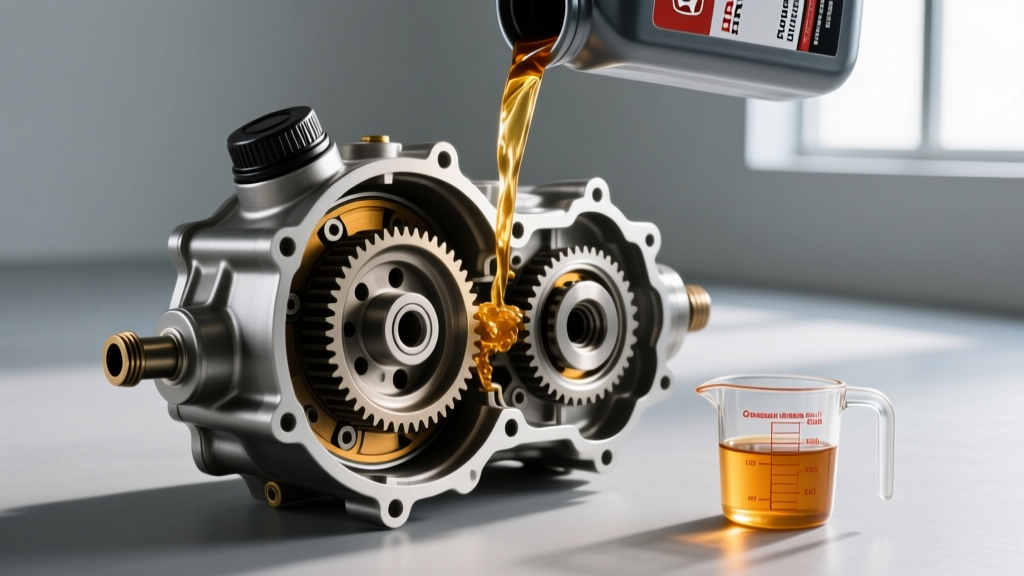
- Refill: Reinstall the drain plug with a new crush washer. Fill with 3.2 quarts of 75W-90 or 75W-140 synthetic gear oil until it weeps from the 24mm fill plug hole. Torque the fill plug to 30 lb-ft.
Dana 44 Electronic Locker (Jeep Gladiator / Wrangler Rubicon)
The Dana 44 uses an electromagnetic locker actuated by a wiring harness that routes through the axle tube. Fluid contamination here destroys the internal electromagnet.
- Cover Removal: Remove the 10 perimeter cover bolts (1/2-inch heads). Torque spec for reassembly is 30-35 lb-ft in a crisscross pattern.
- Electromagnet Inspection: Before cleaning the housing, use a multimeter to test the resistance of the locker coil pins on the axle tube. You should see between 2.0 and 4.0 ohms. An infinite reading means the coil is burnt out, and no amount of fluid changes will make your differential lock button work.
- RTV vs. Gasket: Scrape the old RTV silicone from the cover and housing. For the 2026 rebuild standard, we recommend using a reusable LubeLocker elastomer gasket rather than RTV, which eliminates the risk of silicone beads breaking off and clogging the locker mechanism.
- Refill: The Dana 44 requires approximately 2.0 to 2.5 quarts of fluid. Because the Rubicon locker mechanism takes up internal volume, fill until the fluid level reaches the bottom of the fill plug hole.
The Importance of Axle Breather Tube Upgrades
When an axle cools down after a hot run, it creates a vacuum. If the breather tube is submerged in water or mud, that vacuum sucks moisture directly past the axle seals into the gear oil. This water ingestion is the number one cause of premature actuator failure and differential lock button timeouts. Upgrading your factory breather to an extended, filtered line routed high into the engine bay or bed is a mandatory $40 modification that saves thousands in axle rebuilds. Use 5/16-inch polyurethane tubing and a high-flow sintered bronze breather cap to ensure rapid pressure equalization.
Performance Upgrades: Bypassing the OEM Button for Air Lockers
While factory E-Lockers are excellent for moderate trails, hardcore rock crawlers and heavy-duty competition trucks often outgrow them. The OEM differential lock button and actuator system only allows engagement when the vehicle is moving under 5 MPH and the steering wheel is relatively straight. Furthermore, the internal shift fork can snap under extreme shock loads.
The ultimate 2026 performance upgrade is replacing the OEM carrier with an ARB Air Locker (e.g., Part # RD121 for the Toyota 8-inch). The ARB uses an internal pneumatic seal that locks the side gears instantly via compressed air, completely eliminating the fragile electric actuator motor.
Pro-Tip: When installing an ARB Air Locker, many fabricators retain the OEM differential lock button on the dash by wiring the factory 12V actuator harness to a lightweight relay. This relay then triggers the ARB compressor solenoid, giving you seamless, factory-looking air locker control without drilling new switch holes in your dash.
Real-World Costs and Sourcing OEM vs. Aftermarket Parts
Maintaining your truck's locking differential is an investment in traction and safety. Here is what you can expect to spend on a comprehensive axle and actuator service in 2026:
- Synthetic Gear Oil (3-4 Quarts): $60 - $95 (Amsoil, Red Line, Royal Purple)
- OEM Actuator Motor Replacement: $350 - $600 (Dealer parts counter)
- Extended Breather Kit: $35 - $50 (ARB, Rugged Ridge)
- Full ARB Air Locker Upgrade (Carrier + Compressor): $1,100 - $1,400
By understanding the mechanical synergy between the dash switch, the actuator motor, and the fluid dynamics inside the axle housing, you can diagnose a blinking differential lock button accurately. Don't just throw parts at the electrical system; drop the diff cover, inspect the fluid, and ensure your truck's drivetrain is prepped for whatever the trail demands.
For deeper technical specifications on axle tolerances and locker clearances, always consult the Dana Spicer service manuals or your vehicle manufacturer's official drivetrain documentation before tearing down your differential carrier.