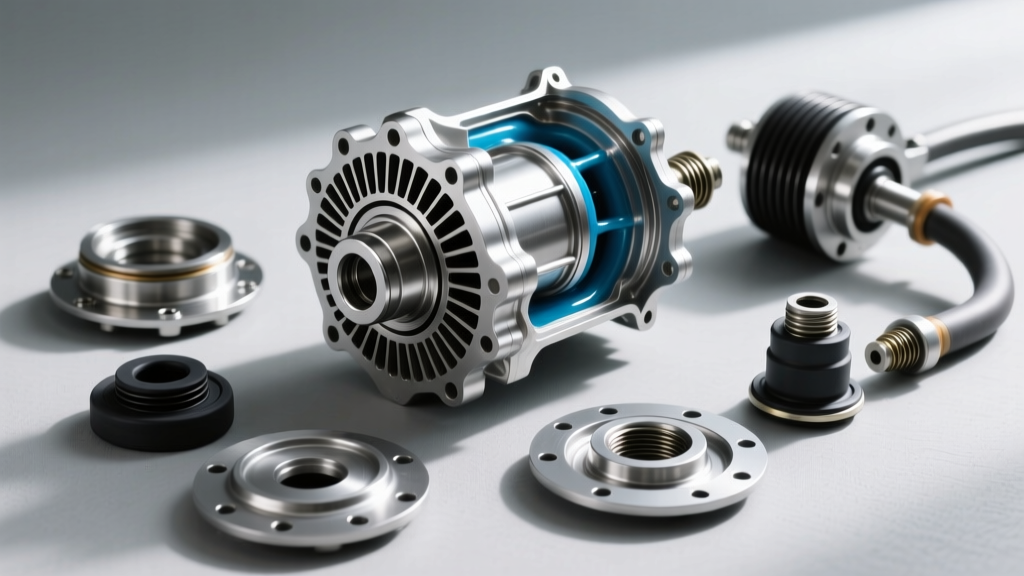
In emergency medicine, formulating a testicular pain differential diagnosis requires a clinician to systematically rule out critical, time-sensitive emergencies (like torsion) from benign issues before catastrophic tissue loss occurs. In the 2026 heavy-duty truck and performance SUV sector, diagnosing a failing rear differential demands this exact same rigorous, unsparing elimination process. When your Ford F-250's 10.5-inch Sterling axle or your Ram 2500's AAM 11.5-inch axle begins howling under a 15,000-lb towing load, guessing is not an option. You must systematically isolate the mechanical 'pain points' within the axle assembly before they lead to total drivetrain failure.
As a senior drivetrain specialist, I approach heavy-duty axle maintenance and performance upgrades with a clinical, step-by-step diagnostic framework. This guide will walk you through advanced noise diagnostics, severe-duty fluid upgrades, and performance hardware installations for modern trucks and SUVs.
The Systematic Axle Diagnostic Framework
Before you drain a single drop of gear oil or order a master rebuild kit, you must perform a dynamic road test to map the noise profile. Differential noise is highly dependent on load, deceleration, and rotational speed.
Isolating the Failure Point
- Pinion Bearing Whine (Drive vs. Coast): If the axle howls under acceleration (load on the drive side of the gear teeth) but quiets down when you let off the throttle, your pinion bearing preload has likely degraded, or the pinion depth shim is incorrect. Conversely, if it whines on deceleration (coast side), the pinion depth is typically too shallow.
- Carrier Bearing Rumble: A low-frequency rumble that persists regardless of throttle position, but changes pitch with vehicle speed, almost always points to worn carrier bearings. These bearings support the entire ring gear assembly and take massive lateral loads during cornering.
- Ring and Pinion Gear Wear: A cyclic 'clunk-clunk-clunk' that matches wheel speed indicates chipped teeth or severe pitting. A continuous, high-pitched siren-like whine that shifts exactly at the transition between drive and coast indicates improper gear backlash or a degraded gear pattern.
- Side Gear / Spider Gear Clunk: If you hear a distinct metallic 'clunk' when shifting from Park to Drive or Reverse, the issue is likely excessive clearance in the differential carrier's internal spider gears, not the ring and pinion itself.
Heavy-Duty Fluid Upgrades: Viscosity and Thermal Limits
For 2026 heavy-duty applications—especially trucks equipped with 5th-wheel hauling packages or SUVs used for high-speed desert running—OEM 75W-90 synthetic gear oil is frequently inadequate. Under extreme GCWR (Gross Combined Weight Rating) conditions, differential sump temperatures in AAM and Sterling axles routinely exceed 230°F (110°C). At these temperatures, standard 75W-90 fluids experience severe shear thinning, leading to boundary lubrication and rapid ring gear scoring.
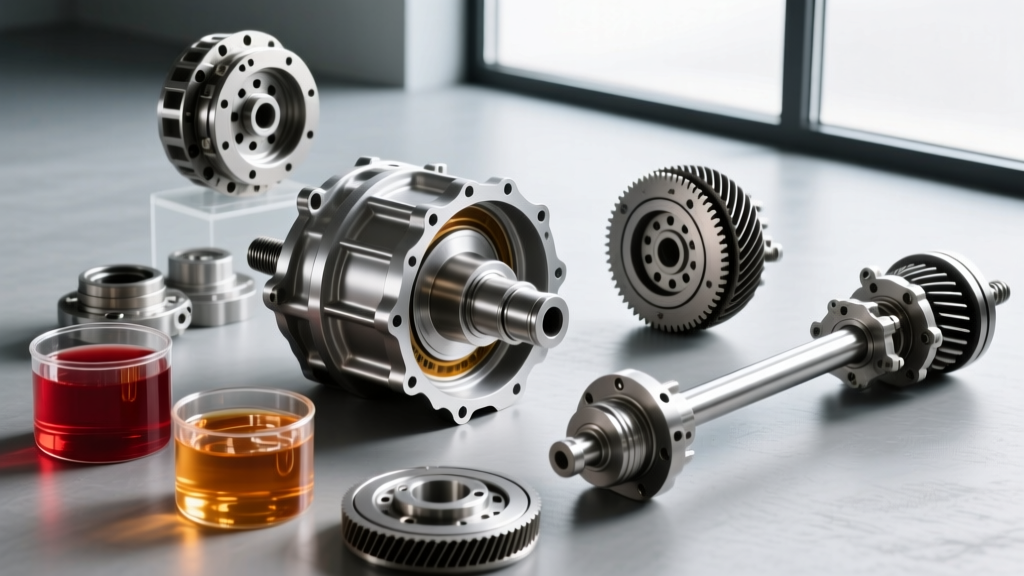
Upgrading to a high-quality 75W-140 synthetic, such as those offered by AMSOIL or Royal Purple, provides a thicker hydrodynamic oil wedge at high temperatures, protecting the gear teeth under extreme towing loads. However, note that 75W-140 can increase parasitic drag in cold weather; it is strictly recommended for severe-duty, high-load, or dedicated off-road applications.
2026 Heavy-Duty Axle Fluid & Torque Specifications
| Axle Model | OEM Capacity | Severe-Duty Upgrade Fluid | Drain/Fill Plug Torque | Cover Bolt Torque |
|---|---|---|---|---|
| Ford 10.5" Sterling | 3.7 Quarts | 75W-140 Full Synthetic | 35 lb-ft | 30 lb-ft (12-point) |
| Ram AAM 11.5" | 3.5 Quarts | 75W-140 Full Synthetic | 25 lb-ft | 33 lb-ft |
| GM 11.5" (14-Bolt) | 3.9 Quarts | 75W-140 Full Synthetic | 30 lb-ft | 25 lb-ft |
| Jeep Dana 44 (Adv.) | 2.2 Quarts | 75W-110 Synthetic | 25 lb-ft | 30 lb-ft (RTV sealed) |
Performance Hardware: Lockers and Gear Swaps
When factory open differentials or limited-slip units (like the Trac-Lok) fail to provide adequate traction in off-road or high-horsepower applications, upgrading to a selectable locker is the definitive 2026 performance standard. Brands like ARB (Air Lockers) and Yukon Gear & Axle (Zip Lockers) dominate this space.
The Art of the Gear Pattern Setup
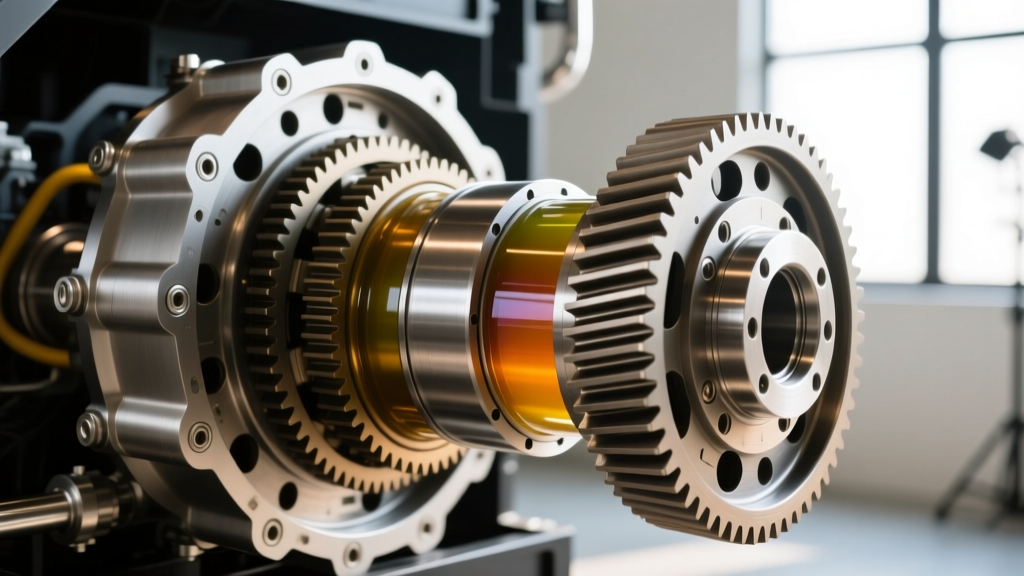
Installing a new ring and pinion set (e.g., swapping from 3.73 to 4.30 for larger 37-inch tires) is not a simple bolt-on job. It requires precision measurement using a dial indicator and yellow gear marking compound. The goal is to achieve a backlash measurement between 0.006" and 0.010".
When applying the marking compound to the ring gear teeth, you are looking for a specific pattern:
- Drive Side Pattern: Should be centered from top to bottom, and slightly biased toward the toe (the inner edge of the tooth). If it's pushed to the heel (outer edge), the pinion depth is too shallow, requiring a thicker pinion depth shim.
- Coast Side Pattern: Should also be centered vertically, but naturally sits slightly closer to the heel.
Furthermore, modern performance builds are moving away from OEM crush sleeves for pinion preload. Using a solid pinion spacer kit allows you to torque the pinion nut to a much higher specification (often 250+ lb-ft) without risking over-crushing the sleeve, which guarantees long-term pinion bearing survival under high-horsepower shock loads.
Critical Torque Specifications for Rebuilds
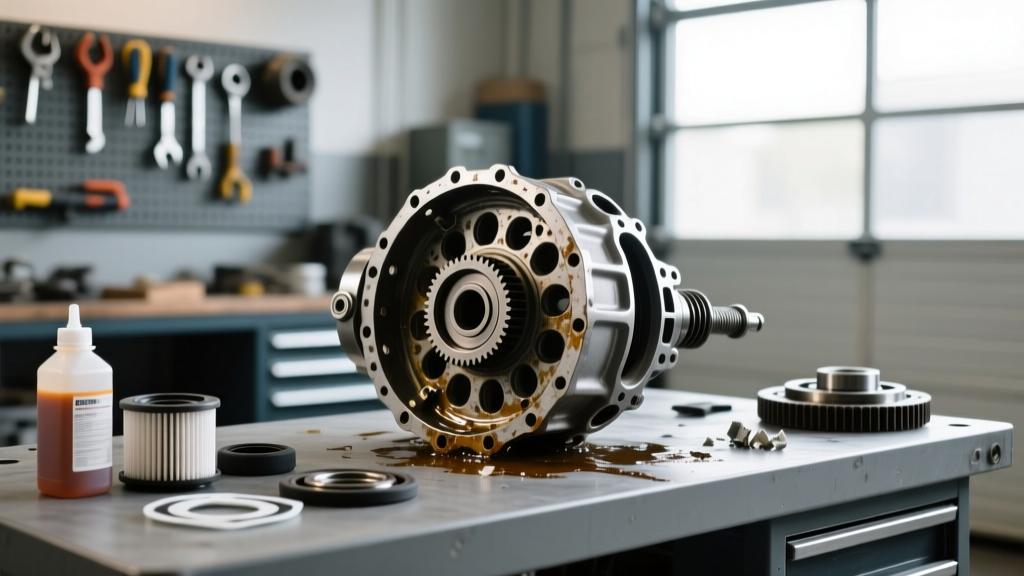
When performing a full differential rebuild or locker installation, adhering to exact torque specifications is non-negotiable. Below are the critical specs for the ubiquitous Ford Sterling 10.5-inch and GM/Ram AAM 11.5-inch axles:
- Ring Gear to Carrier Bolts (7/16"-20): 75 lb-ft (Always apply Red Loctite 271 and use a star-pattern tightening sequence).
- Carrier Bearing Cap Bolts: 120 lb-ft (These must be torqued in place; never swap caps side-to-side or reuse damaged threads).
- Pinion Nut (Crush Sleeve Method): Tighten incrementally while measuring rotational preload. Target 15-25 in-lb of rotational drag for new bearings. (Warning: Over-torquing past 30 in-lb will destroy the bearing race).
- Pinion Nut (Solid Spacer Method): Torque to 225-250 lb-ft to achieve the target 15-25 in-lb rotational preload.
2026 Cost Breakdown: Maintenance vs. Performance Upgrades
Budgeting for axle work requires understanding the difference between routine maintenance and full performance overhauls. Here is what you can expect to pay in the current market:
- Routine Fluid Service (Severe Duty): $80 - $120 per axle (Includes premium 75W-140 synthetic and new crush washers/plugs).
- Carrier Bearing & Seal Replacement: $450 - $650 (Labor intensive, requires pulling the axleshafts and carrier).
- Complete Ring & Pinion Swap (Parts Only): $350 - $500 (For premium forged sets like Yukon or Motive Gear, plus a $150 master bearing kit).
- Selectable Locker Installation (Parts & Labor): $1,200 - $1,800 (Includes the ARB/Zip locker, air compressor routing, and precision setup labor).
Final Diagnostic Verdict
Whether you are dealing with a subtle coast-side whine or planning a complete 4.30 gear and locker overhaul for your heavy-duty truck, the key to drivetrain longevity is methodical precision. Just as a rigorous medical differential diagnosis prevents catastrophic physical outcomes, a rigorous mechanical diagnostic protocol prevents catastrophic axle failure. Invest in high-viscosity synthetic fluids, utilize solid pinion spacers, and always verify your gear pattern with a dial indicator. Your truck's drivetrain will reward you with hundreds of thousands of miles of reliable, high-torque performance.