The Thermal Crisis in Modern Drivetrains
Modern heavy-duty trucks and high-performance Independent Rear Suspension (IRS) vehicles face a common, destructive enemy: heat soak. When towing near maximum Gross Combined Weight Rating (GCWR) or tracking a high-horsepower vehicle, differential fluid temperatures can easily exceed 260°F (126°C). At these extreme thresholds, standard 75W-140 synthetic gear oils begin to experience severe shear thinning, compromising the hydrodynamic lubrication film that protects the ring and pinion gears. This thermal degradation not only accelerates gear wear but also triggers a cascade of secondary failures, most notably the need for a comprehensive differential bushing replacement.
In this technical deep-dive, we explore the physics of differential cooling, how upgraded covers mitigate thermal breakdown, and why addressing your differential bushings is a critical, often-overlooked synergy during axle thermal upgrades.
Differential Cover and Cooling Dynamics
Factory stamped steel differential covers are designed primarily for cost-efficiency and basic fluid retention, not thermal dissipation. They typically hold between 3.0 and 3.5 quarts of gear oil and offer minimal surface area for convective cooling. When subjected to sustained loads, the fluid inside acts as a heat sink, eventually reaching thermal equilibrium at temperatures that degrade extreme pressure (EP) additives.
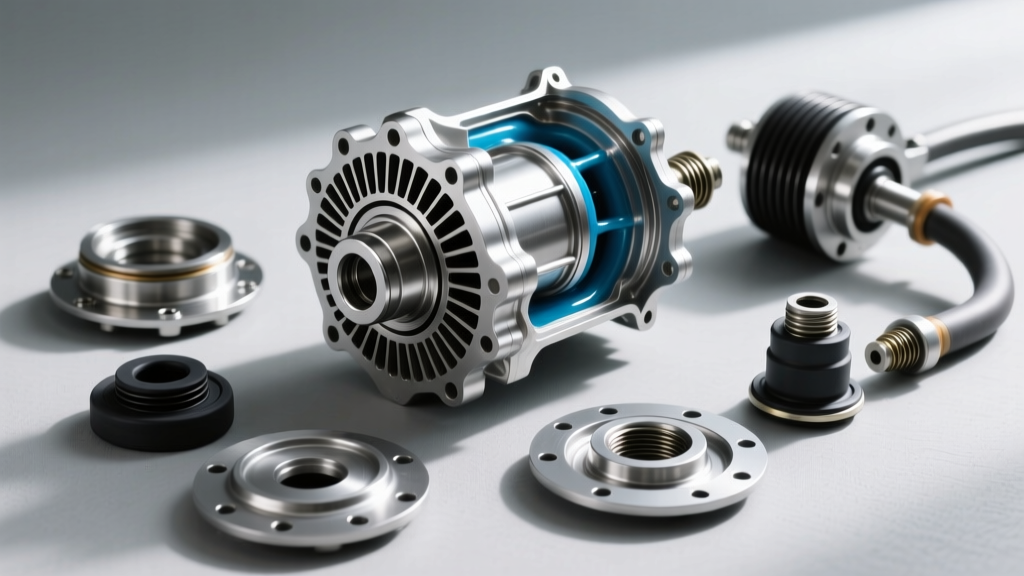
Upgrading to a finned, cast-aluminum differential cover addresses this through three distinct mechanisms:
- Increased Surface Area: External cooling fins increase the convective surface area by up to 300%, allowing ambient airflow to strip heat from the casing.
- Fluid Capacity: Deep-sump designs increase fluid volume by 1.5 to 2.5 quarts. More fluid means a larger thermal mass, delaying the onset of critical heat soak.
- Internal Baffling: Premium covers feature internal fins that agitate the fluid, preventing localized hot spots around the ring gear and pinion snout.
Market Comparison: Top Cooling Covers for Heavy-Duty Axles
| Brand | Primary Fitment | Capacity Increase | Avg Price (2026) | Key Thermal Feature |
|---|---|---|---|---|
| Mag-Hytec | GM AAM 11.5-inch | +1.5 qts | $285 | Magnetic drain plug, O-ring seal, deep sump |
| PPE | Dana 80 | +2.0 qts | $315 | Internal cooling fins, billet aluminum construction |
| AFE Power | Ford Sterling 10.5 | +1.2 qts | $195 | RTV groove channel, external aerodynamic fins |
Why Heat Soak Triggers Differential Bushing Replacement
Many enthusiasts and fleet mechanics view differential cooling and bushing service as unrelated tasks. However, thermal dynamics dictate otherwise. The necessity for a differential bushing replacement is often a direct downstream consequence of inadequate differential cooling.
IRS Mounting Bushings and Radiant Heat
In modern IRS setups—such as the Ford Mustang S550/S650 or the GM Alpha platform (Camaro/CTS)—the differential carrier is mounted directly to the chassis subframe via large rubber or polyurethane bushings. A factory stamped steel cover acts as a massive radiant heat source. Under heavy load, the cover radiates thermal energy directly upward into the subframe tunnel, baking the upper differential mounting bushings.
Over time, this constant thermal radiation vulcanizes the rubber, causing it to harden, crack, and collapse. This introduces severe driveline NVH (Noise, Vibration, and Harshness) and alters the pinion angle under load, leading to premature U-joint and CV axle failure. When diagnosing driveline clunk or vibration in an IRS vehicle, a differential bushing replacement using high-durometer polyurethane (such as kits from BMR Suspension) is mandatory, but it must be paired with a cooling cover to prevent the new bushings from suffering the same thermal fate.
Internal Thrust Washers and Carrier Bushings
For solid axles and specific transaxle setups, the term 'differential bushing' also applies to the internal side-gear thrust washers and pinion snout bushings. When gear oil exceeds 250°F, the zinc and phosphorus EP additives begin to deplete. The resulting metal-on-metal contact scores the internal thrust washers, creating excessive axial end-play. While dropping the cover to install a cooling upgrade, it is standard practice to measure side-gear end-play with a dial indicator. If play exceeds 0.005 inches, an internal differential bushing and thrust washer overhaul is required.
Technical Walkthrough: Cover Installation and Bushing Service
Executing a differential cover upgrade alongside a bushing service requires precision and adherence to OEM torque specifications. Below is the professional workflow for a heavy-duty solid axle (e.g., GM AAM 11.5-inch) and an IRS subframe bushing service.
Step 1: Fluid Evacuation and Mating Surface Prep
Drain the factory fluid while warm. Remove the stamped steel cover and immediately scrape the mating surface using a plastic gasket scraper to avoid gouging the axle housing. Clean the surface with brake cleaner. For applications requiring RTV silicone, use a sensor-safe, high-temp formula like Permatex Ultra Black (Part # 85084). For machined aluminum covers, always use the included O-ring or a specific paper/cork gasket (e.g., Fel-Pro RDS55016) to ensure a leak-free seal.
Step 2: Differential Bushing Replacement (IRS Application)
If servicing an IRS vehicle, support the subframe and remove the driveshaft and half-shafts. Use a specialized bushing puller tool (such as OTC 7213) to extract the heat-damaged factory rubber bushings. Coat the outer sleeve of the new polyurethane bushings with high-temp silicone grease before pressing them into the subframe using a hydraulic press or threaded rod fixture. Realign the differential carrier to ensure the pinion angle remains within 1 degree of the transmission output shaft.
Step 3: Crucial Torque Specifications
Over-torquing differential cover bolts is a leading cause of warped flanges and stripped threads in aluminum housings. Use a calibrated inch-pound or low-range foot-pound torque wrench.
- GM AAM 11.5-inch Cover Bolts: 35 lb-ft (M8 hardware)
- Ford Sterling 10.5-inch Cover Bolts: 33 lb-ft
- Dana 80 Cover Bolts: 45 lb-ft
- IRS Differential-to-Subframe Mounting Bolts: Typically 129 lb-ft to 150 lb-ft (Consult specific OEM service manual; always use new torque-to-yield stretch bolts).
Selecting the Right Gear Oil for High-Heat Applications
A finned cooling cover is only half the battle; the fluid inside must be engineered to withstand the residual heat that inevitably transfers through the axle tubes. According to engineering data from Amsoil, standard synthetic 75W-90 fluids may experience a 20% loss in kinematic viscosity at sustained temperatures above 230°F.
For vehicles equipped with upgraded cooling covers that are subjected to heavy towing or track use, stepping up to a 75W-140 or a high-viscosity 75W-110 is recommended. These heavier grades maintain a thicker hydrodynamic film between the ring and pinion gears, protecting both the gear teeth and the internal differential bushings from microscopic scoring. Furthermore, look for fluids with high flash points (above 400°F) and robust shear-stability ratings to ensure the fluid does not permanently thin out over a 30,000-mile service interval.
Conclusion
Thermal management is the single most important factor in extending the lifespan of your vehicle's drivetrain. By upgrading to a high-capacity, finned aluminum differential cover, you drastically reduce fluid temperatures and protect your ring and pinion investment. However, true drivetrain longevity requires looking at the system holistically. Recognizing the signs of heat-induced degradation and performing a timely differential bushing replacement ensures that your axle remains properly located, your NVH levels stay low, and your vehicle performs flawlessly under the most demanding conditions.