The Physics of Axle Cooling: Understanding Massflow Differential Pressure
When pushing the limits of a modern heavy-duty truck or performance SUV—whether towing a 20,000-pound gooseneck trailer through the Rockies or crawling in low-range transfer case modes—the differential is subjected to extreme thermal and mechanical stress. In advanced tribology and heavy-duty axle engineering, optimizing massflow differential pressure is the secret to preventing catastrophic bearing failure and gear spalling.
While often associated with diesel particulate filters or HVAC systems, the concept of massflow differential pressure is equally critical inside your Dana 60, Ford Sterling 10.5, or AAM 11.5 axle housing. As the ring gear rotates at highway or towing speeds, it acts as a centrifugal pump. It picks up gear oil from the sump and hurls it outward. The variance in fluid pressure between the low-pressure sump and the high-pressure mesh zone creates a hydraulic gradient. This massflow differential pressure dictates the volume and velocity of oil forced through the tight micron-clearances of the pinion and carrier bearings.
If this pressure differential is inadequate—due to low fluid levels, aerated oil, poor housing aerodynamics, or insufficient fluid viscosity—the bearings experience oil starvation and cavitation. The result? Pitting, spalling, and eventual seizure of the pinion bearing, which is the most common failure point in heavy-duty truck axles.
Why Stock Axle Housings Fail Under High-Load Scenarios
Factory stamped-steel differential covers on many 3/4-ton and 1-ton trucks are designed for cost-efficiency, not high-performance fluid dynamics. They suffer from three major issues that degrade massflow differential pressure:
- Internal Turbulence: Smooth, domed steel covers allow oil to splash chaotically, introducing air bubbles (aeration). Aerated oil is compressible, which drastically reduces the hydraulic pressure required to force oil into the bearing galleries.
- Thermal Retention: Stamped steel lacks the surface area and thermal conductivity to dissipate the 250°F+ temperatures generated during sustained heavy towing.
- Inadequate Sump Depth: During hard acceleration or steep off-road inclines, the fluid sloshes away from the ring gear's pickup zone, momentarily dropping the massflow differential pressure to zero and starving the pinion bearing.
Performance Upgrades to Optimize Internal Fluid Dynamics
To maintain optimal massflow differential pressure, you must upgrade both the hardware and the fluid. Below is a comparison of the most effective differential upgrades for trucks and SUVs.
| Upgrade Type | Impact on Massflow & Pressure | Temp Reduction | Est. Cost (2026) |
|---|---|---|---|
| Stamped Steel (OEM) | Baseline (Prone to aeration and starvation) | N/A | $45 - $80 |
| Cast Aluminum Finned Cover | Internal fins direct oil flow, increasing bearing gallery pressure | 15°F - 25°F | $180 - $250 |
| High-Capacity Deep Sump Cover | Prevents starvation during inclines; maintains steady massflow | 20°F - 30°F | $220 - $300 |
| Active Differential Cooler (Pump/Heat Exchanger) | Forces pressurized massflow directly to bearings regardless of RPM | 50°F - 80°F | $600 - $950 |
For serious towing applications, brands like AFE Power and PPE offer cast aluminum covers with engineered internal baffles. These baffles act as directional vanes, catching the oil thrown by the ring gear and channeling it directly toward the pinion and carrier bearing journals. This artificially increases the massflow differential pressure, ensuring a constant, pressurized stream of lubricant exactly where it is needed most.
Fluid Selection: Viscosity, Shear Stability, and Pressure Gradients
Hardware upgrades are useless if the fluid cannot maintain its hydrodynamic film under pressure. The massflow differential pressure relies on the fluid's resistance to shear. When gear teeth mesh, they generate localized pressures exceeding 200,000 PSI. If the gear oil shears (loses viscosity), the hydraulic pressure gradient collapses.
For heavy-duty trucks (Ford F-250/350, Ram 2500/3500, Chevy Silverado 2500HD) and heavy SUVs (Ford Expedition, Chevy Tahoe), stepping up to a 75W-140 Full Synthetic gear oil is highly recommended for performance and towing applications.
Expert Note: While many OEMs specify 75W-90 for standard driving to maximize fuel economy, 75W-140 synthetics like AMSOIL Severe Gear or Royal Purple Max Gear provide a significantly thicker hydrodynamic film. This thicker film better translates the ring gear's rotational energy into usable massflow differential pressure, preventing metal-on-metal contact in the pinion bearings under extreme load.
Key Fluid Specifications to Look For:
- API GL-5 Rating: Mandatory for hypoid gear sets found in all modern truck axles.
- Shear Stability (KRL Test): Look for fluids that lose less than 5% viscosity after the 20-hour KRL shear test.
- Limited Slip Additives: If your truck features a clutch-type LSD (like the Ford Traction-Lok or Auburn LSD), ensure the fluid contains the necessary friction modifiers (e.g., Motorcraft XL-3 or equivalent) to prevent chatter, or use a synthetic that already includes them.
Step-by-Step High-Performance Differential Service Guide
Proper maintenance is required to sustain optimal massflow differential pressure. Below is a precision service guide for the two most common heavy-duty truck axles: the Dana 60 (common in Ford Super Duty front/rear and Ram front) and the AAM 11.5 (common in Ram 2500/3500 rear axles).
1. Preparation and Drain
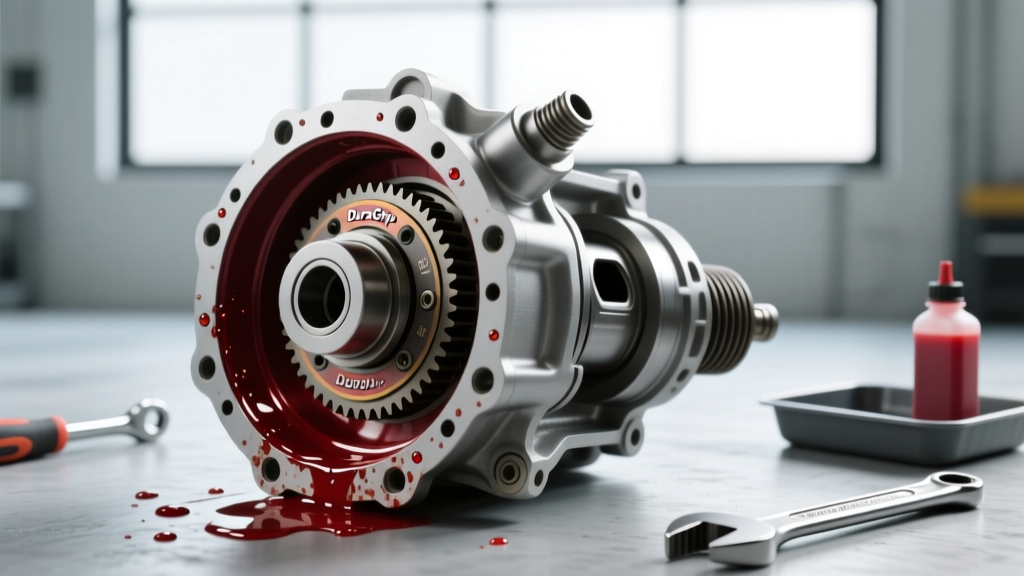
Unlike engine oil, gear oil does not have a traditional drain plug on many heavy-duty axles; the fluid must be pumped or siphoned out after removing the cover. However, some aftermarket covers and specific AAM axles feature a bottom drain plug. If equipped, drain the fluid while the axle is warm (after a 20-minute drive) to ensure suspended metallic particulates are flushed out.
2. Cleaning and Inspection
Use a lint-free rag and brake cleaner to wipe down the inside of the housing. Critical Inspection Point: Check the ring gear teeth for wear patterns. A healthy pattern is centered on the tooth face. If the pattern is biased toward the toe or heel, your ring and pinion backlash is incorrect, which will cause localized heat spikes and destroy your massflow differential pressure dynamics.
Inspect the magnetic drain plug (if equipped) or the bottom of the sump. Fine, glitter-like metallic paste is normal for the first 50,000 miles. Large chips or needle-bearing fragments indicate imminent failure.
3. Sealing: RTV vs. Gasket
For stamped steel covers, a high-quality RTV silicone is preferred. Use Permatex Ultra Black or The Right Stuff. Apply a continuous 1/8-inch bead around the bolt holes. For aftermarket cast aluminum covers (like those from AFE or Mag-Hytec), always use the provided reusable O-ring or specific paper/cork gasket. Do not use RTV on machined aluminum surfaces with O-rings, as it will cause leaks and block internal oil galleries.
4. Torque Specifications and Fill Procedures
Overtightening differential cover bolts will warp the cover, leading to leaks and altering the internal clearance, which negatively impacts fluid dynamics.
- Dana 60 / Dana 70 (Ford/Ram): Tighten cover bolts in a crisscross pattern to 25 - 30 lb-ft. Fluid capacity is typically 3.5 to 4.0 pints (approx. 1.75 - 2.0 quarts).
- AAM 11.5 (Ram 2500/3500 Rear): Tighten cover bolts to 33 - 35 lb-ft. Fluid capacity is typically 4.5 to 5.0 pints.
- Ford Sterling 10.5 (F-250/F-350 Rear): Tighten to 28 - 32 lb-ft. Capacity is roughly 3.5 to 4.0 pints.
Fill the differential until the fluid reaches the bottom of the fill hole. Pro-Tip for High-Capacity Covers: If you have installed a deep-sump aftermarket cover, the fill hole is often relocated higher. Always fill to the level of the fill plug, not the OEM volume specification, to ensure the ring gear can adequately pick up the oil and generate the necessary massflow differential pressure.
Advanced Troubleshooting: Axle Whine and Thermal Breakdown
If you have optimized your hardware and fluid but still experience axle whine or rapid temperature spikes, the issue may lie in the pinion bearing preload. According to Dana Spicer engineering documentation, incorrect pinion bearing preload creates excessive rotational drag. This drag generates parasitic heat that outpaces the cooling capacity of the gear oil's massflow.
Diagnosing this requires a dial-inch-pound torque wrench to measure the rotating torque of the pinion flange (with the axle shafts removed and the differential cover off to eliminate gear mesh drag). For a Dana 60, new pinion bearing preload should typically read between 18 to 25 inch-pounds. If your reading is over 35 inch-pounds, your bearings are over-compressed, guaranteeing thermal failure regardless of your fluid upgrades.
Conclusion
Upgrading your truck or SUV's differential is not just about adding more fluid capacity; it is about mastering the internal fluid dynamics. By understanding and optimizing massflow differential pressure through the use of baffled cast-aluminum covers, high-shear 75W-140 synthetic lubricants, and precise torque specifications, you can ensure your axle survives the most punishing towing and off-road environments. Treat your differential as a high-performance hydraulic system, and it will deliver hundreds of thousands of miles of reliable, heavy-duty service.