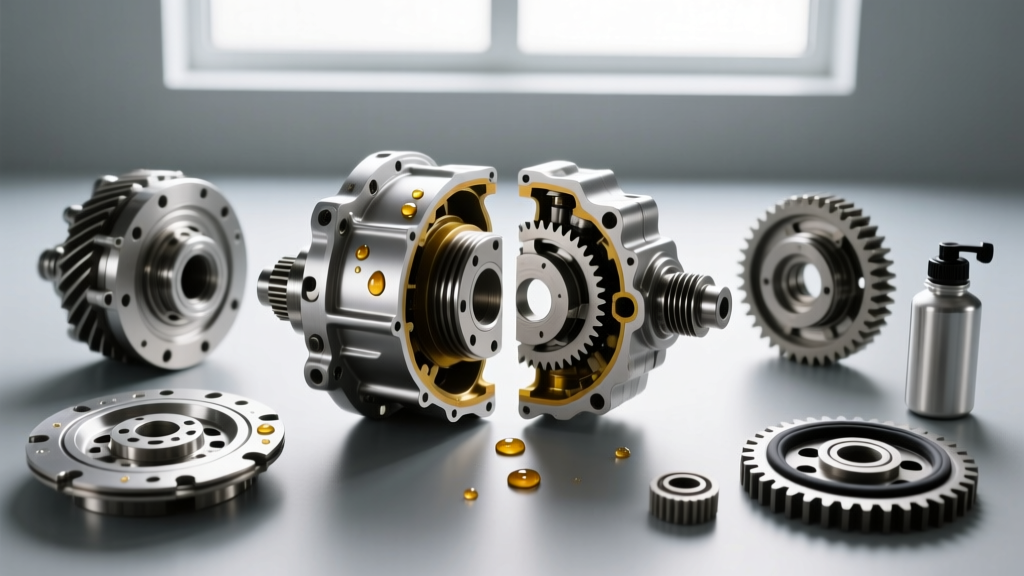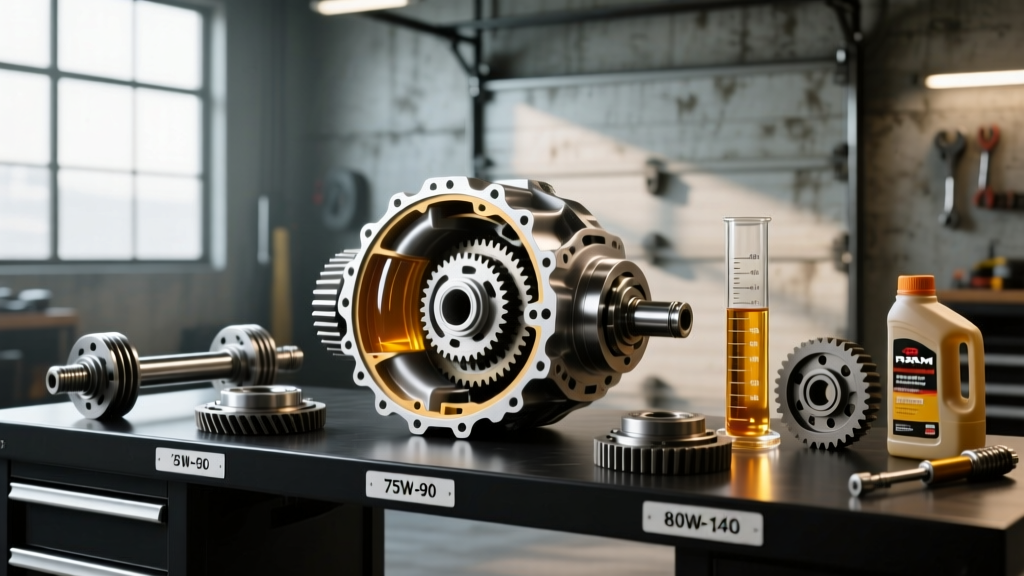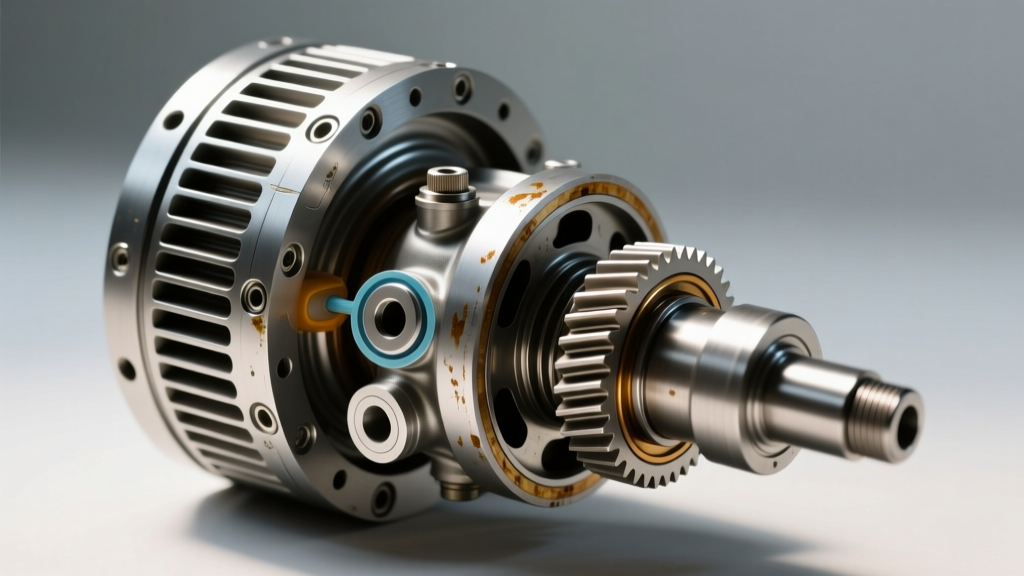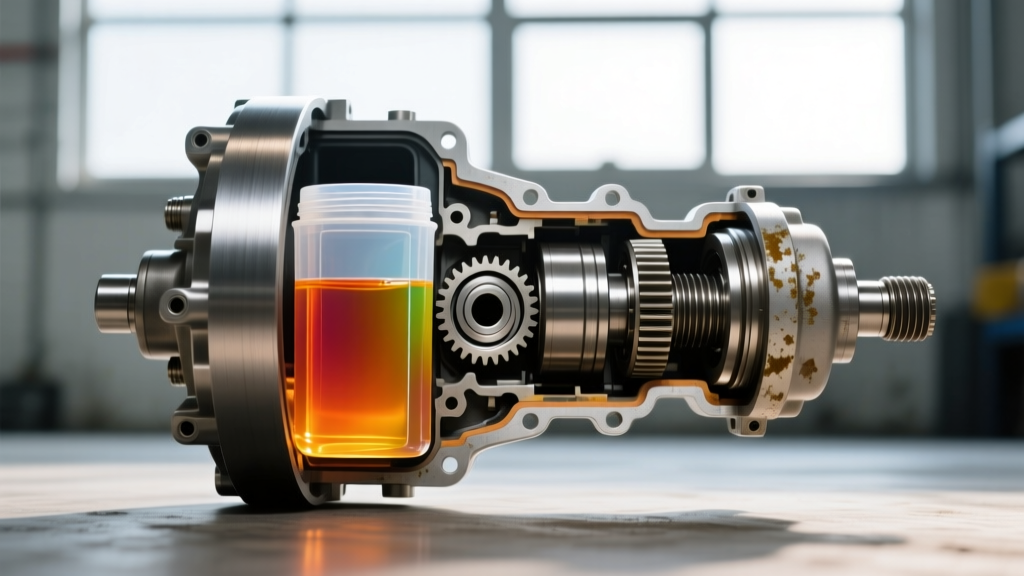
When you start noticing unusual noises from the back of your truck or SUV, identifying the exact rear differential symptoms of problems is the first step toward saving your ring and pinion gears. A whining differential, chattering limited-slip unit, or clunking on engagement often points directly to degraded gear oil, incorrect viscosity, or missing friction modifiers. While catastrophic mechanical failure requires a rebuild, many acoustic warning signs can be mitigated or entirely resolved by selecting the correct fluid specification. In this 2026 buyer’s guide, we compare the top synthetic differential fluids, break down API GL-5 chemistry, and provide exact torque specs to help you perform a flawless rear axle service.
Decoding Rear Differential Symptoms of Problems
Before purchasing gear oil, you must accurately diagnose the acoustic signature of your rear axle. The hypoid gear set inside your differential operates under extreme sliding and rolling pressures. When the fluid film breaks down, metal-to-metal contact generates specific noises that tell a diagnostic story:
- Whining on Deceleration: Often indicates worn pinion bearings or excessive gear backlash. However, if the fluid level is low due to a leaking pinion seal, the pinion bearing starves of lubrication, accelerating wear. Topping off with the correct 75W-90 synthetic can prevent immediate seizure, though bearing replacement may eventually be required.
- Chatter on Low-Speed Turns: This is the hallmark symptom of a clutch-type Limited-Slip Differential (LSD) lacking friction modifiers. As the axles rotate at different speeds during a turn, the clutch packs must slip smoothly. Without stearic acid-based additives, the clutches grab and release violently, causing a shuddering chatter.
- Howling Under Load (Acceleration): This typically points to fluid shearing. Conventional 80W-90 mineral oils can permanently shear down to a 75W or even 50W equivalent viscosity due to the extreme sliding pressures of hypoid gears. The fluid fails to maintain the hydrodynamic wedge, leading to gear tooth deflection and howling.
- Clunking on Engagement: While often a sign of worn spider gears or excessive ring-and-pion backlash, severely degraded fluid that has lost its extreme pressure (EP) additives will accelerate the wear of the cross-pin and side gears, worsening the clunk over time.
2026 Synthetic Gear Oil Comparison Matrix
Not all synthetic gear oils are created equal. The ester and polyalphaolefin (PAO) base stocks used in premium synthetics resist thermal breakdown far better than conventional oils, maintaining their viscosity grade even when towing heavy loads up 8% grades in summer heat. Below is our 2026 comparison of the top-tier differential fluids on the market:
| Brand & Product | Part Number | Viscosity | API Rating | Est. Price/Qt | Best Application |
|---|---|---|---|---|---|
| Mobil 1 Synthetic Gear Lube | 104361 | 75W-90 | GL-5 | $16.50 | Daily drivers, GM 10-bolt/12-bolt |
| Red Line 75W90 Synthetic | 50104 | 75W-90 | GL-5 | $23.00 | Towing, off-road, Dana 44/60 |
| Royal Purple Max-Gear | 01502 | 75W-90 | GL-5 | $19.00 | High-performance street, track use |
| Amsoil Severe Gear | SVGQT | 75W-90 | GL-5 | $21.50 | Heavy towing, extreme desert heat |
| Valvoline SynPower Full Synth | VV975 | 75W-140 | GL-5 | $14.00 | Class 3/4 trucks, continuous heavy towing |
Viscosity and API Classifications Explained
Understanding the SAE J308 viscosity standards is critical for matching the fluid to your driving profile. The 'W' stands for winter, indicating the fluid's flow characteristics at cold temperatures, while the second number represents the kinematic viscosity at 100°C (212°F).
75W-90 vs. 75W-140: Which Do You Need?
For 90% of light-duty trucks and SUVs (such as the Ford F-150, Chevy Silverado 1500, and Jeep Wrangler), 75W-90 is the factory-recommended specification. It provides excellent cold-weather flow, reducing parasitic drivetrain loss and improving fuel economy during winter warm-ups. However, if you frequently tow near your Gross Combined Weight Rating (GCWR) or operate in sustained ambient temperatures above 100°F, stepping up to a 75W-140 is highly recommended. The thicker 140-grade maintains a stronger hydrodynamic film under extreme shear, protecting the ring and pinion from micro-pitting and spalling.
The Chemistry of API GL-5
Differentials utilize hypoid gear sets, where the pinion gear is offset below the centerline of the ring gear. This geometry creates a massive amount of sliding friction, which literally wipes standard oil off the gear teeth. API GL-5 gear oils contain high levels of sulfur-phosphorus Extreme Pressure (EP) additives. Under high load and heat, these additives react with the iron gear surfaces to form a sacrificial solid film of iron sulfide and iron phosphate, preventing catastrophic welding and scoring. Note: Never use GL-5 fluid in manual transmissions containing yellow metals (bronze/brass synchronizers), as the active sulfur will corrode them. However, for rear differentials, GL-5 is mandatory.
The Limited-Slip Differential (LSD) Factor
If your vehicle is equipped with a clutch-type LSD—such as the Ford 8.8-inch Auburn/Eaton unit or the GM 8.5-inch Eaton Posi-Traction—you must address friction modification. According to Eaton's differential service guidelines, clutch packs require a specific coefficient of friction to slip smoothly during cornering.
Many premium synthetic gear oils (like Royal Purple Max-Gear and Amsoil Severe Gear) claim to have friction modifiers already blended into the formula. While this is true, the concentration is often a 'one-size-fits-all' compromise. If you perform a fluid change and still experience low-speed chatter, you must add a dedicated friction modifier.
- Motorcraft XL-3 Friction Modifier: (Part # XL3) The gold standard for Ford 8.8 and 9.75 axles. Priced around $9 per 4oz bottle.
- GM Limited Slip Axle Lubricant Additive: (Part # 1052358) Specifically formulated for GM Eaton Posi units. Priced around $12 per 4oz bottle.
- Torsen / Helical Gear LSDs: If your vehicle uses a torque-sensing Torsen differential (common in many Toyota and Hummer applications), it relies on gear binding rather than clutch packs. Do not add friction modifiers to a Torsen unit; it requires only standard GL-5 gear oil.
Axle-Specific Capacities and Torque Specs
Over-tightening differential cover bolts or fill plugs is a common DIY mistake that leads to stripped threads, warped covers, and chronic fluid leaks. Always use a calibrated torque wrench. Below are the specifications for the most common solid rear axles on the road today:
GM 8.5-inch / 8.6-inch (10-Bolt & 12-Bolt)
- Fluid Capacity: ~4.2 pints (approx. 2.1 quarts)
- Fill Plug Torque: 24 lb-ft (for standard 3/8-inch square drive plug)
- Cover Bolt Torque: 22 lb-ft (Use a criss-cross pattern and RTV silicone if no gasket is present)
Ford 8.8-inch (Explorer, F-150, Mustang)
- Fluid Capacity: 3.5 to 4.0 pints (depending on cover depth)
- Fill Plug Torque: 30 lb-ft (1/2-inch hex or 3/8-inch square)
- Cover Bolt Torque: 28-33 lb-ft (Ford typically uses a reusable rubber-coated steel gasket; do not use RTV with this gasket)
Dana 44 & Dana 60 (Jeep, Ram, Ford Super Duty)
- Fluid Capacity: Dana 44 (~3.5 pints), Dana 60 (~5.5 to 7.0 pints depending on differential cover)
- Fill Plug Torque: 25 lb-ft
- Cover Bolt Torque: Dana 44 (30-35 lb-ft), Dana 60 (35-40 lb-ft)
Step-by-Step Buyer’s Checklist for Your Differential Service
Before heading to the auto parts store or ordering online, run through this checklist to ensure you have the correct supplies for a complete rear differential service:
- Verify Axle Model & LSD Type: Check your RPO codes (Glovebox sticker for GM) or axle tag (bolted to the cover for Ford/Dana) to confirm if you have an open, clutch-type LSD, or locking differential.
- Calculate Volume: Most light-duty axles require 2 to 3 quarts. Heavy-duty Dana 60s or AAM 11.5 axles may require 4 to 6 quarts. Always buy one extra quart to account for spillage and top-offs.
- Purchase a Fluid Extractor/Pump: Many modern differentials (like the GM AAM 9.5-inch) do not have a traditional drain plug; they only have a fill plug. A manual fluid transfer pump (e.g., Mityvac or OEMTOOLS, ~$15-$20) is mandatory for evacuating the old fluid and pumping the thick 75W-90 into the fill hole.
- Inspect the Magnetic Plug: If your fill plug or cover bolt is magnetic, inspect the sludge. A fine, glitter-like metallic paste is normal wear. However, if you find distinct metal flakes or chunks larger than a grain of rice, fluid alone will not save your differential—a teardown and bearing replacement is imminent.
- Prep the Mating Surfaces: If removing the cover, buy a can of brake cleaner to degrease the housing flange, and a tube of Permatex Ultra Black or The Right Stuff RTV to ensure a leak-free seal upon reassembly.
By matching the exact fluid specification to your driving habits and accurately interpreting the early rear differential symptoms of problems, you can extend the life of your drivetrain by hundreds of thousands of miles. For further technical data on synthetic base stocks and EP additive chemistry, consult the Red Line Oil technical library or your vehicle's OEM service manual.