The Economics of Transmission Cooler Leaks: Tru-Cool Max LPD4739-1 Analysis
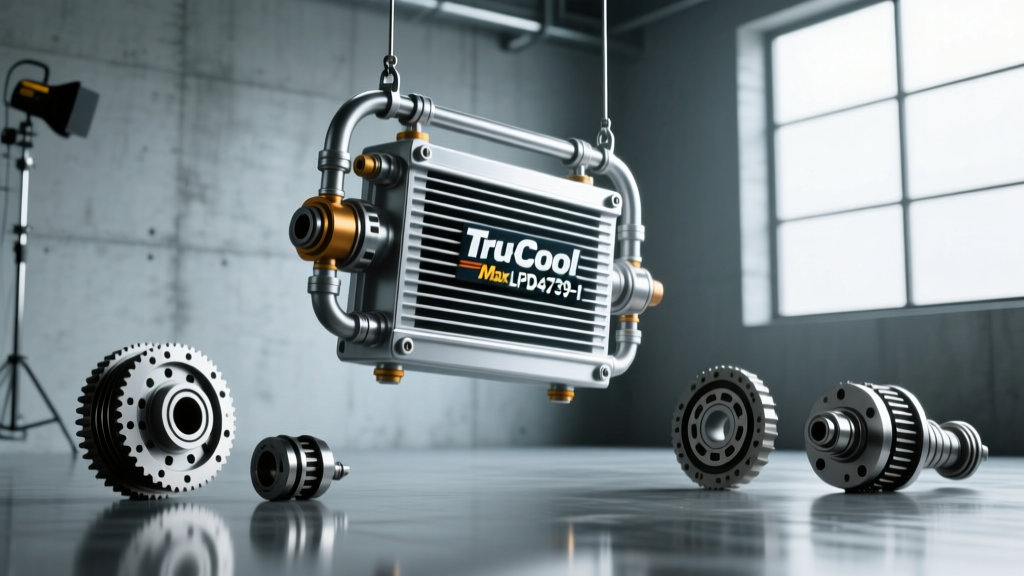
As we navigate the 2026 automotive repair landscape, the integration of high-capacity aftermarket cooling systems has become standard practice for towing and heavy-duty applications. Among the most ubiquitous units on the market is the Tru-Cool Max LPD4739-1 automatic transmission oil cooler. Rated for 24,000 GVW, this stacked-plate design is a staple for GM 6L80, Ford 6R80, and legacy 4L60E transmissions. However, its widespread installation—often performed as a DIY or quick-shop add-on—has led to a surge in improper fitting selections and vibration-induced weeping.
When a customer presents with a puddle of red or amber fluid beneath the front bumper, accurate leak diagnosis is paramount. Misdiagnosing a $15 hose clamp failure as a catastrophic internal radiator breach can cost the vehicle owner hundreds of dollars in unnecessary parts and labor. This guide provides a comprehensive cost analysis, diagnostic protocol, and repair breakdown specifically tailored to the Tru-Cool Max LPD4739-1 and its associated plumbing.
Step-by-Step Leak Diagnosis Protocol
Before quoting a replacement, a certified drivetrain technician must isolate the exact origin of the leak. The LPD (Low Pressure Drop) stacked-plate core itself rarely fails; instead, the vulnerabilities lie at the connection points and thermal cycling zones.
1. Visual Inspection and Thermal Imaging
The first step requires elevating the vehicle and removing the lower air deflector. Using a thermal imaging camera (such as the FLIR ONE Pro), technicians can trace the heat signature of the transmission fluid. Because the LPD4739-1 relies on ambient airflow, the inlet and outlet barb fittings will retain heat differently than the surrounding aluminum brackets. A localized hot spot near the 3/8-inch barb fitting usually indicates a weeping hose connection rather than a core failure.
2. UV Dye and Pressure Testing
If the leak is intermittent or only occurs under highway load, we introduce a petroleum-compatible UV dye (e.g., Tracerline TP9730) into the transmission dipstick tube or fill plug. After a 20-mile test cycle, we inspect the cooler under a 365nm UV light. For static pressure testing, the Transmission Digest recommends utilizing a dedicated cooler line tester to apply 30 PSI of shop air to the isolated cooler circuit. The Tru-Cool brazed joints will easily hold this pressure; if bubbles appear, the failure is almost exclusively at the quick-connect adapters or EPDM rubber hose interfaces.
2026 Cost Breakdown: Diagnosis, Parts, and Labor
Understanding the financial impact of a cooler leak requires separating diagnostic fees from hard parts and consumable fluids. Below is a real-world cost matrix based on current national average shop rates ($125–$165 per hour) and aftermarket parts pricing.
| Service / Component | Part Number / Spec | Estimated Cost (USD) | Notes |
|---|---|---|---|
| Diagnostic Labor | 1.0 Hour Shop Rate | $125 - $165 | Includes UV dye, road test, and lift time. |
| Tru-Cool Max Cooler (if core is damaged) | LPD4739-1 (24,000 GVW) | $140 - $175 | Stacked-plate core. Rarely requires replacement for simple weeping. |
| 3/8" Quick-Connect Fittings | Dorman 800-853 / OEM | $15 - $28 | Replaces fatigued plastic OEM clips that crack under thermal expansion. |
| EPDM Transmission Hose & Clamps | Gates 27093 / T-Bolt Clamps | $25 - $40 | Must use ATF-rated EPDM, not standard fuel hose. |
| ATF Fluid Top-Off (Dexron VI / Mercon LV) | 3-4 Quarts | $30 - $55 | Pricing reflects full synthetic 2026 formulations. |
| Repair Labor (Line/Hose Replacement) | 1.5 Hours | $185 - $245 | Includes fluid drain, line fabrication, and refill/level check. |
| Total Estimated Repair (No Core Replacement) | --- | $365 - $533 | Avoids unnecessary $175 cooler purchase if core is intact. |
Precise Torque Specifications and Fitting Edge Cases
A massive percentage of LPD4739-1 leaks are self-inflicted during the initial installation. The Tru-Cool unit features 3/8-inch male NPT or barb fittings depending on the specific hardware kit utilized. When adapting the factory hard lines to the cooler via rubber hose, technicians frequently over-torque the hose clamps.
- Hose Clamp Torque: Standard worm-gear clamps should be torqued to exactly 3.5 to 4.5 Nm (31-40 in-lb). Exceeding 5 Nm will slice the inner lining of the EPDM rubber hose. As the fluid reaches operating temperatures of 190°F, the rubber softens, and the over-tightened clamp extrudes the hose material, resulting in a slow, misting leak that only appears under highway cruising pressures (typically 45-65 PSI in the return line).
- Hard Line Fitting Torque: If utilizing 3/8-inch inverted flare steel hard lines with aluminum adapter blocks, the flare nut must be torqued to 15-18 lb-ft. Using Teflon tape on NPT adapter threads is strictly prohibited in transmission circuits; shredded tape will bypass the cooler and lodge in the transmission valve body solenoids, causing $2,500+ internal damage. Always use a liquid PTFE thread sealant rated for petroleum.
- Quick-Connect Retainer Clips: GM 6L80 and 8L90 applications utilize plastic quick-connect retainer clips. These become brittle after 60,000 miles of thermal cycling. According to data aggregated by Summit Racing Equipment, replacing these with billet aluminum or reinforced steel Dorman retainers during a leak diagnosis prevents immediate comebacks.
Hidden Costs: The Internal Radiator Bypass Confusion
One of the most expensive diagnostic errors involves confusing an external Tru-Cool leak with an internal radiator failure. Many modern trucks (such as the 2018-2024 Silverado 1500 with the 6L80) utilize a thermal bypass valve inside the transmission itself, alongside an OEM plate-and-fin cooler integrated into the engine radiator.
If the internal radiator tank cracks, engine coolant will mix with the transmission fluid, creating a pink, emulsified sludge (often referred to as the 'strawberry milkshake of death'). If a technician misdiagnoses a simple external barb leak on the Tru-Cool LPD4739-1 as a cross-contamination event, the customer may be erroneously quoted for a new OEM radiator ($450-$800), a complete transmission flush ($250), and in severe cases, a transmission rebuild due to coolant destroying the clutch friction materials ($3,500+). Properly isolating the external circuit via a pressure test saves the consumer thousands of dollars and protects the shop's reputation.
Fluid Chemistry and Top-Off Economics
When repairing a leak on the LPD4739-1, the fluid lost must be replaced with the exact OEM specification. In 2026, the price gap between conventional and full-synthetic ATF has narrowed, but the chemical incompatibility remains strict.
- GM Applications: Require ACDelco Dexron VI. Do not mix with older Dexron III, as the friction modifiers will cause torque converter shudder.
- Ford Applications: Require Motorcraft Mercon LV or ULV.
- Stellantis/Chrysler: Require ATF+4. Using Dexron VI in a ZF 8HP transmission will result in immediate clutch pack degradation.
Expert Verdict on the LPD4739-1
The Tru-Cool Max LPD4739-1 remains an exceptionally reliable, high-flow stacked-plate cooler. As documented by Tru-Cool's official engineering specifications, the LPD technology ensures that fluid viscosity is maintained without starving the lubrication circuits during cold starts. When a leak does occur, it is almost never a failure of the $150 brazed aluminum core. By adhering to strict UV diagnostic protocols, respecting the 4 Nm torque limit on EPDM hose clamps, and utilizing proper PTFE sealants on NPT threads, shops can resolve these leaks efficiently. The average out-the-door cost for a professional repair should hover between $365 and $533, keeping the vehicle safely on the road without resorting to unnecessary core replacements.