The Overheating Epidemic in Modern Tow Rigs
Modern automatic transmissions are engineering marvels, but their compact packaging and aggressive torque converter clutch (TCC) slip strategies generate immense thermal loads. Whether you are running a GM 6L80 in a heavy-duty SUV or a ZF 8HP in a modern diesel truck, heat is the ultimate enemy of clutch packs and synthetic fluid shear stability. Upgrading to a high-capacity stacked-plate cooler is the first line of defense, but without accurate data, you are flying blind. This brings us to a critical intersection in drivetrain modification: pairing the industry-leading Tru Cool 40K transmission cooler with a precision temperature monitoring system.
In this 2026 buyer's guide, we will break down exactly how the Tru Cool 40K (Part #LPC4739) manages fluid thermodynamics, why your factory OBD2 temperature readings are likely lying to you, and the best aftermarket gauges and inline sensors to track your transmission's true thermal state under heavy towing conditions.
The Tru Cool 40K (LPC4739) Explained: Internal Bypass vs. External Monitoring
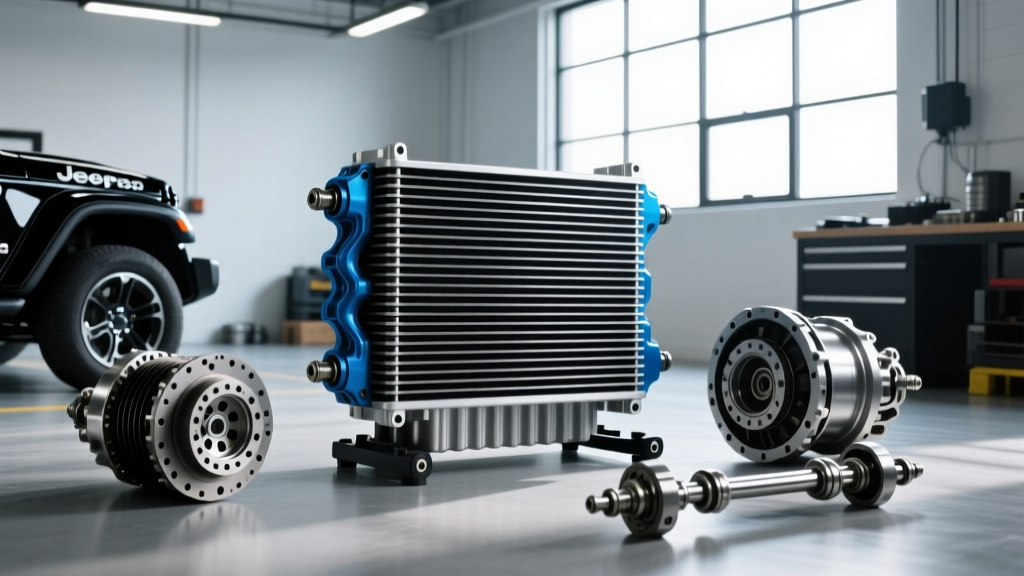
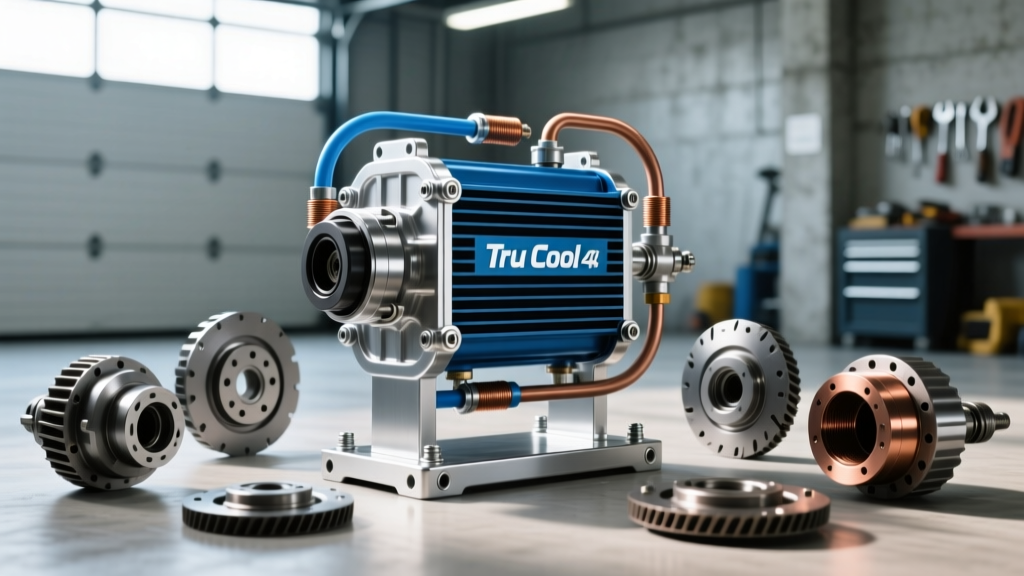
The Long Engineering Tru Cool 40K (LPC4739) is a 40,000-pound GVW-rated stacked-plate cooler. Unlike older tube-and-fin designs that restrict flow and cause pressure drops, the LPC4739 utilizes a low-pressure drop (LPD) bypass system.
How the Thermal Bypass Masks Factory Sensor Data
The genius—and the monitoring complication—of the LPC4739 is its internal thermal bypass valve. When transmission fluid is cold (below 180°F), the valve routes the fluid entirely around the cooling plates, sending it straight back to the transmission. This prevents fluid cavitation, ensures rapid warm-up, and protects the valve body from the sluggish shift times associated with cold, viscous Dexron VI or ZF LifeguardFluid 8.
However, if you are relying on the factory transmission fluid temperature (TFT) sensor located in the transmission pan, you are only seeing the result of the cooling system, not the work it is doing. By the time pan temperatures spike on your dashboard, the torque converter and stator have already been subjected to extreme localized heat. To truly monitor the efficiency of your Tru Cool 40K, you must move the monitoring point to the cooler lines.
Comparing Transmission Temperature Monitoring Methods
To build a complete thermal management profile, enthusiasts and fleet managers must choose how to intercept temperature data. Below is a comparison of the three primary monitoring methodologies when paired with an auxiliary stacked-plate cooler.
| Monitoring Method | Data Point Accuracy | Install Difficulty | Cost Estimate (2026) |
|---|---|---|---|
| OBD2 TCM PID (Factory Pan Sensor) | Low (Delayed reaction, masked by bypass) | None (Plug-and-play) | $0 - $50 (Dongle) |
| Inline Pressure-Side (Cooler Feed) | High (Real-time torque converter heat) | Moderate (Requires line cutting/fittings) | $60 - $150 |
| Inline Return-Side (Cooler Output) | Medium-High (Shows cooler delta/rejection) | Moderate (Requires line cutting/fittings) | |
| Deep Pan Sensor Bung | Medium (Better volume, still delayed) | High (Requires pan drop and drilling) | $150 - $350 |
For the ultimate diagnostic setup, we recommend monitoring the Return-Side of the Tru Cool 40K. This tells you exactly how much heat the stacked plates are rejecting before the fluid re-enters the transmission lubrication galleries.
Buyer's Guide: Best Temp Gauges to Pair with Your Tru Cool 40K
If you have invested $170-$190 in the LPC4739 cooler, do not skimp on the monitoring hardware. Here are the top-tier solutions for tracking your drivetrain temperatures.
1. Edge Insight CTS3 (OBD2 PID Monitoring)
While we noted that factory pan sensors are delayed, the Edge Insight CTS3 remains a staple for baseline monitoring. Priced around $529, this 5-inch touchscreen reads the Transmission Control Module (TCM) PID data directly via the OBD2 port. Best for: Daily drivers who tow occasionally and want to monitor TCC slip percentages alongside general pan temperatures without cutting into factory hard lines.
2. Autometer 3221 Mechanical Transmission Temp Gauge
For dedicated tow rigs and off-road vehicles, analog or stepper-motor mechanical gauges are king. The Autometer 3221 (approx. $65) features a 2-1/16' dial and a capillary tube that terminates in a 1/8' NPT brass fitting. Best for: High-vibration environments where digital sensors fail. You will need to install a T-fitting or an inline adapter block on the cooler return line to thread the 1/8' NPT sensor directly into the fluid stream.
3. Dakota Digital SEN-04-5 Inline Fluid Temp Sensor
If you are running a custom EFI setup or a digital dash like the Dakota Digital RTX series, the SEN-04-5 inline sensor ($85) is the gold standard. It features a 1/8' NPT threaded body that houses a 100-ohm RTD element, providing lightning-fast resistance changes in response to fluid temperature spikes. Best for: Custom hot rods, restomods, and heavy-duty diesel swaps utilizing the Tru Cool 40K as a standalone rear-differential or transmission cooler.
Installation Specs: Sensor Placement and Torque Requirements
Installing inline temperature sensors requires precision. A blown cooler line on the highway will destroy a 4L60E or 6L80 in less than three miles. Follow these strict installation parameters:
- Fitting Preparation: Never use standard PTFE (Teflon) plumber's tape on transmission cooler line fittings. Shredded tape will bypass the filter and lodge in the valve body solenoids, causing catastrophic shift flares. Use Permatex 59214 High Temperature Thread Sealant.
- Torque Specifications: When threading a 1/8' NPT sensor into an aluminum AN6 adapter block, torque to exactly 12-15 ft-lbs. Over-torquing will crack the aluminum casting.
- AN6 Line Fittings: If you are upgrading to -6 AN braided stainless lines to feed the Tru Cool 40K, torque the aluminum AN fittings to 15 ft-lbs using a crowfoot wrench to avoid rounding the hex nuts.
- Mounting the LPC4739: Use the included rubber isolation bushings when bolting the cooler to your chassis or radiator support. Stacked-plate coolers are dense; metal-on-metal mounting will transfer road harmonics directly into the aluminum plates, leading to stress fractures over time.
Real-World Temp Targets for Modern Transmissions
Knowing your temperature is only half the battle; understanding the failure thresholds of your specific transmission is what saves you money. Here are the 2026 industry-standard thermal targets when running synthetic fluids and auxiliary cooling:
- GM 4L60E / 4L80E: Ideal operating range is 160°F - 185°F. At 220°F, the varnish in standard Dexron III/VI begins to break down. At 250°F, clutch pack glazing is imminent.
- GM 6L80 / 6L90: These units run hotter by design to manage massive torque converter slip in Tow/Haul mode. Normal range is 180°F - 205°F. The factory TCM will trigger a thermal limp mode and lock the TCC if pan temps exceed 265°F, but damage occurs well before this threshold.
- ZF 8HP (70/75/90/95): The ZF 8HP utilizes a complex thermal management module. The internal thermostat opens to route fluid to the cooler at 185°F (85°C). ZF LifeguardFluid 8 is highly shear-stable, but sustained temperatures above 230°F will degrade the friction modifiers, leading to the infamous 'ZF shudder' during the 3-4 and 4-5 shifts.
Conclusion: Building a Complete Thermal Management System
The Tru Cool 40K transmission cooler remains the undisputed champion of bolt-on thermal rejection, but it cannot protect your drivetrain if you are unaware of the fluid's actual state. By bypassing the delayed factory pan sensor and installing an inline return-side temperature gauge or digital RTD sensor, you gain actionable, real-time data. Whether you are pulling a 10,000-lb trailer through the Rockies or running high-stall drag radials at the track, pairing the LPC4739 with precision monitoring is the ultimate insurance policy for your transmission's longevity.