When you pick up your vehicle from the shop, the immediate relief of having a functioning drivetrain is often followed by a crucial question: what to expect after a transmission rebuild? Beyond the mechanical break-in period, understanding the financial and maintenance landscape is vital to protecting your investment. As of 2026, a professional automatic transmission rebuild typically ranges from $2,800 to $4,500 depending on the unit and vehicle application. To truly protect this investment, you must understand both the initial transmission rebuild cost breakdown and the mandatory post-service preventive maintenance schedule.
The Immediate Aftermath: Break-In Period Expectations
The first 500 to 1,000 miles after a rebuild are critical. During this window, the new friction materials (clutches and bands) are mating with the steel reaction plates. It is entirely normal to experience slightly firmer shifts, minor hunting between gears, or a faint 'whine' from the new torque converter and front pump as clearances settle. However, harsh slamming into reverse, slipping under load, or burning odors are immediate red flags that require a return to the builder.
According to guidelines published by the Automatic Transmission Rebuilders Association (ATRA), the break-in period generates microscopic metallic and friction material debris. This debris circulates through the valve body and cooler lines, which is why a mandatory 'post-rebuild fluid swap' is non-negotiable for long-term survival.
Decoding the Transmission Rebuild Cost Breakdown
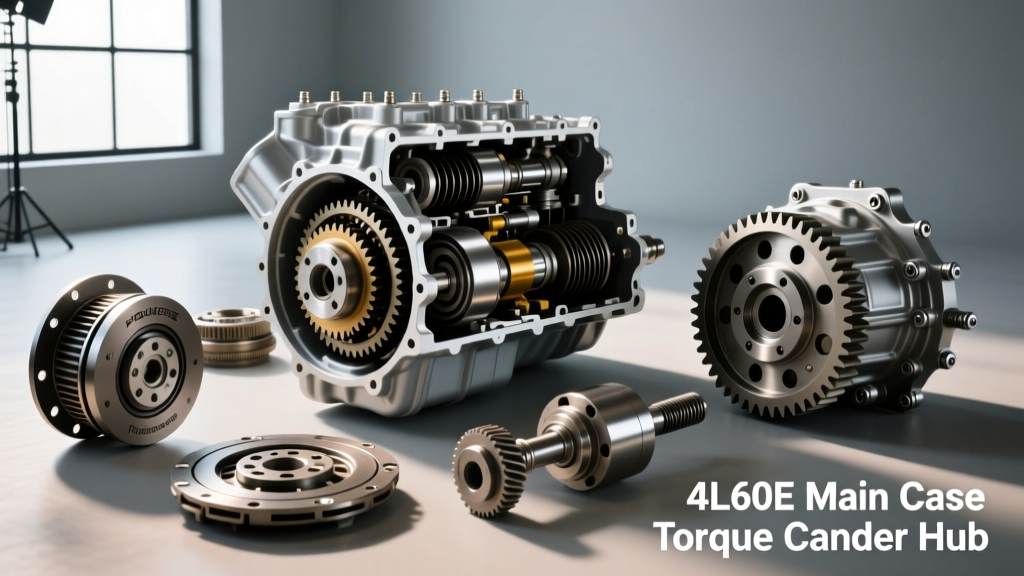
To understand what to expect after a transmission rebuild, you must first understand what you actually paid for. A reputable shop will provide an itemized invoice. If your shop only gave you a flat 'out-the-door' price, you are flying blind regarding the quality of internal components installed. Here is a standard transmission rebuild cost breakdown for a common rear-wheel-drive unit like the GM 4L60E or Ford 6R80.
| Cost Category | Description | Estimated Price Range |
|---|---|---|
| Removal & Reinstallation (R&R) | Labor to pull the unit from the vehicle and reinstall it. | $600 - $950 |
| Soft Parts (Master Kit) | Friction clutches, steel plates, bands, seals, O-rings, and gaskets. | $350 - $600 |
| Hard Parts Replacement | Sun shells, pumps, drums, or valve bodies damaged during failure. | $400 - $1,200 |
| Torque Converter | Mandatory replacement with a newly remanufactured converter. | $250 - $450 |
| Fluid & Filters | Synthetic ATF (e.g., Dexron VI, MERCON LV) and filter kit. | $120 - $200 |
| Machine Shop & Bench Labor | Teardown, cleaning, machining, assembly, and dyno testing. | $800 - $1,400 |
Hard Parts vs. Soft Parts: The Invoice Explained
The 'Soft Parts' are the consumables that wear out over time. High-end builders use upgraded friction materials, such as Raybestos GPZ or High Energy clutches, which handle higher thermal loads. 'Hard Parts' are the structural metal components. If your transmission failed catastrophically (e.g., a shattered 4L60E sun shell or a stripped 6L80 reaction drum), your hard parts cost will skew toward the higher end of the spectrum. Understanding this breakdown helps you verify that the shop didn't simply slap a 'master overhaul kit' into a unit with compromised hard parts.
The 500-Mile Service: Your First Post-Rebuild Cost
Knowing what to expect after a transmission rebuild means budgeting for the 500-mile break-in service. Many owners mistakenly believe the fresh fluid installed during the rebuild is good for 30,000 miles. This is a fatal error. The initial fluid becomes contaminated with assembly lube, clutch material shedding, and metallic dust from the new torque converter.
Expert Preventive Maintenance Tip: Never perform a pressurized 'power flush' on a freshly rebuilt transmission. The high pressure can dislodge debris trapped in the cooler lines and force it backward into the newly assembled valve body, causing immediate solenoid failure. Always opt for a gravity drop-and-fill or a low-pressure cooler line exchange.
Model-Specific Break-In Service Specs & Costs
The cost and procedure for this critical first service vary wildly depending on your transmission model. Below are the exact specifications for three of the most common units on the road today.
- GM 4L60E (1993-2013 GM Trucks/SUVs): Requires a standard pan drop. Use an AC Delco 24236933 deep pan filter kit. Fill with Dexron VI. Crucial Spec: Pan bolts are small and easily snap; torque them to exactly 11 Nm (97 lb-in) in a crisscross pattern. Expected Service Cost: $140 - $190.
- GM 6L80 / 6L90 (2006-2019 GM HD Trucks/Sports Cars): The filter is integrated directly into the Transmission Electro-Hydraulic Control Module (TEHCM) and valve body pan assembly. You cannot replace just the filter; the entire plastic pan must be swapped. Furthermore, the TEHCM adaptation values must be reset using a GDS2 or high-end bi-directional scan tool, or the transmission will shift erratically. Expected Service Cost: $350 - $500 (due to the $250+ pan/filter assembly).
- ZF 8HP (2012+ Chrysler/Dodge Ram, BMW, Audi): Requires ZF Lifeguard 8 fluid (do not substitute with generic ATF). Like the 6L80, the filter is molded into the plastic transmission pan (Part # 68224941AA for Ram applications). Pan bolts are aluminum and single-use; torque to 10 Nm (89 lb-in). Expected Service Cost: $400 - $650 (ZF fluid is highly expensive).
Long-Term Preventive Maintenance: Protecting the Investment
Once the 500-mile break-in service is complete, what to expect after a transmission rebuild transitions into a long-term maintenance rhythm. The Transmission Digest industry publication notes that heat and fluid degradation remain the primary killers of rebuilt units. To maximize the lifespan of your fresh build, adhere to the following preventive maintenance framework:
1. The 30,000-Mile Fluid Interval
Ignore the manufacturer's 'lifetime fluid' claims. In the context of a rebuilt transmission, 'lifetime' usually means the lifetime of the warranty. For severe duty (towing, stop-and-go traffic, modified engines), drop the pan and replace the fluid every 30,000 miles. For standard highway commuting, a 45,000 to 60,000-mile interval is acceptable. Always use the exact OEM-specified fluid; friction modifiers vary drastically between ATF+4, Dexron VI, and MERCON ULV.
2. Auxiliary Cooler Upgrades
If your original transmission failed due to overheating (common in 4L60E and early 6R80 applications), the factory cooler is insufficient. Budget $250 to $400 for an aftermarket auxiliary transmission cooler (such as a Tru-Cool LPD4533) installed in series with the factory radiator cooler. This drops operating temperatures by 30°F to 50°F, effectively doubling the life of your new clutches and seals.
3. External Filter Additions
For vehicles with accessible cooler lines (like the Dodge Ram with the 68RFE or Aisin AS69RC), installing a remote spin-on transmission filter (using a standard 10-micron hydraulic filter) is a game-changer. This costs about $120 installed and catches debris before it ever reaches the transmission pan, allowing you to monitor fluid health simply by cutting open the external filter during oil changes.
Warranty Caveats: What Voids Your Rebuild Guarantee
Most reputable rebuilders offer a 12-month/12,000-mile or 24-month/24,000-mile nationwide warranty. However, understanding what to expect after a transmission rebuild includes knowing how to avoid accidentally voiding this coverage. Almost all builder warranties contain strict stipulations:
- Proof of Cooler Flushing: If the shop that rebuilt your transmission did not also flush or replace your external transmission cooler lines, and the new unit fails due to debris ingestion, the warranty is void. Always demand a Cooler Flush Certificate.
- Mandatory Break-In Service Receipts: If you fail to perform and document the 500-mile fluid and filter change, the builder will deny any warranty claim regarding clutch wear or valve body scoring.
- Engine Modifications: If you have a 4L60E rebuilt to stock specifications but your engine is tuned to produce 450 lb-ft of torque, the builder will void the warranty upon inspection. Ensure your rebuild is spec'd for your actual power output, utilizing upgrades like a billet 2-4 servo or a hardened sun shell.
Conclusion
Knowing what to expect after a transmission rebuild is the difference between a unit that lasts 200,000 miles and one that fails prematurely. By thoroughly reviewing your transmission rebuild cost breakdown, you ensure that high-quality hard and soft parts were utilized. Following up with a strict 500-mile break-in service, utilizing model-specific torque specs and OEM fluids, and investing in auxiliary cooling will safeguard your drivetrain. Treat your freshly rebuilt transmission with mechanical empathy during the first 1,000 miles, and adhere to severe-duty maintenance intervals thereafter to ensure your investment pays dividends on the road ahead.