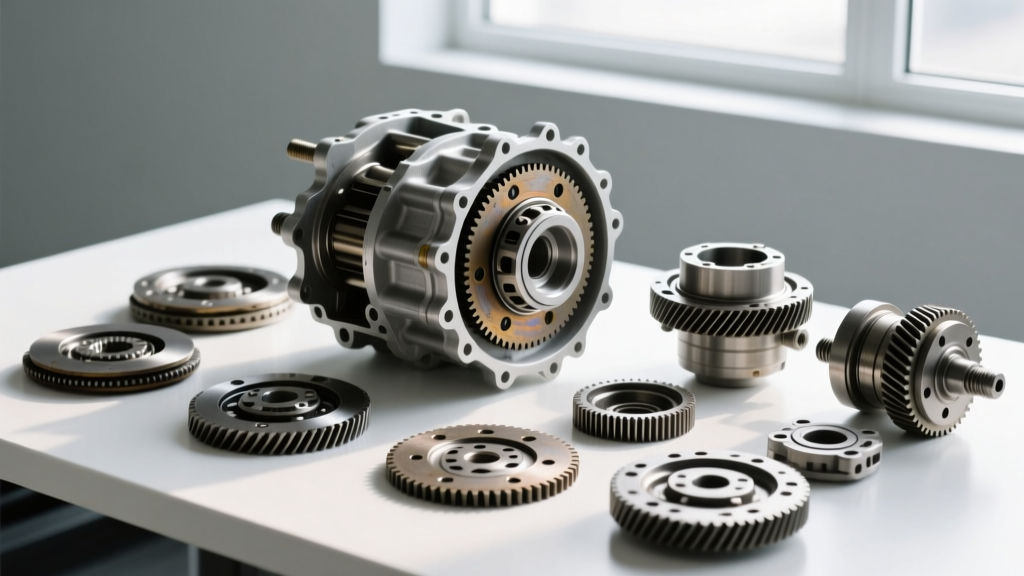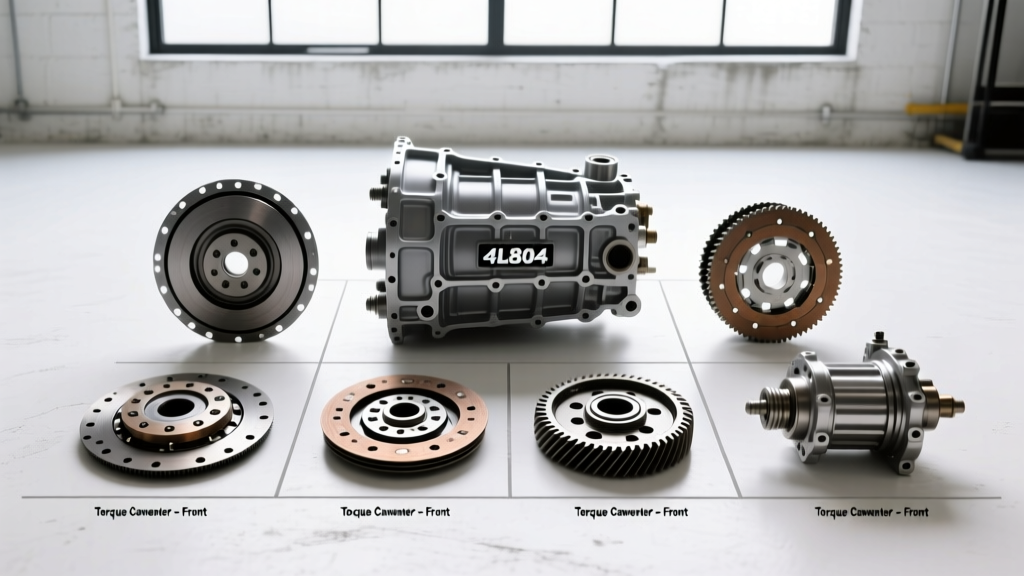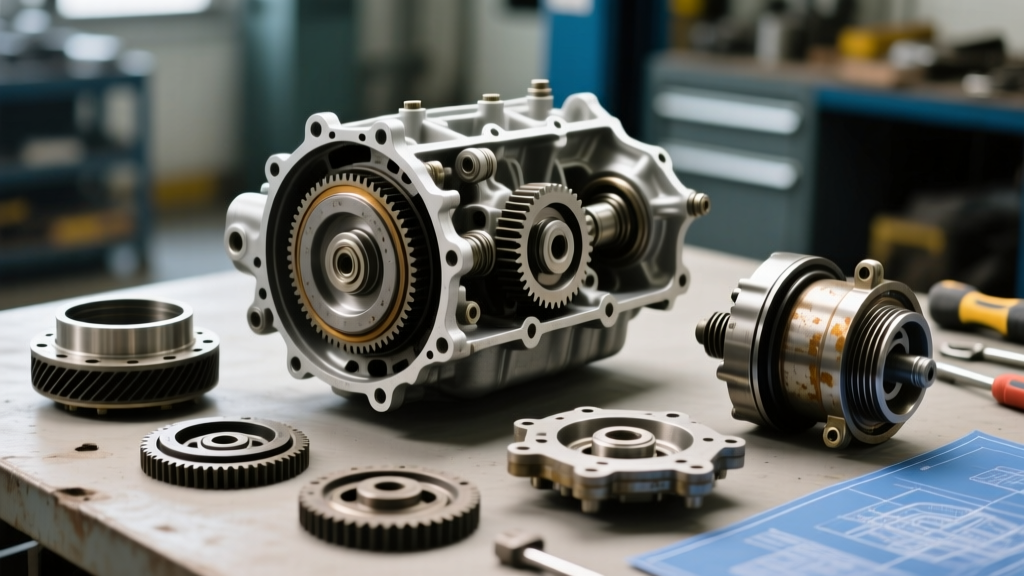
When figuring out how to learn to rebuild transmissions, most instructional guides focus heavily on hand tools, service manuals, and diagnostic software. However, very few resources prepare novice builders for the most brutal reality of the transmission bench: the sheer volume of time required to do the job correctly. In 2026, with shop labor rates frequently exceeding $160 per hour and modern 8-speed and 10-speed units featuring incredibly tight tolerances, understanding and managing your bench time is just as critical as knowing how to install a clutch pack.
For a seasoned professional, a standard rear-wheel-drive transmission rebuild might take 6 to 10 hours of bench time. For a first-time builder or an apprentice learning the ropes, that same unit can easily consume 25 to 40 hours. This comprehensive guide breaks down realistic transmission rebuild time estimates, identifies the hidden time sinks, and provides expert strategies to shrink your learning curve without sacrificing build quality.
The Anatomy of a Rebuild: Where the Hours Actually Go
To master your bench time, you must first understand where the hours disappear. A transmission rebuild is not a single task; it is a sequence of distinct phases, each with its own learning curve and potential for delays.
Phase 1: Teardown and Cataloging (Novice: 4–8 Hours)
Experienced builders can strip a 4L60E to its bare case in under 45 minutes. Novices, however, should expect to spend up to 8 hours on teardown. The delay isn't caused by a lack of wrench speed; it is caused by the necessity of cataloging. When learning, you must bag, tag, and photograph every sub-assembly. For example, the GM 6L80E utilizes specific wave plates and selective cushions in the 1-2-3-4 and 3-5-R clutch housings. Installing these friction and steel plates in the wrong order or upside down will result in immediate shift flare or burnt clutches upon startup. Taking the time to map these components is non-negotiable, but it is a massive time sink for beginners.
Phase 2: The Cleaning Bottleneck (Novice: 6–12 Hours)
Cleaning is the great equalizer of bench time. A novice builder will quickly learn that you cannot simply blast a valve body with brake cleaner and compressed air. You must disassemble the valve body, remove every valve, spring, and plug, and clean the casting with lint-free wipes and specialized solvents. If you are rebuilding a ZF 8HP45, dealing with the intricate mechatronic unit and its delicate separator plates can easily consume an entire afternoon. Rushing this phase guarantees a comeback due to a stuck shift valve or a clogged fluid orifice.
Phase 3: Measurement and Sub-Assembly (Novice: 10–20 Hours)
This is where the true science of transmission building lives. Checking clutch pack clearances, selecting endplay shims, and measuring pump gear clearances require patience and precision. On a classic 4L60E, setting the 3-4 clutch pack clearance to the ideal 0.010"–0.015" per friction surface using a dial indicator and a clutch pack compressor takes a novice significantly longer than a pro who has developed a 'feel' for the snap ring seating. Furthermore, calculating total endplay (targeting 0.008"–0.015") requires assembling the unit, torquing the pump bolts to 10-12 ft-lbs, measuring with a dial indicator, tearing it back down to swap a selective washer, and repeating the process until the spec is met.
Real-World Time Estimates by Transmission Model
Not all transmissions are created equal. The complexity of the unit drastically alters the learning curve. Below is a comparative breakdown of estimated bench times (excluding vehicle R&R) for three common platforms encountered in rebuild shops today.
| Transmission Model | Novice Bench Time | Pro Bench Time | Primary Time Sink for Beginners |
|---|---|---|---|
| GM 4L60E | 18 – 24 Hours | 6 – 8 Hours | Endplay shim selection, 3-4 clutch clearance, boost valve sleeve installation (e.g., Sonnax 51000-01K). |
| GM 6L80 / 6L90 | 24 – 32 Hours | 9 – 12 Hours | Wave plate orientation, TEHCM (Transmission Control Module) adaptation, and complex routing of the internal wiring harness. |
| ZF 8HP45 / 8HP70 | 30 – 45 Hours | 12 – 16 Hours | Mechatronic adapter sleeve replacement (torqued precisely to 8 Nm), valve body ball mapping, and clutch module sequencing. |
Expert Tooling Investments That Buy Back Bench Time
If you are researching how to learn to rebuild transmissions as a career or a serious hobby, you must invest in tooling that reduces trial and error. The following tools are mandatory for shrinking your bench time:
- Precision Endplay Tools: Stop using feeler gauges through the pump bolt holes. Invest in a dedicated transmission endplay gauge kit. This allows you to measure endplay accurately without fully torquing the bellhousing or pump, saving hours of repetitive teardowns.
- Clutch Pack Compressors: Trying to seat heavy-duty snap rings with two screwdrivers while compressing a return spring by hand is a recipe for scored drums and bloody knuckles. Model-specific clutch compressors (available from suppliers like TransGo or Kent-Moore) turn a 45-minute frustration into a 2-minute task.
- Valve Body Bore Reamers: When dealing with worn valve bodies (a common issue on the 4L60E and 6L80E), learning to use a Sonnax reaming fixture and carbide reamer allows you to salvage a core rather than spending hours hunting for a used replacement casting.
- Digital Torque Wrenches (Inch-Pound): Modern transmissions like the ZF 8HP and Ford 10R80 require incredibly precise torque specs on valve body and mechatronic bolts (often between 7 Nm and 11 Nm). Guessing with a standard beam-style wrench leads to warped valve bodies and cross-leaks.
The Financial Reality of Bench Time in 2026
Understanding time estimates is ultimately about understanding cost. In the context of rebuild-cost, time is your most expensive consumable. If you are operating in a professional environment with an overhead and labor rate of $150 per hour, a novice taking 30 hours to rebuild a ZF 8HP has effectively consumed $4,500 in shop resources before factoring in the rebuild kit, hard parts, and dyno fluid.
This is why many shops rely on ATSG (Automatic Transmission Service Group) manuals and technical bulletins. ATSG provides not just the teardown sequence, but the exact diagnostic flowcharts and update part numbers that prevent builders from going down the wrong path. A $40 technical manual can easily save 10 hours of misdiagnosed bench time, paying for itself immediately.
When to Stop the Clock and Ask for Help
Part of learning how to rebuild transmissions efficiently is knowing when you are stuck. If you have spent more than 90 minutes trying to align the input shaft splines through the clutch modules during final case assembly, stop. Forcing the components will crack a friction plate or bind a drum. Disassemble, check for a warped steel plate or a misaligned snap ring, and try again.
Similarly, if your endplay measurement is consistently out of spec despite swapping selective washers, do not accept a 'close enough' measurement to save time. Incorrect endplay will result in catastrophic planetary failure within the first 50 miles. Accept that the first few builds will take three times longer than the manual suggests. Document your clearances, label your bags, and respect the bench time. The speed will come; the precision must be there from day one.