The Overheating Epidemic: Why 6L80 and 68RFE Repairs Demand Cooler Upgrades
When a GM 6L80/6L90 or a Ram 68RFE transmission lands on your lift with burnt fluid, glazed clutch packs, or torque converter shudder, the root cause is almost invariably thermal degradation. As of 2026, with modern low-viscosity fluids facing extreme thermal shearing in aging fleets, simply rebuilding the mechanical hard parts without addressing the thermal management system is a callback waiting to happen. Selecting the correct transmission cooler is not a generic aftermarket afterthought; it is a critical, model-specific repair protocol.
"A rebuilt transmission is only as durable as its thermal management system. Replacing clutches without upgrading an inadequate OEM cooler is engineering negligence." — RevMax Converters Technical Bulletin
This guide dissects the exact transmission cooler architectures required for the GM 6L80 and Ram 68RFE platforms, detailing flow dynamics, bypass deletions, and precise installation specifications to ensure your repair survives the warranty period and beyond.
Thermal Dynamics: Matching Cooler Architecture to Transmission Flow Rates
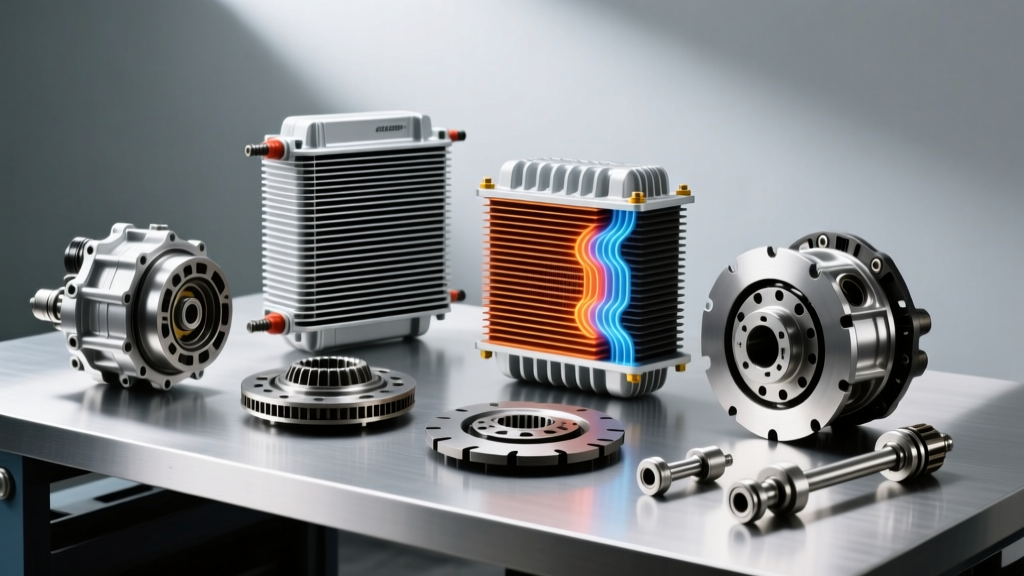
Not all coolers are created equal. The internal architecture of a cooler dictates its heat rejection capability (measured in BTUs) and its pressure drop (flow restriction). Restricting flow on a 68RFE can starve the lube circuit, while failing to reject heat on a 6L80 will cook the internal solenoids. Below is a technical comparison of the three primary cooler types encountered in repair scenarios.
| Cooler Architecture | Thermal Efficiency | Pressure Drop (PSI) | Burst Rating | Ideal Repair Scenario |
|---|---|---|---|---|
| Tube-and-Fin | Low (Base) | Low (1-3 PSI) | ~150 PSI | Light-duty passenger cars; budget OEM replacements. |
| Plate-and-Fin | Medium | Moderate (4-8 PSI) | ~250 PSI | Standard daily drivers; mild towing. |
| Stacked-Plate (Standard) | High | High (8-15 PSI) | 300+ PSI | Heavy towing; racing; high-flow circuits. |
| Stacked-Plate (LPD/Bypass) | Very High | Low (2-4 PSI) | 400+ PSI | 6L80/68RFE heavy-duty repairs; lube-circuit protection. |
For heavy-duty repairs on the 6L80 and 68RFE, Stacked-Plate LPD (Low Pressure Drop) coolers are the only acceptable standard. Standard stacked-plate coolers restrict flow too aggressively, which can trigger the transmission's internal pressure relief valves and starve the planetary gears of lubrication. According to Tru-Cool Official Engineering Data, LPD technology allows fluid to bypass the cooler plates during cold starts or low-load cruising, only forcing fluid through the high-efficiency plates when thermal thresholds are exceeded.
Model-Specific Repair Protocol: GM 6L80/6L90 TEHCM Preservation
The GM 6L80 and 6L90 transmissions house the TEHCM (Transmission Electro-Hydraulic Control Module) directly inside the transmission pan. This unit contains the TCM and all shift solenoids, relying entirely on convective cooling from the sump fluid. If sump temperatures exceed 200°F (93°C), the TEHCM can overheat, triggering limp mode and throwing P0711 or P0719 temperature sensor codes.
Bypass Valve Delete and Flow Routing
The OEM 6L80 cooler circuit features a thermal bypass valve designed to restrict cooler flow during cold starts to warm the fluid quickly. However, in heavy towing or high-ambient-temperature environments, this valve can fail to fully close, or the OEM radiator-integrated cooler simply lacks the BTU rejection to drop temperatures before the fluid returns to the pan.
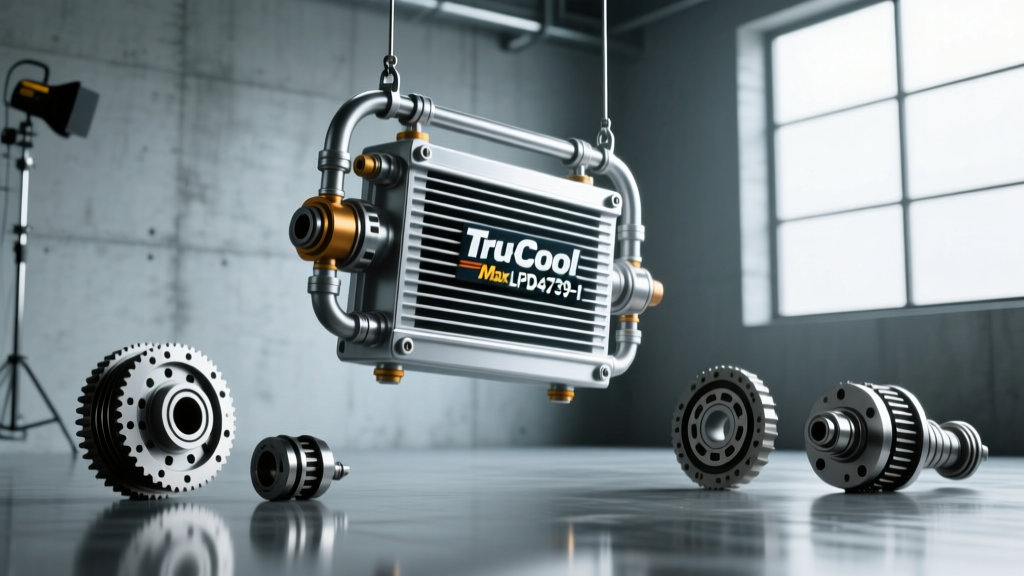
Repair Protocol: When rebuilding a 6L80 for a towing application, perform a thermal bypass delete. Route the cooler-out line directly to a high-capacity auxiliary stacked-plate cooler (such as the Tru-Cool LPD4739 or Hayden 678), and return it directly to the transmission return fitting, completely bypassing the radiator's internal cooler if auxiliary capacity is sufficient. This guarantees 100% of the fluid volume passes through the high-efficiency plates.
Recommended Stacked-Plate Selection
- Tru-Cool LPD4739 (40,000 GVW Rating): Priced around $165–$190. Features a true low-pressure-drop bypass valve. Ideal for 6L80 trucks towing 8,000+ lbs.
- Hayden 678 (Rapid-Cool Stacked-Plate): Priced around $125–$150. Excellent for moderate-duty 6L90 applications where space behind the grille is limited.
Model-Specific Repair Protocol: Ram 68RFE Towing & Line Pressure Spikes
The Ram 68RFE is a robust 6-speed automatic, but it is notorious for line pressure spikes that can exceed 250 PSI in TOW/HAUL mode, especially when paired with modified diesel engines producing over 500 lb-ft of torque.
Managing the 250+ PSI Line Pressure Surges
Installing a standard tube-and-fin or cheap plate-and-fin cooler on a repaired 68RFE is a critical failure point. Under a 250 PSI line pressure spike, inferior coolers will balloon, split their internal brazed joints, or cause a massive pressure drop that starves the overdrive clutch pack. Furthermore, the 68RFE utilizes a dual-filter setup (main inline and sump). If the cooler restricts return flow, the main filter can collapse under vacuum.
Repair Protocol: You must select a cooler with a verified burst pressure rating of at least 400 PSI. The Hayden Automotive Cooling Guides recommend their heavy-duty stacked-plate series for diesel applications due to their copper-brazed or aluminum-furnace-brazed seams that withstand hydraulic shock. Always install an inline magnetic filter (like the Sonnax 100-100) on the cooler return line to catch any metallic debris before it re-enters the transmission or clogs the new cooler.
Hardware, Fittings, and Torque Specifications for Leak-Free Integration
The most common point of failure in a transmission cooler upgrade is not the cooler itself, but the plumbing. GM and Ram use different OEM fitting styles that must be adapted correctly to prevent blowouts under pressure.
- GM Quick-Disconnects: The 6L80 uses 5/16" and 3/8" quick-disconnect fittings at the transmission case. Do not reuse plastic OEM clips. Cut the OEM lines and install aluminum barb fittings with double-clamp setups, or preferably, crimp-on AN-6 push-lock fittings.
- AN Fitting Torque Specs: When threading AN-6 adapter fittings into aluminum transmission cases or aftermarket cooler manifolds, torque to exactly 15–18 ft-lbs. Over-torquing will crack the aluminum case or strip the threads.
- Thread Sealant Warning: NEVER use PTFE (Teflon) tape on transmission cooler fittings. Shreds of Teflon tape will travel through the return line, bypass the sump filter, and lodge directly inside the TEHCM solenoids or the 68RFE's valve body switch valves, causing immediate shift solenoid codes. Use a liquid thread sealant rated for ATF, such as Loctite 565 or Permatex 80634.
- Hose Routing: Use Gates or Earl's dedicated transmission oil hose (rated for 300°F and 400 PSI). Standard fuel or oil lines will degrade rapidly when exposed to modern synthetic ATF additives.
Final Verification and Fluid Fill
After installing the selected transmission cooler and deleting any restrictive OEM bypass valves, the system must be pressure-tested. Use a shop air regulator set to 100 PSI to pressurize the cooler circuit and check for leaks at the AN fittings before filling with fluid. For the 6L80, expect to add an additional 1.5 to 2 quarts of Dexron VI or ULV to account for the new cooler volume. For the 68RFE, utilize the factory dipstick procedure at operating temperature (180°F), ensuring the fluid level is precisely in the crosshatch zone to prevent pump cavitation. For deeper diagnostics on valve body wear related to overheating, consult the Sonnax Technical Resources database for model-specific solenoid feed limit valve repairs.