The Hidden Cost of Poor Transmission Cooler Line Routing
When upgrading or repairing a transmission cooling system, enthusiasts and technicians often obsess over cooler core efficiency while completely neglecting the plumbing. In modern 8-speed and 10-speed automatic transmissions, the cooling circuit is not just a passive heat exchanger; it is an active, pressure-regulated component of the hydraulic system. A poorly executed transmission cooler line fitting installation or a restrictive routing path can induce severe pressure drops, leading to torque converter drain-back, delayed shift engagements, and accelerated clutch pack wear.
As of 2026, with the widespread adoption of low-viscosity fluids like ULV (Ultra Low Viscosity) ATF, hydraulic margins are tighter than ever. This guide details the exact specifications, routing strategies, and fitting selections required to maintain optimal flow dynamics for heavy-duty and high-performance applications.
Decoding Transmission Cooler Line Fitting Types
The first point of failure in any auxiliary cooler setup is the transition from the OEM transmission case to the aftermarket lines. OEM manufacturers prioritize assembly-line speed, utilizing push-to-connect quick-release fittings. While adequate for stock configurations, these plastic-collared fittings are notorious for cracking under high-heat towing conditions and cannot accommodate the bend radii of braided stainless steel hoses.
Upgrading to ORB and AN Flare Fittings
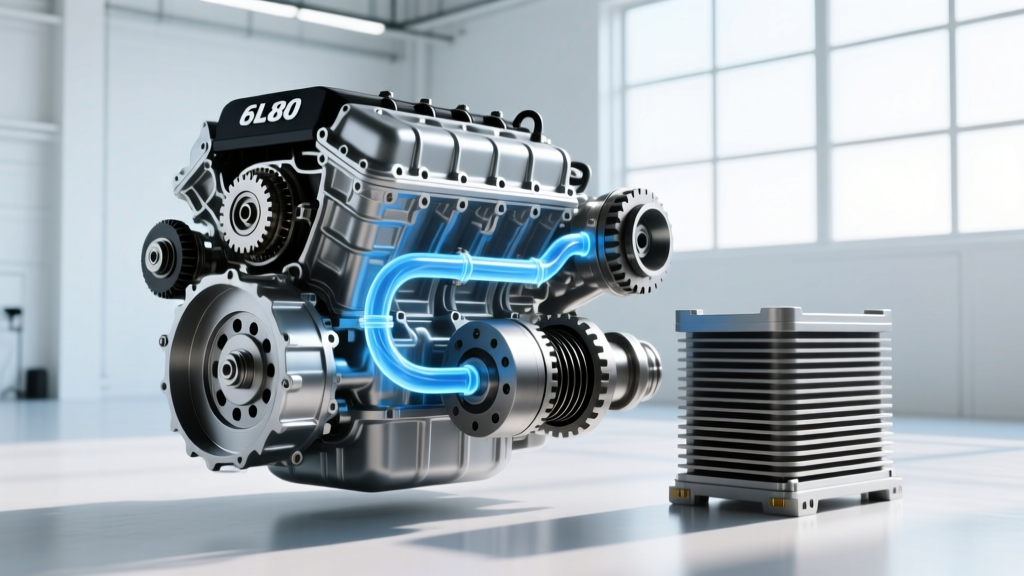
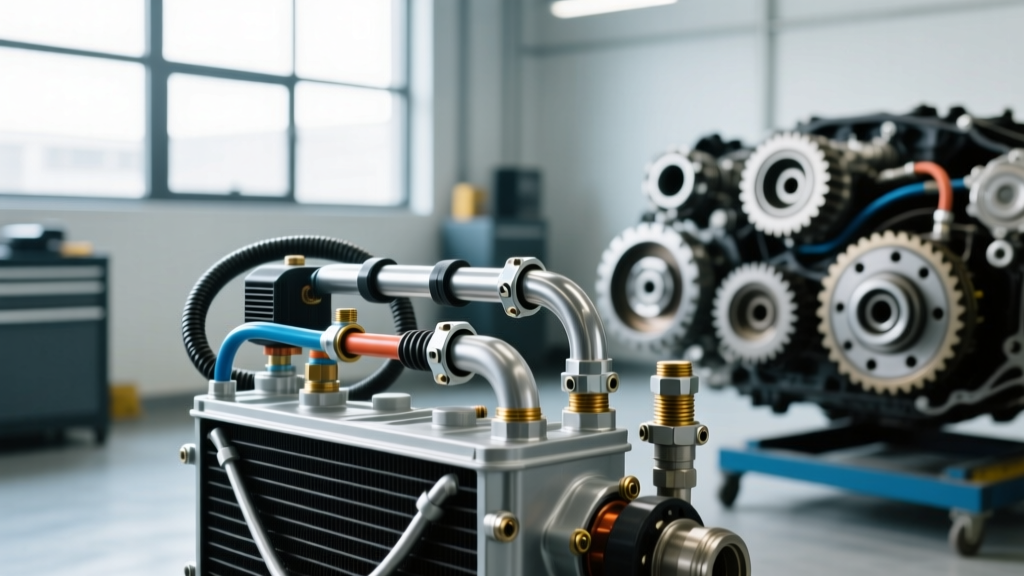
The industry standard for reliable transmission cooler line routing is converting the OEM quick-connects to O-Ring Boss (ORB) ports, which then adapt to Army-Navy (AN) 37-degree flared fittings. For example, the ubiquitous GM 6L80 and 6L90 transmissions utilize a 1/2"-20 thread pitch at the case. Using an adapter like the Derale 15902 Adapter Kit allows you to safely transition to an AN-6 or AN-8 male flare without compromising the case seal.
For ZF 8HP applications (found in Ram trucks, BMWs, and Jaguars), the transmission case often uses metric O-ring face seals (ORFS) or specific banjo bolt configurations. Upgrading these requires precision-machined aluminum banjo adapters that retain the OEM thermal management module (TMM) bypass functionality while providing an AN-8 threaded port for hard-line routing.
Torque Specifications for Common Fitting Sizes
Overtightening aluminum AN fittings into cast aluminum transmission pans or aftermarket cooler cores will strip the threads or warp the sealing surface. Always use a calibrated inch-pound or low-range foot-pound torque wrench. Refer to Summit Racing's AN Fitting Guide for comprehensive thread mapping, but adhere to these baseline torque specs for steel-to-aluminum connections:
| Fitting Size | Thread Pitch | Wrench Size | Torque Spec (ft-lbs) |
|---|---|---|---|
| AN-6 | 9/16"-18 | 11/16" | 12 - 15 ft-lbs |
| AN-8 | 3/4"-16 | 7/8" | 22 - 26 ft-lbs |
| AN-10 | 7/8"-14 | 1-1/16" | 35 - 40 ft-lbs |
Fluid Dynamics: Minimum Bend Radii and Line Sizing
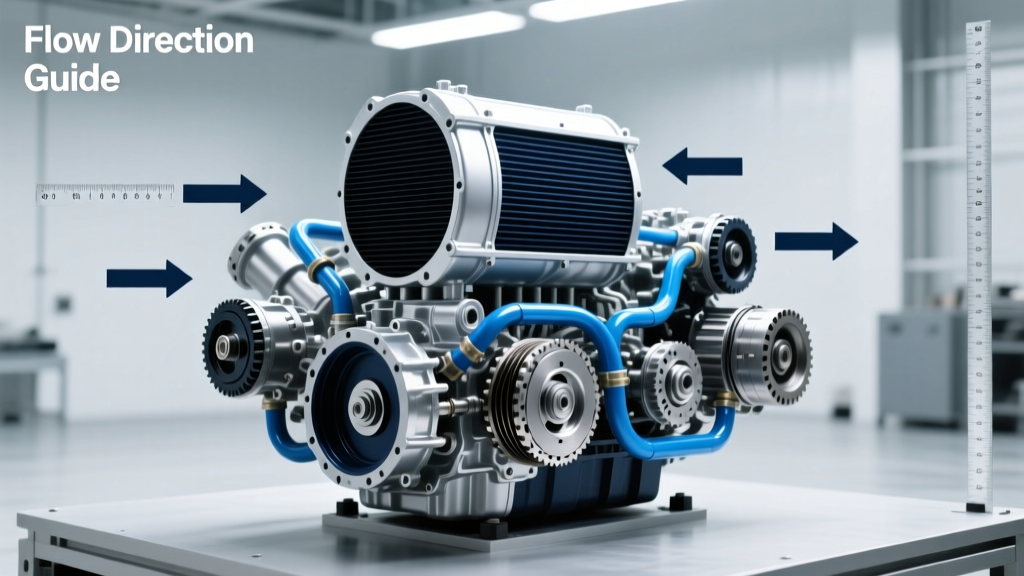
A common mistake in custom transmission cooler line routing is using a line diameter that is too small, or bending the hose too sharply around the crossmember. Fluid requires a specific boundary layer to flow efficiently; sharp 90-degree bends cause cavitation and localized fluid boiling.
Sizing the Feed vs. Return Lines
For transmissions producing over 600 lb-ft of torque, or those utilizing high-stall torque converters, an AN-8 (1/2" ID) feed line and an AN-6 (3/8" ID) return line is the optimal configuration. The slightly smaller return line maintains a crucial 15-25 PSI of backpressure in the cooler circuit. This backpressure is required to force ATF through the transmission's internal lube priority valves, ensuring the output shaft bearings and planetary gearsets receive adequate oiling during high-RPM operation.
Minimum Bend Radii by Hose Type
When routing around exhaust systems and suspension components, respect the physical limitations of your hose material. Exceeding the minimum bend radius will collapse the inner PTFE liner, creating a hidden flow restriction that mimics a clogged cooler core.
| Hose Material | Nominal Size | Minimum Bend Radius | Best Application |
|---|---|---|---|
| Hard Steel / NiCopp | 3/8" OD | 2.5 inches | Frame rail routing, clean OEM look |
| PTFE Core / Stainless Braid | AN-6 / AN-8 | 4.0 inches | Towing rigs, high-vibration zones |
| Push-Loc Rubber Hose | 3/8" ID | 3.0 inches | Temporary routing, low-heat areas |
Step-by-Step Routing Strategy for High-Heat Environments
Proper routing is about thermal isolation and mechanical protection. Modern exhaust systems, particularly on diesel trucks equipped with DPFs (Diesel Particulate Filters), generate radiant heat exceeding 800°F under load. ATF degrades rapidly once it surpasses 250°F, losing its shear stability and friction modifiers.
- Maintain Clearance: Keep all transmission cooler lines a minimum of 4 inches away from exhaust manifolds, downpipes, and catalytic converters. If 4 inches is impossible, wrap the hard lines in DEI Titanium Exhaust Heat Wrap or install a dedicated aluminum heat shield.
- Use Adel Clamps: Never use nylon zip-ties to secure transmission lines to the chassis. UV exposure and heat will cause zip-ties to become brittle and fail, dropping the line onto the exhaust or driveshaft. Use MS21919-standard stainless steel Adel clamps with high-temperature silicone cushions, spaced every 14 to 18 inches.
- Avoid the Driveshaft Trap: When routing lines along the frame rail, ensure they pass above or outside the driveshaft loop. A dropped slip-yoke or broken U-joint will instantly sever a poorly routed cooler line, dumping the entire 12-quart fluid capacity onto the pavement in seconds.
The Teflon Tape Trap: A Critical Warning
Never use PTFE (Teflon) thread seal tape on any transmission cooler line fitting, AN flare, or ORB O-ring connection. The tape shreds under hydraulic pressure, sending microscopic plastic ribbons directly into the transmission valve body. These ribbons routinely clog the 0.040" lube orifices and torque converter charge valves, resulting in catastrophic transmission failure within a few hundred miles.
For NPT (National Pipe Thread) ports found on some aftermarket cooler cores, use a liquid anaerobic thread sealant like Loctite 565 or Permatex High-Temperature Thread Sealant. For ORB and AN fittings, the seal is made entirely by the O-ring or the 37-degree metal-to-metal flare; thread sealant is not only unnecessary, it is detrimental.
Real-World Application: GM 6L80E Towing Rig
Consider a 2024 Silverado 2500HD equipped with the 6L80E, used for heavy fifth-wheel towing. The OEM routing utilizes plastic quick-connects and a restrictive stock cooler. To upgrade this system for 2026 towing standards, we remove the OEM lines and install Fragola 200806-BL adapters (1/2"-20 ORB to AN-8 Male) directly into the transmission case.
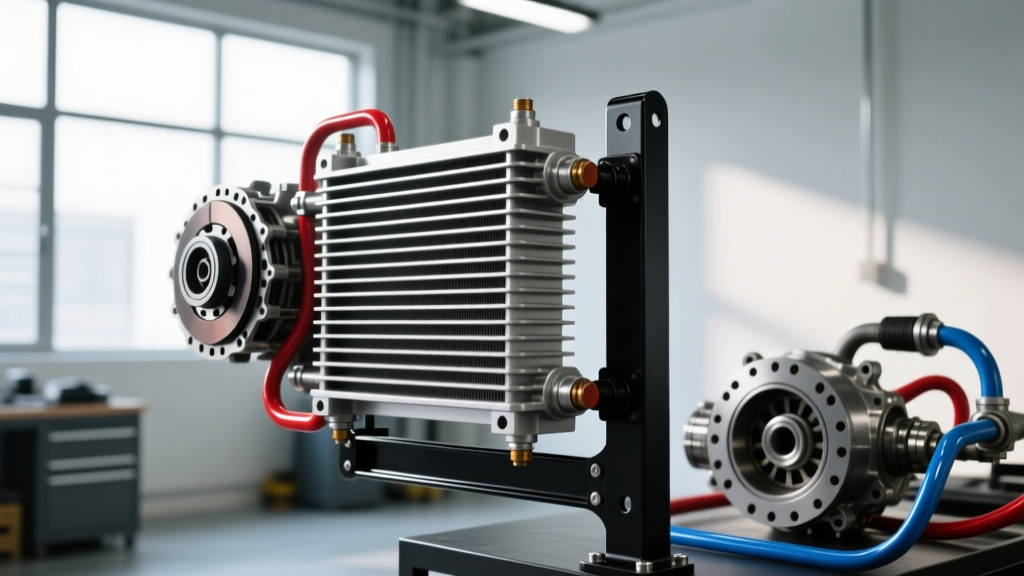
From the case, Earl's ProLite AN-8 PTFE braided hose (approximately $7.50 per foot) is routed down the driver-side frame rail, utilizing factory rubber isolation mounts. The lines feed into a front-mount stacked-plate cooler (such as a Mishimoto MMTC-U) mounted ahead of the AC condenser. The return line steps down to AN-6 at the cooler outlet to generate the necessary lube circuit backpressure, returning to the passenger-side transmission pan fitting. This setup maintains a steady cooler line pressure of 55 PSI at the transmission case, even when ambient temperatures exceed 105°F on steep grades.
Troubleshooting Flow Restrictions and Leaks
If you experience delayed forward engagement after installing new lines and fittings, you likely have a flow restriction or an air leak on the return side.
First, check for cavitation. If the return line is kinked, the transmission pump will pull a vacuum on the torque converter, causing the fluid to aerate. Aerated ATF appears milky on the dipstick and cannot transfer hydraulic pressure effectively.
Second, verify your adapter internal diameters. Many cheap, mass-produced ORB-to-AN adapters found on online marketplaces have poorly machined internal bores. An AN-8 adapter should have a minimum internal flow diameter of 0.410". If the bore is restricted to 0.250" due to poor manufacturing, it will act as a bottleneck, starving the cooler of volume regardless of how large your external cooler core is. Always purchase fittings from reputable motorsport brands like Earl's, Fragola, or Russell Performance, and consult TCI Auto Tech Tips for verified flow-testing methodologies.
Conclusion
Transmission cooler line routing is an exercise in fluid dynamics and thermal management. By selecting the correct transmission cooler line fitting hardware, respecting bend radii, and isolating your plumbing from extreme exhaust heat, you ensure your transmission operates within its optimal thermal window. Whether you are building a dedicated drag car or a heavy-duty tow rig, precision plumbing is the cheapest insurance policy you can buy for your drivetrain.