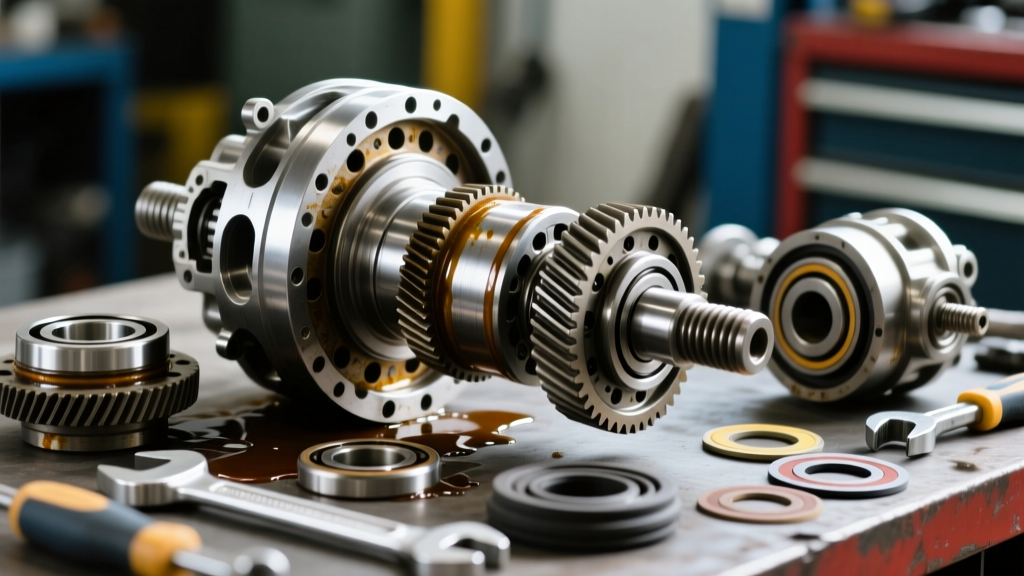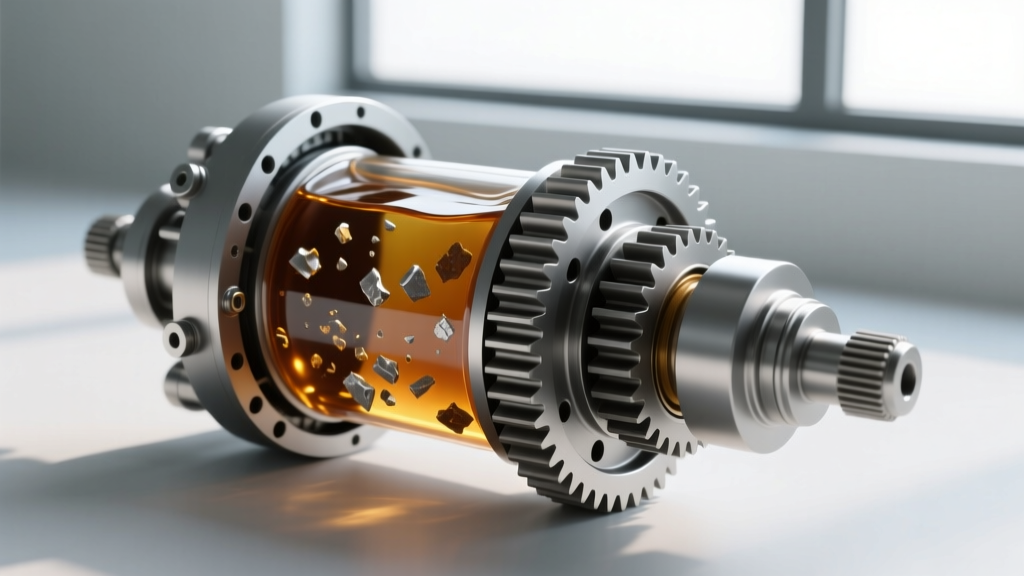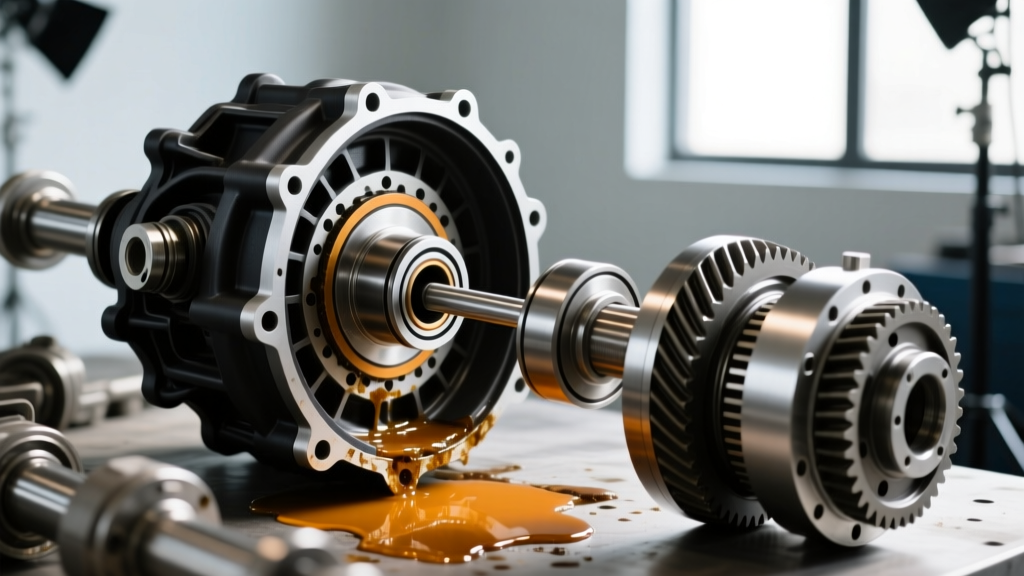
When you back your truck or SUV out of the driveway and spot a dark puddle near the center or rear of the vehicle, panic often sets in. For beginners, the underside of a four-wheel-drive vehicle is a labyrinth of rotating metal. Is that leak coming from the transmission? The transfer case? Or the rear axle? Understanding the mechanical relationship between your transfer case and your rear differential is the first step in accurate diagnosis. More importantly, knowing the exact cost to replace rear differential pinion seal components can save you from being overcharged at the repair shop.
In this 2026 beginner-friendly guide, we will demystify the kinetic chain connecting your transfer case to your rear axle, teach you how to identify drivetrain fluids by smell and sight, and break down the real-world labor and parts costs associated with pinion seal repairs.
The Drivetrain Symbiosis: Transfer Case to Rear Axle
To diagnose a leak, you must first understand the power flow. In a 4WD or AWD vehicle, torque travels from the engine into the transmission, and then directly into the transfer case (such as the NV241OR found in Jeep Wranglers or the NP263XHD in GM heavy-duty trucks). The transfer case acts as a secondary gearbox, splitting power between the front and rear driveshafts.
The rear driveshaft exits the back of the transfer case via an output shaft, which is sealed by a rubber and metal TC output seal. This spinning shaft travels down the chassis and mates to the pinion yoke of the rear differential. The pinion yoke is sealed by the pinion seal. Therefore, the transfer case and the rear differential are physically linked by the driveshaft, and a leak at either end of this shaft can easily be misdiagnosed by an untrained eye. If either seal fails, the resulting fluid starvation will lead to catastrophic gear and bearing failure within miles.
Fluid Forensics: Is it the TC Output or the Pinion Seal?
Before you can estimate the cost to replace rear differential pinion seal hardware, you must confirm the leak's origin. The easiest way to do this is through fluid forensics. Transfer cases and differentials rarely use the same lubricants.
- Transfer Case Fluid: Most modern transfer cases use Automatic Transmission Fluid (ATF) like Dexron VI, or specialized friction-modified fluids like GM AutoTrak II (Part #88900401). These fluids are typically red, light amber, or green, and possess a sweet, metallic, or slightly chemical odor.
- Differential Gear Oil: Rear axles require high-pressure gear oil, typically in 75W-90 or 75W-140 viscosities (like Amsoil Severe Gear or Mobil 1 Synthetic). Gear oil is known for its pungent, sulfur-heavy 'rotten egg' smell and high viscosity.
| Feature | Transfer Case Output Seal Leak | Rear Differential Pinion Seal Leak |
|---|---|---|
| Location of Drip | Directly behind the TC tail housing, near the crossmember. | At the front nose of the rear axle housing, near the driveshaft connection. |
| Fluid Color | Red, Pink, or Light Amber. | Dark Brown, Black, or Honey-colored. |
| Fluid Odor | Sweet, metallic, or like standard ATF. | Strong sulfur / rotten egg smell. |
| Sling Pattern | Splattered upward onto the transmission pan and exhaust. | Splattered onto the underside of the truck bed or rear axle tubes. |
Breaking Down the Cost to Replace Rear Differential Pinion Seal
Once your cardboard test and smell test confirm the gear oil is weeping from the pinion yoke, it is time to talk numbers. The cost to replace rear differential pinion seal assemblies varies based on your vehicle's axle type (e.g., Ford 8.8, GM 8.5/10-bolt, or Dana 44) and regional 2026 labor rates, which currently average between $160 and $230 per hour.
Expert Tip: Never let a shop replace a pinion seal without checking the pinion yoke for a 'wear groove'. If the yoke is grooved, a new seal will leak immediately. Always use a 'Speedi-Sleeve' (like SKF 99157) or replace the yoke entirely.
Below is a realistic cost breakdown for a standard half-ton truck or SUV (such as a Chevy Silverado 1500 or Ford F-150) at an independent drivetrain specialist.
| Cost Component | Estimated Price Range | Details & Part Examples |
|---|---|---|
| Pinion Seal (Part) | $15 - $35 | Timken 710928 (GM) or SKF 13385 (Ford). Sourced via RockAuto. |
| Gear Oil & Consumables | $40 - $80 | 2-3 quarts of 75W-90 Synthetic + RTV / Threadlocker. |
| Pinion Nut & Crush Sleeve | $20 - $45 | Ratech or Dorman nut/washer/crush sleeve kits (Optional but recommended). |
| Labor (1.5 - 2.5 Hours) | $240 - $575 | Includes draining, yoke removal, seal extraction, and preload resetting. |
| Total Estimated Cost | $315 - $735 | Varies heavily based on rust severity and crush sleeve procedures. |
The Hidden Cost Factor: Crush Sleeves and Bearing Preload
Why does the labor cost fluctuate so wildly? The answer lies in crush sleeves. The pinion gear is supported by two tapered roller bearings. To ensure these bearings do not overheat or fail, they must be squeezed together with a precise amount of force, known as bearing preload. From the factory, this preload is achieved using a hollow metal tube called a crush sleeve. When the massive pinion nut is tightened (often requiring 200 to 300 lb-ft of torque), the sleeve crushes slightly, setting the preload.
According to differential experts at Ring & Pinion, a crush sleeve is a one-time-use component. If a mechanic simply removes the pinion nut to swap the seal and then re-torques the old nut onto the old, already-crushed sleeve, the preload will be too loose. The pinion bearing will wobble, destroying the seal you just paid for and eventually shattering the ring and pinion gears.
Proper procedure dictates that the crush sleeve be replaced every time the pinion nut is removed. This requires a specialized inch-pound torque gauge to measure rotational drag (typically 15-25 in-lbs for used bearings) while incrementally crushing the new sleeve. This meticulous process adds time to the labor bill, but it is non-negotiable for a lasting repair.
The Solid Spacer Upgrade
For off-road vehicles or lifted trucks, many drivetrain shops in 2026 recommend eliminating the crush sleeve entirely in favor of a solid spacer and shim kit (such as those made by Ratech). While it adds about $60 to the parts cost and requires more setup time, a solid spacer will never over-crush or loosen under heavy drivetrain shock loads, making future pinion seal replacements a simple, inexpensive swap.
Drivetrain Wind-Up: When the TC and Differential Fight
Sometimes, a pinion seal failure is not caused by age, but by mechanical stress originating from the transfer case. In part-time 4WD systems or poorly maintained AWD systems, a phenomenon called drivetrain wind-up occurs. If the tires are mismatched in size, or if the transfer case clutch pack (found in units like the BorgWarner 4484) fails to slip properly on dry pavement, the rotational speed difference between the front and rear axles creates immense torsional stress.
This stress has to go somewhere. It often pushes the driveshaft violently forward and backward (axial thrust). This thrust hammers the rear differential's pinion bearings, causing microscopic deflections. Over time, this deflection tears the lip of the pinion seal from the inside out. If you replace the seal without addressing the transfer case binding or mismatched tires, the new seal will fail in less than 5,000 miles.
Your 4-Step Beginner Diagnosis Protocol
Before handing your keys to a mechanic, follow this simple diagnostic protocol to ensure you are getting an accurate estimate:
- The Degrease and Drive: Have a shop (or use brake cleaner yourself) thoroughly degrease the transfer case tail housing, the driveshaft, and the differential pinion yoke. Drive the vehicle for 10 miles at highway speeds.
- The Flashlight Inspection: Look at the highest point of the leak. Fluid travels downward and backward via wind. If the top of the differential pinion yoke is wet, you need a pinion seal. If the TC output housing is wet, you need a TC seal.
- The Yoke Play Test: With the vehicle safely supported and in neutral, grab the driveshaft near the differential yoke and push it up and down. According to Timken bearing specifications, any noticeable vertical clunk or play indicates worn pinion bearings. If there is play, a simple seal replacement will not suffice; a full differential rebuild or bearing swap is required.
- Check the Breather Valve: Differentials have a small rubber breather hose on the top of the axle tube. If this hose gets clogged with mud or debris, the axle pressure builds up as the gear oil heats and expands, forcing fluid out through the pinion seal. Always check and clear the axle breather before authorizing a seal replacement.
By understanding the vital link between your transfer case and your rear axle, and by knowing the true mechanical requirements of setting bearing preload, you can confidently navigate the cost to replace rear differential pinion seal components. Armed with this knowledge, you will ensure your drivetrain stays sealed, lubricated, and ready for the road ahead.