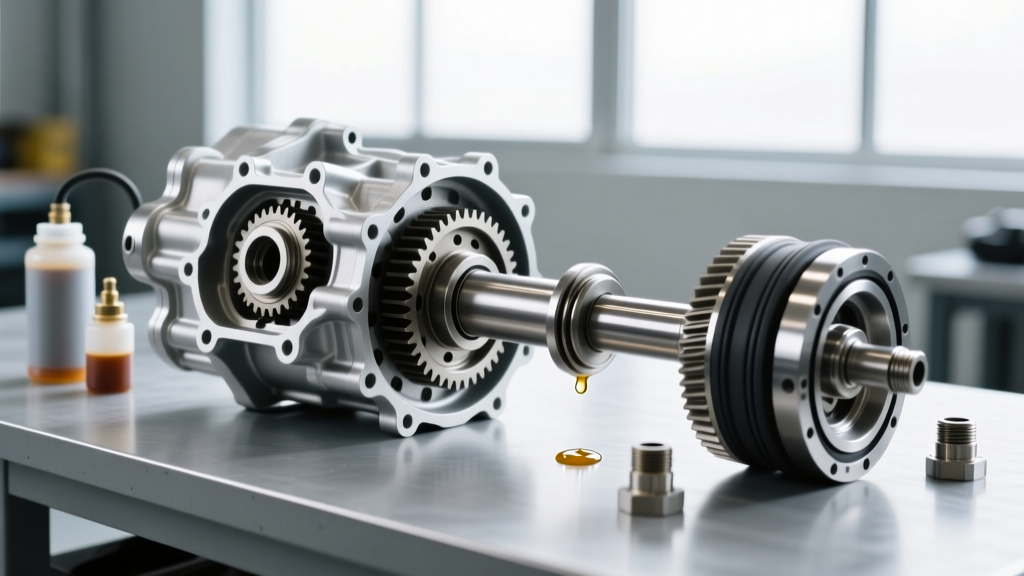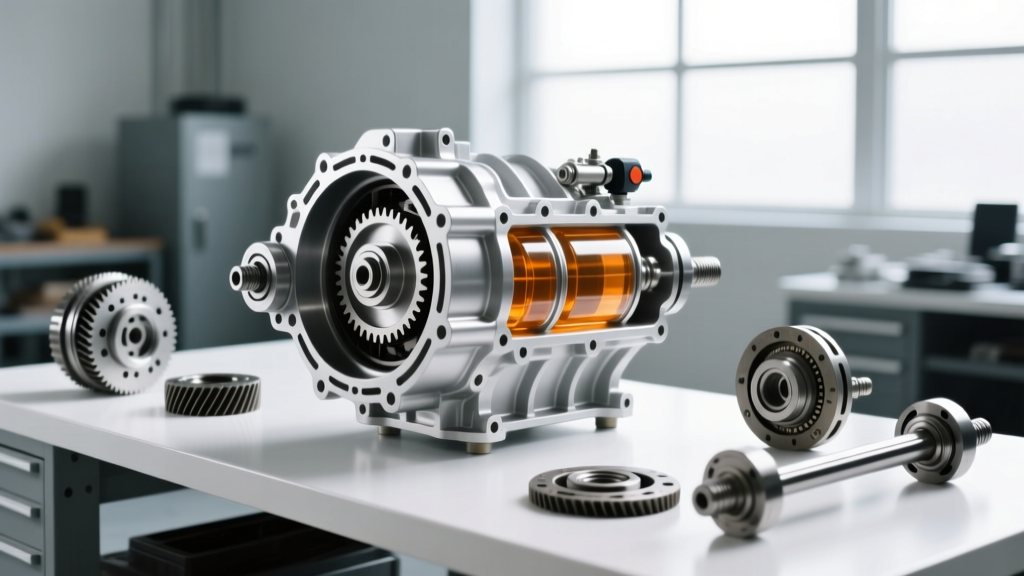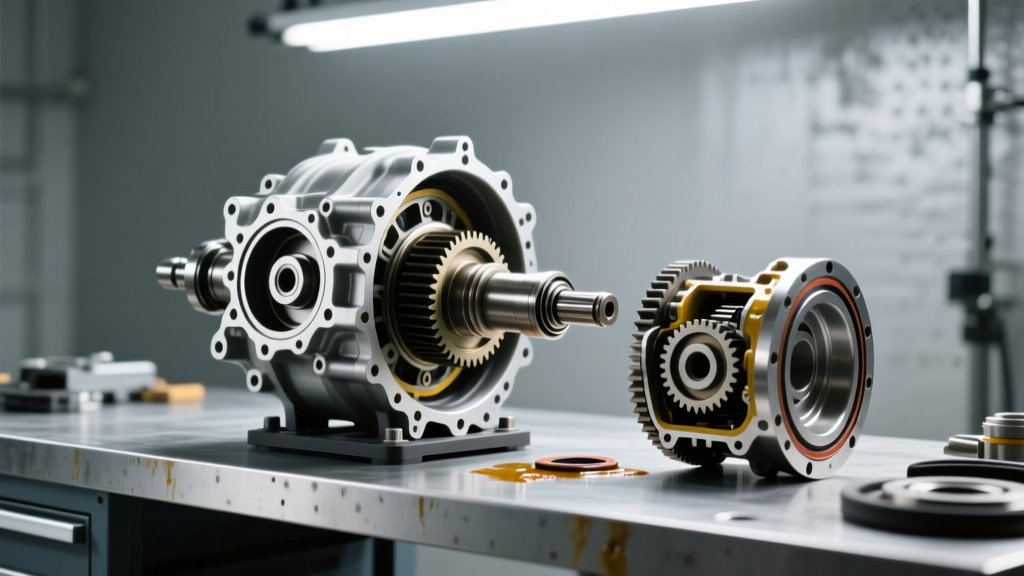
The Drivetrain Symbiosis: Why Diagnose Both Simultaneously?
When planning your drivetrain maintenance, a combined transfer case and rear differential service offers the perfect opportunity to diagnose underlying 4WD problems before they escalate into catastrophic failures. In modern 4WD and AWD trucks, the transfer case and the rear axle do not operate in isolation; they are inextricably linked by the rear driveshaft. A binding limited-slip differential can send shockloads backward into the transfer case chain, while a stretched transfer case chain can induce harmonic vibrations that mimic a failing rear pinion bearing. As an automotive transmission specialist, I always recommend treating the rear driveline as a single, cohesive ecosystem. This guide will walk you through the exact diagnostic procedures to perform while the fluid is on the bench, helping you distinguish between normal wear and impending mechanical doom.
The Symbiosis of the Rear Driveline
The torque path from the transmission to the rear wheels is a continuous chain of rotational energy. In part-time 4WD systems like the GM NV246 (AutoTrac) or the Ford BW4406, the rear output shaft of the transfer case is constantly engaged with the rear driveshaft. If the rear differential's hypoid gear set is suffering from improper backlash, or if the limited-slip clutch packs are chattering due to degraded friction modifiers, that kinetic violence travels directly up the driveshaft and into the transfer case's planetary gearset and drive chain. Conversely, a failing transfer case encoder motor or a worn shift fork can cause the clutch pack inside the T-case to slip, generating excessive heat that degrades the fluid and eventually starves the rear output bearing of lubrication. By performing a simultaneous transfer case and rear differential service, you can isolate the origin of drivetrain noise, vibration, and harshness (NVH) that would otherwise lead to a misdiagnosis and unnecessary parts replacement.
Diagnostic Matrix: Transfer Case vs. Rear Differential Symptoms
| Observed Symptom | Transfer Case Diagnosis | Rear Differential Diagnosis |
|---|---|---|
| Low-speed binding on dry pavement (4WD Auto mode) | Failing encoder motor, stretched drive chain, or degraded AutoTrak II fluid. | Locked LSD clutch packs, missing friction modifier, or mismatched tire circumferences. |
| Highway whine (45-65 mph) that changes on deceleration | Worn rear output shaft bearing or planetary gearset wear. | Improper ring-and-pinion backlash, worn pinion bearing, or hypoid gear pitting. |
| Clunking when shifting from Reverse to Drive | Excessive chain slack, worn shift fork pads, or damaged spline couplings. | Worn spider gears, excessive side gear clearance, or worn driveshaft U-joints. |
| Grinding noise only when 4WD is engaged | Stripped actuator fork, damaged synchronizer ring, or broken mode shift collar. | N/A (Rear diff operates identically in 2WD and 4WD). |
Fluid Forensics: Reading the Drain Plug Tea Leaves
The most critical diagnostic data you will gather during a transfer case and rear differential service comes from the drain pans. Fluid is the blood of the drivetrain, and its condition tells a precise story about internal component health.
Reading the Magnetic Plug
Both the transfer case and the rear differential feature magnetic drain plugs. Fine metallic paste (Glitter): This is generally normal. It indicates microscopic wear from the limited-slip clutch packs or the transfer case's internal wet clutches. Shiny metal flakes or shards: This is a red flag. In a rear differential, shards indicate that the hypoid gears are spalling or a bearing cage has disintegrated. In a transfer case, aluminum flakes point to a shift fork rubbing against the case half, while steel chunks suggest a shattered drive chain link or planetary gear tooth.
Fluid Odor and Color
Standard ATF (used in many transfer cases like the BW4406) should be translucent red. If it smells burnt and is opaque black, the internal wet clutches have been slipping—often due to a failing encoder motor that is not fully applying the clutch pack in 'Auto' mode. For the rear differential, API GL-5 gear oil (such as 75W-90 or 75W-140) naturally has a pungent sulfur odor. However, if the oil has a milky, chocolate-milk appearance, water has breached the axle seal or the differential breather valve, requiring immediate seal replacement and a thorough flush to prevent catastrophic gear rust.
Mechanical Diagnostics During the Service Interval
Transfer Case: Chain Stretch and Encoder Diagnostics
While the fluid is draining, rotate the rear driveshaft by hand (with the transmission in Park and the front wheels chocked). In an NV246 or NV263, you should feel minimal rotational backlash before the front driveshaft or internal components resist. If you can rotate the rear driveshaft more than 15 degrees freely, the internal drive chain is severely stretched and is likely slapping against the case interior under load. Additionally, check the transfer case encoder motor. Use a bi-directional scan tool to command the T-case through 2WD, 4WD Auto, 4WD High, and 4WD Low. Listen for the precise actuation of the shift motor. A grinding noise during this sweep indicates stripped internal plastic gears inside the encoder motor assembly, a common failure point on GM trucks from 2014-2024.
Rear Differential: Gear Backlash and LSD Chatter
With the rear differential cover removed, visually inspect the ring and pinion gears. You are looking for a precise, centered wear pattern on the gear teeth. If the pattern is biased heavily toward the toe or heel of the tooth, the pinion depth or backlash is out of spec. For Limited Slip Differentials (LSDs), such as the Eaton Truetrac or standard clutch-type posi units, check for clutch pack degradation. If the vehicle exhibits a 'chatter' or 'hopping' sensation during tight, low-speed turns, the friction modifier has broken down. During your service, adding the exact OEM friction modifier (e.g., GM 88862624 or Ford XL-3) is mandatory.
Pro Tip: Never use standard API GL-5 gear oil without the appropriate limited-slip friction modifier in a clutch-type LSD. The sulfur-phosphorus additives in standard GL-5 will not provide the necessary slip-to-stick friction coefficient, leading to rapid clutch pack destruction. For modern synthetic requirements, refer to the SAE J2360 Standard for extended-drain axle lubricants.
Critical Torque Specifications and Fluid Capacities
Adhering to exact torque specifications and fluid capacities is non-negotiable to prevent leaks and case warping.
- GM NV246 / NV263 Transfer Case: Drain and fill plugs torque to 18 lb-ft. Capacity is typically 2.0 quarts of GM AutoTrak II fluid (Part #88900402). Do NOT substitute with standard ATF, or the internal clutch pack will slip and burn out.
- Ford BW4406 Transfer Case: Drain plug 15 lb-ft, Fill plug 20 lb-ft. Capacity is 2.0 quarts of MERCON ATF.
- Ford Sterling 10.5-Inch Rear Differential: Cover bolts torque to 33 lb-ft. Capacity is 3.7 quarts of 75W-140 Synthetic API GL-5 Gear Oil. Requires 4 oz of XL-3 Friction Modifier.
- GM 9.5-Inch Semi-Floating Rear Differential: Cover bolts torque to 25 lb-ft. Capacity is 2.75 quarts of 75W-90 Synthetic API GL-5. Requires 2 oz of Limited Slip Additive.
- Dana 44 / Spicer Rear Differential: Cover bolts torque to 25-30 lb-ft. For replacement parts and build specs, always consult the Dana Aftermarket technical library.
2026 Preventive Maintenance Cost Breakdown
| Service / Repair Scenario | DIY Cost (Parts & Fluids) | Independent Shop (2026 Avg) | Dealership (2026 Avg) |
|---|---|---|---|
| Preventive Fluid Service (Both T-Case & Rear Diff) | $85 - $140 | $250 - $350 | $400 - $550 |
| Transfer Case Encoder Motor Replacement | $180 - $300 | $350 - $500 | $600 - $850 |
| Transfer Case Drive Chain & Bearing Rebuild | $350 - $600 | $1,200 - $1,800 | $2,200 - $3,000 |
| Rear Differential Ring & Pinion Setup | $250 - $450 (Gears & Bearings) | $800 - $1,200 | $1,500 - $2,200 |
Expert Tips for Long-Term 4WD Reliability
To maximize the lifespan of your 4WD system, establish a strict maintenance interval. For trucks used primarily for highway commuting, a transfer case and rear differential service every 50,000 miles is sufficient. However, if your vehicle is subjected to heavy towing, off-road trail riding, or frequent water crossings, halve that interval to 25,000 miles. Always replace the differential cover gasket with a reusable silicone or rubber-coated steel gasket (like those from Lube Locker or Fel-Pro) to eliminate the mess and unreliability of RTV silicone sealants. Finally, ensure your transfer case vent tube is routed high into the engine bay and is free of debris; a clogged vent will cause internal pressure to blow out the rear output shaft seal, leading to rapid fluid loss and transfer case destruction.