Four-wheel-drive (4WD) and all-wheel-drive (AWD) systems rely on a symphony of heavy-duty mechanical assemblies to route engine power to the pavement. For many vehicle owners and even some general lube technicians, the transfer case and the differentials are lumped together as 'the gearboxes underneath.' However, from a tribological and mechanical engineering perspective, they serve entirely distinct functions, operate under vastly different load profiles, and require specific lubrication chemistry. Understanding these differences is the first step in accurately diagnosing drivetrain issues and calculating the true transfer case and differential fluid change cost for your specific platform.
The Mechanical Divide: Transfer Case vs. Differential
To understand why service procedures and costs differ, we must first define the mechanical boundaries of each component.
The Transfer Case: Longitudinal Power Distribution
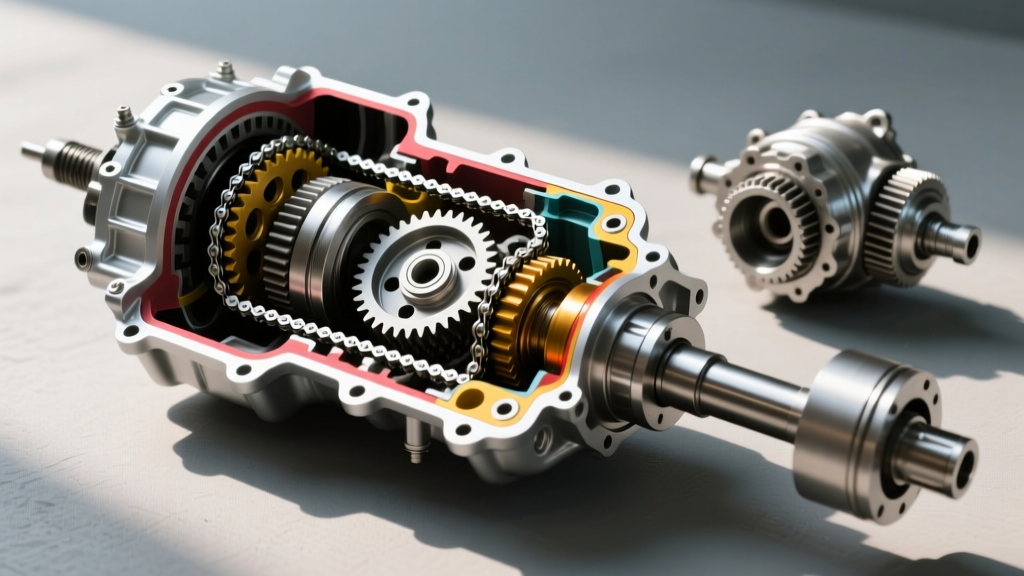
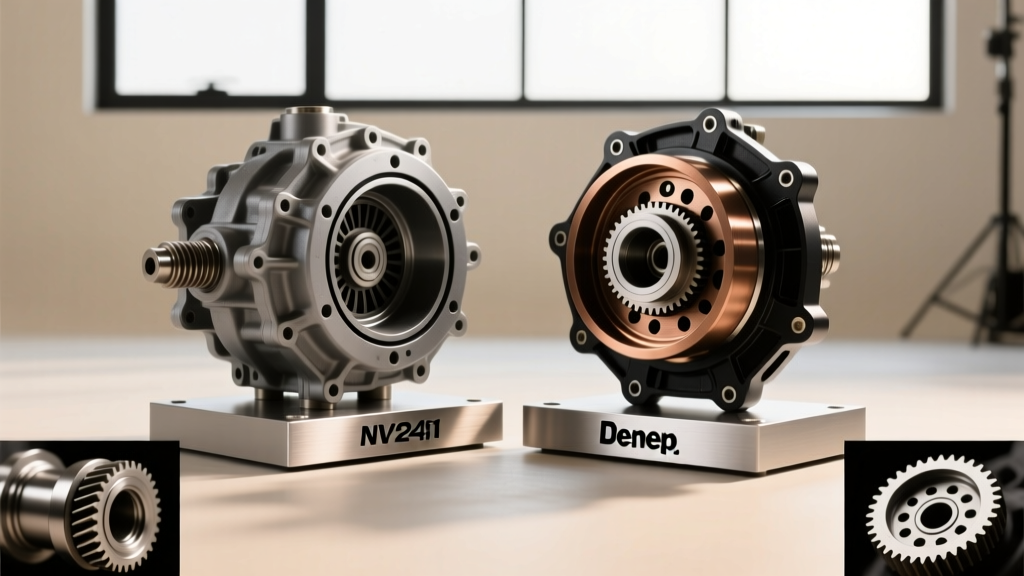
Mounted directly behind the transmission, the transfer case's primary job is to split torque along the vehicle's longitudinal axis (front-to-rear). In part-time 4WD systems like the classic New Venture NV241HD, this is achieved via a heavy-duty roller chain and a dog-clutch engagement collar. In modern active AWD/4WD systems, such as the BorgWarner 4406 found in GM trucks, an electro-hydraulic clutch pack continuously modulates front-axle torque based on wheel slip data from the ABS module.
The Differential: Lateral Torque Splitting and Speed Differentiation
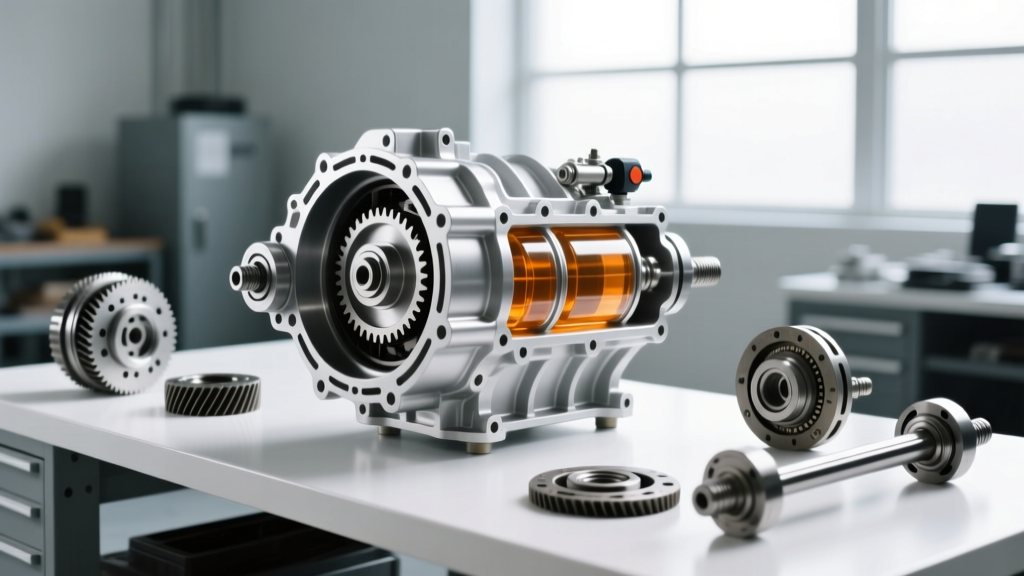
Located at the axles, the differential splits torque laterally (left-to-right). More importantly, it allows the outer wheel to spin faster than the inner wheel during cornering. Whether it is an open differential, a clutch-type limited-slip differential (LSD) like the Ford 8.8 Traction-Lok, or an electronic locking differential like the AAM 11.5-inch found in heavy-duty Ram trucks, the differential manages high-torque hypoid gear sliding action and massive shearing forces.
Fluid Chemistry: Why You Cannot Mix Them
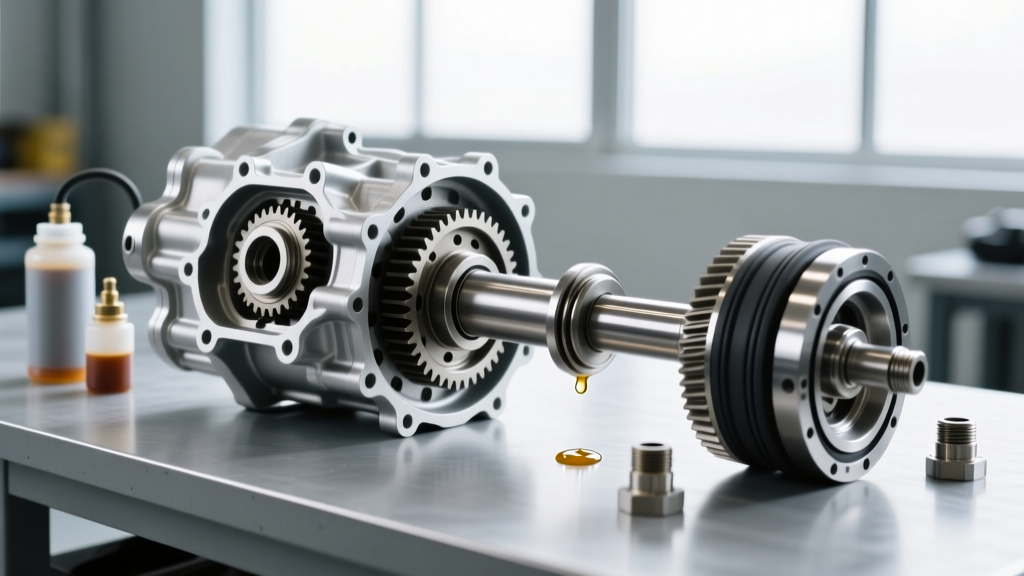
A common and catastrophic mistake in DIY drivetrain maintenance is assuming 'gear oil is gear oil.' The internal architecture of a transfer case versus a differential demands entirely different fluid chemistries.
- Transfer Case Fluids: Most modern chain-driven transfer cases utilize Automatic Transmission Fluid (ATF) such as Dexron VI or specialized proprietary fluids like GM AutoTrak II (P/N 88900401). These fluids are engineered for high shear stability to protect the roller chain, and they contain specific friction modifiers designed to prevent chatter in the wet-clutch packs of active AWD systems. Using standard 75W-90 gear oil in a BorgWarner 4406 will cause immediate clutch pack shudder and eventual burnout.
- Differential Fluids: Differentials require high-viscosity Extreme Pressure (EP) gear oils, typically 75W-90 or 75W-140. The ring and pinion in a differential are hypoid gears, meaning the teeth slide across one another under immense pressure rather than just rolling. EP gear oils contain sulfur-phosphorus additives that bond to the metal surfaces under high heat, preventing micro-welding and pitting. As noted by lubrication experts at AMSOIL, failing to use the correct EP additive package will result in rapid ring gear degradation.
Expert Warning: Never introduce friction modifiers intended for limited-slip differentials into an active transfer case clutch pack. The friction coefficients are entirely different and will lead to unpredictable torque transfer and encoder motor hunting.
Analyzing the Transfer Case and Differential Fluid Change Cost
When evaluating the transfer case and differential fluid change cost, it is critical to separate the fluid material costs from the labor variables. Because transfer cases are generally compact and feature simple drain/fill plugs, they are cheaper to service. Differentials, particularly those with removable carrier covers (like the Dana 44 or Ford 8.8), require gasket scraping, RTV silicone application, and cure time, driving up labor hours.
| Service Component | Average Fluid Cost (2026) | Average Labor Time | Dealership Total Estimate | Indie Shop Total Estimate |
|---|---|---|---|---|
| Transfer Case (Chain/Clutch) | $15 - $35 (2-3 qts) | 0.4 - 0.6 Hours | $90 - $160 | $70 - $120 |
| Rear Differential (Cover/Drain) | $30 - $60 (2-3 qts) | 0.8 - 1.2 Hours | $160 - $280 | $120 - $200 |
| Front Differential (Drain/Fill) | $25 - $50 (1.5-2 qts) | 0.5 - 0.8 Hours | $110 - $190 | $85 - $140 |
| Complete 4WD System Service | $70 - $145 | 1.7 - 2.6 Hours | $360 - $630 | $275 - $460 |
Real-World 2026 Pricing Scenarios
To provide concrete context, let us look at two popular platforms using current 2026 national average labor rates ($145/hr for dealerships, $115/hr for independents), with parts sourced via RockAuto.
Scenario A: 2018 Chevrolet Silverado 1500 (NV246 Transfer Case + AAM 9.5-inch Rear Diff)
- T-Case: Requires ~2.0 quarts of GM AutoTrak II fluid. Material cost is roughly $22. Labor is 0.5 hours. Total T-Case cost: ~$95 at a dealer.
- Rear Diff: Requires ~2.4 quarts of 75W-90 Synthetic Gear Oil. Material cost is $40. Labor is 1.0 hour (includes RTV and cleaning). Total Diff cost: ~$185 at a dealer.
Scenario B: 2020 Jeep Wrangler JL Rubicon (Rock-Trac NV241OR + Dana 44 Front/Rear)
Critical Service Specifications and Torque Limits
Over-torquing drain and fill plugs is the leading cause of catastrophic fluid loss in modern 4WD systems. Many late-model transfer cases and front differentials utilize thin-walled aluminum housings. Stripping these threads turns a $100 fluid change into a $1,500 housing replacement or helicoil repair job.
| Component Model | Fluid Type & Capacity | Drain/Fill Plug Torque Spec | Common Failure Point |
|---|---|---|---|
| GM NV246 Transfer Case | AutoTrak II (2.0 qts) | 15 lb-ft (20 Nm) | Pump rub hole in rear case half |
| Ford BW4406 Transfer Case | Mercon V / ATF (2.0 qts) | 22 lb-ft (30 Nm) | Clutch pack wear / Chain stretch |
| Dana 44 Differential (Jeep) | 75W-140 + Modifier (2.0 qts) | Cover Bolts: 30 lb-ft | Ring gear pitting / Pinion seal leaks |
| AAM 11.5 Rear Diff (HD Trucks) | 75W-90 Synthetic (3.4 qts) | Fill Plug: 25 lb-ft | Bearing spalling under heavy towing |
Diagnostic Framework: Reading the Drain Pan
When performing a fluid service, the drain pan offers a window into the health of your drivetrain. According to drivetrain tribology discussions on MotorTrend and independent transmission builders, you should evaluate the spent fluid using this framework:
- Fine Metallic Glitter (Normal): A slight shimmer on the dipstick or drain plug magnet is normal wear for hypoid gears and roller chains. This indicates the fluid has done its job of suspending micro-particles.
- Chunky Metal Shards (Critical): If you find metal fragments the size of a match head, a needle bearing has likely failed, or the transfer case chain has stretched and is eating into the aluminum case halves. Immediate teardown is required.
- Burnt Smell / Black Fluid (Transfer Case): In active T-cases, a burnt smell indicates the wet-clutch pack has been slipping due to degraded friction modifiers or a failing encoder motor that is commanding partial engagement at highway speeds.
- Water Contamination (Milky Fluid): Common in front differentials after off-road water fording. The axle breather tube creates a vacuum when the hot differential is submerged, sucking water past the pinion seal. This destroys EP additive effectiveness and leads to rapid corrosion.
Summary: Protecting Your Drivetrain Investment
The transfer case and differential may both live under the chassis, but they are entirely different beasts requiring distinct maintenance protocols. By understanding the mechanical differences, respecting the torque specifications of aluminum housings, and budgeting accurately for the transfer case and differential fluid change cost, you can ensure your 4WD system operates flawlessly for hundreds of thousands of miles. Always consult your specific factory service manual (FSM) for the exact fluid part numbers and torque specifications before turning a single wrench.