The Drivetrain Hierarchy: Understanding the Power Flow
When you press the accelerator in a four-wheel-drive (4WD) or all-wheel-drive (AWD) vehicle, a complex mechanical symphony occurs beneath you. For beginners, the drivetrain can seem like a confusing web of gears and shafts. However, understanding the relationship between your transmission, transfer case, and rear end differential is crucial for proper vehicle maintenance and troubleshooting. Think of the engine as the heart, the transmission as the arteries regulating pressure, the transfer case as a traffic director, and the differentials as the final delivery hubs to your wheels.
In modern 4x4 trucks and SUVs, the journey of torque begins at the transmission output shaft. Whether you are driving a vehicle equipped with a robust GM 6L80E or a sophisticated ZF 8HP automatic, the transmission's job is strictly to manage gear ratios for engine efficiency. Once the power leaves the transmission, it enters the transfer case. From there, it is routed via driveshafts to the front and rear axles. It is here that the transfer case and the rear end differential must work in perfect harmony to keep your vehicle moving without tearing itself apart.
The Transfer Case: The Great Torque Splitter
The transfer case is bolted directly to the back of the transmission. Its primary job is to split the engine's torque between the front and rear axles. In a part-time 4WD system, like the legendary New Process NP241C found in older Jeeps and Dodges, or the heavy-duty NP261XHD used in GM 2500/3500HD trucks, the transfer case can lock the front and rear driveshafts together, forcing them to spin at the exact same speed.
In modern AWD systems, such as those utilizing the BorgWarner 4485 transfer case found in GM full-size SUVs (Tahoe, Yukon, Silverado 1500), the transfer case uses an internal clutch pack to variably send power forward based on traction needs. While the transfer case manages the longitudinal split of power (front-to-back), it does not change the direction of that power. It simply passes it down the driveshaft tubes toward the axles.
The Rear End Differential: Turning the Corner
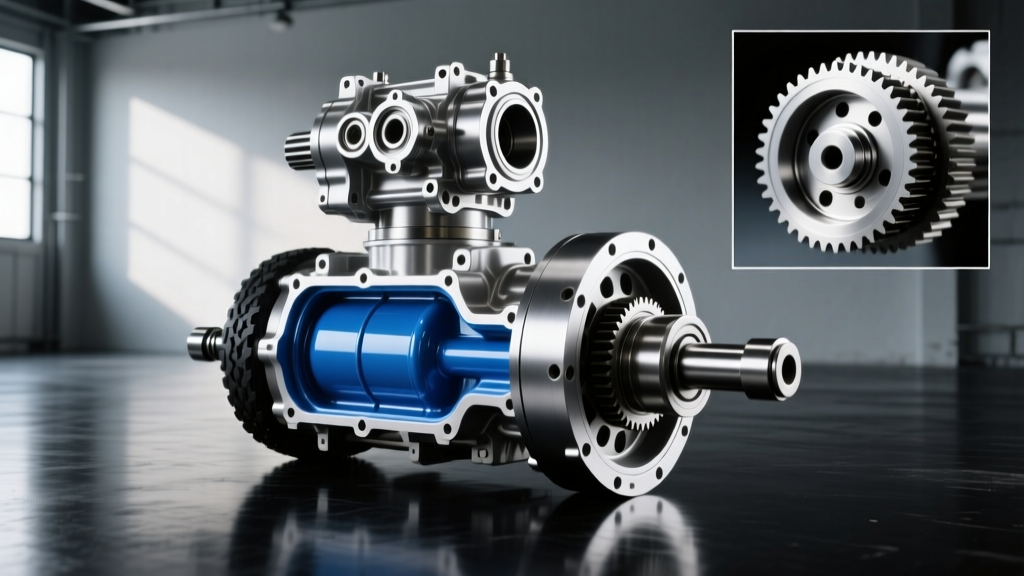
This is where the rear end differential steps in to perform two critical, physics-defying tasks. First, it must take the rotational energy coming down the driveshaft (spinning parallel to the frame) and turn it exactly 90 degrees to spin the axles and wheels. It achieves this via the ring and pinion gear set. Second, it multiplies the torque through its final drive ratio (e.g., 3.73:1 or 4.10:1).
Furthermore, the rear end differential allows the left and right rear wheels to spin at different speeds when cornering. Without an open or limited-slip differential, your rear tires would chirp, hop, and bind every time you turned the steering wheel. According to the drivetrain experts at Ring-Pinion.com, the precise setup of the ring and pinion backlash and bearing preload is what dictates the longevity and noise level of this crucial assembly.
The Symbiosis: Driveline Wind-Up and Binding
So, how do the transfer case and rear end differential relate? The relationship is defined by driveline bind. When you lock a part-time transfer case into 4-High on a dry, paved road, the transfer case forces the front and rear driveshafts to spin at the same RPM. However, because the front and rear axles travel on slightly different radii during turns, and because front and rear tires often wear at different rates, the front and rear axles want to spin at different speeds.
Expert Insight: If the transfer case is locked, the drivetrain has nowhere to absorb this speed difference. The rotational stress (wind-up) travels through the driveshafts and aggressively attacks the weakest links: the transfer case chain, the U-joints, and the ring gear teeth inside your rear end differential. This is why part-time 4WD systems must only be locked on loose surfaces like dirt, mud, or snow, where the tires can slip to relieve the binding pressure.
In full-time 4WD and AWD systems, the transfer case contains a center differential or a slipping clutch pack. This center mechanism absorbs the front-to-rear speed differences, protecting the rear end differential and front differential from catastrophic gear binding. The rear diff only has to manage the left-to-right speed differences during cornering.
2026 Drivetrain Fluid & Torque Specification Matrix
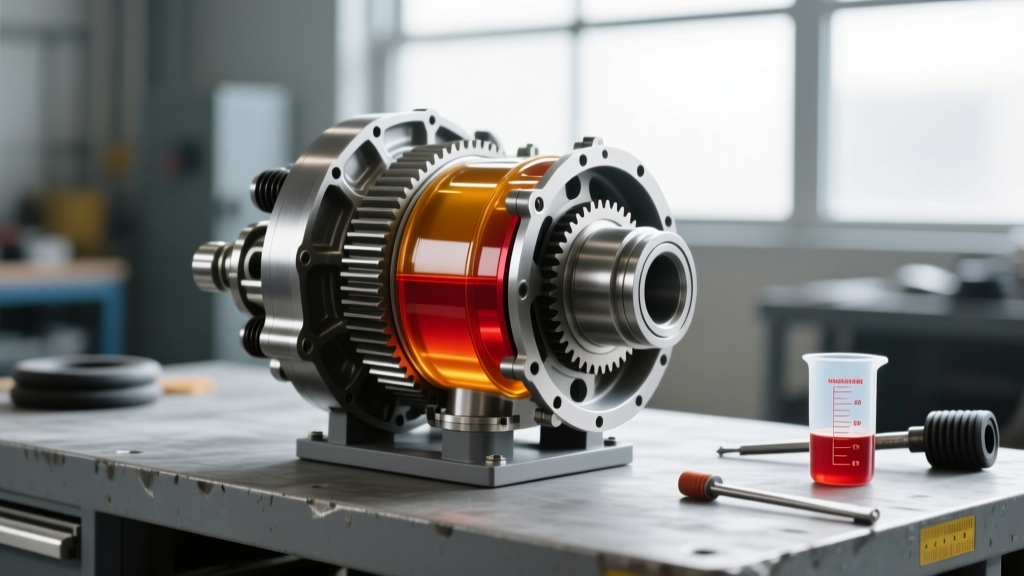
Because the transfer case and the rear end differential operate under entirely different mechanical stresses, they require vastly different lubricants. Below is a baseline specification chart for common light-duty and heavy-duty 4WD setups.
| Component | Typical Application | Required Fluid Type | Capacity | Drain/Fill Plug Torque |
|---|---|---|---|---|
| Transfer Case (Part-Time) | NP261XHD (GM HD Trucks) | Synthetic ATF (Dexron VI) | 2.0 Quarts | 18 lb-ft (Aluminum Case) |
| Transfer Case (AWD) | BW4485 (GM SUVs) | GM AutoTrak II (Clutch Fluid) | 2.0 Quarts | 15-20 lb-ft |
| Rear End Differential | GM 10.5' 14-Bolt (HD) | 75W-90 GL-5 Synthetic Gear Oil | 3.5 - 4.0 Quarts | 25-30 lb-ft (Cover Bolts) |
| Rear End Differential (LSD) | Ford 9.75' (F-150) | 75W-140 + Friction Modifier | 2.5 - 3.0 Quarts | 33 lb-ft (Fill Plug) |
Maintenance Realities: Protecting the Power Flow
As we navigate the 2026 automotive landscape, vehicles are producing more low-end torque than ever before, thanks to twin-turbo V6s and hybrid-assist systems. This places immense stress on the transfer case chain and the rear end differential gears. Neglecting the fluids in either component will lead to catastrophic failure.
Transfer Case Maintenance
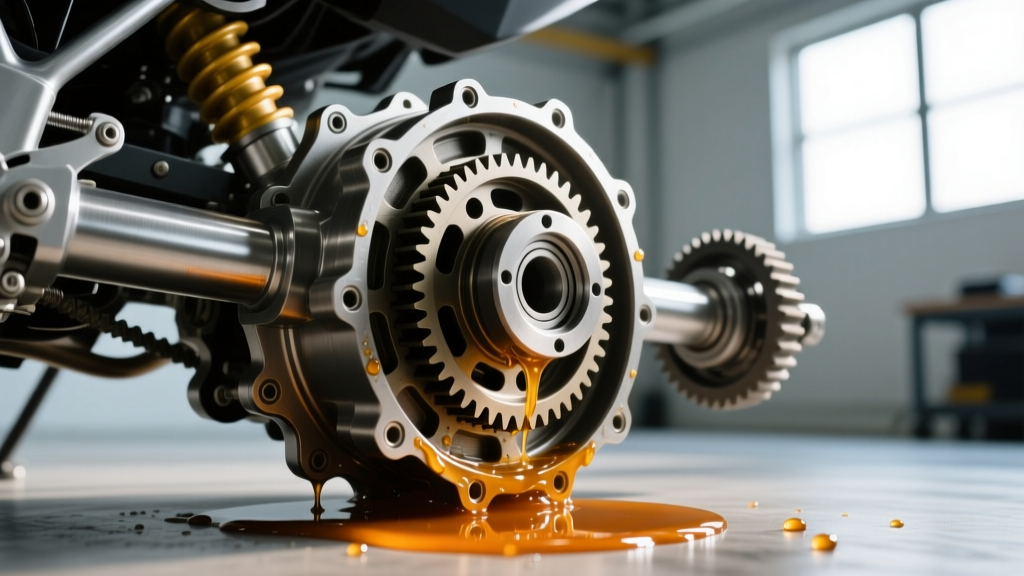
Many beginners mistakenly believe transfer cases are 'sealed for life.' This is a myth. The internal chains stretch, and the clutch packs in AWD systems shed microscopic friction material into the fluid. If you drive an AWD SUV, flushing the transfer case every 50,000 miles is mandatory to prevent clutch-pack shudder. Using the wrong fluid—such as standard ATF in an AutoTrak II system—will cause the AWD clutches to grab violently, sending shockwaves directly into your rear end differential pinion gear.
Rear End Differential Maintenance
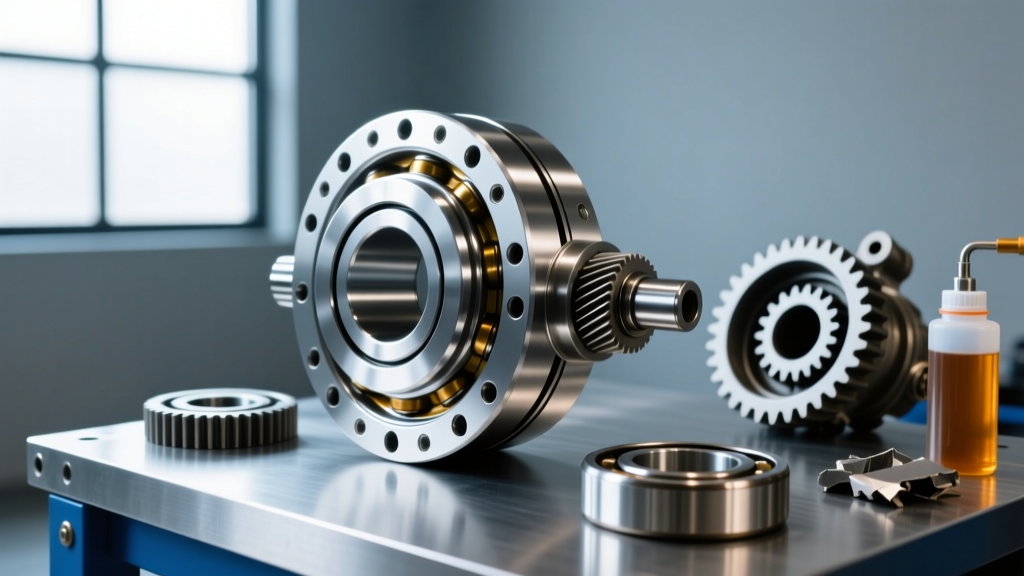
The rear end differential relies on extreme-pressure (EP) additives found in GL-5 gear oils to protect the sliding friction of the hypoid ring and pinion gears. Over time, heat and shearing forces break down these additives. Furthermore, if your rear diff is equipped with a Limited Slip Differential (LSD), you must add a friction modifier additive during fluid changes. Without it, the clutch packs inside the differential will chatter and bind during low-speed turns, mimicking the symptoms of a failing transfer case.
For deep-dive technical teardowns and adapter solutions for custom drivetrain swaps, the engineers at Novak Adapt provide invaluable resources on matching transfer case output splines to differential input yokes.
Real-World Costs and Diagnostic Tips
If you are experiencing a vibration or binding sensation, how do you know if it is the transfer case or the rear end differential? Here is a quick diagnostic framework:
- Binding in tight turns on dry pavement (4WD vehicles): Normal behavior for locked part-time transfer cases. Shift to 2WD immediately.
- Chatter or clunking from the rear during low-speed turns: Usually indicates worn LSD clutches or missing friction modifier inside the rear end differential.
- High-pitched whining that changes with throttle load (acceleration vs. deceleration): Classic symptom of worn ring and pinion gear backlash in the rear differential.
- Grinding or jumping sensation from the center console area: Points to a stretched transfer case chain or worn clutch forks inside the transfer case.
In terms of 2026 maintenance pricing, a professional transfer case fluid service typically ranges from $110 to $160, while a rear end differential drain, fill, and LSD additive service will cost between $150 and $250, depending on shop labor rates and whether the differential uses a removable cover or press-in cartridge axles. Investing in high-quality synthetic lubricants from brands like AMSOIL or Red Line can drastically extend the service intervals of both components, ensuring your 4WD system operates flawlessly for hundreds of thousands of miles.
Summary
The transfer case and the rear end differential are deeply interconnected partners in your vehicle's drivetrain. The transfer case manages the front-to-rear torque split, while the rear end differential multiplies that torque, turns it 90 degrees, and manages left-to-right wheel speed. By understanding their relationship, respecting the physics of driveline bind, and adhering to strict fluid maintenance schedules, you can protect your investment and conquer any terrain with confidence.