Decoding the Banging Sound Coming From Rear Differential on 2007 Rhino 660
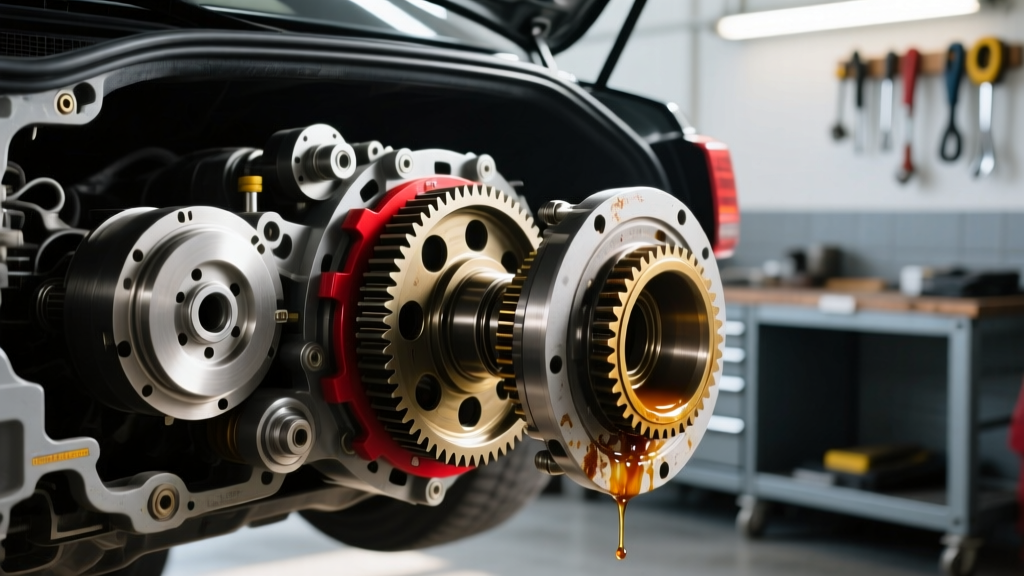
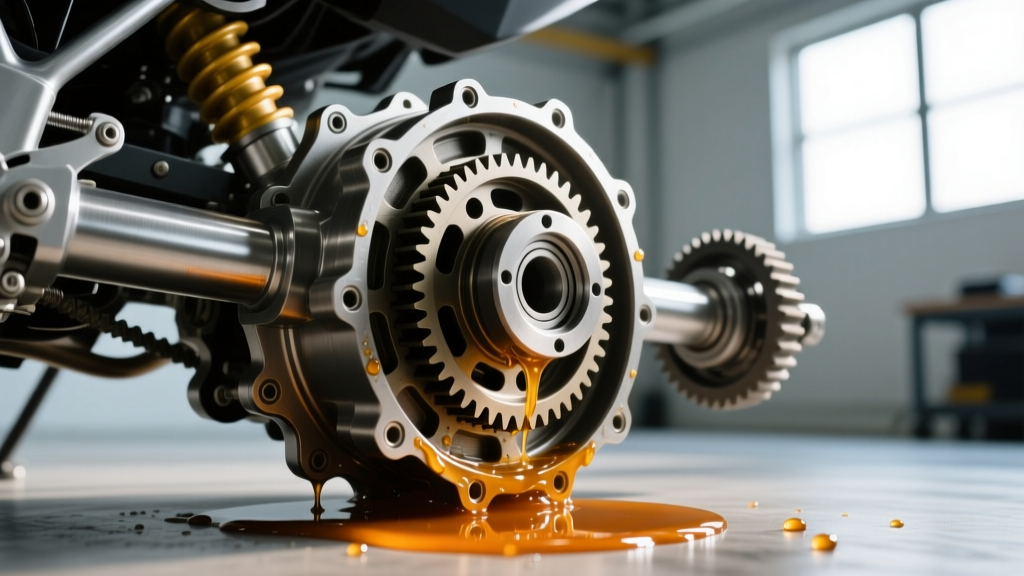
When you are navigating tight trails or transitioning from dirt to pavement, hearing a loud, metallic clunk or a repetitive banging sound coming from rear differential on 2007 Rhino 660 is an immediate red flag. The Yamaha Rhino 660 (YXR660) is a legendary side-by-side, but its rear drivetrain is subjected to immense shock loads, mud ingestion, and extreme torque. While the factory 2007 rear end utilizes a solid spool or an open differential with a manual dog-clutch locker, many owners upgrade to an aftermarket Limited Slip Differential (LSD) or a locking carrier to improve traction. If your Rhino is equipped with an LSD, that banging noise is rarely just a nuisance—it is the sound of internal mechanical binding, shattered clutch packs, or severe fluid starvation.
In this technical deep-dive, we will dissect the exact mechanics of limited slip operation in UTV applications, diagnose the specific failure modes causing rear-end banging, and outline the precise maintenance protocols, torque specifications, and fluid chemistry required to keep your Rhino 660 on the trail and out of the repair shop.
Factory Spool vs. Aftermarket LSD: What is Actually in Your Housing?
Before tearing into the differential, it is critical to understand the baseline architecture of the 2007 Yamaha Rhino 660 rear axle. From the factory, the rear differential was designed primarily as a spool (where the axles are permanently locked together via a solid carrier) or an open diff with a manual locking collar. This design provides maximum straight-line traction in mud but causes severe axle bind, tire chirping, and a distinct 'banging' or 'popping' noise when turning on high-traction surfaces like asphalt or hard-packed clay.
However, if you or a previous owner installed an aftermarket clutch-type Limited Slip Differential (such as those manufactured by Yukon Gear or Auburn), the operational dynamics change entirely. An LSD uses internal friction to allow wheel speed differentiation while still transferring torque to the wheel with grip. When an LSD begins to bang or chatter violently, it indicates that the internal friction coefficients have failed, or the mechanical preload has been compromised.
How a Clutch-Type Limited Slip Differential Operates
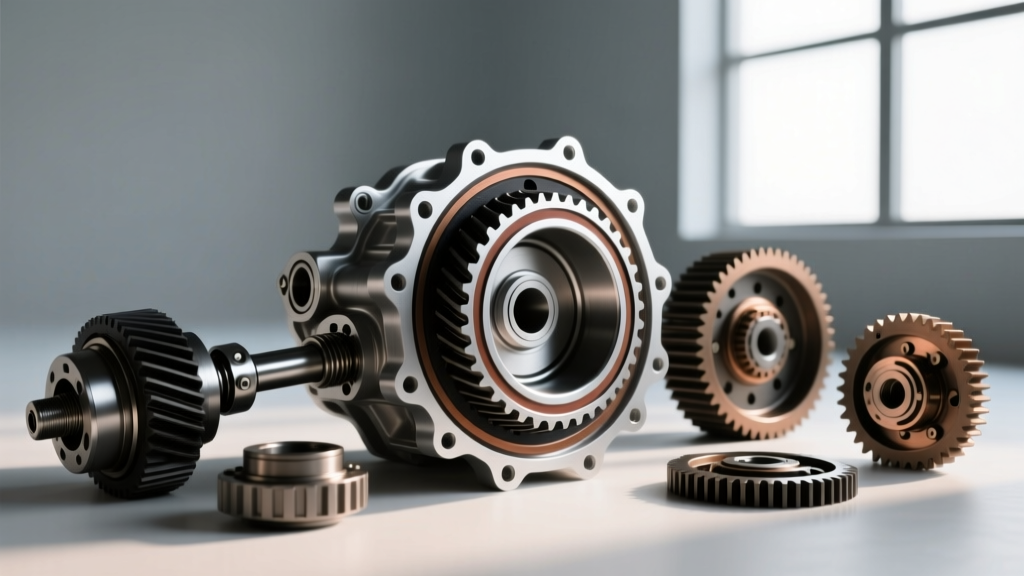
To diagnose the banging sound, you must understand the internal physics of a clutch-pack LSD. Inside the differential carrier, the spider gears are mated to a series of alternating steel and friction-lined clutch packs. These packs are compressed by S-shaped preload springs (or a solid preload block).
- Straight-Line Acceleration: Both axles turn at the same speed. The clutch packs remain locked together via static friction, acting like a solid spool.
- Cornering (Differentiation): The outside wheel must spin faster than the inside wheel. The torque difference overcomes the clutch pack's preload, allowing the friction discs to slip smoothly against one another.
- Low-Traction Scenarios: If one wheel hits ice or mud, the LSD transfers torque to the wheel with resistance, preventing the classic 'one-wheel peel' of an open differential.
When the Yukon Gear limited slip tech guidelines are violated—specifically regarding friction modifiers and break-in procedures—the clutch discs do not slip smoothly. Instead, they grab, bind, and release violently. This stick-slip phenomenon manifests as a severe banging or chattering sound echoing through the Rhino's rear chassis.
Diagnostic Matrix: Identifying the Source of the Banging
Not all banging sounds are created equal. Use the following diagnostic matrix to isolate the failure point inside your Rhino 660's rear differential housing.
| Symptom / Sound Profile | Trigger Condition | Probable Internal Failure | Required Action |
|---|---|---|---|
| Sharp metallic bang followed by grinding | Hard acceleration or dropping the clutch | Shattered spider gear cross-pin or stripped ring gear teeth | Complete teardown; replace carrier and ring/pinion set |
| Rhythmic banging / violent chatter | Low-speed turning on high-traction surfaces | LSD clutch pack glazing, missing friction modifier, or broken preload spring | Fluid flush, friction modifier additive, or clutch pack rebuild |
| Single loud 'clunk' on throttle reversal | Transitioning from deceleration to acceleration | Excessive ring-and-pinion backlash or worn axle splines | Check backlash with dial indicator; inspect axle couplers |
| Continuous popping under load | Climbing steep inclines or pulling heavy loads | Carrier bearing failure allowing the pinion gear to deflect away from the ring gear | Replace carrier and pinion bearings; reset gear mesh pattern |
The Friction Modifier Imperative: Why Standard Gear Oil Fails
The most common cause of LSD chatter and subsequent banging in UTVs is the use of standard GL-5 gear oil without the necessary friction modifiers. Standard 75W-90 or 80W-90 gear oils are designed for open differentials and hypoid gear protection. They contain extreme pressure (EP) additives, often sulfur-phosphorus compounds, which make the oil 'slippery' to protect gear teeth.
However, an LSD requires controlled friction. If the oil is too slippery, the clutch packs cannot lock, causing wheel spin. If the oil lacks the specific friction modifier additives, the clutch packs grab aggressively, causing the stick-slip banging noise. According to AMSOIL Powersports lubricant specifications, UTV differentials equipped with limited-slip or locking mechanisms require specialized synthetic formulations or dedicated friction modifier additives (often labeled as Posi-Traction or LSD Additive).
2007 Rhino 660 Rear Differential Fluid Specifications
- Factory Recommendation: Yamalube Gear Lube 80W-90 (or equivalent API GL-5)
- Capacity: Approximately 1.2 Liters (40.5 fl oz) - Always fill to the bottom of the fill plug threads.
- LSD Additive Requirement: If equipped with a clutch-type LSD, add 2 to 3 oz of dedicated LSD Friction Modifier (e.g., Koyo, Yamaha, or Lubegard 70902) before filling with base gear oil.
- Drain Plug Torque: 22 ft-lb (30 Nm)
- Fill Plug Torque: 22 ft-lb (30 Nm)
- Ring Gear to Case Bolt Torque: 58 ft-lb (79 Nm) with medium-strength threadlocker
Step-by-Step LSD Maintenance and Fluid Service
Proper maintenance is the only way to prevent a chattering LSD from escalating into a catastrophic banging failure. Follow this exact procedure for servicing the rear differential on your 2007 Rhino 660.
1. Preparation and Draining
Elevate the rear of the Rhino securely on jack stands. Ensure the vehicle is level so the fluid capacity reading is accurate. Place a drain pan beneath the rear differential. Remove the fill plug first (using a 10mm or 12mm hex socket depending on your specific aftermarket plug). Never remove the drain plug before the fill plug; if the fill plug is seized, you will be left with an empty differential and no way to refill it. Once the fill plug is out, remove the drain plug and allow the 80W-90 fluid to drain completely.
2. Magnetic Inspection (The Teardown Indicator)
Inspect the drain plug. It features a magnet designed to catch ferrous metal shavings. A fine, glitter-like paste is normal wear for hypoid gears. However, if you find large metal flakes, chunks of steel, or brass-colored debris, your LSD clutch packs or spider gears are physically disintegrating. This is the root cause of your banging sound, and a simple fluid change will not fix it; a full differential rebuild is required.
3. The Friction Modifier Flush
If the debris is minimal and you suspect clutch-pack glazing is causing the banging, perform a flush. Reinstall the drain plug (torque to 22 ft-lb). Fill the differential with a cheap, non-synthetic GL-5 80W-90 and a double dose of friction modifier. Drive the Rhino in a paved parking lot, performing continuous figure-eight turns for 15 minutes. This forces the clutch packs to slip, burnishing off the glazed material and allowing the friction modifier to penetrate the porous friction discs. Drain this flush fluid immediately.
4. Final Fill and Bedding
Reinstall the drain plug. Fill the housing with a high-quality synthetic 75W-90 GL-5 UTV-specific gear oil. Add the standard 2 oz of friction modifier. Reinstall the fill plug and torque to 22 ft-lb. The LSD will now operate smoothly, eliminating the stick-slip banging noise during cornering and low-speed maneuvering.
Cost Analysis: Maintenance vs. Catastrophic Rebuild
Ignoring the early signs of LSD chatter and banging will inevitably lead to mechanical destruction. Here is the financial reality of Rhino 660 rear differential ownership in 2026:
- Preventative Fluid Service (DIY): $45 - $70 (Includes synthetic GL-5 fluid and friction modifier).
- LSD Clutch Pack Rebuild Kit: $120 - $180 (Requires pulling the carrier, pressing bearings, and setting side-bearing preload).
- Complete Aftermarket LSD Carrier Assembly: $450 - $750 (Bolt-in replacement, assuming ring gear is reused).
- Full Ring, Pinion, and Bearing Master Kit: $350 - $500 (Required if the banging was caused by gear tooth shearing or pinion deflection).
Ultimately, a banging sound coming from the rear differential on a 2007 Rhino 660 is a mechanical plea for help. Whether you are dealing with factory spool bind on pavement or an aftermarket LSD starving for friction modifier, addressing the fluid chemistry and internal clearances immediately will save you from a trail-side breakdown and a massive repair bill. Treat your differential fluid with the same respect as your engine oil, and your Rhino will continue to claw through the mud without skipping a beat.