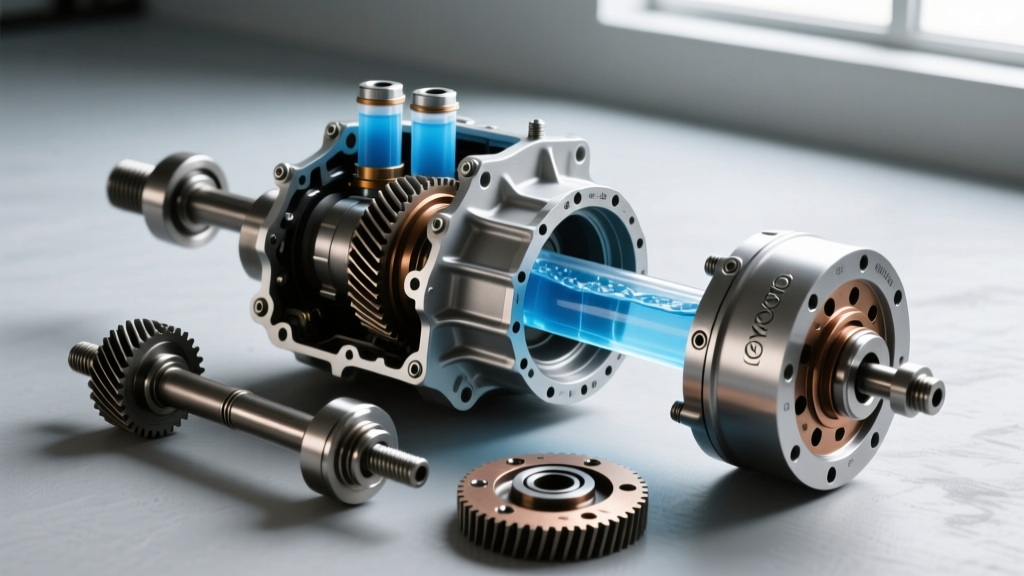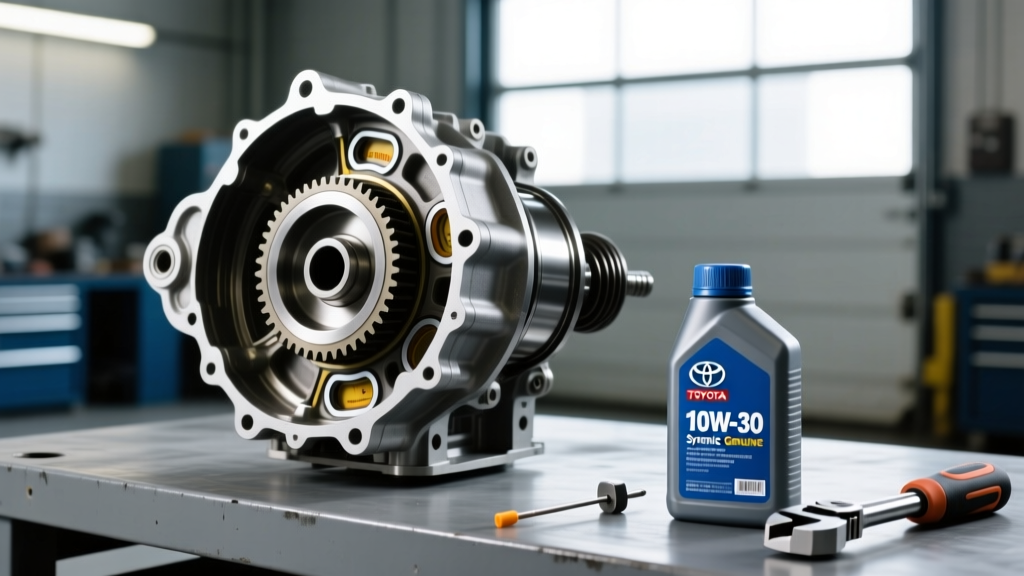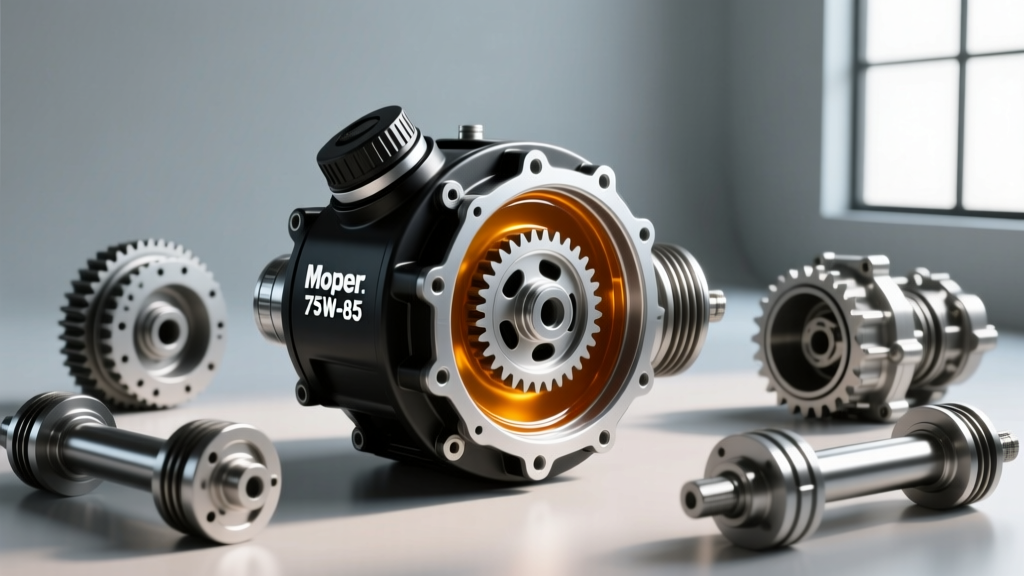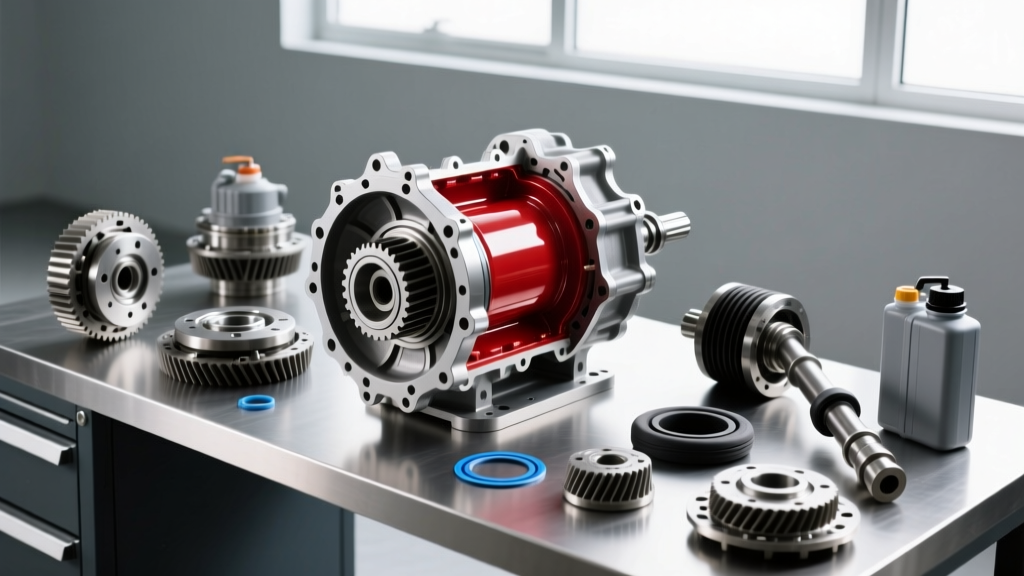
The Drivetrain Hierarchy: Where Does the Power Go?
For beginners diving into the world of four-wheel-drive (4WD) and all-wheel-drive (AWD) vehicles, the underside of the truck or SUV can look like a tangled metal maze. To properly maintain these vehicles, you must understand the mechanical relationship between the transmission, the transfer case, and the axles. When power leaves the transmission, it doesn't just go straight to the wheels; it goes through a carefully orchestrated chain of torque multiplication and distribution. Misunderstanding this chain is the leading cause of premature drivetrain failure, and it heavily influences your long-term maintenance budget.
Transfer Case vs. Differential: The Core Differences
While both components contain gears, bearings, and require specialized lubricants, their jobs are fundamentally different. Thinking of them as interchangeable is a critical error that often leads to catastrophic mechanical failure.
The Transfer Case (The Longitudinal Splitter)
Bolted directly to the rear of the transmission, the transfer case's primary job is to split engine torque along the vehicle's longitudinal axis—sending power forward to the front driveshaft and rearward to the rear driveshaft. In part-time 4WD systems like the widely used New Venture Gear NV246 (found in older GM trucks) or the BorgWarner 4406 (common in Ford F-150s), the transfer case contains a chain-driven gearset and an internal clutch pack or mechanical fork to engage the front axle. In AWD systems, it utilizes a viscous coupling or electronic multi-plate clutch to constantly vary torque split based on wheel slip.
The Differentials (The Lateral Distributors)
Once the driveshafts deliver torque to the front and rear axles, the differentials take over. Their job is to split power laterally (left and right) while allowing the outside wheel to spin faster than the inside wheel during a corner. The differential houses the ring and pinion gear set, which performs the final gear reduction (e.g., a 3.73:1 or 4.10:1 ratio) and turns the rotational force 90 degrees to the wheels. According to the technical archives at Ring & Pinion, the hypoid gear design used in most automotive differentials creates immense sliding friction, demanding extreme-pressure (EP) lubrication that a transfer case simply does not need.
The Symbiotic Relationship: Why They Rely on Each Other
Why does a guide on axles need to discuss the transfer case? Because in a 4WD system, the transfer case and the front differential are locked in a mechanical marriage. If one fails, it often takes the other down with it.
Consider the phenomenon known as driveline bind. When a 4WD vehicle is driven on dry pavement in '4-High' or '4-Low', the front and rear axles want to turn at slightly different speeds due to steering geometry and tire wear. Because the transfer case in a traditional part-time system locks the front and rear driveshafts together at a 50/50 split, this speed difference creates massive torsional stress. The energy has nowhere to go, resulting in a 'wind-up' effect that can shatter transfer case chains, strip differential spider gears, or snap axle shafts.
Furthermore, in modern active 4WD systems (like GM's AutoTrak), the transfer case relies on clutch packs to smoothly engage the front differential. If the transfer case fluid degrades, the clutch pack will chatter and slip. This erratic engagement sends violent shockloads down the front driveshaft, directly into the front differential's pinion gear. Many mechanics mistakenly blame the front differential for a failing pinion bearing, when the root cause was actually a neglected transfer case clutch pack slipping and grabbing.
Calculating Your Car Differential Service Cost (and Transfer Case Pricing)
When budgeting for 4WD maintenance, understanding the total car differential service cost alongside your transfer case service is vital. Many quick-lube shops only offer a rear differential drain-and-fill, completely ignoring the front differential and the transfer case. In 2026, a complete 4WD drivetrain fluid service (Front Diff, Rear Diff, and Transfer Case) at an independent specialist typically ranges from $450 to $650, depending on fluid capacities and synthetic oil prices.
| Component | Typical Fluid Type | Avg. Capacity | Avg. Shop Cost (Parts & Labor) |
|---|---|---|---|
| Front Differential | 75W-90 Synthetic GL-5 | 1.5 - 2.0 Quarts | $140 - $190 |
| Rear Differential | 75W-140 Synthetic GL-5 | 2.0 - 3.5 Quarts | $160 - $240 |
| Transfer Case | Specific T-Case Fluid / ATF | 2.0 - 2.5 Quarts | $120 - $180 |
Pro-Tip: If your vehicle is equipped with a Limited Slip Differential (LSD) in the rear axle, the shop must add a friction modifier (such as ACDelco 10-9003 or Motorcraft XL-3). Failure to add this $8 bottle of modifier will result in severe clutch-pack chatter during tight turns, which can eventually destroy the LSD unit.
Fluid Chemistry: Why You Cannot Mix Them
A common beginner mistake is assuming that all gear oil is the same. The AMSOIL Drivetrain Fluid Guides explicitly warn against cross-contaminating differential and transfer case fluids due to radically different chemical requirements.
- Differential Fluid (e.g., 75W-90 GL-5): Formulated with high levels of sulfur and phosphorus extreme-pressure (EP) additives. These additives create a sacrificial chemical film on the hypoid ring and pinion gears to prevent metal-on-metal welding under thousands of pounds of shearing force. However, these same sulfur additives will corrode the yellow metals (bronze bushings and synchronizers) found inside many transfer cases.
- Transfer Case Fluid (e.g., AutoTrak II or Motorcraft XL-12): Transfer cases rarely contain hypoid gears. Instead, they use spur gears, chains, and wet-clutch packs. They require fluids with specific friction modifiers to allow the clutch packs to grip smoothly without shuddering, alongside anti-foaming agents to prevent fluid aeration at high chain speeds. Putting thick 75W-140 gear oil in a transfer case will cause immediate overheating, clutch-pack failure, and eventual transfer case seizure.
DIY Service Guide: Torque Specs and Fill Procedures
If you are tackling the car differential service cost savings by doing the job in your driveway, precision is mandatory. Over-torquing aluminum differential covers or transfer case fill plugs will strip the threads, leading to expensive housing replacements. Always follow the 'Fill First, Drain Second' rule on differentials: always ensure you can get the fill plug out before you drain the old fluid, otherwise, you risk being stranded with an empty axle.
Crucial Torque Specifications
While you should always consult your specific factory service manual, here are standard baseline torque specs for common late-model drivetrains:
- GM 9.5-Inch Semi-Floating Rear Axle Fill/Drain Plug: 24 Nm (18 lb-ft). Use a 3/8-inch drive torque wrench; a 1/2-inch drive will easily snap the aluminum plug.
- GM NV246 Transfer Case Fill/Drain Plugs: 20 Nm (15 lb-ft). These plugs often feature an integrated O-ring. Inspect the O-ring for flat spots or cracking before reinstalling.
- Ford 8.8-Inch Rear Differential Cover Bolts: 33 Nm (24 lb-ft). Tighten in a star-pattern sequence to ensure the RTV silicone or cork gasket seats evenly without pinching.
- BorgWarner 4406 Transfer Case (Ford): Uses standard ATF (like MERCON V) in older models, but requires exact fluid level checks. The fill plug is typically torqued to 20-25 lb-ft.
The Level-Plug Check
Neither the transfer case nor the differential uses a traditional dipstick. They rely on a 'level plug' system. To fill correctly, the vehicle must be perfectly level on jack stands or a lift. You pump fluid into the fill hole using a hand-operated fluid transfer pump until the oil begins to weep back out of the hole. Once it drips, the unit is exactly at the factory-specified capacity. Reinstall the plug immediately to prevent fluid loss and contamination from road debris.
Understanding the intricate dance between your transfer case and your axles is the key to longevity. By respecting the fluid chemistry, adhering to precise torque specs, and budgeting accurately for your car differential service cost, you ensure that your 4WD system remains capable, quiet, and reliable for hundreds of thousands of miles.