When automotive enthusiasts and daily commuters alike begin exploring how power reaches the pavement, a fundamental question inevitably arises: do all cars have differentials? The short answer is an absolute yes. However, the way these differentials interact with the rest of the drivetrain changes drastically depending on whether you are driving a front-wheel-drive commuter, a rear-wheel-drive sports car, or a four-wheel-drive off-roader.
For vehicles equipped with four-wheel-drive (4WD) or all-wheel-drive (AWD), the differential does not work alone. It relies on a critical intermediary component known as the transfer case. Understanding the transfer case and differential relationship is essential for proper maintenance, fluid selection, and avoiding catastrophic driveline binding. In this beginner-friendly explainer, we will break down exactly how these components communicate, the specific fluids they require, and the real-world torque specifications you need to service them properly in 2026.
The Short Answer: Do All Cars Have Differentials?
Every street-legal passenger vehicle features at least one differential. Its primary job is to allow the left and right wheels to rotate at different speeds when cornering. If both wheels were locked to a single solid axle shaft, the inside tire would have to slip and scrub across the pavement every time you turned the steering wheel, leading to rapid tire wear and broken axle shafts.
- Front-Wheel Drive (FWD): The differential is housed inside the transmission casing, creating a single unit known as a transaxle.
- Rear-Wheel Drive (RWD): The differential is located in the rear axle housing, connected to the transmission via a driveshaft.
- 4WD and AWD: These vehicles feature both a front differential and a rear differential. To power both axles simultaneously, they utilize a transfer case bolted to the rear of the transmission.
The Mechanical Handshake: How the Transfer Case and Differential Relationship Works
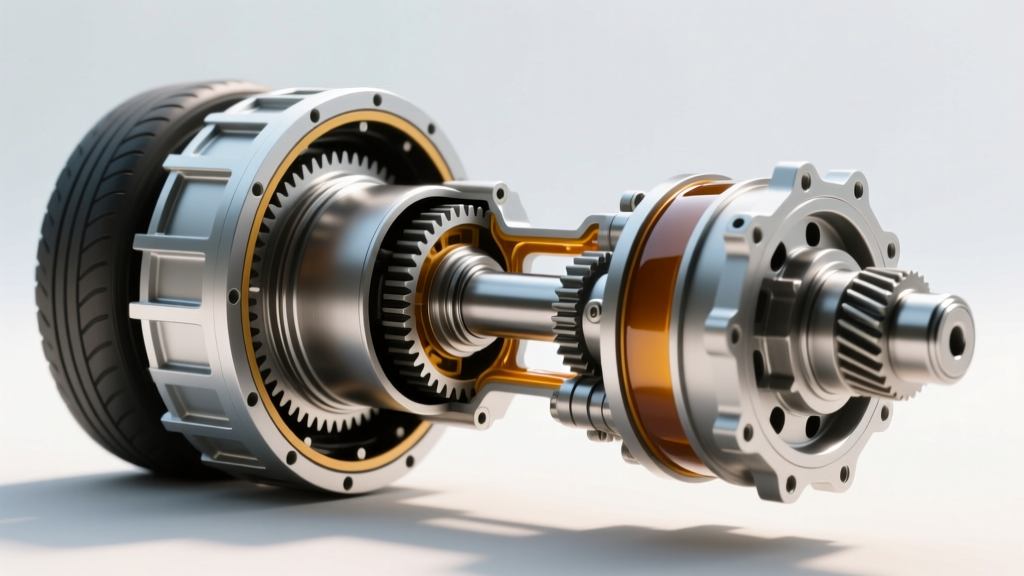
Think of the transfer case as a power-splitting traffic cop. The transmission’s output shaft feeds rotational energy into the transfer case’s input gear. From there, the transfer case must divide that torque between the front and rear drive axles.
In traditional part-time 4WD systems (like the legendary New Process NP205 or the chain-driven NP241 found in GM trucks), the transfer case physically locks the front and rear driveshafts together. This means the front and rear differentials are forced to turn at the exact same average speed. While this provides maximum traction in mud or snow, it creates a mechanical conflict on dry pavement, which we will discuss later.
In modern full-time AWD systems (such as the BorgWarner 4406 found in Ford F-150s or the ZF-based active transfer cases in modern SUVs), the transfer case contains a center differential or a clutch pack. This allows the front and rear axles to slip slightly relative to one another, accommodating the speed differences between the front and rear differentials during cornering.
Drivetrain Configuration Comparison
| System Type | Transfer Case Example | Center Differential? | Dry Pavement Use? |
|---|---|---|---|
| Part-Time 4WD | NP241, Dana 300 | No (Locked Spool) | No (Causes Wind-Up) |
| Full-Time AWD | BW4406, NV125 | Yes (Planetary/Clutch) | Yes |
| On-Demand AWD | BW4411, MagnaPower | Viscous/Electronic Clutch | Yes |
Fluid Chemistry: Why the Relationship Dictates the Lubricant
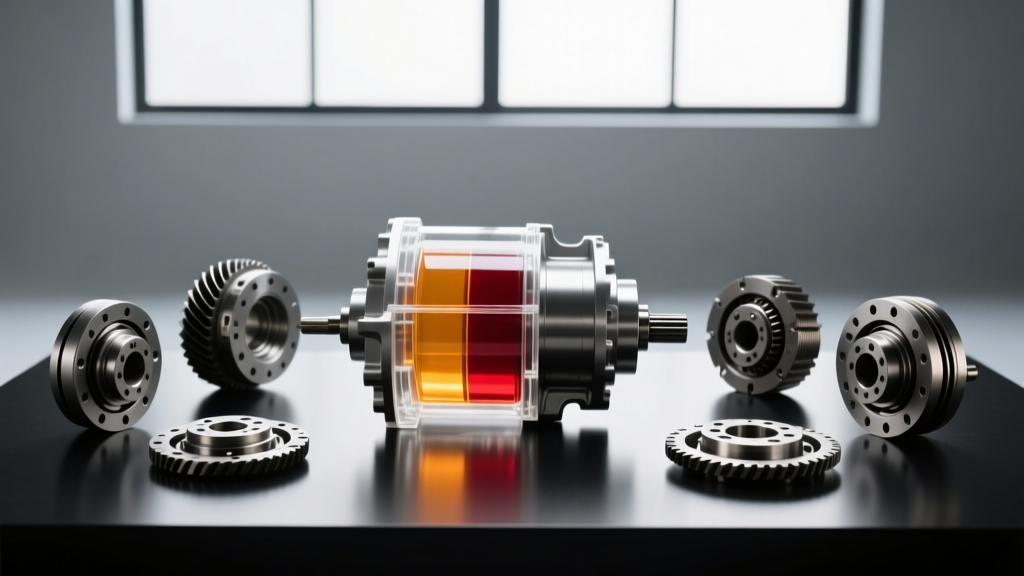
Because the transfer case and the axle differentials perform vastly different mechanical tasks, they require entirely different chemical environments. A common and costly beginner mistake is assuming all drivetrain fluids are interchangeable. According to lubrication experts at AMSOIL, using the wrong fluid can lead to immediate clutch pack failure or gear scoring.
Inside the Axle Differentials: Extreme Pressure (EP) Gear Oil
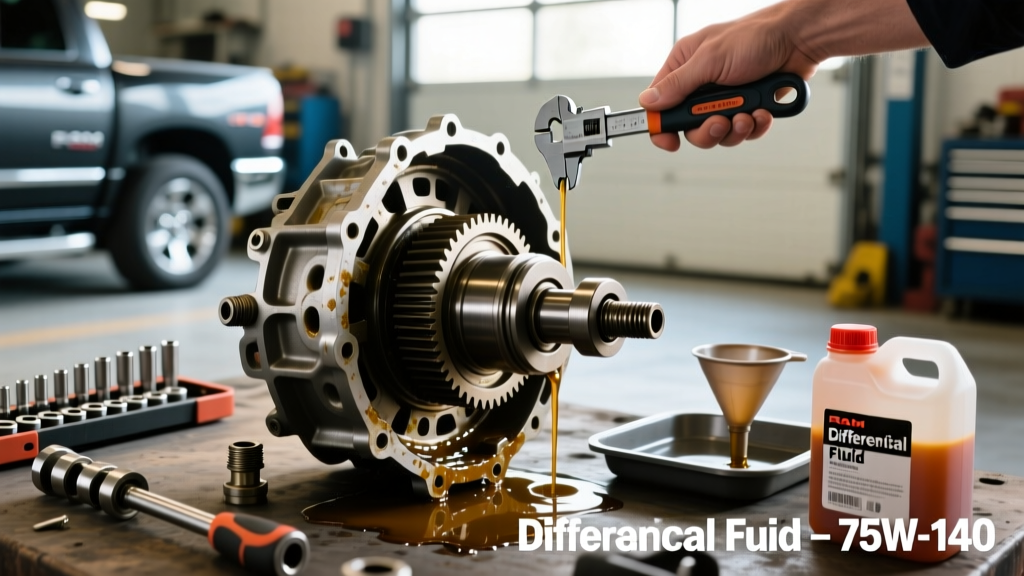
Differentials rely on hypoid ring and pinion gears. These gears feature a severe sliding motion across the teeth under immense load. To prevent the metal from welding together, differentials require API GL-5 rated gear oil, which contains high levels of sulfur-phosphorus extreme pressure (EP) additives.
- Standard Fluid: 75W-90 or 80W-90 GL-5 Gear Oil.
- Capacity Example: A standard Dana 44 rear differential holds approximately 2.2 quarts.
- Cost: $12 to $25 per quart for high-quality synthetic.
Inside the Transfer Case: Friction Modifiers and ATF
Transfer cases typically use planetary gearsets, drive chains, and wet-clutch packs. GL-5 gear oil is far too thick and contains friction modifiers that will cause wet clutches to slip and overheat. Furthermore, the EP additives in gear oil can corrode the yellow metals (bronze bushings) found inside many transfer cases.
- Standard Fluid: Most modern transfer cases require standard Automatic Transmission Fluid (ATF) like Dexron VI or MERCON LV, or specialized transfer case fluids like Auto-Trak II.
- Capacity Example: An NP241C transfer case holds roughly 2.0 quarts of Dexron ATF.
- Cost: $8 to $15 per quart.
Expert Warning: Never put 75W-90 gear oil inside a BorgWarner or New Process chain-driven transfer case unless explicitly stated by the manufacturer. For exact OEM specifications and tolerances, consulting resources like Yukon Gear & Axle or your factory service manual is mandatory before turning a wrench.
Wrenching Guide: Torque Specs and Maintenance Intervals
Maintaining the transfer case and differential relationship means servicing both ends of the driveline. Over time, gear oil shears and loses its viscosity, while ATF in the transfer case degrades from the heat generated by the drive chain and clutch packs. As of 2026, most manufacturers recommend servicing these fluids every 30,000 to 50,000 miles under normal driving conditions, or every 15,000 miles under severe off-road or towing conditions.
When performing a drain and fill, adhering to exact torque specifications is critical to prevent stripped threads in aluminum housings or fluid leaks on the trail.
Common Torque Specifications
- NP241 Transfer Case Drain/Fill Plugs: 15 to 20 lb-ft. (Note: Always remove the fill plug before the drain plug to ensure you can refill the case if the fill plug is seized).
- Dana 44 Differential Cover Bolts: 30 to 35 lb-ft. Use a star-pattern tightening sequence to ensure the RTV silicone or gasket seals evenly.
- Ford 8.8 Differential Cover Bolts: 28 to 33 lb-ft.
- BorgWarner 4406 Transfer Case Plugs: 18 to 22 lb-ft.
Driveline Wind-Up: When the Relationship Breaks Down
The most common way beginners destroy the transfer case and differential relationship is through a phenomenon called driveline wind-up (or axle binding).
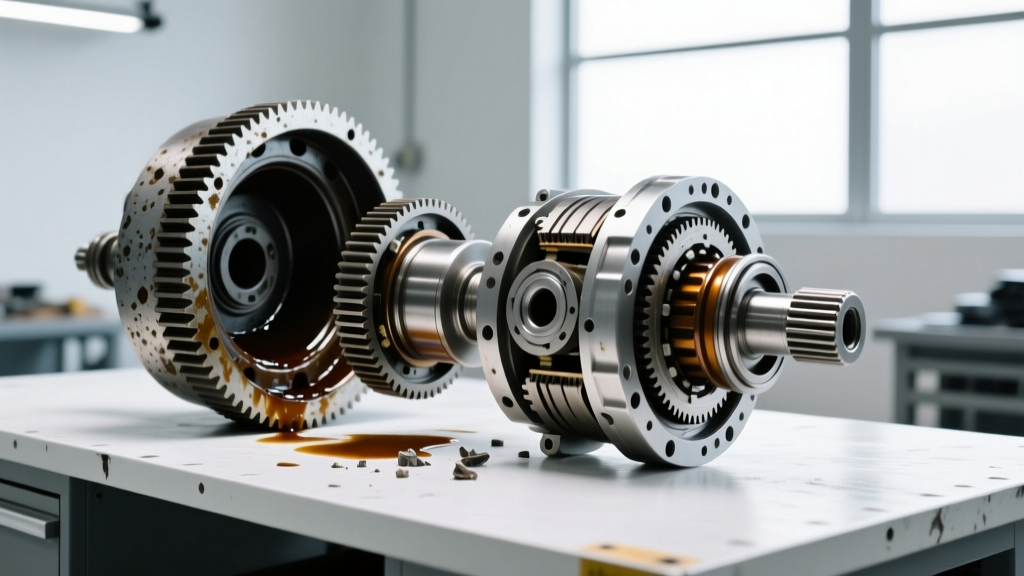
If you engage a part-time 4WD system (which locks the transfer case output shafts together) on dry, high-traction pavement, the front and rear differentials are forced to fight each other. Because the front and rear axles travel slightly different distances through a curve, the tires will chirp, the steering will feel heavy, and immense torsional stress will build up in the driveshafts. This energy has nowhere to go. Ultimately, it will result in a shattered transfer case chain, broken U-joints, or chipped ring and pinion gears inside the differentials.
Modern active transfer cases mitigate this with computer-controlled clutch packs that slip automatically when wheel-speed sensors detect binding. However, for traditional 4WD systems, the rule remains absolute: Only engage the locked transfer case mode on loose, slippery surfaces like mud, snow, or sand where the tires can slip to relieve the mechanical binding.
Summary
So, do all cars have differentials? Yes. But in 4WD and AWD vehicles, those differentials are merely the endpoints of a complex mechanical conversation orchestrated by the transfer case. By understanding how power is split, respecting the distinct fluid requirements of hypoid gears versus wet clutches, and adhering to precise torque specs during maintenance, you can ensure your drivetrain survives hundreds of thousands of miles of service. For deeper dives into specific gear ratios and rebuild kits, authoritative drivetrain manufacturers like Dana Incorporated offer extensive engineering documentation to help you master your axle systems.