The Drivetrain Hierarchy: Where Does Power Go?
Whether you are wrenching on a 1/10th-scale radio-controlled basher in your driveway or servicing a heavy-duty 2026 Jeep Wrangler Rubicon, the fundamental physics of torque distribution remain identical. For beginners stepping into the world of four-wheel-drive (4WD) mechanics, the terminology can be overwhelming. However, by bridging the gap between scaled-down models and full-size trucks, we can demystify how power travels from the engine to the dirt.
At its core, a 4WD drivetrain is a river of rotational energy. The engine (or electric motor) generates torque, the transmission multiplies it, and then the drivetrain must split it to reach all four corners of the vehicle. This is where the critical relationship between the transfer case and the axles comes into play.
The RC Car Sandbox: Learning the Basics
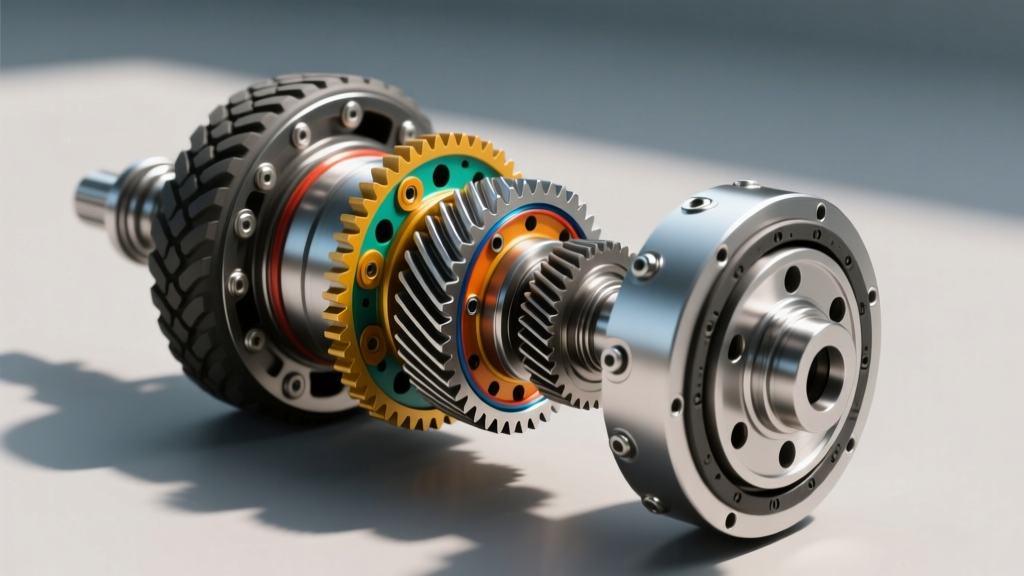
When you upgrade the differential for rc car platforms like the Traxxas Slash 4x4 or Arrma Kraton, you are interacting with a simplified, transparent version of full-size automotive engineering. In a typical 4WD RC car, the central motor spins a driveshaft that connects to a center differential. From there, two smaller driveshafts route power to the front and rear axle housings, which contain their own left-to-right differentials.
This exact same architecture scales up to full-size trucks, albeit with massive steel components, high-pressure hypoid gear meshes, and complex fluid dynamics. Understanding the RC layout is the perfect primer for mastering real-world 4x4 maintenance.
Transfer Case vs. Differential: The Dynamic Duo
Many beginners confuse the transfer case with the differential. While both are gearboxes that split power, they operate on completely different axes and serve distinct mechanical purposes.
1. The Transfer Case (Longitudinal Split)
The transfer case is bolted directly to the rear of the transmission. Its sole job is to split power longitudinally (front-to-back). In a part-time 4WD system like the legendary NV241 OR found in Jeep Wranglers, the transfer case uses a heavy-duty roller chain and a shifting collar to lock the front and rear output shafts together, ensuring a 50/50 torque split to both axles.
In modern full-time 4WD systems, such as the NV246 AutoTrac found in GM trucks, the transfer case contains a planetary gearset and a clutch pack that acts as a massive center differential, allowing the front and rear driveshafts to spin at slightly different speeds to prevent binding on dry pavement.
2. The Differential (Lateral Split)
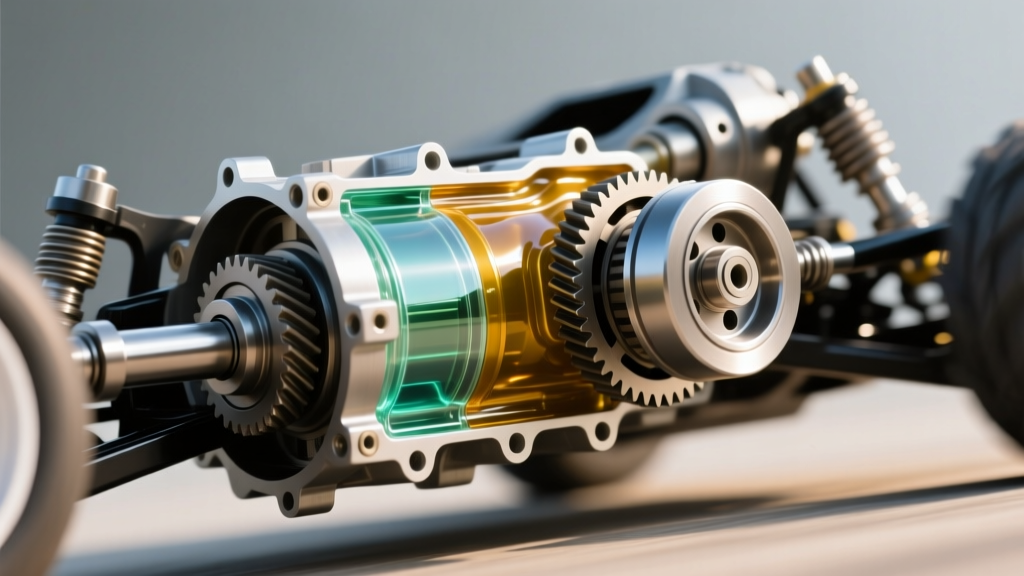
Once power leaves the transfer case and travels down the driveshaft, it hits the axle's differential. The differential's job is to split power laterally (left-to-right) while allowing the outside wheel to spin faster than the inside wheel during a turn. Without a differential, your tires would scrub, chirp, and destroy themselves every time you turned the steering wheel.
Expert Insight: While an open differential is great for street driving, it sends all power to the wheel with the least resistance (the one slipping in the mud). This is why off-roaders upgrade to Limited Slip Differentials (LSDs) or locking differentials like the Eaton E-Locker or ARB Air Locker.
Fluid Dynamics: RC Silicone vs. Full-Size Gear Oil
One of the most fascinating differences between RC cars and full-size 4x4s is how they manage differential slip and lubrication. As we move into 2026, full-size synthetic gear oils have reached incredible levels of thermal stability, but the physics of the hypoid gear mesh demands specific chemistry.
| Component | RC Car (1/10 Scale) | Full-Size 4x4 (e.g., Dana 44 Axle) | Primary Function |
|---|---|---|---|
| Differential Fluid | Silicone Diff Oil (e.g., 100k cSt) | 75W-90 or 75W-140 GL-5 Gear Oil | Lubrication vs. Slip Tuning |
| Slip Mechanism | Fluid Viscosity (Thicker = More Lock) | Clutch Packs + Friction Modifier | Managing wheel speed differences |
| Transfer Case Fluid | N/A (Usually solid shafts or belts) | ATF+4 or AutoTrak II (2.0 Quarts) | Chain lubrication and clutch cooling |
| Drain Plug Torque | 1.5 - 2.0 Nm (Small set screw) | 20 - 25 lb-ft (Steel/Brass plug) | Sealing under high pressure |
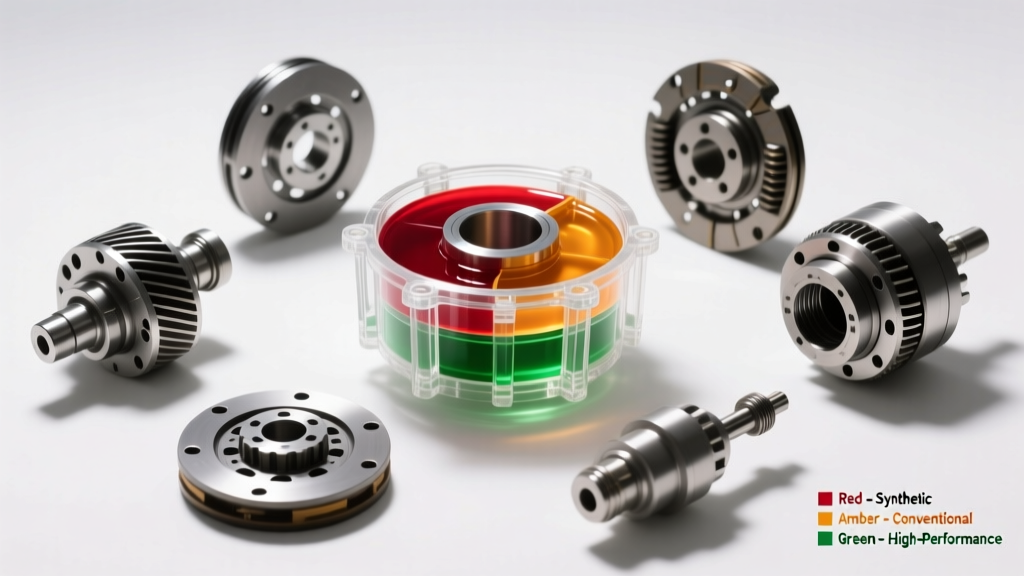
In the RC world, tuners use thick silicone oil inside the differential casing to create a 'fluid locker.' The thicker the oil, the harder it is for the internal spider gears to spin independently, effectively locking the axle. In a full-size Dana 44 or GM 9.5-inch rear axle, we cannot rely on fluid viscosity to lock the wheels—the torque would instantly shear the fluid. Instead, we use mechanical clutch packs bathed in GL-5 gear oil mixed with a specialized friction modifier (like Mopar LSD Additive) to prevent chatter during tight turns.
Scaling Up: Real-World 4x4 Architecture and Maintenance
Let's look at the specific maintenance requirements for a standard full-size 4x4 drivetrain, using the ubiquitous Jeep Wrangler JL (NV241 transfer case and Dana 44 front/rear axles) as our benchmark. For deeper technical schematics, you can always refer to the Spicer Technical Resources library or explore HowStuffWorks: 4WD Systems for animated breakdowns.
Transfer Case Service (NV241 OR)
- Fluid Type: ATF+4 (Automatic Transmission Fluid). Do NOT use gear oil here; the synchronizers and chain require the specific friction profile of ATF.
- Capacity: Approximately 2.0 quarts (1.9 liters).
- Torque Spec: The drain and fill plugs are typically 17mm hex or standard bolt heads. Torque to 20-25 lb-ft. Over-tightening can crack the cast magnesium or aluminum housing.
- Interval: Every 30,000 to 60,000 miles, or immediately after deep water fording to prevent emulsification.
Differential Service (Dana 44 Front & Rear)
- Fluid Type: 75W-90 API GL-5 Synthetic Gear Oil. The 'GL-5' designation means it contains high levels of sulfur-phosphorus extreme pressure (EP) additives, which are mandatory for the sliding friction of hypoid ring and pinion gears.
- Capacity: ~2.0 quarts per axle.
- Torque Spec: If removing the stamped steel diff cover, tighten the 10 or 12 cover bolts in a crisscross pattern to exactly 30 lb-ft. If equipped with a factory drain plug, torque to 25 lb-ft.
- Additive: If your axle is equipped with a Trac-Loc (clutch-type LSD), you must add 2.5 oz of limited-slip friction modifier to prevent clutch chatter.
The Danger of Driveline Wind-Up
Understanding the relationship between the transfer case and the differentials also explains a common beginner mistake: driving a part-time 4WD truck on dry pavement in '4-High'.
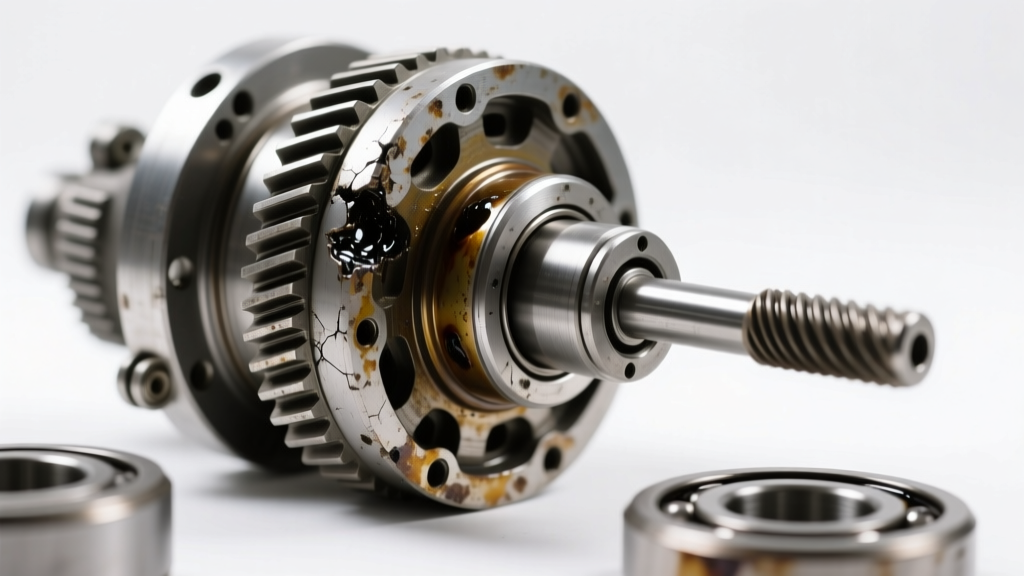
When you turn a corner, the front wheels travel a wider arc than the rear wheels, and the outside wheels travel a wider arc than the inside wheels. The left-to-right differentials handle the lateral speed differences perfectly. However, the front and rear axles also need to spin at slightly different average speeds. If your transfer case is locked in a 50/50 part-time mode (without a center differential), the drivetrain has nowhere to absorb this speed difference. The result is 'driveline wind-up'—a massive buildup of torsional stress that will eventually snap an axle shaft, shatter a transfer case chain, or strip the ring and pinion gears. Always reserve locked part-time 4WD for loose, slippery surfaces like mud, snow, or sand, where the tires can slip to relieve the stress.
Final Thoughts for the Aspiring Gearhead
Whether you are tuning the silicone diff fluid in an RC car to dial in your cornering traction, or dropping a heavy-duty Dana 60 axle under a full-size truck, the mechanical hierarchy remains the same. The transfer case manages the longitudinal split, and the differentials manage the lateral split. By respecting the fluid specifications, adhering to precise torque specs, and understanding the physics of driveline bind, you can ensure your rig—no matter the scale—survives the trail for years to come.