The Journey of Torque: From Transmission to Pavement
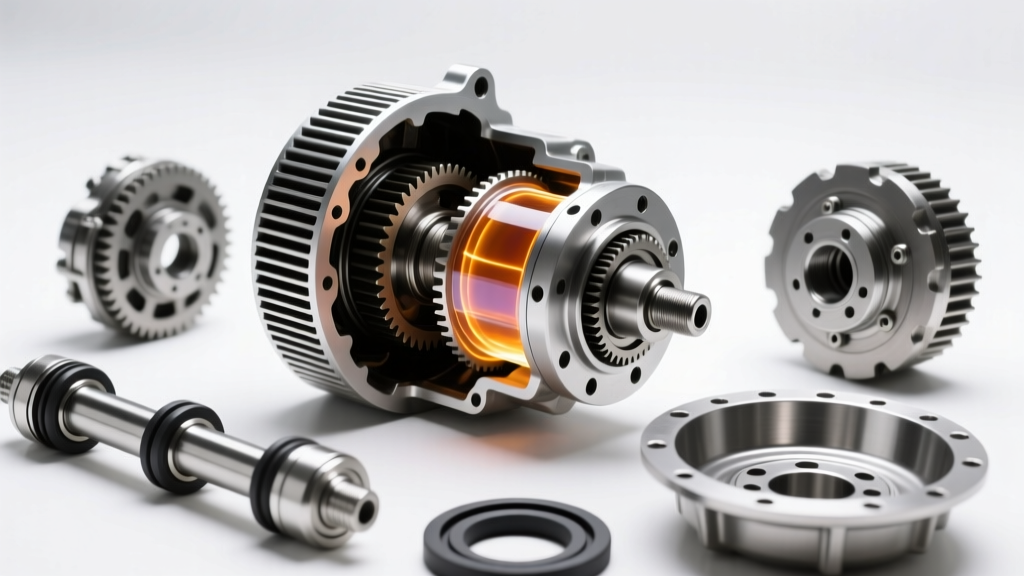
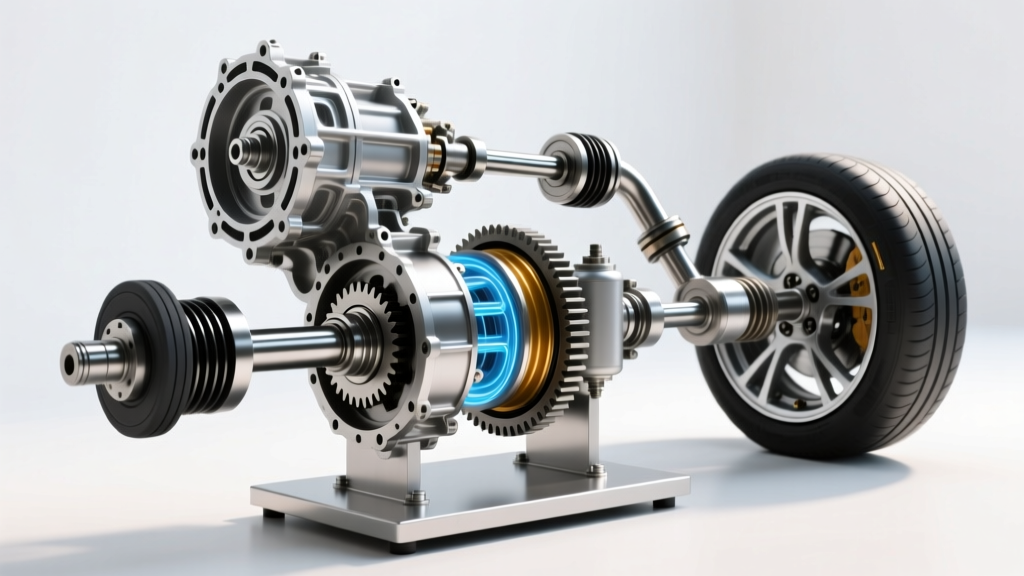
If you have ever wondered how a heavy truck or rugged SUV manages to crawl over boulders or pull a massive trailer up a steep grade, the answer lies deep within the drivetrain. For beginners, the undercarriage of a four-wheel-drive (4WD) or all-wheel-drive (AWD) vehicle can look like a confusing maze of heavy metal housings, spinning shafts, and thick gears. However, the relationship between these components is a masterclass in mechanical engineering. To truly understand off-road capability and towing dynamics, we must trace the path of engine torque from the transmission, through the transfer case, and ultimately into the differential wheel and axle assembly.
In this beginner-friendly explainer, we will demystify the transfer case and differential relationship. We will break down exactly how these two critical components communicate, why they require entirely different lubricants, and what happens when their mechanical harmony is disrupted. Whether you are wrenching on a classic Jeep Wrangler, a heavy-duty Ram 2500, or a modern Ford Bronco, understanding this power flow is essential for proper maintenance and diagnosis.
Transfer Case 101: The Great Torque Splitter
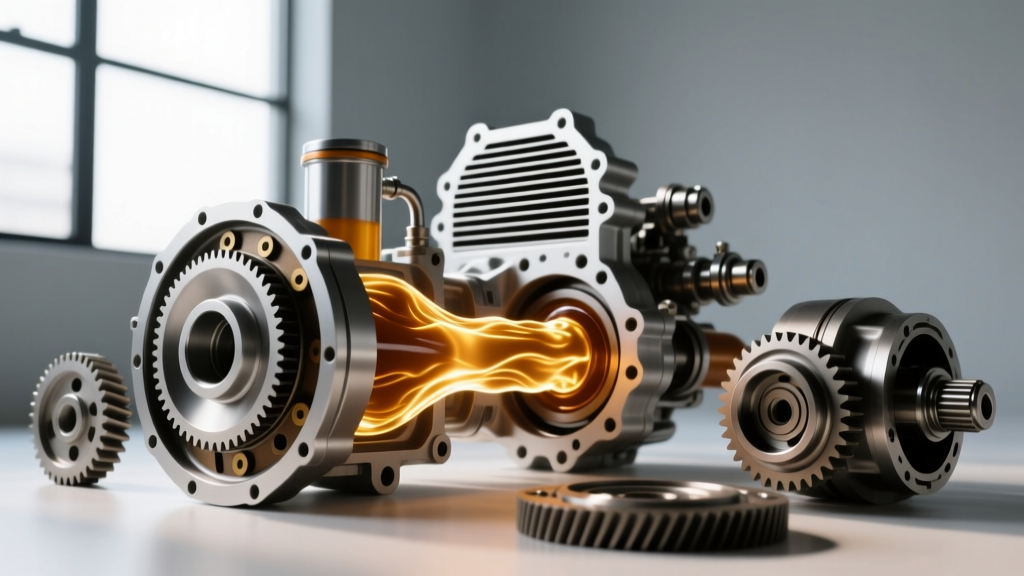
Before power can reach the axles, it must first pass through the transfer case. Bolted directly to the rear of the transmission, the transfer case acts as a secondary gearbox. Its primary job is to split the rotational force (torque) coming from the engine and route it to both the front and rear driveshafts simultaneously when 4WD is engaged.
There are two main architectural designs you will encounter in modern and classic 4WD vehicles:
- Chain-Driven Transfer Cases: Common in lighter SUVs and modern trucks (like the New Venture NV241 or NP231), these use a heavy-duty steel roller chain to connect the input shaft to the front output shaft. They are lighter, quieter, and offer a lower manufacturing cost.
- Gear-Driven Transfer Cases: Found in heavy-duty applications and classic off-roaders (like the legendary NP205), these use cut steel gears to transfer power. They are significantly heavier and noisier but offer unparalleled strength for extreme rock crawling and heavy towing.
When you shift your truck into 4-High (4Hi), the transfer case locks the front and rear output shafts together, forcing them to spin at the exact same RPM. This is where the relationship with the differentials becomes absolutely critical.
Decoding the Differential Wheel and Axle Assembly
While the transfer case splits power front-to-back, the differentials split power left-to-right. When evaluating the entire differential wheel and axle configuration, you are looking at the final stage of torque multiplication and directional routing.
Power travels down the driveshaft and strikes the pinion gear at the front of the differential housing. This pinion meshes with the massive ring gear, which changes the direction of rotation by 90 degrees and multiplies the torque based on the gear ratio (e.g., 3.73:1 or 4.10:1). From the ring gear, power moves into the carrier, where a set of spider gears allows the left and right axles to spin at different speeds.
Why is this necessary? When your vehicle turns a corner, the outside wheel must travel a longer distance than the inside wheel. If both axles were locked together, the tires would chirp, skip, and scrub across the pavement, causing severe drivetrain stress. The open differential elegantly solves this problem by allowing the axles to differentiate their speed while still receiving torque.
The Crucial Relationship: Why Drivetrain Wind-Up Happens
The most common point of confusion for beginners is why part-time 4WD systems cannot be used on dry pavement. This limitation is entirely due to the relationship—or lack of a center differential—between the transfer case and the differential wheel and axle setups.
When a part-time transfer case (like the NV231) is in 4WD, it forces the front and rear driveshafts to spin at the exact same speed. However, because the front and rear axles travel slightly different distances over uneven terrain or during turns, the front and rear differentials naturally want to rotate at different speeds. Because the transfer case refuses to allow this speed difference, the rotational energy has nowhere to go. It stores up as torsional stress in the driveshafts and axles. This phenomenon is known as drivetrain wind-up.
If you attempt to turn sharply on dry pavement in 4WD, the tires will lose traction to break the tension, or worse, you will hear a loud bang as a U-joint, driveshaft, or ring-and-pinion gear shatters under the immense stored pressure. According to engineering data from Spicer Parts, the torsional load generated by drivetrain bind on high-traction surfaces can easily exceed the yield strength of standard OEM axle shafts.
Component Comparison: Transfer Case vs. Differential
To solidify your understanding, review the comparison table below detailing the distinct roles and specifications of these two drivetrain heavyweights.
| Feature | Transfer Case | Differential (Ring & Pinion) |
|---|---|---|
| Primary Function | Splits torque front-to-rear; provides low-range gearing. | Changes rotation 90 degrees; splits torque left-to-right. |
| Location | Directly behind the transmission. | At the center of the front and rear axles. |
| Internal Gearing | Planetary gears (low range) and chains/gears. | Hypoid ring and pinion, spider gears, side gears. |
| Standard Lubricant | Automatic Transmission Fluid (ATF) or specific transfer case fluid. | GL-5 Gear Oil (e.g., 75W-90 or 80W-90). |
| Common Failure Point | Stretched chains, worn shift forks, dry bearings. | Pitted gear teeth, worn spider gears, pinion seal leaks. |
Drivetrain Fluids and Maintenance Specs (2026 Guide)
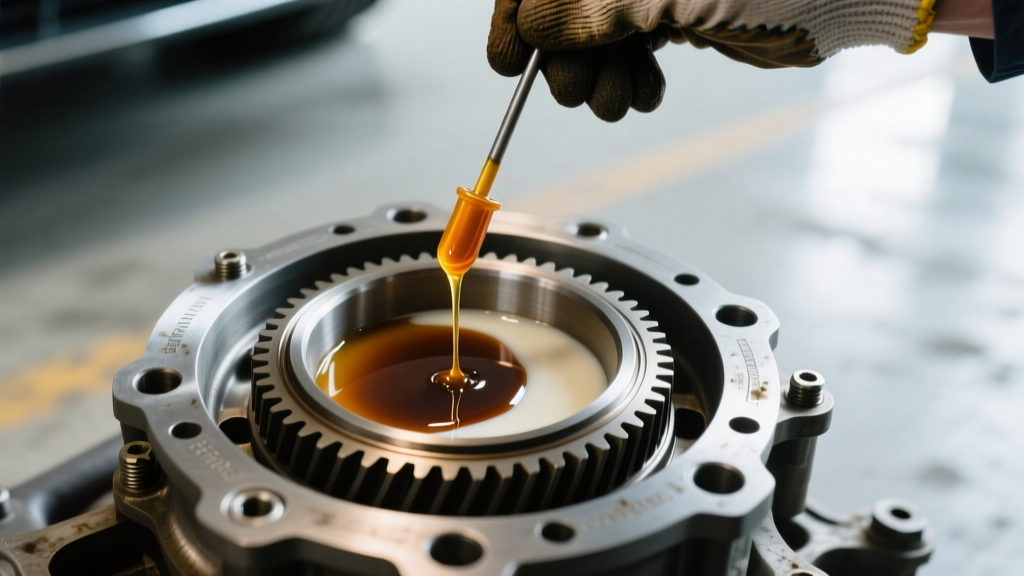
One of the most expensive mistakes a beginner can make is assuming that all heavy-duty drivetrain fluids are interchangeable. The transfer case and the differential wheel and axle housings operate under vastly different friction and pressure profiles. Using the wrong fluid will lead to catastrophic failure.
Transfer Case Service Specs
Most modern chain-driven transfer cases rely on Automatic Transmission Fluid (ATF) because the internal clutches, shift forks, and chains require the specific friction modifiers and detergents found in transmission fluids. For example, the ubiquitous New Venture NV241HD found in heavy-duty Ram trucks requires Mopar ATF+4.
- Fluid Capacity: Typically 2.0 quarts.
- Cost: $9 to $12 per quart for full synthetic ATF+4.
- Drain/Fill Plug Torque: 25 ft-lbs (34 Nm). Do not overtighten, as the housings are often cast aluminum and prone to stripping.
- Maintenance Interval: Every 60,000 miles under normal use; every 30,000 miles if frequently towing or operating in deep water.
Differential Service Specs
Differentials, on the other hand, feature hypoid gears that experience extreme sliding friction and sheer pressure. ATF would instantly burn up and fail to protect these gears. Instead, differentials require thick, sulfur-phosphorus additive-laced GL-5 gear oil. As noted by the drivetrain specialists at Yukon Gear & Axle, using a high-quality synthetic 75W-90 GL-5 gear oil is critical for maintaining the structural integrity of the ring and pinion teeth under heavy loads.
- Fluid Capacity: Varies by housing (e.g., Dana 44 holds ~2.0 quarts; Ford 10.5-inch holds ~3.5 quarts).
- Cost: $14 to $20 per quart for premium synthetic 75W-90 GL-5.
- Limited Slip Additive: If your differential features a clutch-type limited-slip differential (LSD), you must add a friction modifier (approx. 4 oz) to prevent clutch chatter during tight turns.
- Drain/Fill Plug Torque: 25 to 35 ft-lbs, depending on the housing. Steel housings can tolerate more torque than aluminum differential covers.
Diagnosing Drivetrain Noise: Where is it Coming From?
Because the transfer case and differentials are connected via driveshafts, a noise originating in one component can easily be misdiagnosed as coming from another. Here is a quick diagnostic framework for beginners:
- Whining on Deceleration (Coasting): Usually points to worn ring and pinion gears in the differential. The coast side of the gear teeth is worn down.
- Clicking in 4WD Turns: If driving on a slippery surface, this is normal spider gear operation. If on dry pavement, you are experiencing drivetrain bind. Shift back to 2WD immediately.
- Grinding or Rattling Under Load: Often indicates a stretched chain inside the transfer case slapping against the aluminum housing, or a failing output shaft bearing.
- Vibration at 55-65 MPH: Rarely the differential or transfer case internals; usually points to an unbalanced driveshaft, worn U-joints, or a failing center support bearing.
Final Thoughts on Drivetrain Harmony
The relationship between the transfer case and the differential wheel and axle components is a perfect example of mechanical synergy. The transfer case dictates the macro-distribution of power, while the differentials handle the micro-distribution required for stable, predictable handling. By respecting the unique lubrication requirements, torque specifications, and operational limits of each component, you can ensure your 4WD vehicle remains reliable whether you are commuting to the job site or tackling the trails.