The Diagnostic Power of Differential Fluid Analysis
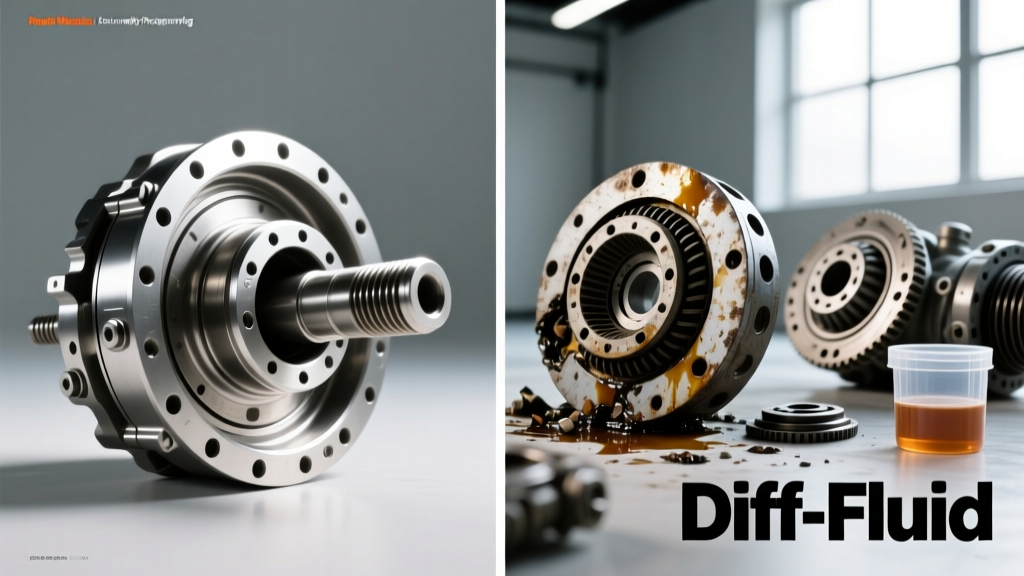
The rear differential is one of the most heavily loaded, yet frequently ignored, components in your vehicle’s drivetrain. While engine oil and transmission fluid get regular attention, differential gear oil often runs for 100,000 miles or more without a second thought. However, understanding how to check rear differential fluid and interpret its color and condition is a critical preventive maintenance skill. The gear oil inside your axle housing acts as a liquid telemetry system, holding the chemical and physical secrets of your ring and pinion gears, bearings, and limited-slip clutch packs.
By extracting a small sample and analyzing its viscosity, color, and particulate content, you can predict catastrophic axle failures months before they occur. This guide will walk you through the exact extraction process, provide a comprehensive fluid condition matrix, and detail the specific failure modes associated with modern axle assemblies like the Ford 8.8-inch, GM 10-bolt, and Dana 44/60 series.
Step-by-Step: Extracting a Fluid Sample Safely
Before you can analyze the fluid, you need to extract it properly without introducing contaminants or damaging the axle housing. Here is the professional procedure for sampling rear differential fluid:
- Level the Vehicle: Park on a perfectly level surface. If the vehicle is on an incline, the fluid level will read inaccurately, and you may not get a representative sample of the sediment settled at the bottom of the housing.
- Locate and Clean the Fill Plug: Never remove the drain plug first. If the fill plug is seized or stripped, you will be left with an empty, immobile axle. Wipe the area around the fill plug with a brake cleaner-soaked rag to prevent dirt from entering the housing.
- Remove the Fill Plug: Most modern axles use a 3/8-inch square drive, a 15mm hex bit, or a standard 1/2-inch hex. Apply steady torque. If stuck, apply a penetrating fluid like PB Blaster to the outer threads only—avoid getting it inside the gear oil.
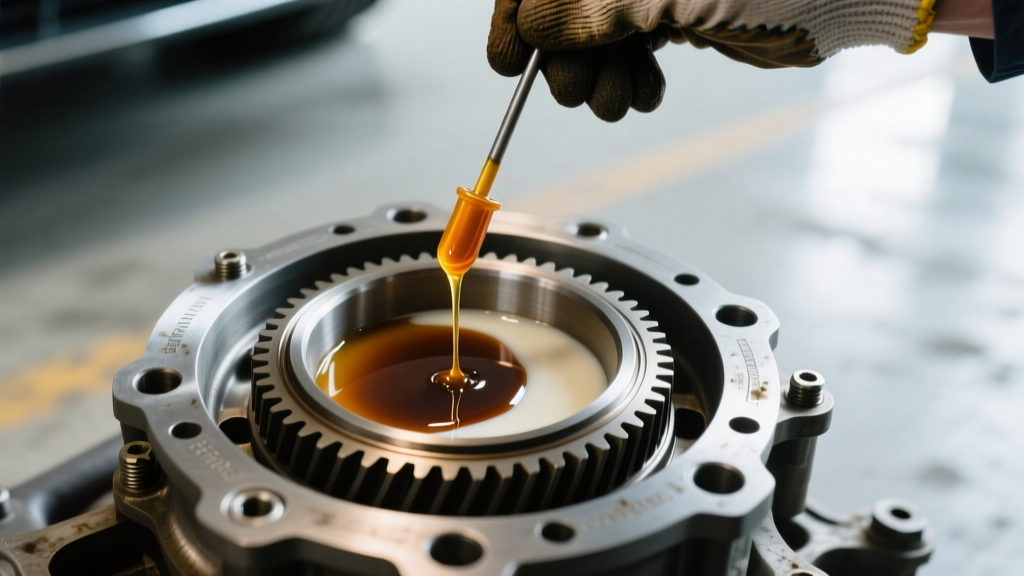
- Catch the Sample: Use a clean, clear glass jar or a dedicated fluid extraction pump with a clear hose. Insert the hose to the very bottom of the housing to pull up any settled metallic particulates or water, which sits below the oil due to its higher density.
- Reinstall and Torque: When reinstalling, apply a small amount of blue threadlocker or anti-seize to the outer threads (depending on manufacturer spec). Torque the fill plug to factory specifications. For a Ford 8.8-inch axle, the torque spec is typically 22-30 lb-ft. For a Dana 44, aim for 25-35 lb-ft. Over-torquing can crack the cast-iron or aluminum differential cover.
Differential Fluid Color and Condition Matrix
Once you have your sample in a clear glass container, hold it up to a bright light. Use the following matrix to diagnose the internal health of your rear axle.
| Fluid Condition | Color & Smell Profile | Diagnosis & Action Required |
|---|---|---|
| New / Fresh | Clear Amber to Honey; Mild Sulfur | Optimal. Extreme Pressure (EP) additives are fully active. |
| Normal Used | Dark Brown / Opaque; Strong Sulfur | Normal oxidation and heat cycling. Continue standard intervals. |
| Water Intrusion | Milky, Frothy, or 'Chocolate Milk' | Emulsification. Breather tube failure or submerged axle. Flush immediately. |
| Thermal Breakdown | Jet Black; Burnt Toast / Acrid Odor | Excessive heat (>250°F). Clutch pack glazing or severe towing overload. |
| Mechanical Failure | Grey/Silver; Glitter or Metal Chunks | Ring and pinion wear or bearing cage disintegration. Rebuild required. |
Amber to Dark Brown: The Baseline
Brand new 75W-90 or 75W-140 synthetic gear oil, such as AMSOIL Synthetic Gear Lube or Red Line ShockProof, typically pours out clear, amber, or slightly greenish. As the fluid is subjected to the extreme shearing forces of the hypoid gear set, it will naturally darken to a deep, opaque brown. This is caused by the suspension of microscopic carbon deposits and the normal oxidation of the base oil. A strong 'rotten egg' sulfur smell is entirely normal; this is the sulfur-phosphorus Extreme Pressure (EP) additive package doing its job to protect the sliding contact patches of the hypoid gears.
Milky or 'Chocolate Milk': Water Intrusion and Emulsification
If your extracted fluid looks like a vanilla latte or chocolate milk, water has entered the axle housing. Gear oil contains emulsifiers that trap microscopic water droplets, turning the fluid into a thick, milky sludge. This is a catastrophic failure of lubrication; water-laden oil loses its hydrodynamic film strength, leading to immediate metal-on-metal contact and rapid pitting of the ring and pinion gears.
Root Causes: Water ingress usually occurs due to a clogged or missing axle breather tube. When you drive through deep water or splash through cold puddles, the hot axle housing rapidly cools, creating a vacuum that sucks moisture past the axle shaft seals or pinion seal. According to Yukon Gear & Axle Technical Support, ensuring the axle breather valve is routed high up into the frame rail and is free of debris is the number one defense against water contamination in off-road and towing applications.
Jet Black and Burnt: Thermal Breakdown and LSD Clutch Failure
While dark brown is normal, jet black fluid accompanied by an acrid, burnt smell indicates thermal breakdown. Gear oil begins to rapidly oxidize and lose its protective qualities when sump temperatures exceed 250°F to 280°F. This is common in vehicles used for heavy towing without an aftermarket differential cover equipped with cooling fins.
If your vehicle is equipped with a clutch-type Limited-Slip Differential (LSD), such as an Auburn or Eaton Posi unit, black fluid is a major red flag. LSDs require a specific friction modifier (like Ford XL-3 or GM EOS) to allow the clutch packs to slip smoothly during cornering. When the fluid overheats, the friction modifier breaks down, and the clutch discs begin to glaze, chatter, and eventually disintegrate. The black sludge you see is actually the dissolved friction material from the clutch packs. If you catch this early, a complete flush and a refill with high-quality synthetic fluid and fresh friction modifier can save the unit. If the chatter persists after the fluid change, the clutches are permanently damaged and require a physical rebuild.
Grey Glitter vs. Metal Chunks: Mechanical Wear Analysis
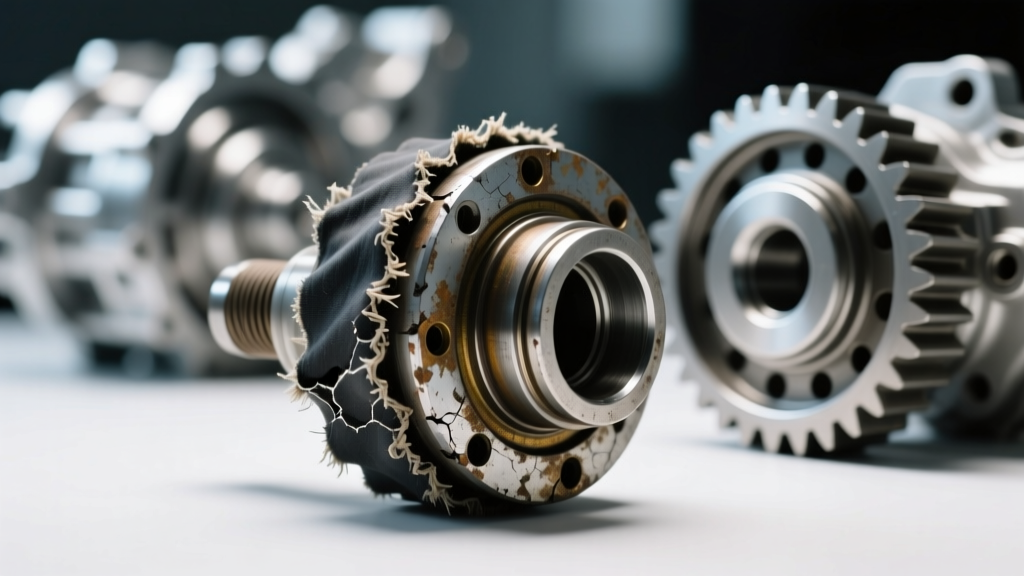
Most differential fill plugs or drain plugs are magnetic. When you remove the plug, inspect it carefully. A fine, grey 'fuzz' or paste on the magnet is completely normal—it is the result of the initial break-in wear of the gears and bearings. However, if you see metallic 'glitter' suspended in the fluid itself, or if you pull out actual metal shards or chunks, your differential is actively destroying itself.
Glitter indicates that the needle bearings inside the pinion gear or the carrier bearings are failing, shedding microscopic steel flakes into the oil. Larger chunks or teeth fragments mean the ring and pinion gear mesh is incorrect, or the pinion bearing has collapsed, allowing the gears to hammer against one another. As noted in the Red Line Oil Gear Lubricant Technical Guides, once particulate matter becomes visible to the naked eye in the fluid suspension, the abrasive wear cycle has become exponential. A fluid change will not fix this; the axle requires a teardown, bearing replacement, and likely a new ring and pinion set.
Cost Analysis: Preventive Service vs. Catastrophic Rebuild
Understanding the condition of your differential fluid directly impacts your wallet. Here is a realistic breakdown of maintenance versus repair costs in the current market:
- DIY Preventive Fluid Service: $40 - $90. Includes 3 quarts of premium 75W-90 synthetic gear oil and a new crush washer or RTV silicone for the cover.
- Professional Shop Flush & Fill: $150 - $250. Labor rates and shop markup on fluids apply.
- LSD Clutch Pack Replacement: $400 - $700. Requires dropping the axle cover, removing the carrier, and pressing in new clutches and shims.
- Complete Ring & Pinion Rebuild: $1,500 - $3,500+. Includes new gears, master bearing kits, seals, and the highly specialized labor required to set gear backlash and contact patterns.
By taking 15 minutes to learn how to check rear differential fluid and interpreting the color and condition matrix above, you can easily avoid the $3,000 rebuild bill. Make differential fluid sampling a mandatory part of your annual preventive maintenance checklist, especially if you tow, off-road, or live in a climate with heavy rainfall and deep puddles.