The Thermal Threshold: Why Heat Dictates Drivetrain Longevity
When evaluating the long-term reliability of a vehicle's drivetrain, enthusiasts and fleet managers often focus on torque capacity, gear ratios, and axle shaft spline counts. However, the most pervasive enemy of the hypoid gear set is not mechanical shock—it is thermal degradation. As modern trucks and SUVs continue to push the boundaries of towing and payload capacities in 2026, managing differential temperatures has become a critical factor in avoiding a catastrophic rear end differential repair cost.
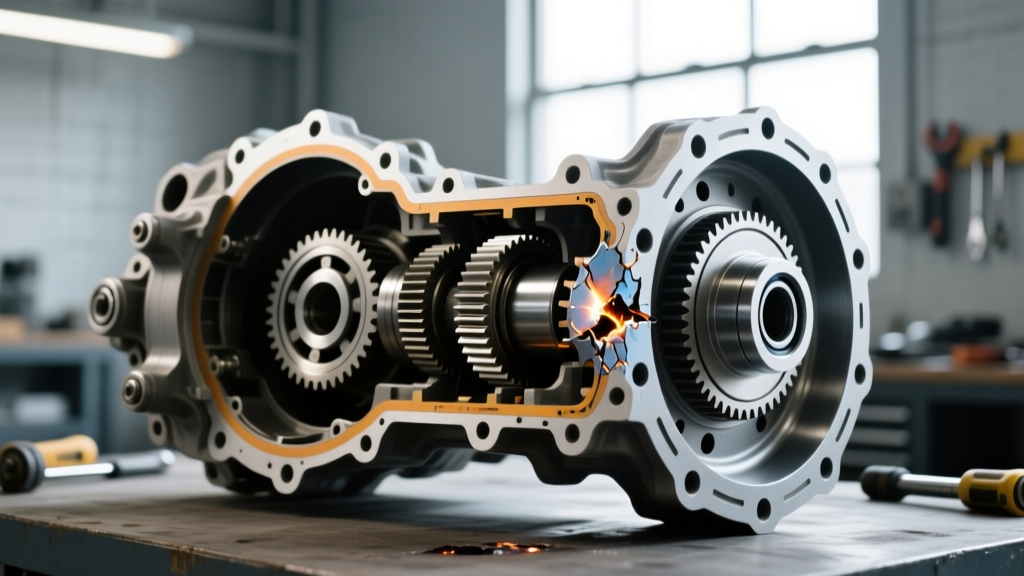
The hypoid gear geometry found in standard automotive and heavy-duty axles relies on extreme-pressure (EP) sliding friction. This sliding action inherently generates massive amounts of localized heat. When differential fluid temperatures exceed 250°F (121°C), the oxidation rate of standard and synthetic gear oils accelerates exponentially. According to tribology data published by Machinery Lubrication, every 18°F (10°C) increase in operating temperature halves the useful life of the lubricant. Once the fluid oxidizes, it forms varnish and sludge, leading to starved pinion bearings, scored ring gears, and ultimately, a complete axle rebuild.
Stamped Steel vs. Cast Aluminum: A Thermal Dynamics Comparison
Original Equipment Manufacturer (OEM) differential covers are typically manufactured from stamped steel. While cost-effective for mass production, stamped steel acts as a thermal insulator rather than a heat sink. Furthermore, the internal clearance between the ring gear and the smooth steel cover creates a 'dead zone' where fluid pools and stagnates, away from the splashing action of the rotating gears.
Upgrading to a finned, cast-aluminum differential cover fundamentally alters the thermal dynamics of the axle housing. Aluminum possesses a thermal conductivity approximately 15 times greater than steel. When combined with external cooling fins and internal fluid-direction baffles, aftermarket covers actively wick heat away from the gear oil and dissipate it into the ambient airstream.
Cover Architecture and Fluid Capacity Matrix
Increasing the fluid volume is one of the most effective ways to lower equilibrium temperatures. A larger sump means more fluid is available to absorb heat before reaching critical thresholds. Below is a comparison of common heavy-duty axle configurations and the impact of deep-sump cover upgrades.
| Axle Model | OEM Cover Material | Stock Fluid Capacity | Deep Sump Capacity | Avg. Temp Reduction |
|---|---|---|---|---|
| GM AAM 11.5" (14-Bolt) | Stamped Steel | 3.5 Quarts | 5.2 Quarts | 25°F - 35°F |
| Ford 10.5" (12-Bolt) | Stamped Steel | 3.0 Quarts | 4.6 Quarts | 20°F - 30°F |
| Dana 80 (Heavy Duty) | Stamped Steel | 4.0 Quarts | 6.5 Quarts | 30°F - 45°F |
| Jeep Dana 44 (Rubicon) | Cast Aluminum (Stock) | 2.0 Quarts | 2.8 Quarts | 15°F - 20°F |
*Data reflects synthetic 75W-90 or 75W-140 gear oil under sustained highway towing loads.
Active vs. Passive Cooling Strategies
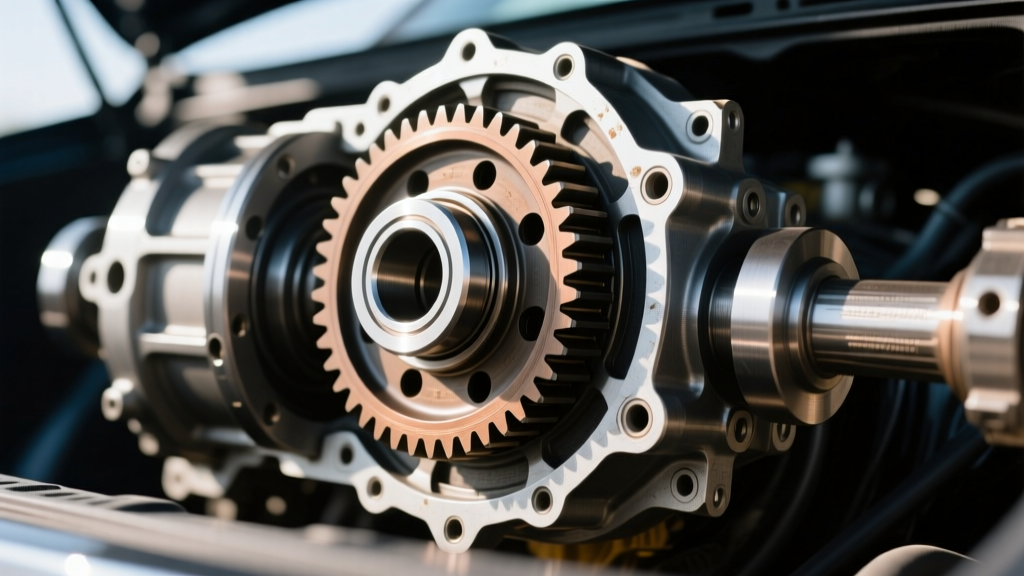
For standard daily driving and light towing, passive cooling via a finned aluminum cover—such as those engineered by Mag-Hytec or AFE Power—is entirely sufficient. These covers utilize external ribbing to maximize surface area and internal baffles to direct oil flow over the hottest components, namely the pinion bearing and the ring gear contact patch.
When to Consider Active Differential Cooling
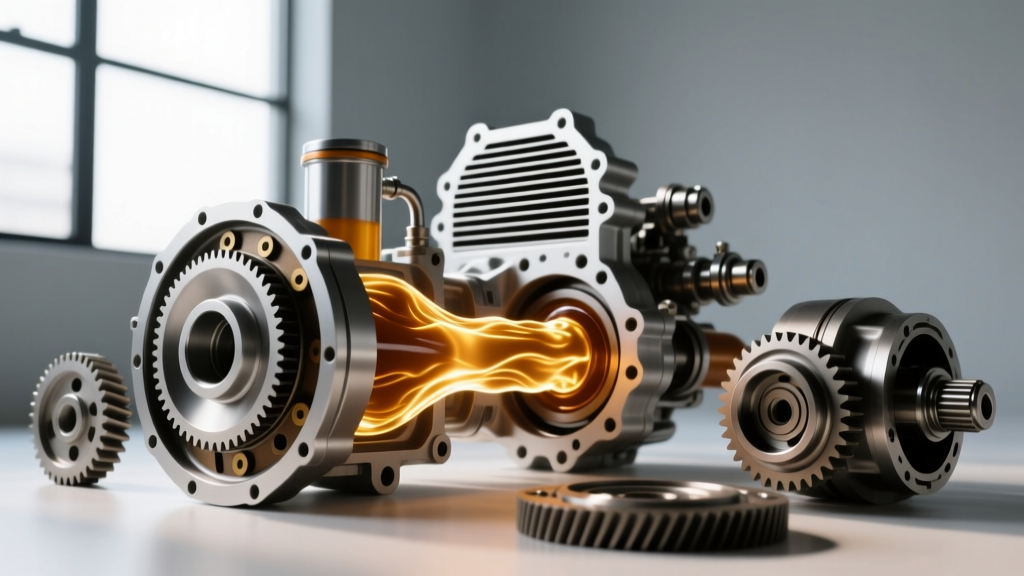
If your application involves sustained low-speed, high-torque scenarios—such as rock crawling, heavy 5th-wheel towing up 6% mountain grades, or commercial fleet use in desert climates—passive airflow is insufficient. In these edge cases, active cooling systems are required. Active systems utilize a magnetic or PTO-driven fluid pump to draw hot gear oil from the axle sump, push it through a remote finned heat exchanger (often paired with a dedicated 12V electric fan), and return it to the pinion area. While an active cooler setup can cost between $600 and $1,200, it is a fraction of the rear end differential repair cost associated with replacing a heat-blued ring and pinion set.
Installation Protocols: Torque Specs and Sealing Best Practices
Upgrading your differential cover is not simply a matter of unbolting the old unit and slapping on a new one. Improper installation is a leading cause of post-upgrade fluid leaks and bearing contamination. When performing a differential cover upgrade alongside a fluid change, adhere to the following technical protocols:
- Surface Preparation: Scrape all old RTV silicone from the axle housing mating surface using a plastic gasket scraper. Follow up with a brake cleaner wipe to remove residual oils. Do not use abrasive metal pads, as steel bristles can fall into the carrier bearing assembly.
- Sealant Selection: If your aftermarket cover uses RTV instead of a reusable O-ring or gasket, use a high-temperature, oil-resistant silicone like Permatex Ultra Black (Part #81878). Apply a continuous 2mm bead, ensuring complete circles around all bolt holes.
- Torque Specifications: Overtightening cover bolts will warp the mating surface or strip the axle housing threads.
- GM AAM 11.5" (M10x1.5 bolts): Torque to 30-35 lb-ft in a crisscross pattern.
- Ford 10.5" 12-Bolt (3/8"-16 bolts): Torque to 28-33 lb-ft.
- Dana 44 / Dana 60 (3/8" bolts): Torque to 25-30 lb-ft.
- Magnetic Drain Plugs: Always ensure your new cover features a high-strength neodymium magnetic drain plug. During the first 5,000 miles post-installation, inspect this magnet for fine metallic fuzz. Large, jagged shards indicate imminent bearing failure.
The Financial Reality: Cover Upgrade vs. Rebuild Costs
To understand the true ROI of a differential cooling upgrade, we must analyze the anatomy of a thermal failure. When gear oil loses its viscosity and EP additives degrade, the pinion bearing is usually the first casualty. As the pinion bearing scores and develops excessive clearance, the pinion gear shifts out of its precise depth setting. This misalignment causes the ring and pinion teeth to clash, resulting in spalling, catastrophic tooth shearing, and carrier destruction.
2026 Cost Breakdown: The True Price of Thermal Failure
Based on current aftermarket parts pricing from industry leaders like Ring & Pinion and standard independent shop labor rates, here is what a heat-induced axle failure actually costs:
| Repair Component | Estimated Cost (Parts & Labor) |
|---|---|
| Master Bearing Kit (Timken/Koyo) | $180 - $350 |
| Ring and Pinion Gear Set (4.10 Ratio) | $300 - $650 |
| Carrier & Pinion Seals, Crush Sleeve | $50 - $120 |
| Labor (R&R Axle, Setup Pattern, Preload) | $900 - $1,600 |
| Fluid & Friction Modifier | $60 - $110 |
| Total Rear End Differential Repair Cost | $1,490 - $2,830+ |
Expert Insight: 'In high-torque diesel applications, the thermal expansion of the crush sleeve can artificially alter pinion bearing preload as the axle heats up and cools down. A deep-sump cover that maintains a stable, lower operating temperature doesn't just save the fluid; it preserves the mechanical preload geometry of the entire pinion assembly.'
Conclusion: Proactive Thermal Management
The math is undeniable. Investing $150 to $350 in a high-quality, finned cast-aluminum differential cover and an extra two quarts of premium synthetic 75W-140 gear oil yields a massive return on investment. By keeping fluid temperatures below the 220°F danger zone, you prevent oxidation, maintain pinion bearing preload, and ensure the hypoid gear set operates with a protective hydrodynamic film. In an era where heavy-duty trucks are subjected to unprecedented towing demands, managing your axle's thermal output is the single most effective way to avoid a devastating rear end differential repair cost and keep your drivetrain on the road, not on the lift.