The True Cost of Front Axle Neglect in 2026
When owners map out a preventive maintenance schedule for the WK2 (2011-2021) and WL (2022-present) platforms, the engine oil and transfer case often steal the spotlight. However, the Jeep Grand Cherokee front differential operates under immense stress, particularly when routing torque through the Quadra-Trac II or Quadra-Drive II systems. Neglecting this sealed, hypoid gear assembly leads to catastrophic bearing failure, ring and pinion scoring, and Electronic Limited Slip Differential (ELSD) clutch burnout.
As of 2026, replacement costs for a complete front axle assembly or a rebuilt unit easily exceed $2,800 to $4,500, depending on whether you drive a standard V6 Summit or a supercharged Trackhawk. Understanding the precise fluid costs, service intervals, and mechanical nuances of the American Axle Manufacturing (AAM) front units is the most cost-effective insurance policy you can buy for your drivetrain.
Dealership vs. Independent vs. DIY: Pricing Breakdown
Service pricing has shifted significantly over the last few years due to synthetic lubricant costs and rising shop labor rates. Below is a realistic 2026 pricing matrix for a standard fluid exchange on a Jeep Grand Cherokee front differential.
| Service Method | Estimated Cost (2026) | Parts & Materials Included | Labor / Time Investment |
|---|---|---|---|
| DIY (At-Home Extraction) | $35 - $55 | OEM Synthetic Gear Oil, Friction Modifier (if ELSD), Replacement Crush Washers | 45 - 60 Minutes |
| Independent 4x4 Shop | $95 - $145 | Aftermarket 75W-140 Synthetic, Generic Additive, Shop Supplies | 0.5 - 0.8 Billable Hours |
| Chrysler/Jeep Dealership | $160 - $230 | Mopar OEM Fluid, Mopar Additive, Factory Labor Rate ($165-$210/hr) | 0.8 - 1.2 Billable Hours |
Note: If your vehicle is equipped with the Quadra-Drive II ELSD system, ensure the shop includes the mandatory friction modifier. Many budget shops skip this step, resulting in severe clutch chatter during low-speed, tight-radius turns.
OEM Fluid Specifications: AAM M186 and M220 Axles
The modern Grand Cherokee utilizes AAM (American Axle Manufacturing) front axles. The V6 models typically house the AAM M186 IFS (Independent Front Suspension) axle, while V8, SRT, and diesel variants utilize the heavier-duty AAM M220. Both are reverse-rotation, disconnect-capable hypoid differentials.
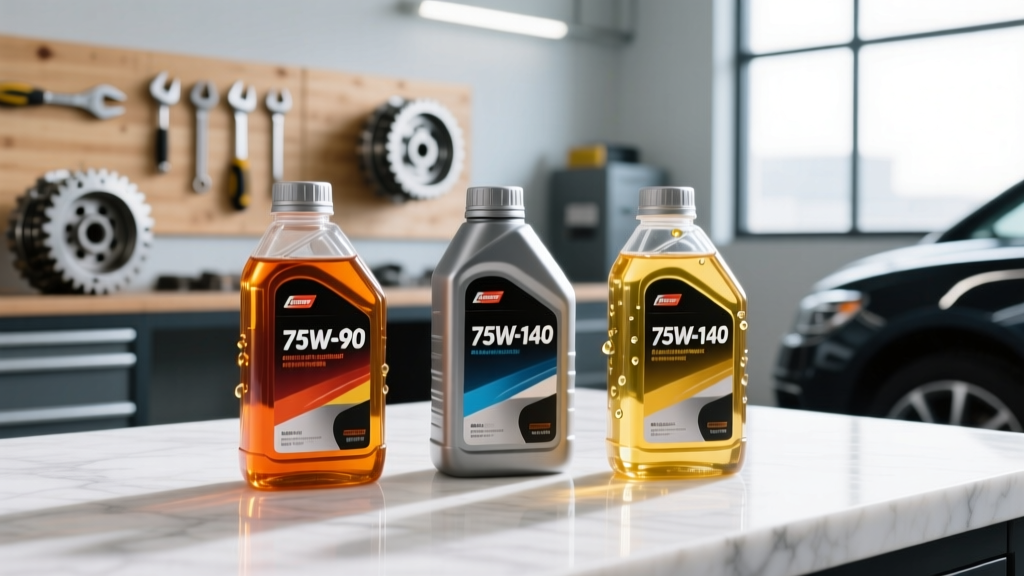
- Standard Fluid Spec: Mopar 75W-140 Synthetic Gear Lubricant (Part # 68218655AA or 05013477AA).
- Capacity: M186 requires approximately 0.95 quarts (0.9L); M220 requires approximately 1.1 quarts (1.05L).
- Friction Modifier: Mopar Trac-Lok / ELSD Additive (Part # 4318060AD). Exactly 2.5 oz is required for ELSD-equipped units.
While some aftermarket brands market 75W-90 as a 'universal' fit, the high-heat environment generated by the Grand Cherokee's front axle disconnect (FAD) actuator and aggressive towing profiles demands the shear stability of a true 75W-140 synthetic. You can verify exact OEM part numbers and fluid routing via the Mopar Parts Giant catalog.
Expert Drivetrain Tip: Never overfill the front differential. The AAM axles rely on precise fluid levels to prevent aeration. Aeration causes the ELSD clutch packs to overheat and the synthetic fluid to foam, drastically reducing its film strength. Fill exactly to the bottom edge of the fill plug threads.
Preventive Maintenance Procedure: Extraction and Torque Specs
One of the most frustrating design quirks of the WK2 and early WL front differentials is the absence of a traditional gravity drain plug on certain model years. To perform a complete fluid exchange, technicians must use a pneumatic or manual fluid evacuator.
Why You Need a Fluid Evacuator
If your AAM axle only features a single rear-facing fill plug, you cannot simply 'drain and fill.' You must insert a 1/4-inch extraction tube down into the lowest point of the differential sump. Pump out the old fluid until the line runs clear and dry. Attempting to flush the unit by spraying new fluid into it will only dilute the contaminated fluid and leave heavy metal particulates trapped in the bearing cages.
Step-by-Step Torque and Service Data
- Vehicle Preparation: Level the vehicle on jack stands. The front axle must be at normal ride height or perfectly level to ensure an accurate fill volume.
- Plug Removal: Use a 3/8-inch or 1/2-inch drive Allen socket (depending on the exact year). Clean the magnetic tip of the fill plug. A fine, glitter-like paste is normal; jagged metal shards indicate imminent bearing failure.
- Extraction: Extract 100% of the old fluid. If equipped with a drain plug, gravity drain first, then extract the remainder.
- Filling: Inject the friction modifier first, followed by the 75W-140 synthetic until it weeps from the fill hole.
- Torque Specification: Reinstall the fill plug and torque precisely to 25 lb-ft (34 Nm). Do not exceed this, as the aluminum housing threads are highly susceptible to stripping.
For deeper technical discussions on AAM axle teardowns and FAD actuator failures, the technical archives at JeepGarage.org remain an invaluable resource for WK2 and WL owners.
Edge Cases: Transfer Case vs. Differential Whine
Before spending money on a differential rebuild or premium fluids, you must accurately diagnose the source of driveline noise. A common pitfall in the Grand Cherokee community is misattributing a high-pitched whine to the front differential when the actual culprit is the transfer case.
The NV146 / NV245 Chain Stretch Phenomenon
The BorgWarner transfer cases used in these platforms rely on a heavy-duty drive chain to transfer torque to the front output shaft. Over 80,000 to 100,000 miles, this chain stretches. When it stretches, it slaps against the internal tensioners and housing, creating a whine or grinding noise that travels down the front driveshaft, making it sound exactly like a failing front ring and pinion.
- Differential Whine: Usually changes pitch strictly in correlation with vehicle speed and load (acceleration vs. deceleration). Often accompanied by physical vibration in the front floorboards.
- Transfer Case Chain Whine: Often more prominent in 4WD Auto mode under load, and may be accompanied by a 'clunk' when shifting from Park to Drive due to chain slack.
Furthermore, inspect the front output shaft seal on the transfer case. A failed seal can allow transfer case fluid to migrate down the front driveshaft yoke, or conversely, allow differential fluid to be drawn up into the transfer case, leaving the front differential starved of lubrication. Always check both fluid levels simultaneously during your 30,000-mile severe-duty preventive maintenance intervals.
By adhering to these precise OEM specifications, utilizing the correct extraction tools, and understanding the true cost variables in 2026, you can easily extend the life of your Jeep Grand Cherokee front differential well past the 150,000-mile mark without catastrophic drivetrain failure.