The Engineering Reality of Go-Kart Axles in 2026
When building or upgrading an off-road buggy, trail kart, or high-torque electric shifter, selecting the right go kart differential axle setup dictates whether you conquer mud or snap an axle in a corner. While traditional paved-track sprint karts rely on solid live axles to manipulate chassis dynamics, off-road and two-seat karts require a differential to prevent excessive tire scrub, drivetrain binding, and premature axle failure. As high-output engine swaps (like the Predator 420cc Hemi) and 10kW electric motor conversions dominate the 2026 custom kart scene, understanding the mechanical divide between open differentials and limited-slip/locking spool setups is critical for traction and survivability.
Why Sprint Karts Avoid Differentials
Before diving into off-road and trail applications, it is vital to understand why paved-track karts avoid differentials entirely. Karts lack a traditional suspension system; instead, they rely on the jacking effect. During cornering, a solid rear axle forces the inside rear tire to lift off the pavement, effectively turning the kart into a three-wheeled vehicle that can rotate freely. Installing an open differential on a sprint kart ruins this geometry, causing the inside wheel to spin endlessly while the kart understeers straight into the barriers. However, for trail riding, mud bogging, and high-speed desert running, a differential is non-negotiable to allow the outer wheel to rotate faster than the inner wheel during turns.
Open Differential Axles: The Manco 2183 Standard
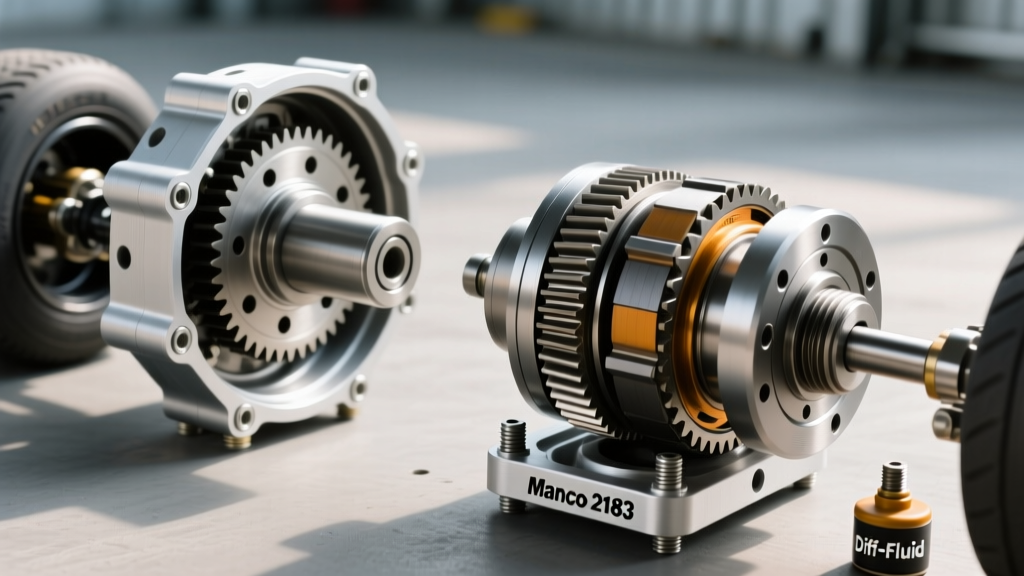
The undisputed workhorse of the entry-level and mid-tier off-road kart market is the open differential, with the Manco 2183 (and its Comet Industries equivalents) being the most ubiquitous. Designed for a 1-inch solid steel axle and featuring a 12-tooth #35 chain sprocket, this unit retails between $130 and $160. Inside the cast housing, a set of four spider gears and two side gears allow for speed differentiation between the left and right axle halves.
Internal Anatomy and Failure Points
While adequate for 6.5HP to 13HP gas engines (such as the Honda GX200 or Predator 212), the standard open go kart differential axle setup has severe limitations under high torque. The primary failure point is the 1/4-inch keyway. When a kart encounters high-traction environments (like packed dirt or mud) and the throttle is pinned, the shock load can shear the keyway, stripping the axle and the sprocket hub. Furthermore, open diffs suffer from the classic 'one-wheel peel'—if one rear tire loses traction, 100% of the engine's torque is routed to the spinning wheel, leaving the kart stranded.
Limited-Slip and Locking Spool Upgrades
To combat traction loss, advanced builders in 2026 are turning to Limited Slip Differentials (LSD) or locking spools. True clutch-type LSDs are rare in dedicated karting due to packaging constraints, but builders frequently adapt ATV and golf cart units, or utilize billet locking spools.
Adapting ATV LSDs and Billet Spools
A popular upgrade path involves adapting a Kazuma 150cc CVT differential or a Yamaha golf cart Posi-traction unit to a custom 1-inch 4140 Chromoly axle. These units utilize internal clutch packs or centrifugal weights to bias torque to the wheel with traction. Alternatively, for pure off-road and mud karts, builders opt for a billet locking spool (often CNC-machined from 6061-T6 aluminum). A spool locks both axle halves together permanently, functioning identically to a solid live axle but allowing for a centralized chain-drive sprocket. While spools cost between $220 and $380 and induce severe understeer on paved surfaces, they provide unparalleled forward bite in deep mud and loose sand.
Head-to-Head: Open vs. LSD Go Kart Differential Axle
| Feature | Open Differential (e.g., Manco 2183) | LSD / Locking Spool (e.g., Billet Spool / ATV Adaptation) |
|---|---|---|
| Traction in Mud/Sand | Poor (One-wheel peel) | Excellent (50/50 torque split) |
| Pavement Cornering | Predictable, low tire scrub | Aggressive understeer, high tire wear |
| Price Range (2026) | $130 - $160 | $250 - $450+ |
| Axle Requirement | Standard 1045 Carbon Steel (1-inch) | Upgraded 4140 Chromoly (1-inch or splined) |
| Maintenance | Grease packing every 20 hours | Clutch pack fluid changes / Zero maintenance (Spool) |
Lubrication: Grease vs. Gear Oil in Kart Diffs
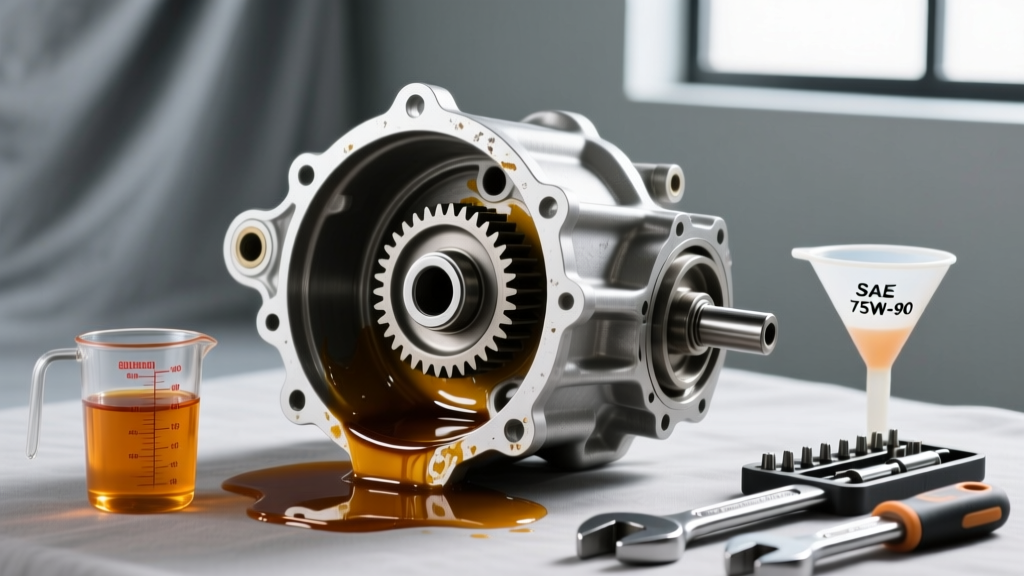
Because the diff-fluid category extends to all forms of differential lubrication, it is crucial to note that most dedicated go-kart differentials are unsealed. They lack the rubber lip seals and breather tubes found on automotive axles like the Ford 8.8 or Dana 44. Therefore, traditional 75W-90 gear oil will simply leak out of the Manco 2183 casing, attracting dirt and destroying the internal bushings.
NLGI #2 vs. 85W-140 Synthetic
For unsealed open kart differentials, the industry standard is a high-tack NLGI #2 Lithium Complex Grease (such as Lucas Oil Red 'N Tacky). Builders must pull the sprocket housing and hand-pack the spider gears with approximately 4 to 6 ounces of grease every 20 hours of operation. Conversely, if you are building a sealed, custom-machined differential housing for an adapted ATV LSD, you must use a heavy 85W-140 synthetic gear oil (like Royal Purple Max Gear). The high viscosity is required to cushion the shock loads of a heavy off-road kart dropping off a berm, and the limited-slip friction modifiers prevent the clutch packs from chattering during tight turns.
Expert Insight: Never use standard automotive limited-slip additive in a kart wet-brake or centrifugal clutch system. The friction modifiers will contaminate the brake rotors if the axle seals weep, resulting in catastrophic braking failure on downhill trails.
Assembly, Bearings, and Torque Specifications
Installing a go kart differential axle requires precision alignment to prevent drivetrain binding and premature bearing failure. Most off-road karts utilize UC205-16 pillow block bearings (1-inch bore). If the bearing carriers are misaligned by even a few millimeters, the differential housing will bind under load, generating massive heat and snapping the axle.
- Axle Material: Upgrade to 4140 Chromoly if running engines over 15HP or high-torque electric motors.
- Bearing Carrier Bolts: 3/8-16 Grade 8 hardware, torqued to 30-35 ft-lbs with medium-strength threadlocker.
- Pillow Block Set Screws: Torque to 10-12 ft-lbs. Always apply a dab of silicone over the set screws to prevent dirt intrusion.
- Sprocket Hub Bolts: 5/16-18 Grade 8, torqued to 25 ft-lbs in a star pattern.
- Keyway Locking: Use Loctite 242 (Blue) on all keyways and set screws to prevent vibration-induced backing out.
Diagnosing Differential Noise and Wear
Because kart differentials are exposed to extreme environments, auditory diagnosis is your first line of defense against catastrophic failure. A high-pitched whining noise under deceleration typically indicates worn spider gear bushings or a lack of NLGI #2 grease, causing metal-on-metal friction. A sharp clunking sound when engaging the throttle points to a sheared cross-pin or excessive backlash between the side gears and the axle splines. If you hear a rhythmic clicking that speeds up with the kart's momentum, immediately inspect the #35 drive chain for stiff links and check the differential sprocket for hooked or worn teeth.
2026 Buyer's Verdict
For weekend trail riders, family buggies, and low-horsepower builds, the standard open go kart differential axle remains the most cost-effective and predictable choice. However, the 2026 landscape of off-road karting is defined by massive torque. If you are swapping in a Predator 420cc, a turbocharged clone engine, or a high-voltage electric powertrain, the open differential will inevitably fail. Upgrading to a locking spool or adapted LSD on a 4140 Chromoly axle is a mandatory investment for serious traction, ensuring that your kart puts power to the dirt rather than tearing up its own drivetrain.
For more technical build guides and component sourcing, consult industry staples like BMI Karts for drivetrain components, Comet Industries for torque converter and drive dynamics, and the extensive fabrication archives at DIY Go Karts.