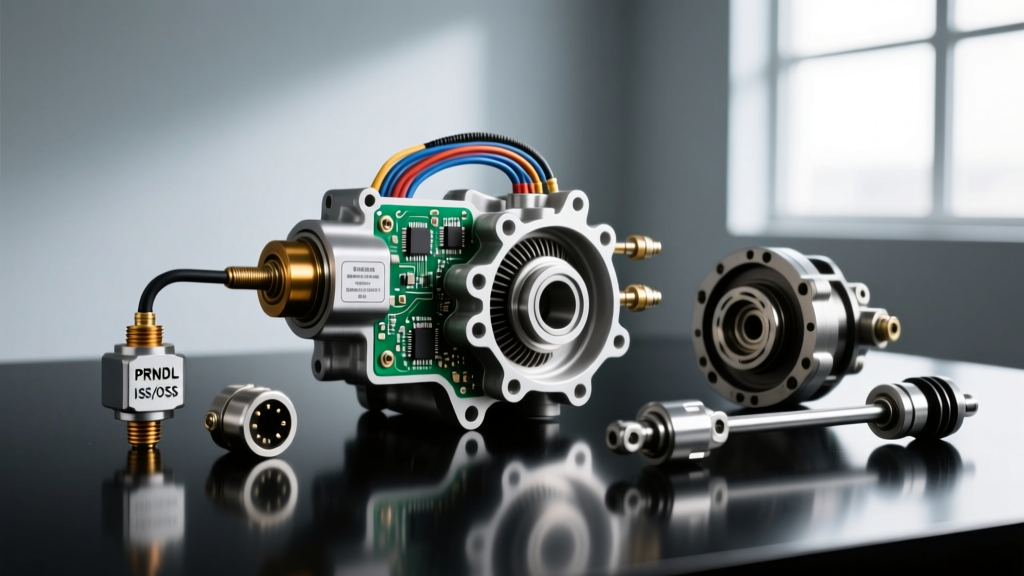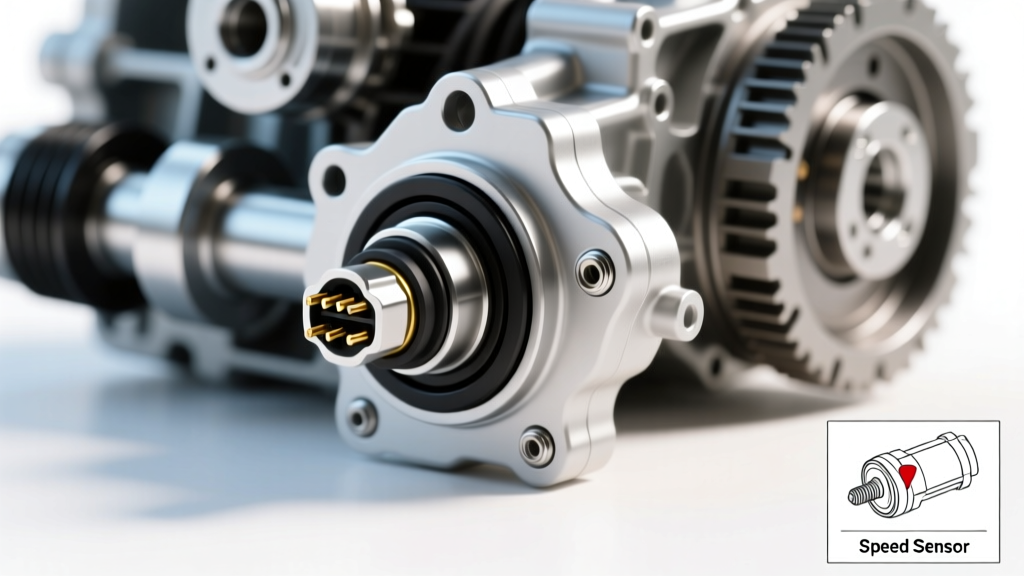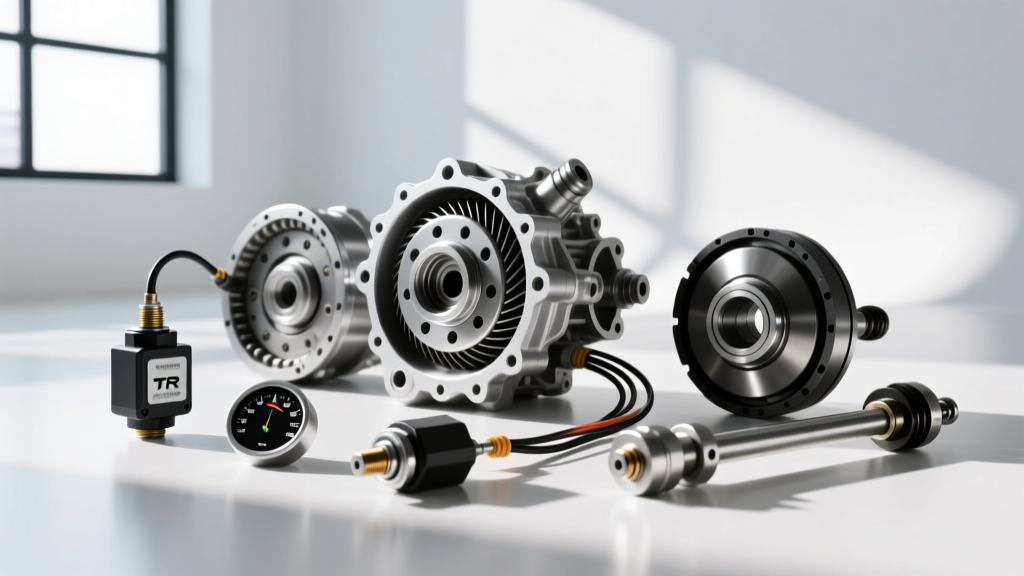
When a modern automatic transmission enters limp mode, exhibits erratic shifting, or refuses to crank, the diagnostic trail frequently leads to the electronic sensor network. Two of the most critical—and frequently confused—components are the Transmission Range (TR) / Position Sensor and the Input/Output Speed Sensors. While a failing speed sensor triggers codes like P0717 or P0722, a defective position sensor throws P0705 or P0706. Because both dictate shift scheduling and torque management, owners often wonder how a complex transmission position sensor replacement compares to the average transmission speed sensor replacement cost.
The Diagnostic Divide: Position vs. Speed Sensor Failures
To understand the repair implications, we must first separate the roles of these sensors. The Transmission Control Module (TCM) relies on the Input Speed Sensor (ISS) and Output Speed Sensor (OSS) to calculate the current gear ratio and manage shift timing. If the TCM detects a discrepancy between the ISS and OSS readings, it sets a gear ratio code (e.g., P0731 for 1st gear incorrect ratio) and commands maximum line pressure to prevent clutch slip.
Conversely, the Transmission Position Sensor (often called the TR sensor, PRNDL switch, or Internal Mode Switch) tells the TCM the physical position of the manual valve inside the valve body. It dictates reverse light illumination, starter relay engagement (Neutral Safety), and baseline shift scheduling. If the TR sensor fails or falls out of calibration, the TCM may default to a 'fail-safe' mode, assuming the vehicle is in a forward gear even when in Park, or it may inhibit shifting entirely to prevent mechanical bind-up.
Because both sensor networks feed the TCM's rationality algorithms, a failing TR sensor can mimic speed sensor failures. For instance, if the TR sensor momentarily drops its 'Drive' signal while the vehicle is moving, the TCM may interpret the sudden loss of load data as a speed sensor failure, setting overlapping codes that confuse amateur diagnostics.
2026 Cost Breakdown: TR Sensor vs. Speed Sensor
When evaluating the transmission speed sensor replacement cost, you are typically looking at a highly accessible, external repair. Most ISS and OSS units thread directly into the outside of the transmission case or slide into the tail housing. The TR sensor, however, varies wildly in architecture depending on the transmission family. Below is a 2026 market comparison based on current dealership and independent shop labor rates ($140–$190/hour).
| Component Architecture | Typical Part Cost (OEM) | Labor Time | Estimated Total (2026) |
|---|---|---|---|
| External Speed Sensor (OSS/ISS) | $25 - $65 | 0.5 - 1.0 hr | $95 - $255 |
| External TR Sensor (e.g., Ford 6R80) | $45 - $110 | 0.8 - 1.2 hr | $155 - $330 |
| Internal Mode Switch (e.g., GM 6L80) | $120 - $180 | 3.5 - 4.5 hr | $610 - $1,035 |
| Integrated Mechatronic (e.g., ZF 8HP) | $400 - $1,200+ | 5.0 - 8.0 hr | $1,100 - $2,700+ |
As the data illustrates, while the transmission speed sensor replacement cost rarely exceeds $250, replacing an internal transmission position sensor can easily cross the $1,000 threshold due to the invasive labor required to access the valve body.
Expert Replacement Guide: GM 6L80 Internal Mode Switch (IMS)
The GM 6L80 and 6L90 transmissions abandoned the traditional external neutral safety switch in favor of the Internal Mode Switch (IMS). This position sensor is mounted directly onto the manual shaft inside the transmission pan. When a 6L80 throws a P0706 (Transmission Range Sensor Circuit Range/Performance) or exhibits a no-crank condition, the IMS is the primary suspect.
Part Selection and Sourcing
Always use OEM or premium-tier sensors for the 6L80 IMS. The ACDelco 24236939 is the definitive OEM replacement for most 2006-2014 applications. Aftermarket alternatives often suffer from poor Hall-effect sensor calibration, leading to recurring P0705 codes within 5,000 miles. You can cross-reference fitment via the RockAuto Parts Database to ensure compatibility with your specific RPO code.
Removal and Installation Procedure
Replacing the 6L80 IMS requires dropping the transmission pan, removing the filter, and unbolting the manual detent lever from the manual shaft. Expert technicians follow these critical torque and alignment specifications:
- Pan Bolt Torque: 9 Nm (80 lb-in). Do not overtighten; the aluminum pan rails warp easily, causing permanent leaks.
- IMS Mounting Bolts: 9 Nm (80 lb-in).
- Manual Shaft Nut: 23 Nm (17 lb-ft). Use a line wrench or detent lever holder to prevent the shaft from rotating inside the valve body.
The Neutral Alignment Protocol
The most common mistake during a 6L80 position sensor replacement is failing to align the IMS to the physical manual valve. The IMS features a small alignment tab that must mate perfectly with the manual shaft's flat spot when the transmission is in Neutral. GM specifies the use of alignment tool J-41364 (or an equivalent 3/32' drift pin) inserted through the IMS housing into the alignment hole on the switch body. If this pin does not drop in freely after the transmission is shifted into Neutral via the detent lever, the sensor is misaligned and will throw immediate rationality codes upon startup.
External TR Sensors: Ford 6R80 and Chrysler Applications
Unlike the GM 6L80, the Ford 6R80 utilizes an external Transmission Range Sensor mounted on the driver's side of the transmission case, directly over the manual shaft lever. This design keeps the transmission position sensor replacement cost much closer to the standard transmission speed sensor replacement cost.
When replacing the Ford 6R80 TR sensor (Motorcraft SW-6753 or equivalent), the alignment procedure relies on matching the alignment marks on the sensor housing with the alignment marks on the manual lever. The mounting bolts must be torqued to exactly 10 Nm (89 lb-in). A common edge case on the 6R80 is corrosion on the 12-way pigtail connector; always apply dielectric grease and inspect the pins for green oxidation, which can cause intermittent P0707 (Circuit Low) codes even with a brand-new sensor.
The ZF 8HP Challenge: Integrated Mechatronic Sensors
The ZF 8HP series (found in BMW, Audi, Jaguar, and Chrysler vehicles) represents the pinnacle of transmission integration. The position sensor is not a standalone component; it is a series of Hall-effect sensors embedded directly into the Mechatronic unit (the combined valve body and TCM). If the range sensor fails, ZF's official service protocol dictates replacing the entire Mechatronic assembly, which requires removing the transmission, specialized programming, and security gateway unlocking.
However, as of 2026, advanced aftermarket repair facilities are successfully replacing just the Mechatronic sleeve and the internal sensor board, reducing the repair cost from over $3,000 to approximately $1,200. This requires specialized clean-room environments to prevent particulate contamination of the delicate hydraulic valves.
Calibration, Fluid Refill, and Best Practices
Any transmission position sensor replacement that involves dropping the pan necessitates a precise fluid refill procedure. Modern transmissions do not use traditional dipsticks; they rely on temperature-dependent standpipe overflow plugs.
GM 6L80 / 6L90 Fluid Protocol
- Fluid Type: Dexron VI (Strictly required; older Dexron III will degrade the IMS contacts and clutch friction materials).
- Fill Volume: Approximately 6.0 Liters for a pan and filter drop.
- Temperature Check: Connect a bi-directional scan tool to monitor the Transmission Fluid Temperature (TFT). The fluid level must be checked with the TFT between 30°C and 50°C (86°F - 122°F) while the vehicle is level and idling in Park. If the fluid is below 30°C, the standpipe will overfill; if above 50°C, it will underfill, leading to immediate pump cavitation.
Final TCM Adaptation Reset
After installing a new TR sensor or IMS, it is a best practice to perform a 'TCM Adaptation Reset' or 'Shift Learn Procedure' via a professional-grade scan tool. This clears the learned clutch volume indices (CVI) and forces the TCM to re-map the shift solenoids based on the new sensor's exact voltage gradients. Skipping this step often results in harsh 2-3 shifts or delayed engagements during the first 50 miles of driving.
Summary
While the transmission speed sensor replacement cost remains one of the most affordable drivetrain repairs, transmission position sensor replacements require a nuanced understanding of internal architecture. Whether you are aligning a GM 6L80 Internal Mode Switch or diagnosing a ZF 8HP Mechatronic fault, adhering to exact torque specifications, utilizing OEM components, and following temperature-based fluid protocols are the hallmarks of a permanent, expert-level repair.