The Critical Role of Speed Sensors in the GM 4L60E
The GM 4L60E is one of the most prolific 4-speed automatic transmissions ever produced, powering millions of Chevrolet, GMC, and Cadillac vehicles from the early 1990s through the 2010s. Unlike its hydraulic predecessor, the 700R4, the 4L60E relies entirely on a Transmission Control Module (TCM) to dictate shift points, line pressure, and torque converter lockup. At the heart of this electronic ecosystem is the Vehicle Speed Sensor (VSS). When this component fails, the resulting transmission sensor and shifting problems can range from minor annoyances to catastrophic limp-mode defaults. In this comprehensive buyer's guide and diagnostic manual, we will detail the exact 4L60E transmission speed sensor location, analyze how failures manifest on the road, and compare the best replacement options available in 2026.
Pinpointing the 4L60E Transmission Speed Sensor Location
Before you can diagnose or replace the component, you must know where to look. The 4L60E transmission speed sensor location is on the extension housing (commonly referred to as the tail shaft housing). Specifically, it is mounted on the driver’s side of the housing, positioned just above the output shaft yoke where the driveshaft connects.
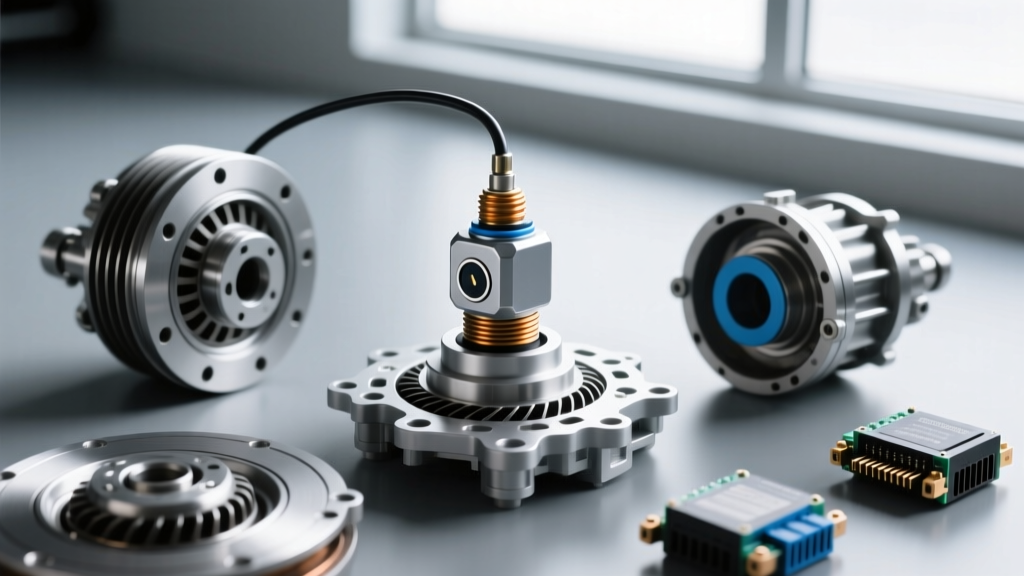
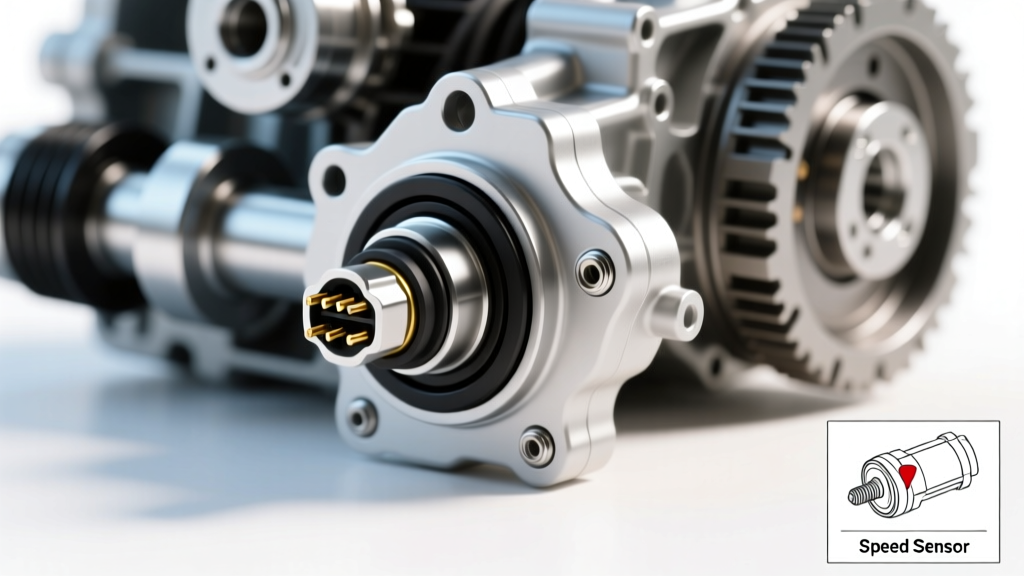
The sensor itself is a Variable Reluctance (VR) magnetic pickup. It protrudes into the housing to read the teeth of the reluctor wheel (tone ring) pressed onto the output shaft. As the output shaft spins, the reluctor teeth pass the magnetic tip of the sensor, generating an alternating current (AC) sine wave. The frequency and amplitude of this AC voltage increase proportionally with vehicle speed, providing the TCM with the data it needs to calculate shift timing.
Expert Note: Do not confuse the VSS on the tail housing with the Input Speed Sensor (ISS) found on later generation transmissions like the 6L80 or 8L90. The 4L60E primarily calculates turbine speed via the Throttle Position Sensor (TPS) and engine RPM data, relying on the tail-shaft VSS for actual vehicle road speed.
How a Failing Speed Sensor Triggers Shifting Problems
When the TCM loses the VSS signal, it is essentially driving blind. It cannot determine how fast the vehicle is moving, which leads to a cascade of drivability and shifting problems. Here are the most common symptoms of a failing 4L60E speed sensor:
1. Torque Converter Clutch (TCC) Lockup Failure
The TCM requires a reliable VSS signal to engage the Torque Converter Clutch, typically in 3rd or 4th gear at speeds above 45 MPH. If the sensor signal drops out, the TCM will immediately disable TCC lockup to prevent engine stalling. You will notice this as a sudden spike in RPMs at highway speeds and a significant drop in fuel economy.
2. Harsh or Delayed Shifts
Shift firmness in the 4L60E is controlled by the Pressure Control (PC) solenoid. The TCM modulates line pressure based on engine load and vehicle speed. Without speed data, the TCM defaults to a high-line-pressure safety map to prevent clutch pack slippage. This results in notoriously harsh, jarring 1-2 and 2-3 shifts that feel like you've been rear-ended.
3. Default to 2nd or 3rd Gear (Limp Mode)
If the TCM detects a complete circuit failure or an irrational signal (e.g., a P0722 code), it will trigger Fail-Safe or 'Limp' mode. The transmission will lock itself into 2nd or 3rd gear to allow you to limp to a mechanic, completely disabling 1st gear starts and 4th gear overdrive.
4. Inoperative Speedometer and ABS Warnings
In many 1990s and early 2000s GM trucks (like the C/K 1500 and Silverado), the VSS signal is routed from the transmission to the instrument cluster, and then to the TCM and ABS module. A dead sensor means a dead speedometer, and may trigger the ABS warning light since the anti-lock system also requires wheel speed data.
Buyer's Guide: OEM vs. Aftermarket Speed Sensors
When addressing transmission sensor and shifting problems, part selection is critical. The 4L60E is highly sensitive to signal degradation caused by cheap internal windings or poorly molded O-ring grooves. Below is a comparison of the top replacement options on the market.
| Brand / Part Number | Type | Est. Price (2026) | Connector Quality | Warranty |
|---|---|---|---|---|
| ACDelco 213-3243 | OEM (Original Equipment) | $45 - $65 | Factory Exact (Delphi) | 2-Year / Unlimited Miles |
| Standard Motor Products SC114 | Premium Aftermarket | $30 - $40 | High (OEM Supplier) | 3-Year / 36,000 Miles |
| WVE by NTK 5S1431 | Mid-Range Aftermarket | $22 - $28 | Good | 2-Year / Unlimited Miles |
| Dorman 917-614 | Budget / Value | $12 - $18 | Fair (Prone to brittle pins) | Limited Lifetime |
Our Verdict: For a transmission as sensitive to voltage variance as the 4L60E, we strongly recommend the ACDelco 213-3243. Budget sensors often feature weaker magnetic cores that output low-amplitude sine waves at low speeds, causing the TCM to miscalculate shift points during city driving. You can source genuine ACDelco components directly through authorized distributors or verified catalog platforms like ACDelco's official parts portal.
Advanced Diagnostics: Testing the Variable Reluctance Sensor
Before throwing parts at the problem, verify the sensor is actually the culprit. Wiring harness chafing near the bellhousing or a cracked reluctor ring can mimic a bad sensor. According to diagnostic standards outlined by industry authorities like OBD-Codes for P0722, you should perform the following tests:
- Resistance Test (Static): Disconnect the sensor and set your multimeter to Ohms. Measure across the two sensor pins. A healthy 4L60E VSS should read between 1,000 and 2,500 ohms at room temperature. An open circuit (OL) or a dead short means the internal coil is destroyed.
- AC Voltage Test (Dynamic): Safely elevate the rear axle on jack stands. Connect the multimeter to the sensor pins (set to AC Volts). Start the engine and shift into Drive. As the driveshaft spins, you should see the AC voltage climb from roughly 0.5V at idle to over 40V at highway simulation speeds. If voltage remains at zero, check the reluctor wheel for missing teeth.
- Wiring Continuity: Check the harness from the transmission plug to the TCM/PCM for continuity. Look for melted insulation near the exhaust crossover pipes, a common failure point on GM trucks.
Step-by-Step Replacement and Torque Specifications
Replacing the sensor at the 4L60E transmission speed sensor location is a straightforward job, but improper installation will result in fluid leaks or damaged sensor tips.
Tools and Materials Required
- New VSS (ACDelco 213-3243)
- 7/32-inch or 5mm socket (for the hold-down bolt)
- Transmission fluid (Dexron VI)
- Shop towels and safety glasses
Installation Procedure
- Disconnect the Battery: Reset the TCM and prevent electrical shorts by disconnecting the negative battery terminal.
- Locate and Disconnect: Crawl under the vehicle and locate the sensor on the driver-side tail shaft. Press the tab and unplug the electrical connector.
- Remove the Hold-Down Bolt: Use your 7/32-inch socket to remove the M6 x 1.0 flange bolt. Keep track of this bolt; they are easily dropped into the exhaust crossmembers.
- Extract the Sensor: Twist the sensor gently and pull it straight out. Expect a small amount of Dexron VI fluid to leak from the tail shaft bore. This is normal; you will not drain the entire pan.
- Lubricate the O-Ring: Critical Step. Coat the new sensor's rubber O-ring with fresh Dexron VI fluid. Installing it dry will pinch and cut the O-ring, guaranteeing a tail-housing leak within 500 miles.
- Seat and Torque: Push the new sensor into the bore until it seats fully against the reluctor wheel. Reinstall the M6 bolt and torque it to exactly 11 Nm (97 lb-in). Do not overtighten, as the aluminum extension housing threads strip easily.
- Top Off Fluid: Check the transmission dipstick with the engine running and add Dexron VI as necessary to replace the lost fluid.
Common OBD-II Trouble Codes to Monitor
After replacement, use an OBD-II scanner to clear any lingering codes. If your shifting problems persist, cross-reference these specific codes:
- P0722: Output Speed Sensor Circuit No Signal. Usually indicates a dead sensor, severed wire, or completely stripped reluctor ring.
- P0723: Output Speed Sensor Circuit Intermittent. Often caused by a failing wiring harness connector or excessive metallic debris on the sensor's magnetic tip.
- P0502: Vehicle Speed Sensor 'A' Circuit Low Input. Frequently triggered when the sensor is installed dry and the O-ring binds, preventing the sensor from seating fully against the tone ring.
Final Thoughts on 4L60E Drivability
Addressing transmission sensor and shifting problems on the 4L60E doesn't always require a $3,000 rebuild. By understanding the precise 4L60E transmission speed sensor location, utilizing a multimeter to verify the AC sine wave, and investing in OEM-tier components like the ACDelco 213-3243, you can restore factory-crisp shifting and TCC lockup for under $60. Always respect the 97 lb-in torque spec, keep your O-rings lubricated, and ensure your wiring harness is free from exhaust heat damage to guarantee long-term reliability on the road.