The Engineering Behind Toyota Differentials: LSD Architectures
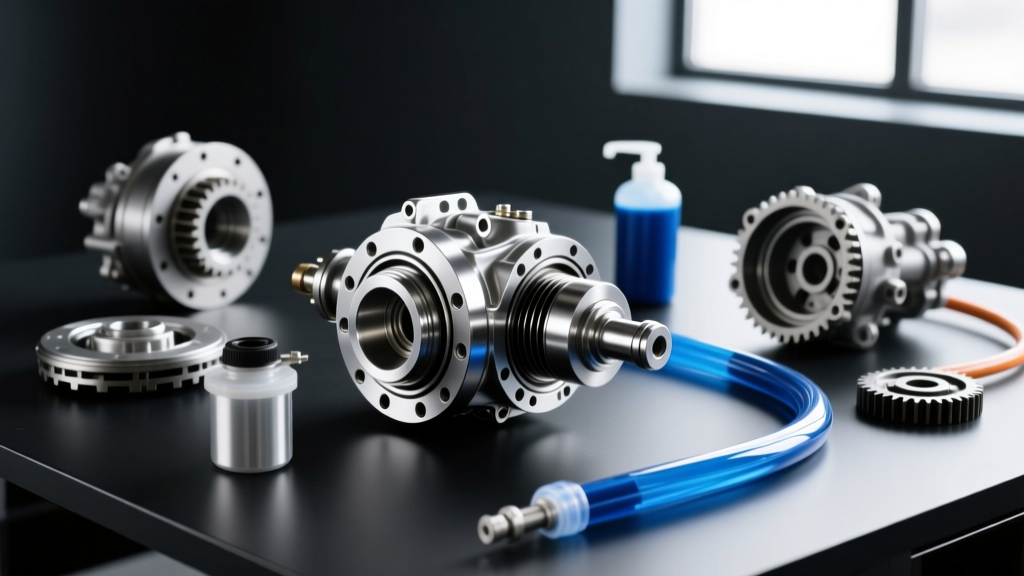
When evaluating the off-road and track capabilities of modern Toyota trucks and sports cars, the drivetrain's torque distribution is paramount. While open differentials suffice for dry pavement, Toyota differentials equipped with Limited Slip (LSD) technology are what allow vehicles like the Tacoma TRD Sport, 4Runner, and GR86 to maintain forward momentum when traction is compromised. As of the 2026 model year, Toyota utilizes two primary LSD architectures across its lineup: the traditional clutch-type LSD (often branded under the TRD umbrella) and the helical gear-driven Torsen LSD. Understanding the mechanical operation, fluid requirements, and precise maintenance protocols of these units is critical for maximizing drivetrain longevity and preventing catastrophic clutch pack failure.
Clutch-Type vs. Torsen: Operational Mechanics
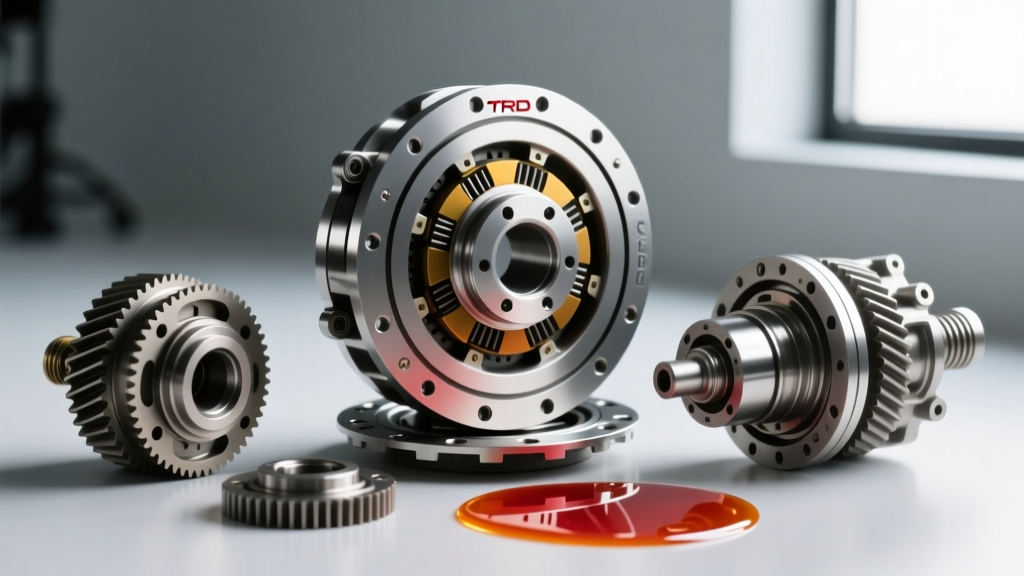
The clutch-type LSD, commonly found in the rear axles of the Tacoma TRD Sport and older 4Runner models, relies on a series of alternating friction and steel clutch packs positioned behind the side gears. An S-spring (or pre-load spring) sits between the side gears, applying constant outward pressure against the clutch packs. When one wheel loses traction and begins to spin, the torque differential forces the side gear to push harder against the clutch pack, increasing the friction locking force and transferring torque to the wheel with grip.
Conversely, the Torsen (Torque-Sensing) LSD, utilized in the Toyota GR86 and Supra, operates without clutch packs. Instead, it uses a complex arrangement of helical planetary gears. Under normal conditions, it acts as an open differential. However, when a torque imbalance occurs, the helical gears bind against the differential housing, creating friction that multiplies torque to the high-traction wheel. Because there are no clutch plates to wear out, the Torsen unit requires zero friction modifiers, making its maintenance profile vastly different from the clutch-type variant.
| LSD Type | Primary Applications | Operating Mechanism | Friction Modifier Required? | Wear Profile |
|---|---|---|---|---|
| Clutch-Type (TRD) | Tacoma TRD Sport, 4Runner, Tundra | Friction/Steel Clutch Packs & S-Spring | Yes (Mandatory) | Clutch pack degradation over time |
| Torsen (Helical) | GR86, Supra, Lexus IS/RC F | Helical Planetary Gear Binding | No | Minimal (Gear wear only) |
| Electronic Locker | Tacoma TRD Off-Road/Pro, 4Runner | Electromagnetic Actuator & Locking Collar | No | Actuator motor/collar wear |
Fluid Specifications and the Friction Modifier Debate
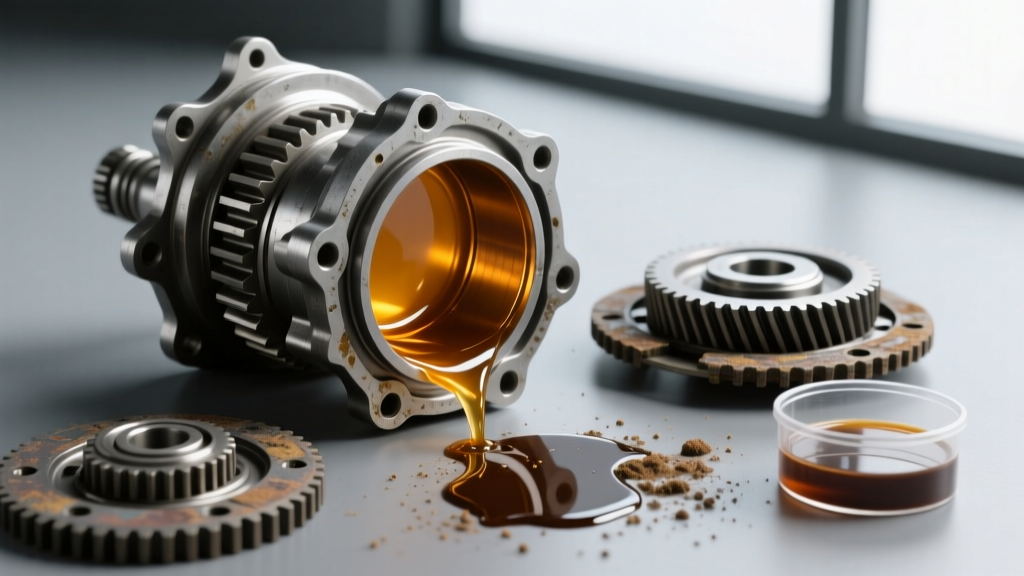
The most common cause of premature failure and drivetrain chatter in Toyota clutch-type differentials is incorrect fluid formulation. Toyota specifies an API GL-5 rated gear oil, typically in a 75W-85 or 75W-90 viscosity. For most modern Tacoma and 4Runner rear axles, the factory fill is Toyota Genuine Hypoid Gear Oil SX GL-5 75W-85 (Part No. 08885-02506).
However, the base gear oil is only half of the equation. The clutch packs in a Toyota LSD require a specific coefficient of friction to engage smoothly. Without a dedicated friction modifier, the clutches will experience 'stick-slip'—a phenomenon where the plates grab aggressively, snap, and grab again, resulting in a violent shuddering or 'chatter' during low-speed cornering. To prevent this, you must add Toyota LSD Friction Modifier (Part No. 08885-02606).
Expert Insight: Never rely solely on 'off-the-shelf' gear oils that claim to have 'LSD additives already included.' The friction characteristics of Toyota's TRD clutch packs are highly specific. Always drain the axle, fill with pure GL-5 gear oil, and add exactly one 50ml tube of Toyota Genuine Friction Modifier (08885-02606) per 3.0 quarts of fluid capacity to guarantee optimal clutch pack modulation.
Fluid Capacity and Drain/Fill Specifications
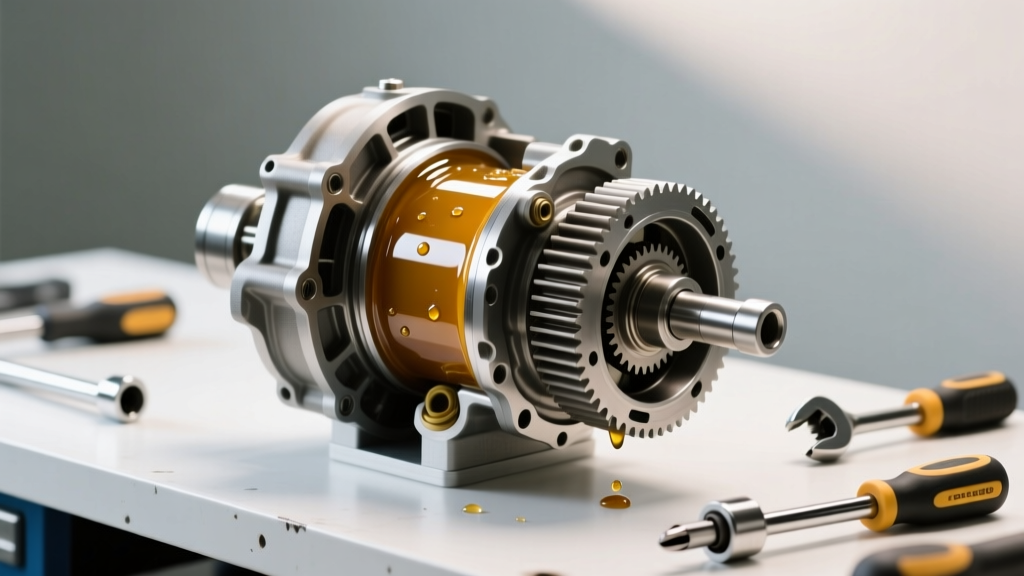
For the ubiquitous Toyota 8-inch and 8.75-inch rear axles found in the Tacoma and 4Runner, the total fluid capacity is approximately 3.2 quarts (3.0 liters). When performing a drain and fill, adhere strictly to the following hardware and torque specifications to prevent housing thread stripping or fluid leaks:
- Drain/Fill Plug Socket: 24mm hex (or 1/2-inch square drive on select older housings).
- Drain Plug Torque: 37 lb-ft (50 Nm).
- Fill Plug Torque: 37 lb-ft (50 Nm).
- Crush Washer (Mandatory Replacement): Part No. 90430-24003 (Aluminum).
Always remove the fill plug before the drain plug. This prevents the nightmare scenario of draining the axle only to discover the fill plug is seized or stripped, leaving the vehicle immobile.
Rebuilding the Toyota Clutch-Type LSD: Shimming and Clearances
If a Toyota clutch-type LSD continues to chatter even after a fluid and friction modifier flush, or if it behaves like an open differential (one wheel spinning freely while the other remains stationary), the clutch packs are likely worn beyond their service limit or the S-spring has fatigued. Rebuilding the differential requires precision measurement. According to data published by Ring & Pinion Service, the internal clearances of the side gears and clutch packs dictate the locking torque of the unit.
Step-by-Step Clutch Pack Shimming
- Disassembly and Inspection: Remove the differential carrier from the housing. Extract the cross-pin shaft and S-spring. Inspect the friction plates for glazing, scoring, or thermal bluing. If the friction material is worn below 0.030 inches, replacement is mandatory.
- Measuring Side Gear Clearance: Assemble the side gears and clutch packs into the carrier without the S-spring. Mount a dial indicator on the carrier face. Measure the axial play of the side gear. Toyota's specification for side gear-to-pinion gear backlash typically ranges between 0.002" and 0.006".
- Selective Thrust Washers: If the clearance exceeds 0.006", you must install a thicker selective thrust washer behind the side gear. Yukon Gear & Axle offers comprehensive shim kits for Toyota 8-inch axles that include washers in 0.005" increments.
- S-Spring Preload: The S-spring provides the baseline clamping force. If the spring shows signs of heat discoloration or measures less than the OEM free-length specification, it must be replaced to ensure adequate static clamping force on the clutch packs.
Ring Gear and Bearing Cap Torque Specs
When reinstalling the rebuilt LSD carrier into the Toyota axle housing, the ring gear and bearing cap torque specs must be exact to maintain proper gear mesh and prevent catastrophic ring gear separation under heavy towing or off-road loads.
- Ring Gear Bolts (Toyota 8-inch): 96 lb-ft (130 Nm). Apply a medium-strength threadlocker (e.g., Loctite 243) to the threads. Do not use oil on these bolts, as it alters the torque-to-clamp load ratio.
- Bearing Cap Bolts: 58 lb-ft (79 Nm). Ensure the bearing cap alignment marks (stamped on the housing and caps during factory machining) match perfectly. Swapping caps side-to-side will destroy the bearing and gear set instantly.
- Carrier Bearing Preload: Toyota axles typically use shims behind the carrier bearings to set preload and gear backlash. Target backlash for Toyota 8-inch and 8.75-inch ring and pinion sets is generally 0.005" to 0.007", measured at three equidistant points on the ring gear.
Diagnosing Edge Cases: Noise and Vibration
Differential noise diagnosis requires isolating the sound based on vehicle load and speed. A whining noise that changes pitch with acceleration and deceleration is almost always indicative of ring and pinion gear wear or improper pinion depth, not an LSD failure. However, a rhythmic 'clunk' or binding sensation specifically during tight, low-speed turns (such as pulling into a driveway) points directly to the LSD clutch packs.
For vehicles equipped with the Torsen LSD (like the GR86), a whining noise is rare, but a metallic rattle at idle could indicate worn helical gear thrust washers or excessive pinion bearing play. Because Torsen units do not use clutch packs, chatter during cornering is mechanically impossible; if a Torsen-equipped Toyota exhibits cornering chatter, the issue lies in the suspension bushings, CV axles, or tire pressure discrepancies, not the differential internals.
The Break-In Procedure for Rebuilt LSDs
If you have rebuilt a Toyota clutch-type LSD, the first 500 miles are critical. The friction plates must mate perfectly to the steel plates. Drive the vehicle normally on the highway for the first 20 miles to bring the gear oil up to operating temperature (approx. 140°F). Then, find a clean, dry parking lot and perform 10 to 15 tight figure-8 maneuvers at 5-10 mph. This forces the clutch packs to slip slightly, burnishing the friction material and ensuring smooth engagement for the life of the differential. Skipping this step is the leading cause of premature chatter in freshly rebuilt Toyota differentials.
By adhering to factory fluid specifications, utilizing exact torque values, and understanding the distinct mechanical differences between Toyota's clutch-type and Torsen architectures, technicians and enthusiasts can ensure their drivetrains deliver optimal traction and reliability for hundreds of thousands of miles. For official service manuals and wiring diagrams for electronic locking differentials, always consult the Toyota Technical Information System (TIS).