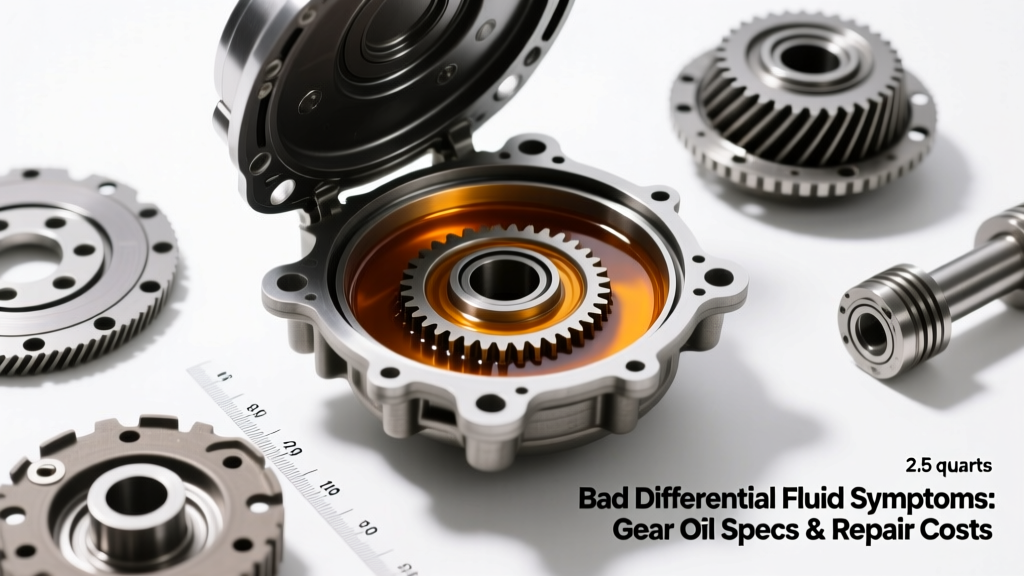
The Core Question: What Does Locking Differential Mean for Maintenance?
When off-road enthusiasts and truck owners ask, what does locking differential mean, they are usually trying to understand how their drivetrain handles extreme traction loss. Unlike an open differential that sends power to the wheel with the least resistance, a true locking differential (such as the Eaton G80, ARB Air Locker, or Detroit Locker) mechanically forces both axle shafts to spin at the exact same RPM, regardless of traction. But what does a locking differential mean for your preventive maintenance budget and fluid service costs? The answer is more nuanced than a standard open differential.
Mechanical lockers endure immense shock loads when they engage, especially if one wheel is spinning freely and suddenly catches grip on pavement or rock. This violent engagement generates extreme shearing forces inside the gear oil. Consequently, the fluid in a locking differential requires high-quality Extreme Pressure (EP) additives to prevent the ring and pinion gears from microwelding or pitting under stress.
2026 Differential Fluid Service Pricing Breakdown
Understanding the cost of servicing your differential is critical for long-term ownership. Below is a comprehensive pricing guide for 2026, comparing service costs across different differential types and service providers.
| Differential Type | DIY Cost (Fluid Only) | Independent Shop | Dealership Service |
|---|---|---|---|
| Open Differential | $30 - $50 | $90 - $140 | $150 - $220 |
| Clutch-Type LSD | $45 - $75 (Includes FM) | $130 - $190 | $200 - $300 |
| Mechanical Locking Diff | $40 - $85 | $140 - $210 | $250 - $380 |
Note: Prices reflect standard 1/2-ton and 3/4-ton trucks (e.g., Ford F-150, Chevy Silverado 1500, Ram 1500) requiring 2 to 2.5 quarts of 75W-90 or 75W-140 synthetic gear oil.
Why Do Dealerships Charge More for Locking Differentials?
Dealerships often classify locking differentials under 'severe duty' or 'specialty drivetrain' service codes. Because vehicles equipped with factory lockers (like the Z82 trailering package or Z71 off-road package) are assumed to be towed or driven off-road, dealerships may mandate a complete differential flush rather than a simple drain-and-fill, artificially inflating the price to the $300+ range. An independent shop or a DIY driveway service will typically stick to the factory-recommended drain-and-fill procedure, saving you hundreds of dollars.
The Friction Modifier Myth: Do Lockers Need Additives?
One of the most expensive mistakes owners make when servicing a locking differential is purchasing unnecessary friction modifiers. If you are servicing a clutch-type Limited Slip Differential (LSD) (like the Ford 8.8-inch Traction-Lok or Dana Trac-Lok), you absolutely must add a friction modifier (e.g., Motorcraft XL-3 or Mopar Limited Slip Additive) to prevent clutch chatter.
However, if your vehicle features a true mechanical locking differential—such as the GM Eaton G80 Gov-Lock, a Detroit Locker, or an ARB Air Locker—do not add friction modifiers. Mechanical lockers do not rely on clutch packs to transfer torque; they use mechanical gears, pawls, or air pressure. Adding a friction modifier to a mechanical locker is a waste of $15-$25 and can technically alter the viscosity profile of the gear oil, potentially delaying the engagement of centrifugal lockers like the Eaton G80. Always consult your owner's manual, but as a rule of thumb: Lockers need high-quality GL-5 gear oil, not clutch modifiers.
Recommended Gear Oils for Locking Differentials
Because locking differentials subject gear oil to severe shearing, full synthetic 75W-90 or 75W-140 GL-5 gear oils are mandatory. Here are the top-tier choices for 2026:
- AMSOIL Severe Gear 75W-90: Engineered with high-viscosity index base oils that resist shearing under the shock loads of a locking differential engaging at speed. (Reference: AMSOIL Drivetrain Lubricants)
- Royal Purple Max Gear 75W-90: Contains proprietary Synerlec additive technology which provides excellent film strength to protect ring and pinion teeth during locker engagement.
- Mobil 1 Synthetic Gear Lube LS 75W-90: A widely available, cost-effective option. Despite the 'LS' in the name, it can be used in lockers, though it already contains a mild friction modifier which is harmless but unnecessary for pure mechanical lockers.
Diagnosing Fluid Degradation: What to Look For During a Drain
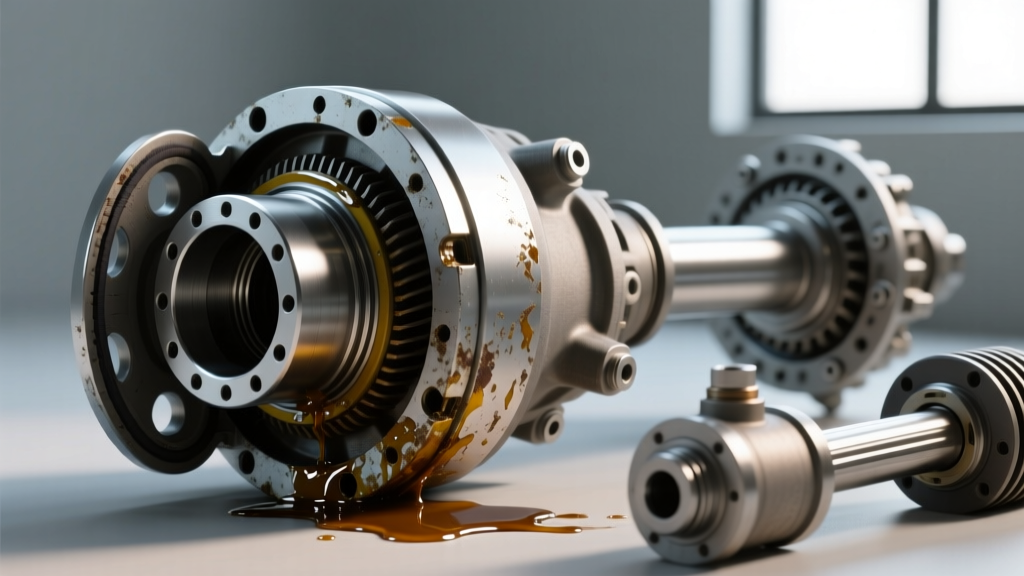
When performing a preventive drain-and-fill on a locking differential, the condition of the old fluid is a direct window into the health of your ring and pinion. Because lockers engage with sudden, violent force, they are prone to accelerated gear wear if the fluid is neglected. Normal wear presents as a fine, silvery paste on the magnetic drain plug or fill plug. This is typical micro-wear from the spider gears and side gears. Abnormal wear, however, looks like chunky metal flakes or brass-colored shavings. Brass indicates that the carrier bearings or pinion bearings are disintegrating. If you find large, jagged ferrous chunks, your locking mechanism (such as the pawls in an Eaton G80) may be chipping teeth due to engagement while the wheels are spinning at vastly different speeds. Catching this early via a $40 DIY fluid change can save you from a $2,500 complete axle rebuild.
Preventive Maintenance: Torque Specs and Service Intervals
Proper preventive maintenance goes beyond just buying the right fluid. Over-torquing differential cover bolts or fill plugs is a common DIY error that leads to stripped threads and catastrophic fluid leaks. Below are the exact torque specifications for two of the most common locking differential housings found on North American trucks.
Dana 44 / Dana 50 (Common in Jeep Wrangler Rubicon, Ford Super Duty)
- Cover Bolts (10-bolt pattern): 25 - 30 lb-ft. Use a star-pattern tightening sequence to ensure even gasket compression.
- Fill/Drain Plugs (if equipped): 25 lb-ft.
- Fluid Capacity: Approximately 2.0 quarts (1.9 liters).
- Service Interval: Every 30,000 miles for severe off-road use; 50,000 miles for standard towing.
GM 9.5-Inch / 10-Bolt (Common in Chevy/GMC 1500 with Eaton G80)
- Cover Bolts: 25 lb-ft. (Note: Many GM 10-bolt axles do not have a drain plug; the cover must be removed, requiring a new RTV silicone bead or pre-cut gasket).
- Fill Plug: 24 lb-ft.
- Fluid Capacity: 2.2 to 2.4 quarts depending on the exact axle ratio and housing depth.
- Service Interval: Every 50,000 miles under normal towing conditions.
For deeper technical insights into differential architectures and locker mechanisms, refer to the engineering documentation provided by Eaton Vehicle Differentials and Dana Incorporated.
Final Verdict: Protecting Your Drivetrain Investment
So, what does locking differential mean for your wallet? It means you must invest in premium, shear-stable synthetic gear oils, but you can safely skip the expensive friction modifiers and dealership flush packages. By understanding the mechanical nature of your locker and adhering to precise torque specifications during your DIY fluid changes, you can keep your differential operating flawlessly for well over 150,000 miles, keeping your 2026 maintenance budget firmly in the green.