The Drivetrain Ecosystem: Beyond the Axles
When you own a four-wheel-drive Toyota truck or SUV—such as a Tacoma, 4Runner, or Tundra—maintaining your axles is only half the battle. Many beginners search for guides on a toyota differential fluid change but completely overlook the critical component sitting right behind the transmission: the transfer case. To truly protect your drivetrain, you must understand the mechanical and maintenance relationship between the transfer case and your front and rear differentials.
In this beginner-friendly explainer, we will break down how these components interact, why their fluid services are intrinsically linked, and the exact specifications you need to perform the job correctly in your own garage.
How the Transfer Case and Differentials Interact
Power Flow and Mechanical Symbiosis
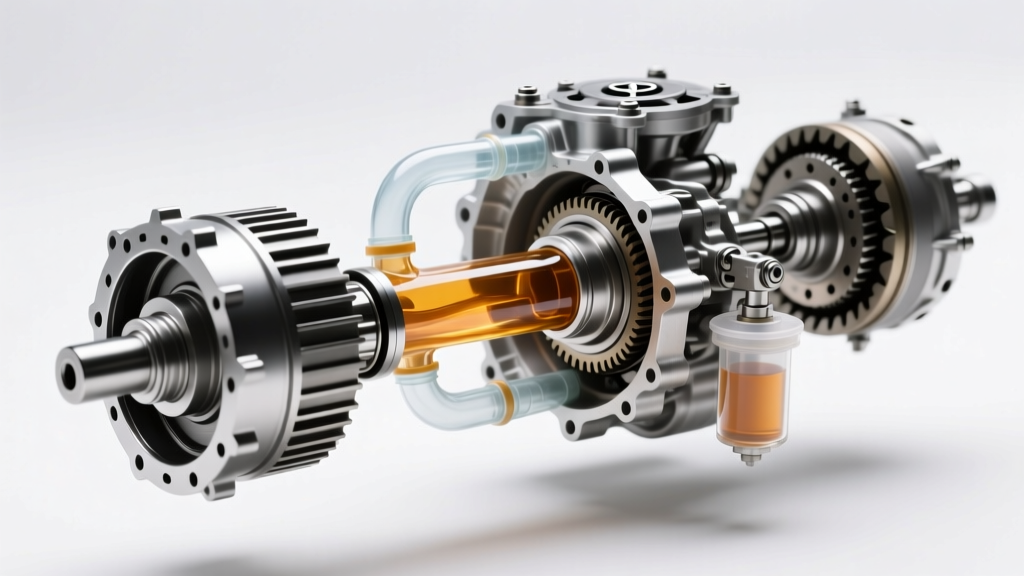
To understand why we service these components together, you need to visualize how power travels from the engine to the dirt. In a traditional Toyota 4WD system, power flows in a specific sequence:
- Transmission: Multiplies engine torque and provides gear ratios.
- Transfer Case: Receives power from the transmission output shaft and splits it between the rear driveshaft (100% of the time in 2WD/4Hi) and the front driveshaft (when 4WD is engaged).
- Driveshafts: Transfer the rotational force to the axles.
- Differentials (Ring and Pinion): Take the longitudinal rotation from the driveshaft and turn it 90 degrees to spin the axles and wheels, while allowing wheels to rotate at different speeds during cornering.
Because the transfer case is the "traffic cop" that dictates how torque is distributed to the differentials, a failure or excessive wear in the transfer case directly impacts the load and stress placed on the front and rear ring and pinion gears. If the transfer case chain stretches or the internal bearings degrade due to old fluid, it can cause driveline binding, vibration, and uneven torque loading, which accelerates wear on the differential gears.
The "Shared Interval" Maintenance Philosophy
From a maintenance perspective, the relationship is about shared intervals and contamination prevention. While Toyota's official severe maintenance schedule might stagger these services, experienced off-road enthusiasts and fleet mechanics treat them as a single "driveline fluid service." When you are already under the vehicle, covered in gear oil, it makes zero logical sense to leave the transfer case untouched, especially since they share similar environmental exposure to water crossings, mud, and extreme temperature cycles.
Fluid Specifications: What Goes Where?
The most common—and most destructive—mistake beginners make during a Toyota differential fluid change is assuming all the drain plugs take the same gear oil. They do not. Most modern Toyota transfer cases require Automatic Transmission Fluid (ATF), not heavy gear oil. Putting 75W-90 GL-5 gear oil into a Toyota transfer case will cause severe clutch pack failure, chain slip, and actuator binding.
| Component | Typical Capacity | Required Fluid Specification | OEM Part Number Example |
|---|---|---|---|
| Front Differential | 1.5 - 1.9 Quarts | 75W-85 GL-5 Gear Oil | 08885-81016 |
| Rear Differential (Open) | 3.0 - 3.2 Quarts | 75W-85 GL-5 Gear Oil | 08885-81016 |
| Rear Differential (LSD) | 3.0 - 3.2 Quarts | 75W-85 GL-5 + LSD Modifier | 08886-81206 (Modifier) |
| Transfer Case | 1.5 - 2.0 Quarts | Toyota Genuine ATF WS | 00289-ATPWS |
Note: Capacities vary slightly between the Tacoma (VF4B transfer case) and the 4Runner/Land Cruiser (VF1A/VF2A transfer cases). Always measure what comes out to verify what goes in.
The LSD Additive Trap
If your Toyota is equipped with a mechanical Limited Slip Differential (LSD) in the rear axle, the relationship between the fluid and the internal clutch packs is incredibly delicate. Standard GL-5 gear oil lacks the necessary friction modifiers. If you skip the LSD additive, the clutch packs will chatter violently during low-speed turns, eventually glazing the friction material and ruining the differential. Always add the OEM LSD friction modifier (Part #08886-81206) before filling the axle with gear oil to ensure it mixes properly.
Step-by-Step Service Order for Beginners
When tackling the transfer case and differential relationship in your driveway, the order of operations matters. Follow this sequence to avoid cross-contamination and ensure a smooth workflow:
- Prep and Safety: Level the vehicle on jack stands. Never rely solely on a hydraulic floor jack. Ensure the drivetrain is cool to the touch to prevent burns, but warm enough that the fluid flows easily.
- Break the Fill Plugs First: Before draining anything, break loose the fill plugs on the transfer case, front diff, and rear diff. If a fill plug is seized and you have already drained the fluid, you are stranded.
- Service the Transfer Case: Drain and fill the transfer case with ATF WS first. This keeps the thinner ATF away from your gear oil tools.
- Service the Front Differential: Drain, clean the magnetic plug, and fill with 75W-85 GL-5.
- Service the Rear Differential: Drain, add LSD modifier (if equipped), and fill with 75W-85 GL-5.
Exact Torque Specifications and Tools
Over-tightening drain plugs is a notorious way to crack aluminum differential housings or strip threads, leading to thousands of dollars in repairs. Invest in a quality inch-pound or foot-pound torque wrench.
- Front Differential Drain/Fill Plugs: 10mm Hex bit | Torque: 29 ft-lbs (39 Nm)
- Rear Differential Drain/Fill Plugs: 10mm Hex bit | Torque: 30 ft-lbs (40 Nm)
- Transfer Case Drain/Fill Plugs: 24mm Socket or 14mm Hex (Year dependent) | Torque: 29 ft-lbs (39 Nm)
Always replace the aluminum crush washers on the drain and fill plugs. They cost pennies and are your primary defense against slow weeping leaks that will eventually ruin your gear oil.
Real-World Cost Breakdown (2026 Estimates)
Understanding the financial relationship between DIY and dealer service helps justify the time spent under the truck. As of 2026, dealership labor rates and fluid markups have made DIY maintenance more attractive than ever.
- Dealership Driveline Service: $450 - $650 (Includes all three fluids, labor, and shop supplies).
- DIY Driveline Service: $110 - $160 (Includes 2 gallons of 75W-85, 2 quarts of ATF WS, LSD modifier, and crush washers).
By doing it yourself, you not only save money, but you also get a firsthand look at the condition of your drivetrain. The magnetic drain plugs in the differentials and transfer case will tell you a story; a fine metallic paste is normal, but chunky metal shards indicate imminent bearing or gear failure.
"The transfer case and diffs are a matched set. If you're wheeling your Tacoma in mud or snow, water intrusion will emulsify the gear oil into a milkshake. Checking the transfer case fluid alongside the diffs after every deep water crossing is the difference between a $150 fluid change and a $3,000 axle rebuild."
— Drivetrain Moderator, ToyotaNation Forums
Final Thoughts
A proper toyota differential fluid change is never just about the axles. By respecting the mechanical relationship between your transfer case and your differentials, using the exact OEM fluid specifications, and adhering to precise torque values, you ensure that your Toyota's 4WD system remains reliable for hundreds of thousands of miles. For more deep-dive technical discussions and model-specific wrenching advice, the community archives at IH8MUD remain an invaluable resource for Toyota truck owners.