Bridging the Language Gap: The Diferencial Trasero
In the modern automotive repair landscape of 2026, bilingual communication on the shop floor is more critical than ever. When a customer or colleague asks about the rear differential in Spanish, they are referring to the diferencial trasero. Specifically, when dealing with performance or off-road trucks and SUVs, the conversation quickly shifts to the diferencial de deslizamiento limitado—the Limited Slip Differential (LSD). Understanding the precise terminology is only the first step; mastering the mechanical operation, fluid chemistry, and exact maintenance procedures of these units is what separates a parts-changer from a true drivetrain specialist.
This technical deep-dive explores the inner workings of clutch-type LSDs, the critical role of friction modifiers, and the exact torque specifications required to service the most common diferenciales traseros on the road today.
Clutch-Pack LSD Operation: How the Embragues Work
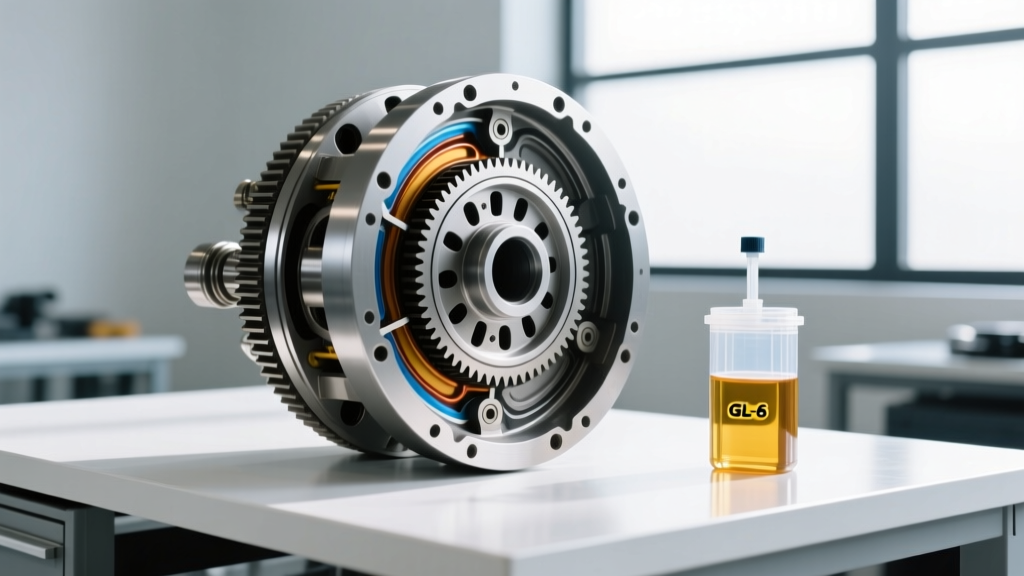
To properly maintain a diferencial trasero, you must first understand its internal architecture. Unlike an open differential that sends power to the path of least resistance (the wheel with the least traction), a clutch-type LSD utilizes a series of alternating friction and steel clutch packs (paquetes de embrague) positioned behind the side gears.
When both wheels are rotating at the same speed, the clutch packs remain relatively static. However, when one wheel begins to lose traction and spin faster than the other, the spider gears (engranajes satélites) walk up the side gear ramps. This axial movement compresses the clutch packs against the differential case, creating immense friction that locks the axles together and transfers torque to the wheel with grip.
Expert Note: It is vital to distinguish between a clutch-type LSD (like the Ford Traction-Lok or Eaton Positraction) and a helical gear LSD (like the Torsen). Torsen units operate purely on gear binding mechanics and do not require limited-slip friction modifiers. Adding friction modifier to a Torsen diferencial trasero will not harm it, but it is entirely unnecessary and a waste of shop resources.
The Chemistry of GL-5 Gear Oil and Friction Modifiers
The lifeblood of any diferencial trasero is the gear oil. Modern 2026 specifications almost universally call for a 75W-90 or 75W-110 API GL-5 synthetic lubricant. GL-5 oils are packed with sulfur-phosphorus Extreme Pressure (EP) additives. Under the immense shearing forces of the hypoid ring and pinion gears (corona y piñón), these additives react with the metal surfaces to form a sacrificial solid film, preventing micro-welding and gear spalling.
The Stick-Slip Phenomenon and Modificadores de Fricción
While EP additives protect the gears, they create a problem for the clutch packs. Standard GL-5 oil has a high coefficient of friction, which causes the clutch plates to grab, release, and grab again in rapid succession during low-speed cornering. This results in an audible and tactile shudder known as 'chatter' (vibración o traqueteo).
To resolve this, a Limited Slip Friction Modifier (LSFM) must be added. LSFMs are typically composed of long-chain organic esters or amides. These molecules are polar; one end bonds to the metal surface of the clutch discs, while the other end extends outward, creating a microscopic, highly slippery boundary layer. This allows the clutches to slip smoothly during cornering while still maintaining enough grab to lock up under heavy throttle. For exact formulations, technicians frequently rely on dedicated additives like Red Line Limited Slip Friction Modifier or OEM-specific fluids like Motorcraft XL-3.
Bilingual Shop Guide: LSD Fluid Service Procedures
Servicing a diferencial trasero requires meticulous attention to cleanliness and torque. The drain and fill procedure (procedimiento de drenaje y rellenado) is straightforward, but cutting corners leads to catastrophic leaks and premature clutch failure.
Step 1: Draining and Inspection (Drenaje e Inspección)
- Warm Up the Axle: Drive the vehicle for 15 miles to bring the gear oil to operating temperature. This suspends metallic particulates in the fluid, ensuring they drain out rather than settling in the housing.
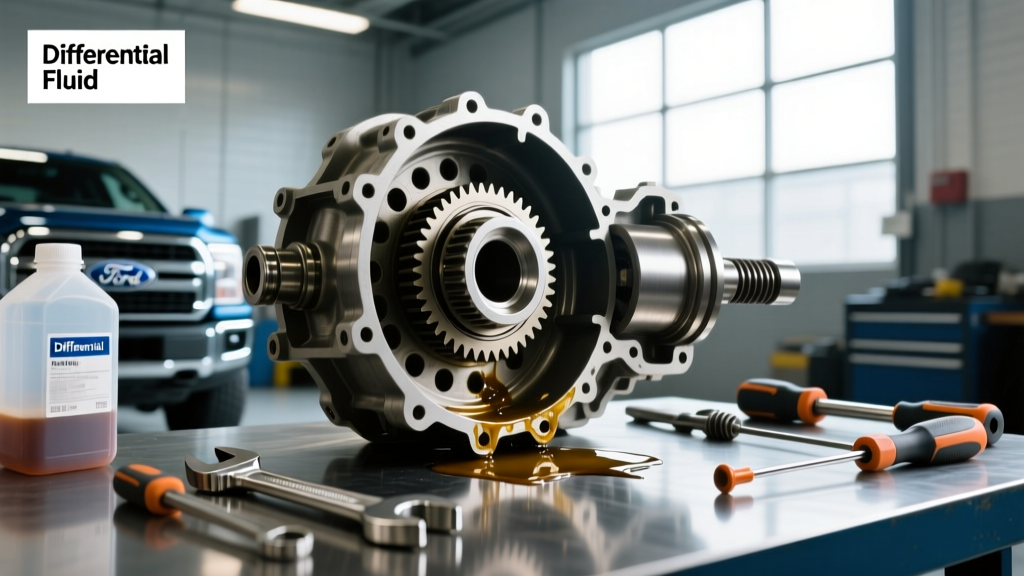
- Remove the Cover: Use a dedicated differential cover spreader tool or carefully tap with a rubber mallet. Never pry between the machined sealing surfaces with a flathead screwdriver, as gouging the aluminum or stamped steel will cause permanent leaks.
- Inspect the Magnets: Most OEM differential covers feature an internal magnet. A fine, gray metallic paste is normal clutch and gear wear. Shiny, jagged metal shards indicate ring and pinion failure or bearing disintegration.
Step 2: Sealing and Refilling (Sellado y Rellenado)
Abandon cheap cork gaskets and standard black RTV. In 2026, the industry standard for sealing a diferencial trasero is either a reusable rubber-coated steel gasket (like LubeLocker) or a high-torque sensor-safe silicone such as Permatex Ultra Black (Part #81180). If using RTV, apply a continuous 3mm bead, torque the cover to spec, and wait a minimum of two hours before filling to allow the silicone to skin over.
Fill the housing with the specified 75W-90 GL-5 synthetic until the fluid level is exactly even with the bottom of the fill plug hole. Add the precise amount of friction modifier before the final top-off to ensure proper mixing.
Axle Torque Specifications & Capacity Chart
Applying the correct torque (par de apriete) to the differential cover bolts is critical. Overtorquing will warp stamped steel covers, crushing the gasket and causing leaks. Undertorquing leads to fluid seepage and gear starvation. Below is a reference chart for the most common North American rear axles.
| Axle Type (Tipo de Eje) | Cover Bolts | Torque Spec (lb-ft) | Fluid Capacity | OEM Friction Modifier P/N |
|---|---|---|---|---|
| Ford 8.8" (Super 8.8 / Traction-Lok) | 12 | 28 - 38 lb-ft | 2.5 - 3.0 qts | Motorcraft XL-3 |
| Dana 44 (Jeep Trac-Lok / Rubicon) | 10 | 30 - 35 lb-ft | 3.5 qts | Mopar 4318060AB |
| GM 8.6" 10-Bolt (Silverado/Tahoe) | 10 | 22 lb-ft | 2.75 qts | ACDelco 88900333 |
| Chrysler 8.25" (Ram/Cherokee) | 10 | 30 - 35 lb-ft | 3.25 qts | Mopar 4318060AB |
Note: Always consult specific OEM service manuals via Spicer Parts or dealer portals, as aftermarket heavy-duty covers may require altered torque sequences.
Diagnosing Chatter: The Figure-8 Test (Prueba en Ocho)
If a customer returns complaining of a shuddering noise from the diferencial trasero when turning out of a driveway, you must perform the Figure-8 test. Find a wet or slightly damp, empty parking lot to minimize tire wear.
- Turn the steering wheel to full lock.
- Apply light, steady throttle to drive the vehicle in a tight circle.
- Reverse the steering to full lock in the opposite direction and repeat.
If you feel a rhythmic binding or hear a 'clunking' chatter from the rear axle, the clutch packs are experiencing stick-slip. First, verify the fluid level and ensure the correct dose of LSFM was added. If the chatter persists, the friction material on the clutch discs is likely glazed or contaminated. At this stage, a simple fluid change will not suffice. The differential cover must be removed, the carrier extracted, and the clutch packs rebuilt using a master overhaul kit (such as the Yukon Gear & Axle YK series or Eaton rebuild kits sourced through Ring-Pinion.com).
Summary for the Modern Drivetrain Technician
Whether you call it a rear differential or a diferencial trasero, the physics of limited-slip operation remain unchanged. Success in the drivetrain bay comes down to respecting the chemistry of GL-5 fluids, understanding the polar mechanics of friction modifiers, and adhering strictly to cover torque specifications. By combining bilingual shop communication with rigorous technical standards, you ensure every LSD operates smoothly, quietly, and reliably for tens of thousands of miles.