Selecting the correct Toyota differential fluid is one of the most misunderstood aspects of Japanese truck and SUV maintenance. Whether you are servicing a 2024 Tacoma TRD Off-Road, a high-mileage 4Runner, or a Tundra built for heavy towing, the gear oil inside your axles dictates the longevity of your ring and pinion set. As we move through 2026, Toyota's engineering focus has heavily prioritized parasitic drag reduction and fuel economy, leading to a widespread factory shift toward lower-viscosity 75W-85 synthetic gear oils. However, for enthusiasts, off-roaders, and towers, the debate between OEM specifications and high-performance aftermarket alternatives remains fierce.
In this comprehensive buyer's guide, we break down the exact fluid specifications, part numbers, chemical requirements, and torque specs you need to service your Toyota differentials correctly.
The Engineering Behind Toyota Hypoid Differentials
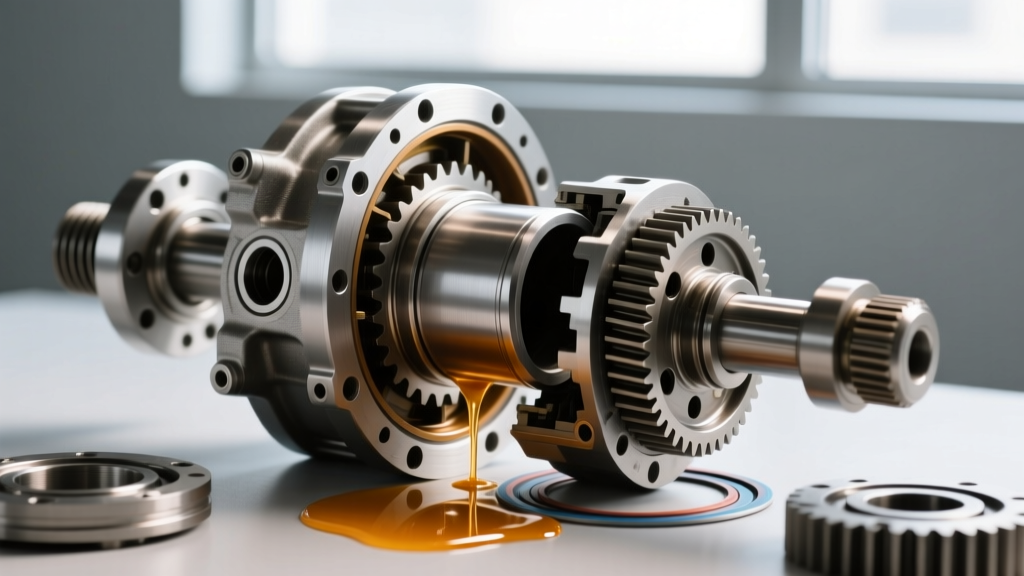
Before pouring any fluid into your axle, it is critical to understand the mechanical environment inside a Toyota differential. Toyota utilizes hypoid gear sets in both their front independent (IFS) and rear solid axles. Unlike standard spur gears, hypoid gears feature a spiral cut where the pinion gear meshes below the centerline of the ring gear.
This design allows for a lower driveshaft tunnel and smoother operation, but it creates massive sliding friction rather than pure rolling friction. To prevent the gear teeth from welding together under extreme pressure, your fluid must contain high levels of sulfur-phosphorus extreme pressure (EP) additives. This is why the American Petroleum Institute (API) GL-5 rating is non-negotiable for Toyota axles. Using a GL-4 fluid (often meant for manual transmissions) will result in catastrophic pitting and premature gear failure.
OEM vs. Aftermarket: 2026 Comparison Matrix
The market is flooded with gear oils claiming to be the 'best' for Japanese applications. Below is a direct comparison of the most reliable options available in 2026, analyzing viscosity, additive packages, and real-world pricing.
| Brand / Product | Viscosity | API Rating | Est. Price (Per Qt) | LSD Additive Included? | Best Application |
|---|---|---|---|---|---|
| Toyota Genuine SX | 75W-85 | GL-5 | $14.50 | No | Stock daily driving, fuel economy |
| Red Line 75W-85 | 75W-85 | GL-5 | $23.00 | Yes | High-heat, off-road, mixed use |
| Mobil 1 Synthetic | 75W-90 | GL-5 | $13.99 | No | Budget towing, heavy loads |
| Amsoil Severe Gear | 75W-90 | GL-5 | $18.50 | No | Extreme towing, rock crawling |
| Toyota Genuine LX | 75W-140 | GL-5 | $16.00 | No | Factory heavy-duty tow packages |
Decoding Toyota Genuine Hypoid Gear Oils
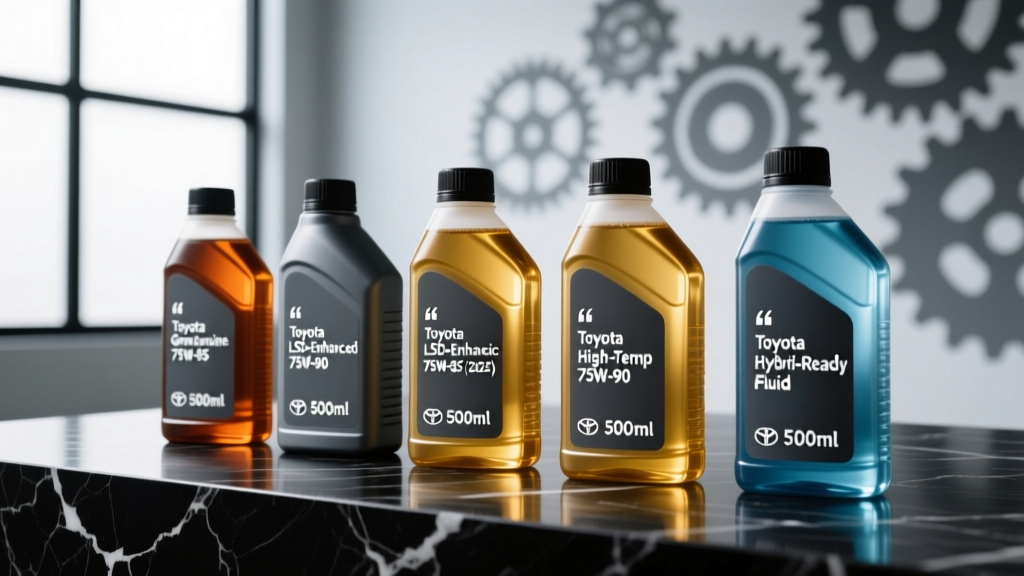
If you prefer to stick strictly to OEM Toyota parts and fluids, the dealership will typically offer one of two primary gear oils. Understanding the difference between the SX and LX lines is crucial for matching the fluid to your driving habits.
75W-85 SX (Part #08885-02606)
This is the factory fill for the vast majority of modern Tacomas, 4Runners, and RAV4 Adventure models. The 75W-85 viscosity was engineered specifically to reduce rotational mass and fluid drag, squeezing out marginal MPG gains to meet CAFE standards. It features a robust synthetic base stock that handles standard commuting and light trail use exceptionally well. However, its thermal ceiling is lower than a 75W-90, meaning it can thin out and lose film strength during prolonged, high-speed towing in summer heat.
75W-140 LX (Part #08885-02506)
Reserved for heavy-duty applications, the LX 75W-140 is a massive step up in viscosity. You will typically find this specified in Tundra TRD Pro models or trucks equipped with the factory tow package. The thicker fluid maintains a protective hydrodynamic wedge between the hypoid gears even when differential temperatures exceed 230°F (110°C). The trade-off is slightly reduced fuel economy and increased rolling resistance when the axle is cold.
The 75W-85 vs. 75W-90 Debate for Heavy Towing
A common question in the Toyota truck community is whether it is safe to deviate from the factory 75W-85 specification. If you frequently tow trailers exceeding 4,000 lbs, navigate steep mountain passes, or engage in slow-speed rock crawling, stepping up to a high-quality 75W-90 synthetic (like Mobil 1 or Amsoil) is a highly recommended upgrade.
Expert Insight: The physical dimensions of the gear teeth do not change based on the oil weight. A 75W-90 will fit perfectly in a differential stamped for 75W-85. The slight penalty in cold-weather fuel economy is vastly outweighed by the 30% increase in thermal stability and shear resistance under heavy towing loads.
The LSD Friction Modifier Dilemma
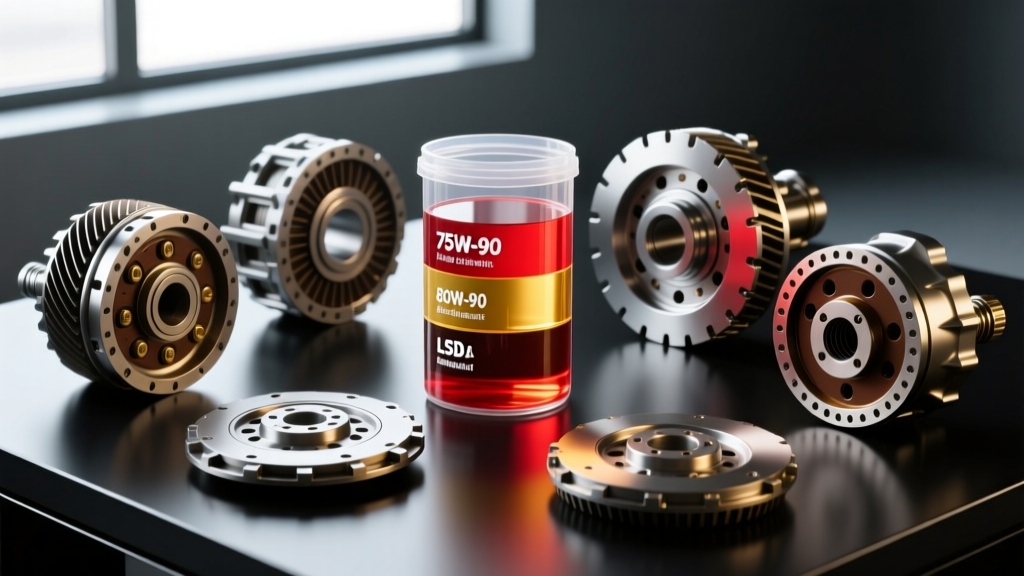
One of the most frequent mistakes made during a Toyota differential service is mishandling Limited Slip Differential (LSD) additives. Toyota has utilized two completely different LSD technologies over the last two decades, and they require entirely different fluid treatments.
1. Mechanical Clutch-Type LSDs (Older Tacomas, FJ Cruisers)
If your Toyota features a traditional clutch-pack LSD (often identified by an 'LSD OIL ONLY' sticker on the filler cap), the clutch packs require a specific friction modifier to operate smoothly. Without it, the clutches will bind and release abruptly, causing a violent 'chatter' or shudder during tight, low-speed turns. If your chosen aftermarket fluid (like standard Mobil 1) does not explicitly state 'LS' or 'Limited Slip Compatible,' you must add a separate friction modifier (e.g., Ford XL-3 or Red Line Additive) at a ratio of roughly 1 oz per quart.
2. Torsen / Helical Gear LSDs (Modern TRD Off-Road Models)
Newer Toyota trucks, including the 2016+ Tacoma TRD Off-Road, utilize a Torsen-style (helical gear) mechanical LSD. These differentials operate entirely on gear mesh and torque biasing; they do not contain friction clutches. Adding a friction modifier to a Torsen differential will actually reduce the fluid's coefficient of friction, hampering the LSD's ability to lock and transfer torque. For Torsen axles, use standard GL-5 fluid with zero additives.
Application Guide: Capacities and Torque Specifications
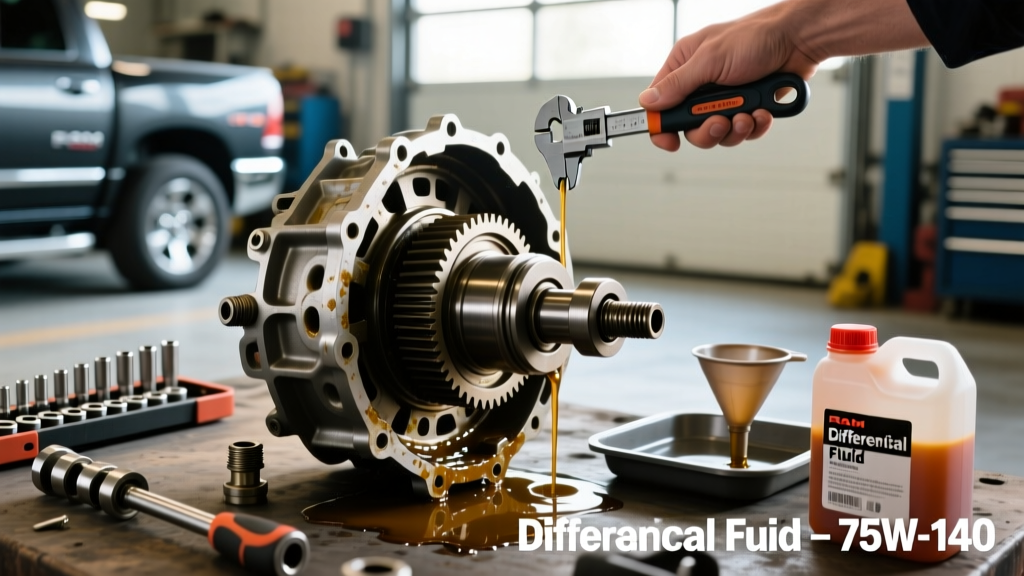
When performing a differential drain and fill, precision is just as important as fluid selection. Toyota's aluminum front differential housings and steel rear housings have different torque tolerances. Over-torquing an aluminum fill plug can strip the threads, requiring a costly housing replacement or helicoil repair.
Common Toyota Truck Differential Data
- 2016-2023 Tacoma (8-inch Rear Solid Axle)
- Capacity: 3.2 Liters (3.38 Quarts)
- Drain/Fill Plug Torque: 36 ft-lbs (49 Nm)
- Recommended Fluid: 75W-85 GL-5
- 2010-2024 4Runner (8-inch Rear Solid Axle)
- Capacity: 3.0 Liters (3.17 Quarts)
- Drain/Fill Plug Torque: 36 ft-lbs (49 Nm)
- Recommended Fluid: 75W-85 GL-5 (or 75W-90 for towing)
- 2007-2021 Tundra (10.5-inch Rear Axle)
- Capacity: 3.8 Liters (4.01 Quarts)
- Drain/Fill Plug Torque: 36 ft-lbs (49 Nm)
- Recommended Fluid: 75W-140 (Tow Pkg) or 75W-90
- Front IFS Differential (Tacoma / 4Runner)
- Capacity: ~1.6 to 1.8 Liters (varies by year)
- Drain/Fill Plug Torque: 29 ft-lbs (39 Nm) - Caution: Aluminum housing!
- Recommended Fluid: 75W-85 GL-5
Step-by-Step Diagnostic: Do You Need an Additive?
If you just bought a used Toyota and are unsure what type of LSD is inside or whether the previous owner added a friction modifier, perform this simple parking lot test before draining the fluid:
- Find a clean, empty parking lot (preferably with loose gravel or damp asphalt to make noise more apparent).
- Roll the vehicle forward slowly while turning the steering wheel to full lock (left or right).
- Drive in a tight figure-8 pattern at 5-10 mph.
- The Result: If you feel a rhythmic hopping, binding, or hear a clunking/shuddering noise from the rear axle, the clutch packs are chattering. You either have a clutch-type LSD that is missing its friction modifier, or the fluid is severely degraded. If the turning feels smooth and neutral, you either have an open diff, a Torsen diff, or a properly treated clutch LSD.
Final Buyer's Verdict
When shopping for the best Toyota differential fluid in 2026, your choice should be dictated by your vehicle's hardware and your driving demands. For daily drivers and weekend warriors prioritizing factory fuel economy and smooth operation, the Toyota Genuine 75W-85 SX remains an excellent, cost-effective choice.
However, if you have upgraded your truck with larger, heavier tires, added armor, or regularly tow a camper, stepping up to a premium synthetic like Red Line 75W-85 or a 75W-90 equivalent provides the necessary thermal headroom to protect your hypoid gears. Always verify your LSD type before adding friction modifiers, invest in a high-quality 24mm socket for your drain plugs, and strictly adhere to the 29-36 ft-lb torque specifications to ensure your axles survive the long haul.